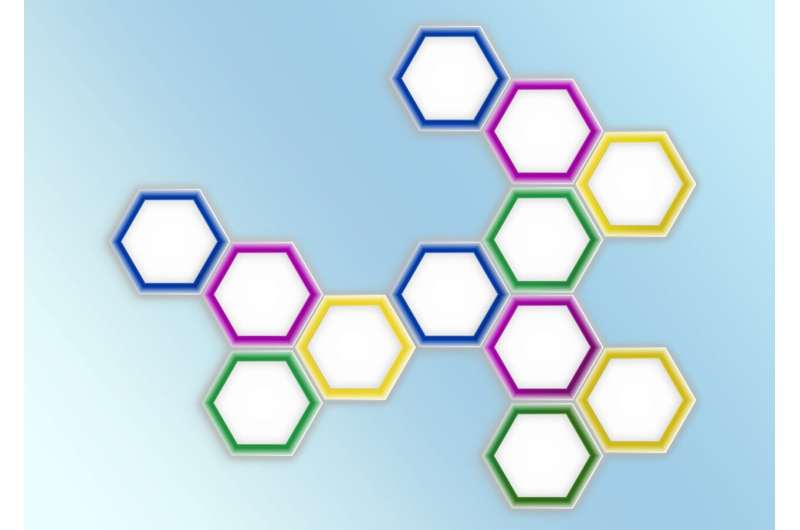
A team of scientists from Radboud University has achieved a groundbreaking feat by developing synthetic molecules that closely resemble real organic molecules. Led by Alex Khajetoorians and Daniel Wegner, the collaborative effort has resulted in the ability to simulate the behavior of genuine molecules using artificial counterparts. This breakthrough enables researchers to manipulate molecule properties in unprecedented ways, shedding new light on how molecules undergo changes. The team’s remarkable findings have been published in the journal Science.
Emil Sierda, the lead experimenter at Radboud University, shared the origin of their groundbreaking idea, stating, “A few years ago, we had this audacious idea of constructing a quantum simulator. Our goal was to create synthetic molecules that closely resemble real ones. To achieve this, we developed a system capable of trapping electrons. Electrons envelop a molecule like a cloud, and we utilized these trapped electrons to construct artificial molecules.” The results they obtained were astonishing, with Sierda remarking, “The similarity between our artificial creations and genuine molecules was striking.”
Continue reading… “Scientists Create Synthetic Molecules that Mimic Organic Molecules, Revolutionizing Molecular Understanding”