Author: admin

Printing the Future of Cosmetics: 3D-Printed Skin Models Offer Alternative to Animal Testing

A groundbreaking collaboration between Graz University of Technology (TU Graz) in Austria and the Vellore Institute of Technology (VIT) in India has resulted in the development of a 3D-printed skin model designed to replace animal testing in the cosmetic industry. This innovation aligns with increasingly strict European regulations—such as Directive 2010/63/EU—which significantly limit the use of animal testing for cosmetic purposes.

At the core of the research are specially engineered hydrogels, which serve as the foundation for creating lifelike, biomimetic skin structures. These hydrogels are infused with living skin cells and processed using a biocompatible 3D printing method. Their high water content makes them ideal for supporting cell growth and proliferation, but it also presents unique challenges in maintaining mechanical and chemical stability. To address this, TU Graz developed innovative crosslinking techniques that stabilize the structures under mild, cell-friendly conditions, avoiding substances that could damage the delicate cells.

Continue reading… “Printing the Future of Cosmetics: 3D-Printed Skin Models Offer Alternative to Animal Testing”
Smarter Smiles: AI-Driven 3D Bioprinting Creates Personalized Gum Grafts Without Surgery

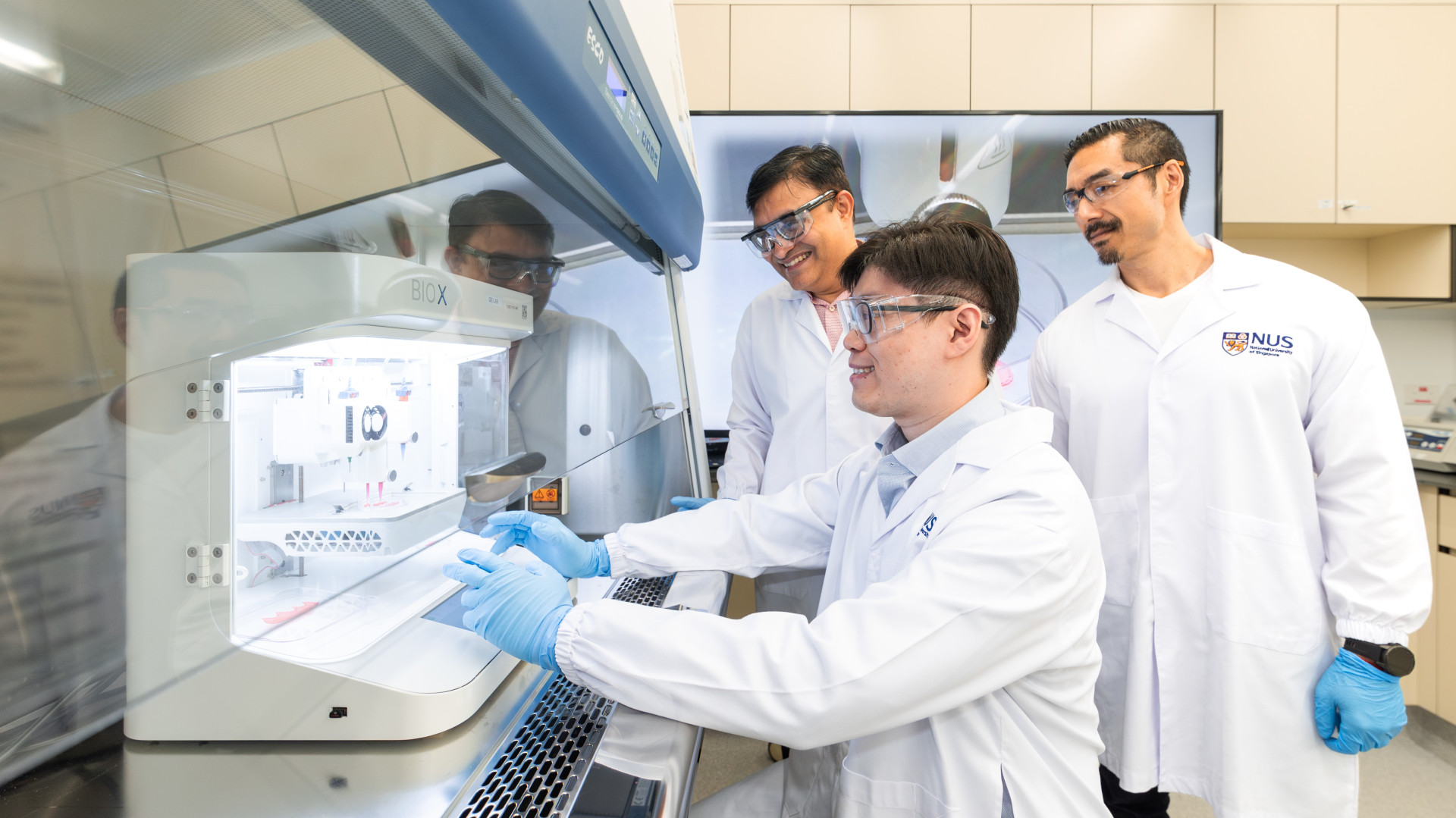
A team of researchers from the National University of Singapore (NUS) has developed a groundbreaking technique that combines 3D bioprinting with artificial intelligence (AI) to produce personalized gum grafts, offering a less invasive alternative to traditional dental surgery. Led by Assistant Professor Gopu Sriram from the NUS Faculty of Dentistry, this innovation aims to reduce patient discomfort by eliminating the need to harvest tissue from the patient’s own mouth—a common and often painful step in current grafting procedures.

Designed for use in treating gum defects caused by periodontal disease or complications from dental implants, the team’s approach relies on a specially formulated bio-ink that supports cell growth while maintaining the mechanical strength necessary during the 3D printing process. Their research, published in Advanced Healthcare Materials on December 17, 2024, was funded by the National Additive Manufacturing Innovation Cluster and the National University Health System.

Continue reading… “Smarter Smiles: AI-Driven 3D Bioprinting Creates Personalized Gum Grafts Without Surgery”

Twist to Power: Revolutionary Metamaterial Sets New Standard for Mechanical Energy Storage

Modern technologies—from shock absorbers and energy-efficient machinery to advanced robotics—depend on materials that can efficiently store and release mechanical energy. This essential process involves converting motion or mechanical work into elastic energy, which can later be recovered and reused. At the core of this transformation is enthalpy, a key measure of how much energy a material can absorb and release. Yet maximizing enthalpy remains a significant engineering challenge. According to Professor Peter Gumbsch of the Karlsruhe Institute of Technology (KIT), the difficulty lies in balancing often conflicting properties: high stiffnesshigh strength, and large recoverable strain.

To overcome this, Gumbsch—who also directs the Fraunhofer Institute for Mechanics of Materials in Freiburg—collaborated with researchers from China and the United States to develop an innovative mechanical metamaterial. These are materials with engineered internal structures that do not exist in nature, granting them extraordinary properties. The team’s starting point was deceptively simple: a round rod. They discovered a way to store large amounts of elastic energy in it without breaking or causing permanent deformation. By cleverly arranging these rods, they integrated the mechanism into a full-scale metamaterial.

Continue reading… “Twist to Power: Revolutionary Metamaterial Sets New Standard for Mechanical Energy Storage”

Bio-Inspired Breakthrough: Scientists Develop Bone-Mimicking 3D Printing Material

In a major step forward for regenerative medicine, researchers have developed a new bioceramic material that closely mimics the micro- and nanoscale structure of natural bone. The team overcame significant technical challenges by leveraging prenucleation clusters—tiny molecular structures naturally found in bone that play a key role in guiding mineralization.

By incorporating these clusters into a transparent calcium phosphate resin, the researchers were able to replicate the intricate architecture of real bone, bringing them one step closer to creating implants that don’t just support the body but become part of it. Their groundbreaking results were recently published in Advanced Materials.

Continue reading… “Bio-Inspired Breakthrough: Scientists Develop Bone-Mimicking 3D Printing Material”

Brains of the Future: Self-Learning ‘Infomorphic Neurons’ Bring AI Closer to Biology

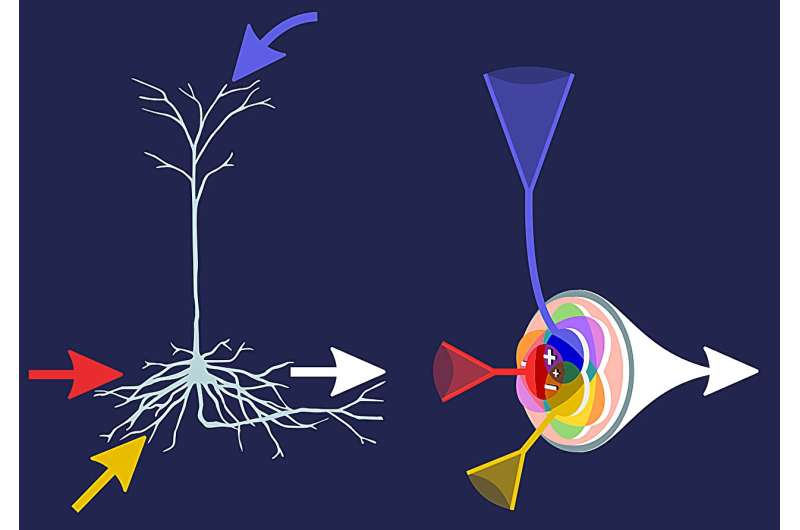
In a breakthrough that could redefine the future of artificial intelligence, researchers have developed a new kind of artificial neuron that mimics the brain more accurately than ever before. Known as “infomorphic neurons,” these units can learn independently, just like their biological counterparts.

Developed by scientists at the Göttingen Campus Institute for Dynamics of Biological Networks (CIDBN) at the University of Göttingen and the Max Planck Institute for Dynamics and Self-Organization (MPI-DS), these artificial neurons were designed to self-organize and extract meaningful patterns from their local network environment—without relying on external coordination. The research was recently published in the Proceedings of the National Academy of Sciences.

Continue reading… “Brains of the Future: Self-Learning ‘Infomorphic Neurons’ Bring AI Closer to Biology”

Turning Trash into Tech: German Scientists Transform Household Plastic Waste into 3D Printing Gold

Germany is tackling its mounting plastic waste crisis head-on with an innovative approach led by the Fraunhofer Institute for Manufacturing Technology and Advanced Materials (IFAM). In 2023 alone, the country generated a staggering 5.6 million metric tons of plastic waste—most of it single-use packaging consumed in homes. With less than a third of that being recyclable, scientists are under pressure to find new ways to reuse this waste.

Fraunhofer IFAM has developed a cutting-edge system that converts everyday household plastic waste into high-quality filaments used for 3D printing. The breakthrough comes at a critical time as industries increasingly demand sustainable materials for manufacturing.

Continue reading… “Turning Trash into Tech: German Scientists Transform Household Plastic Waste into 3D Printing Gold”

Reclaiming Voices: New Brain-to-Speech Tech Restores Natural Communication for the Paralyzed

For millions of people around the world who have lost the ability to speak due to conditions like stroke, ALS, or traumatic brain injuries, a groundbreaking breakthrough is offering renewed hope. Scientists have developed a cutting-edge system that translates brain activity directly into speech in real time, allowing individuals with severe paralysis to communicate naturally once again.

Unlike earlier technologies that introduced awkward delays into conversation, this new “brain-to-voice neuroprosthesis” responds almost instantly to the user’s intent to speak. It processes brain signals in tiny 80-millisecond chunks, enabling fluid, real-time speech that closely mirrors natural conversation.

Continue reading… “Reclaiming Voices: New Brain-to-Speech Tech Restores Natural Communication for the Paralyzed”

Ultra-Thin Lightsail Brings Interstellar Travel Closer to Reality

In a groundbreaking development that could accelerate humanity’s journey to the stars, scientists have created an ultra-thin, ultra-reflective lightsail membrane designed to ride laser beams at unprecedented speeds. This advancement may one day enable small spacecraft to travel to neighboring star systems like Alpha Centauri in just a few decades—rather than thousands of years.

Developed through a collaboration between researchers at Brown University and the Delft University of Technology (TU Delft) in the Netherlands, the lightsail measures 60 millimeters on each side but is just 200 nanometers thick—thinner than a human hair. What sets this new design apart is its surface, which is patterned with billions of nanoscale holes. These features dramatically reduce the sail’s weight while enhancing its reflectivity, allowing it to better harness the pressure of light for acceleration.

Continue reading… “Ultra-Thin Lightsail Brings Interstellar Travel Closer to Reality”

Germany’s AI Drone in a Green Orb Could Revolutionize Wildfire Prevention

Tucked away in the German countryside, a futuristic green orb—resembling a giant, solar-panel-covered golf ball—is housing what may become a game-changing solution to one of the world’s most destructive consequences of climate change: wildfires. Developed by German tech company Dryad, the installation serves as a hangar for an AI-powered drone designed to detect and extinguish wildfires within minutes.

With rising global temperatures, wildfires are becoming more frequent, aggressive, and harder to control. “Fires are spreading much faster and more aggressively than in the past. That also means we have to react more quickly,” explained Dryad CEO Carsten Brinkschulte during a demonstration near Berlin. Once rare in Germany, wildfires are now a growing threat—even in urban-adjacent areas like the forests around Berlin, where severe blazes erupted during the 2022 heatwave.

Continue reading… “Germany’s AI Drone in a Green Orb Could Revolutionize Wildfire Prevention”

Bioprinted Fat Brings Burn Treatment Closer to a Breakthrough

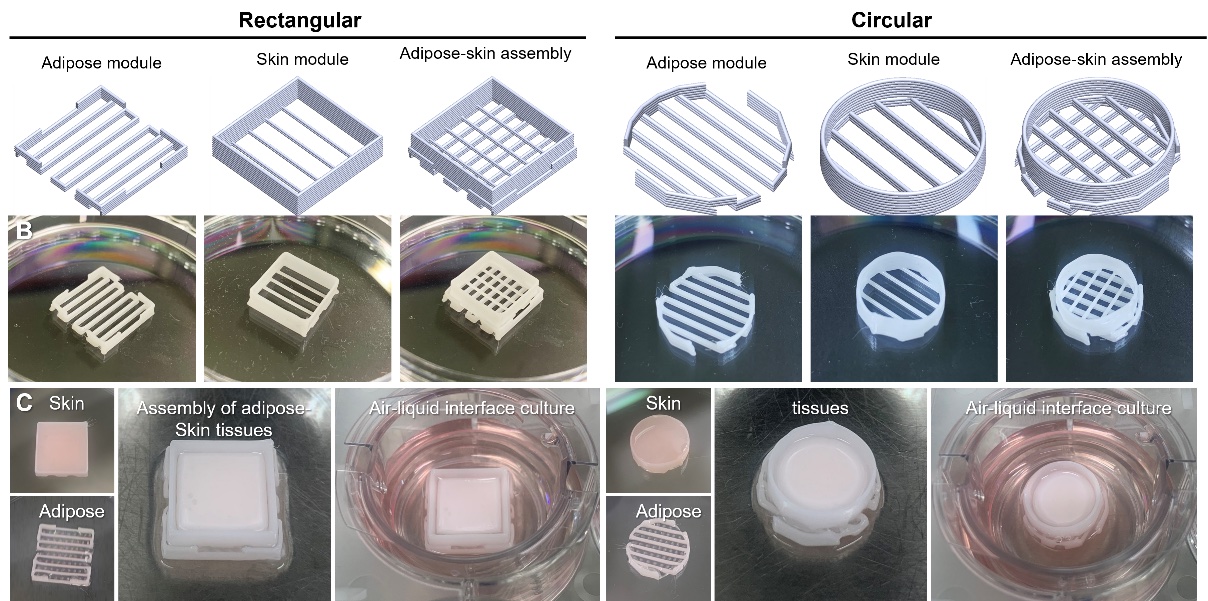
Bioprinting is steadily progressing toward its ambitious goal of creating functional, transplantable tissues and organs. While researchers around the world are focused on printing hearts, cartilage, and other complex body parts, a team from Korea’s Pusan National University has made a crucial advancement in a less flashy—but medically vital—area: 3D printing adipose tissue, commonly known as fat. Their findings, published in Advanced Functional Materials, could mark a major leap forward in wound healing and skin regeneration.

Although printing fat tissue might not sound revolutionary at first glance, adipose tissue plays a critical role in the body. It’s found throughout the body as visceral fat protecting organs, in bones, and under the skin as subcutaneous fat. More importantly, fat is a major component of healthy skin and essential to the body’s natural wound-healing processes. That makes it an ideal target for bioprinting research focused on skin repair—particularly for treating severe burns.

Continue reading… “Bioprinted Fat Brings Burn Treatment Closer to a Breakthrough”

Oak Ridge Breakthrough Brings Quantum Internet Closer with All-in-One Photonic Chip

Quantum information scientists at the U.S. Department of Energy’s Oak Ridge National Laboratory (ORNL) have achieved a major milestone in quantum networking by developing the first device to integrate essential quantum photonic functions onto a single chip. Published in Optica Quantum, the study outlines a pioneering advance in photon-based quantum computing, where qubits—quantum bits—are encoded using particles of light. These photonic qubits are capable of existing in multiple states simultaneously through quantum superposition, enabling them to store and process information far beyond the capabilities of classical bits.

This integrated chip not only generates quantum entanglement—where pairs of qubits share properties even when separated—but also performs encoding and transmission within a compact, scalable platform. Such integration is crucial for the future of quantum networking, which aims to interconnect quantum systems across long distances and ultimately form a secure, high-speed quantum internet.

Continue reading… “Oak Ridge Breakthrough Brings Quantum Internet Closer with All-in-One Photonic Chip”

Torc Robotics Teams Up with NVIDIA and Flex to Power the Future of Autonomous Long-Haul Trucks

Torc Robotics Inc. has announced a major collaboration with NVIDIA Corp. and Flextronics International Ltd. to create a scalable, high-performance physical artificial intelligence (AI) compute system designed specifically for autonomous trucks. The announcement was made during Torc’s debut at NVIDIA’s GTC event in San Jose, California, where the company showcased its latest advancements in autonomous driving technology.

“This was a thrilling week for us,” said CJ King, chief technology officer at Torc, during the event. “Partnering with NVIDIA and Flex is a key milestone as we edge closer to the commercialization of our autonomous trucking solution. GTC gave us the opportunity to showcase our technology and introduce our engineering talent to the broader tech and automotive communities.”

Continue reading… “Torc Robotics Teams Up with NVIDIA and Flex to Power the Future of Autonomous Long-Haul Trucks”
Discover the Hidden Patterns of Tomorrow with Futurist Thomas Frey
Unlock Your Potential, Ignite Your Success.

By delving into the futuring techniques of Futurist Thomas Frey, you’ll embark on an enlightening journey.

Learn More about this exciting program.