Author: admin

Agentic AI: Revolutionizing the Future of Biological Research and Medicine

Understanding biological systems, particularly human biology, presents an immense challenge due to their staggering complexity. These systems are not only highly intricate but also deeply dynamic and interdependent, making them difficult to decode. A prime example is the immune system, which operates across multiple levels of organization, from individual molecules to entire organs, constantly adapting and responding to various internal and external stimuli in real-time. The complexity of such systems has long posed a significant hurdle for traditional research methods.

While traditional research techniques have made remarkable strides, they struggle to handle the vast volume and interconnectedness of biological data. The immune system alone involves millions of cells, proteins, and signaling pathways, each influencing one another in ways that are difficult to track. Making sense of this tangled web of interactions is a monumental task for human researchers, often requiring years of manual data analysis and experimentation.

Continue reading… “Agentic AI: Revolutionizing the Future of Biological Research and Medicine”

Revolutionary ‘Biocooperative’ Material Created from Blood to Repair Bones and Aid Regeneration

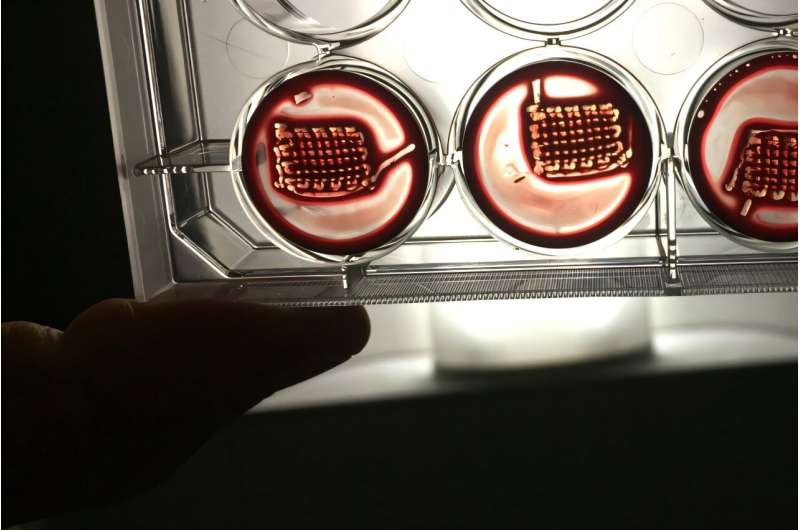
In a groundbreaking development, scientists have created a new “biocooperative” material derived from blood, which has shown great promise in repairing bones and could pave the way for personalized regenerative therapies. Researchers from the University of Nottingham’s Schools of Pharmacy and Chemical Engineering have harnessed the power of peptide molecules to guide key processes in natural tissue healing, creating living materials that enhance tissue regeneration. The research, published in Advanced Materials, marks a significant step forward in regenerative medicine.

Human tissues possess a remarkable ability to regenerate after injuries, especially when the damage is small. This healing process is complex and begins when liquid blood forms a solid regenerative hematoma (RH), a living microenvironment that consists of cells, macromolecules, and growth factors that work together to orchestrate regeneration. However, replicating this process in the laboratory has proven challenging due to its intricate nature.

Continue reading… “Revolutionary ‘Biocooperative’ Material Created from Blood to Repair Bones and Aid Regeneration”

First-Ever Observation of Mini-Tornadoes in Supersolid Quantum Gas: A Breakthrough in Quantum Matter Research

In a groundbreaking experiment, scientists have confirmed the superfluid properties of supersolids by observing the formation of quantized vortices—mini-tornadoes in a quantum gas. This breakthrough offers new insights into the coexistence of solid and fluid characteristics in these exotic states of matter, opening up exciting possibilities for the study of quantum systems and astrophysical phenomena.

The concept of supersolids—materials that simultaneously exhibit the rigidity of solids and the fluidity of superfluids—may seem paradoxical. However, more than 50 years ago, physicists predicted that quantum mechanics could allow such a state. As Francesca Ferlaino, from the University of Innsbruck and the Institute of Quantum Optics and Quantum Information (IQOQI), explains, “A supersolid is both rigid and liquid, much like Schrödinger’s cat, which is both alive and dead.”

Continue reading… “First-Ever Observation of Mini-Tornadoes in Supersolid Quantum Gas: A Breakthrough in Quantum Matter Research”

Unlocking the Secrets of Memory: Non-Brain Cells Can Learn and Remember Too

Traditionally, memory has been understood as a function of the brain, specifically brain cells, which store and process information. However, recent groundbreaking research has revealed that cells outside the brain also play a role in memory, expanding our understanding of how memory works and potentially opening new doors for enhancing learning and treating memory-related disorders.

Nikolay V. Kukushkin, a clinical associate professor of life science at New York University (NYU) and the lead author of the study published in Nature Communications, explains, “Learning and memory are generally associated with brains and brain cells alone, but our study shows that other cells in the body can learn and form memories, too.” This discovery challenges long-held beliefs about memory and introduces new avenues for research in the field.

Continue reading… “Unlocking the Secrets of Memory: Non-Brain Cells Can Learn and Remember Too”

Electro-Biodiesel: A Game-Changing Solution for Decarbonizing Transportation

Vehicles powered by diesel are a significant source of carbon emissions, posing a considerable challenge on the path to decarbonization. In 2022, diesel fuel was responsible for roughly 25% of carbon dioxide emissions from transportation in the U.S. and about 10% of overall energy-related emissions, according to the U.S. Energy Information Administration. To tackle this problem, researchers have developed a groundbreaking method to convert carbon dioxide into a cleaner, more sustainable fuel—electro-biodiesel.

Joshua Yuan, from the Department of Energy, Environmental, and Chemical Engineering at Washington University, and Susie Dai, a professor at the University of Missouri, have pioneered a process that uses electrocatalysis to convert carbon dioxide into electro-biodiesel. This new method is 45 times more efficient and requires 45 times less land compared to traditional soybean-based biodiesel production, offering a more sustainable alternative.

Continue reading… “Electro-Biodiesel: A Game-Changing Solution for Decarbonizing Transportation”

Breakthrough in Noninvasive Brain-Computer Interfaces Paves the Way for Mind-Controlled Devices

Controlling technology with just your mind may have once been the realm of science fiction, but advances in brain-computer interface (BCI) technology have brought it much closer to reality. Researchers at the Johns Hopkins Applied Physics Laboratory (APL) and the Johns Hopkins School of Medicine have made a groundbreaking discovery in noninvasive, high-resolution brain activity recording. In a recent paper published in Scientific Reports, the team revealed that neural tissue deformations could provide a novel signal for brain activity, one that could revolutionize future BCI devices.

Unlike current BCI technologies, which often require invasive surgical implants to record and interpret neural signals, this new approach offers a noninvasive alternative with the potential for broader applications. “Today, the highest impact BCI technologies require invasive surgical implants to record and decode brain activity,” explained Mike Wolmetz, program manager for Human and Machine Intelligence at APL. “Our findings present the foundations for a new approach that could significantly expand the possibilities for nonsurgical BCI.”

Continue reading… “Breakthrough in Noninvasive Brain-Computer Interfaces Paves the Way for Mind-Controlled Devices”

The Costly Fantasy of Sending Earth’s Trash into Space

After Elon Musk’s success in launching thousands of satellites into low-Earth orbit, many might wonder: Why can’t we just send all our trash into space or even throw it straight into the sun? Despite the appeal of removing Earth’s growing waste problem by dumping it elsewhere in the solar system, this idea remains more fantasy than feasible reality, primarily due to the enormous costs and practical limitations involved.

John L. Crassidis, a mechanical and aerospace engineering professor at the State University of New York at Buffalo, explains that sending garbage into space would require vast amounts of thrust and fuel, making it “not cost-feasible at all.” The challenge isn’t just launching the trash—it’s about where to put it. Unlike Earth’s pollution, which can be dumped into oceans or landfills, space is unforgiving. To avoid collisions with existing satellites or risk bringing debris back to Earth, waste would have to be moved at least 22,000 miles away, out of the Earth’s gravitational influence.

Continue reading… “The Costly Fantasy of Sending Earth’s Trash into Space”

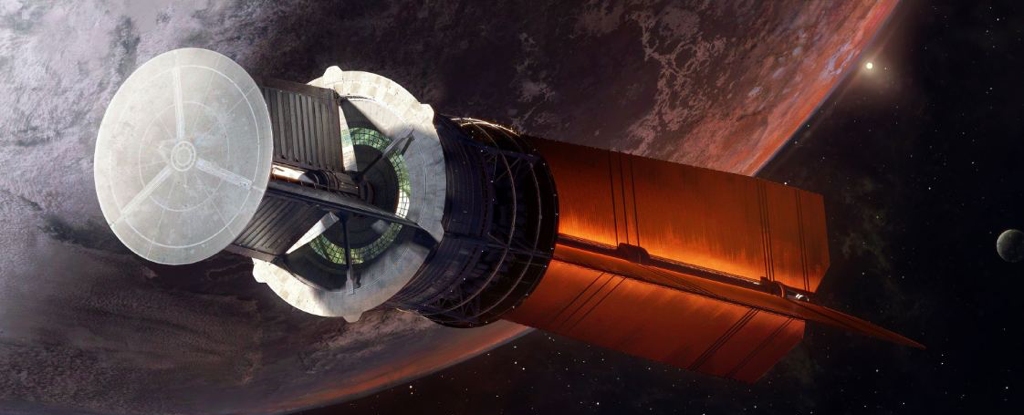
Designing the Future of Interstellar Travel: A Competition for Generation Ships

The dream of exploring the far reaches of space and establishing human civilization on distant planets has captivated our imagination for generations. For centuries, we’ve known that most stars likely have their own planetary systems, and many have argued that humanity should not only explore these worlds but also settle on them. With the advent of the Space Age, this once fantastical notion has transformed into a scientific pursuit. However, the challenges of reaching another star system are immense, and the task of sending crewed missions beyond our solar system remains a distant, albeit tantalizing, goal.

When it comes down to it, there are two primary ways to make crewed interstellar travel a reality: the development of advanced propulsion systems capable of achieving relativistic speeds (a significant fraction of the speed of light), or the creation of spacecraft designed to sustain human life over multiple generations—also known as Generation Ships or Worldships.

Continue reading… “Designing the Future of Interstellar Travel: A Competition for Generation Ships”

The Reinvention of the Automobile: The Impact of Self-Driving Technology

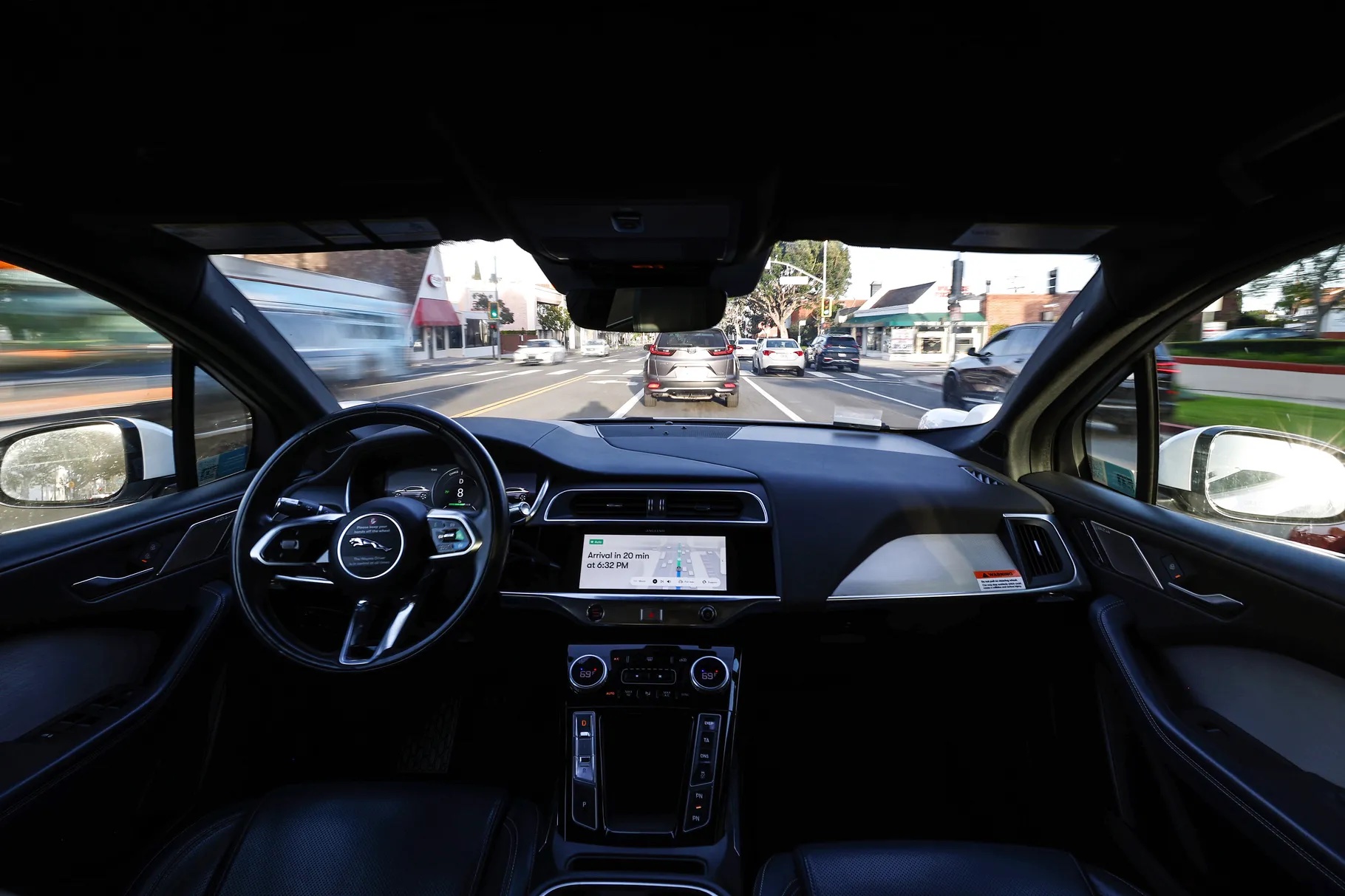
The automobile was one of the most transformative technologies of the 20th century. The invention of the internal combustion engine reshaped agriculture, personal transportation, and supply chains. It made suburban living possible, altered the design of cities, and drove the demand for fossil fuels. It also gave rise to some of the world’s largest and most influential companies. Now, as we stand on the cusp of reinventing this cornerstone technology, it’s clear that the potential of self-driving cars is immense, though not fully understood by the public or the media.

Self-driving technology, if scaled successfully, could reshape society in ways as profound as the original automobile revolution. However, the full magnitude of this transformation is often underreported. The technology itself, the industries it could disrupt, and the broader implications for daily life are often overlooked in discussions of autonomous vehicles.

Continue reading… “The Reinvention of the Automobile: The Impact of Self-Driving Technology”

AI Model at Washington State University Revolutionizes Disease Detection in Tissue Samples

A groundbreaking “deep learning” artificial intelligence (AI) model developed at Washington State University (WSU) is showing promising results in identifying signs of disease in both animal and human tissue. This model, which is faster and often more accurate than human pathologists, could significantly accelerate disease research and improve medical diagnoses, particularly in the early detection of cancers.

Published in Scientific Reports, the study highlights the AI’s ability to analyze pathology images with remarkable speed and precision. For example, the model can detect cancer from biopsy images in just a few minutes—far outpacing the hours of work typically required by human pathologists. According to Michael Skinner, a biologist at WSU and co-author of the study, this AI system has the potential to “revolutionize” medical diagnostics and pathology, providing a crucial tool for both animal and human health analysis.

Continue reading… “AI Model at Washington State University Revolutionizes Disease Detection in Tissue Samples”

OpenAI CEO Sam Altman Predicts Artificial General Intelligence by 2025: Is AGI Within Reach?

As society continues to adjust to the rapid evolution of artificial intelligence, Sam Altman, CEO of OpenAI, has made a bold prediction: Artificial General Intelligence (AGI) could arrive as soon as 2025. This announcement marks a significant shift in the timeline many experts expected, raising questions about how close we really are to achieving a form of AI that can match or even surpass human intelligence in almost all domains.

AGI refers to an AI system that possesses cognitive abilities comparable to, or more advanced than, humans in virtually every intellectual area. For years, it has been the “holy grail” of AI development, with predictions suggesting it was at least a decade or more away. However, Altman now believes that AGI is not a distant dream but a pressing engineering challenge that could be solved sooner than expected.

Continue reading… “OpenAI CEO Sam Altman Predicts Artificial General Intelligence by 2025: Is AGI Within Reach?”

Pentagon Tests AI-Enabled Autonomous Robotic Gun to Tackle Drone Threats

Amid a surge in low-cost, weaponized drones targeting U.S. troops abroad, the Pentagon is ramping up its efforts to protect forces from the growing threat of aerial attacks. While expensive munitions, advanced directed energy weapons, and an expanding fleet of military drones are among the options on the table, a new, simpler solution is gaining attention: reinventing the gun.

At the Technology Readiness Experimentation (T-REX) event in August, the U.S. Department of Defense (DoD) showcased a cutting-edge, AI-powered autonomous gun system designed to combat drone threats with unparalleled precision. Developed by the fledgling defense contractor Allen Control Systems (ACS), the system, dubbed “Bullfrog,” is a robotic gun mounted with a 7.62-mm M240 machine gun, designed to deliver small arms fire with superior accuracy compared to conventional firearms like the M4 carbine or the new XM7 rifle.

Continue reading… “Pentagon Tests AI-Enabled Autonomous Robotic Gun to Tackle Drone Threats”
Discover the Hidden Patterns of Tomorrow with Futurist Thomas Frey
Unlock Your Potential, Ignite Your Success.

By delving into the futuring techniques of Futurist Thomas Frey, you’ll embark on an enlightening journey.

Learn More about this exciting program.