3D-Printed Soft-Jointed Robots Could Revolutionize Swarm Technology for Disaster Relief and Environmental Monitoring

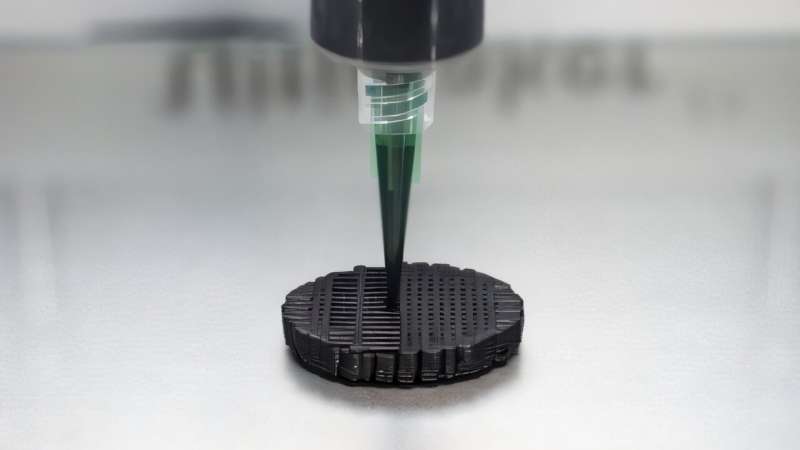
A new generation of small, resilient robots, designed to work in swarms, is being developed to address some of the world’s most challenging problems. From disaster relief operations to environmental monitoring, these robots are built to be fast, adaptable, and highly effective in demanding environments. Led by Markus Nemitz and his team at Tufts University, the research marks a significant leap in swarm robotics, achieving a long-term goal of creating robots that can collaborate seamlessly in complex situations.

Swarm robotics involves large groups of robots working together, sharing information, and adapting their behavior to meet evolving conditions. However, the cost and time required to build these swarms have been significant obstacles. Traditional methods of creating robots in large numbers are resource-intensive, making it difficult to quickly deploy robotic systems in real-world scenarios.

Continue reading… “3D-Printed Soft-Jointed Robots Could Revolutionize Swarm Technology for Disaster Relief and Environmental Monitoring”
NASA Tests 3D-Printed Antenna for Low-Cost, High-Performance Space Communication

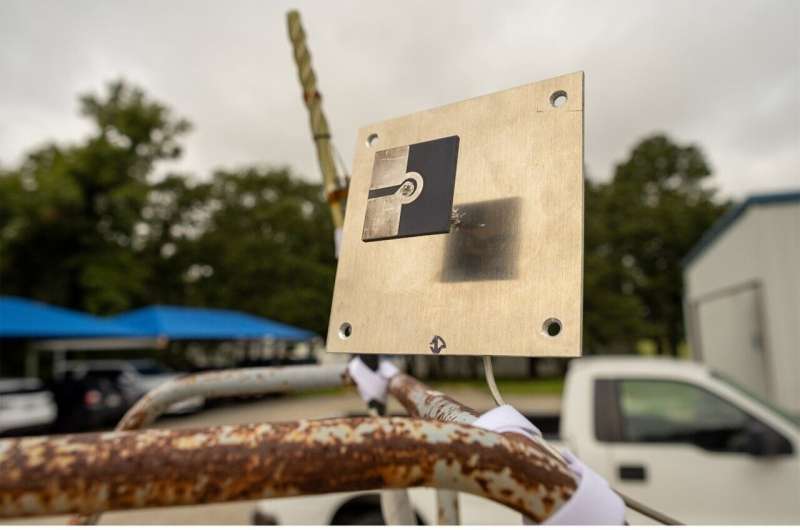
In fall 2024, NASA achieved a significant milestone in space communication technology by testing a 3D-printed antenna designed to deliver science data from space to Earth. This groundbreaking experiment demonstrated the potential of 3D printing as a cost-effective, rapid development solution for the growing number of science and exploration missions. Tested in flight with an atmospheric weather balloon, the antenna could pave the way for more affordable and flexible communication systems in future space missions.

NASA’s Near Space Network engineers led the design and construction of the 3D-printed antenna, which was tested using the network’s relay satellites. The antenna was launched aboard a weather balloon, marking a major step in demonstrating the feasibility of additive manufacturing (3D printing) for space communication applications.

Continue reading… “NASA Tests 3D-Printed Antenna for Low-Cost, High-Performance Space Communication”

A Breakthrough in Bioprinting: Combining Aptamer Technology and 3D Printing to Create Human-Like Tissues

A groundbreaking advancement in bioengineering has brought scientists closer to creating tissues that closely resemble real organs in both structure and function.

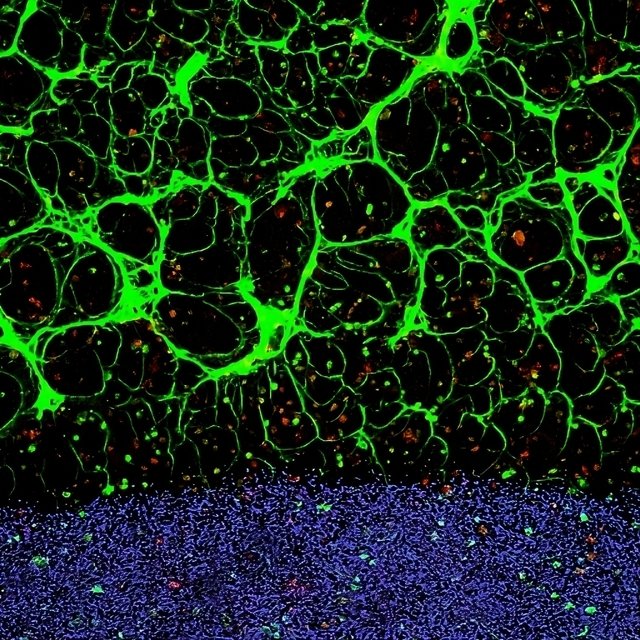
By integrating aptamer-based technology with extrusion-based 3D bioprinting, researchers have developed a system that mimics the biochemical signals of the human body.

Continue reading… “A Breakthrough in Bioprinting: Combining Aptamer Technology and 3D Printing to Create Human-Like Tissues”

Revolutionizing Concrete: New Self-Reinforced Material Paves the Way for 3D Printed, Resilient Infrastructure

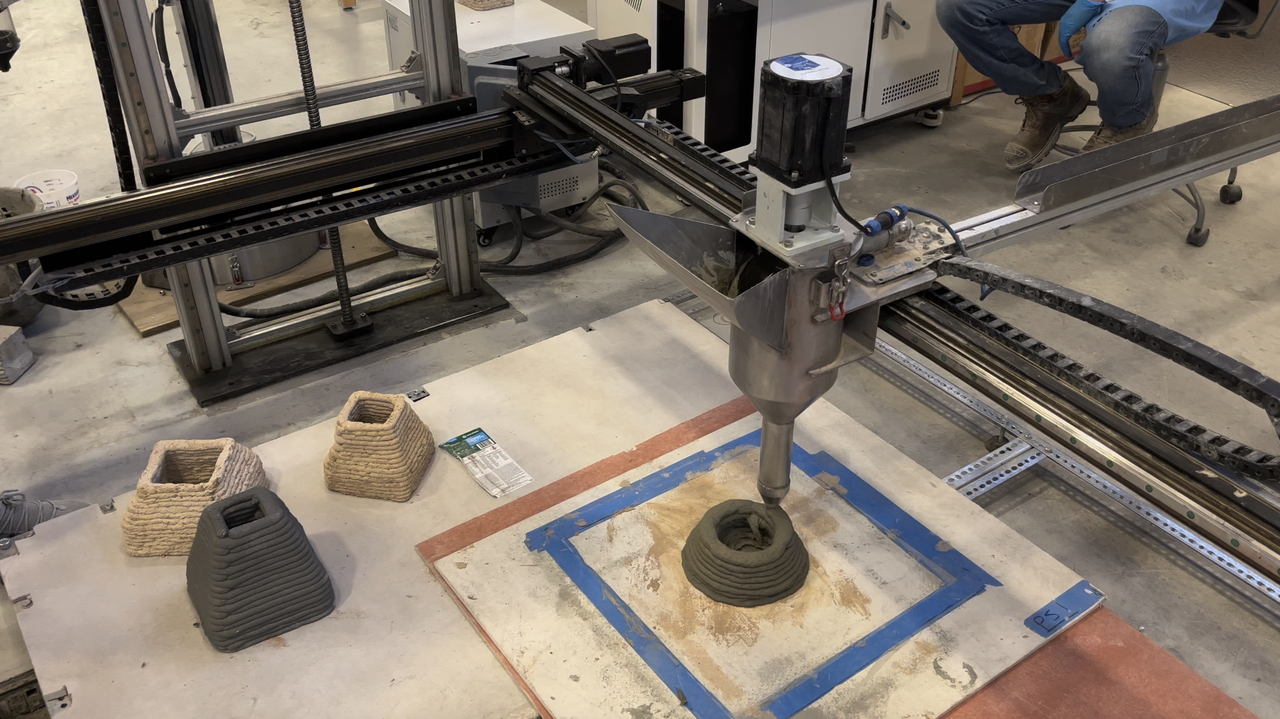
Researchers at the University of New Mexico’s Gerald May Department of Civil, Construction, and Environmental Engineering have developed an innovative material that could transform the future of construction and infrastructure maintenance. The material, a self-reinforced ultra-ductile cementitious substance, was designed specifically for 3D printing concrete structures, offering enhanced resilience and reduced reliance on traditional reinforcement methods. This breakthrough is poised to make concrete structures stronger, more flexible, and more durable—ultimately improving the lifespan and cost-effectiveness of public infrastructure.

Traditional construction processes often involve heavy machinery, steel beams, and manual labor, which can be expensive and dangerous. Additionally, maintaining concrete structures is an ongoing challenge due to the material’s brittleness and tendency to crack under tension. Even reinforced concrete, which is commonly used for buildings, bridges, and sidewalks, requires continuous repairs.

Continue reading… “Revolutionizing Concrete: New Self-Reinforced Material Paves the Way for 3D Printed, Resilient Infrastructure”

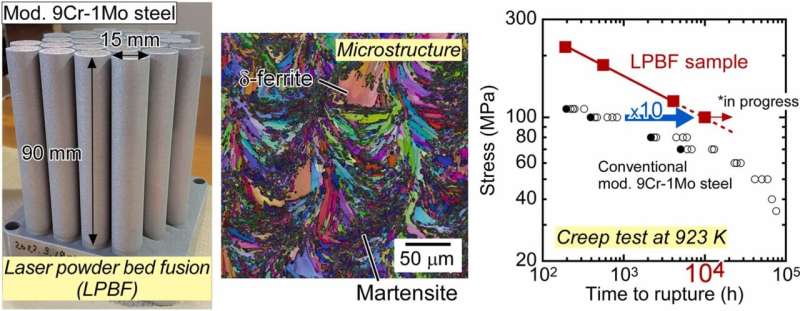
Breakthrough in Heat-Resistant Steel: Laser 3D Printing Extends Creep Life by 10-Fold

A research team from the National Institute for Materials Science (NIMS) has achieved a significant advancement in heat-resistant steel by using laser powder bed fusion (LPBF)—a type of metal 3D printing.

The team fabricated test specimens and subjected them to creep testing for up to 10,000 hours, revealing that LPBF significantly extended the creep life of the material, achieving at least a 10-fold increase compared to steel produced through traditional heat-treatment processes. These groundbreaking findings are detailed in the journal Additive Manufacturing.

LPBF is an additive manufacturing technique where metal powder is deposited and selectively melted layer by layer using a high-powered laser, eventually forming solid 3D metal components. Unlike conventional manufacturing methods, LPBF can create complex shapes with more precision, and it has seen applications across various industries. However, ensuring that LPBF-produced materials can withstand high-temperature, high-pressure environments over extended periods is crucial, especially for safety-critical applications like thermal power plants.

Continue reading… “Breakthrough in Heat-Resistant Steel: Laser 3D Printing Extends Creep Life by 10-Fold”

Feeding the Future: Empa’s 3D-Printed Biodegradable Fungal Battery Powers Agriculture and Research

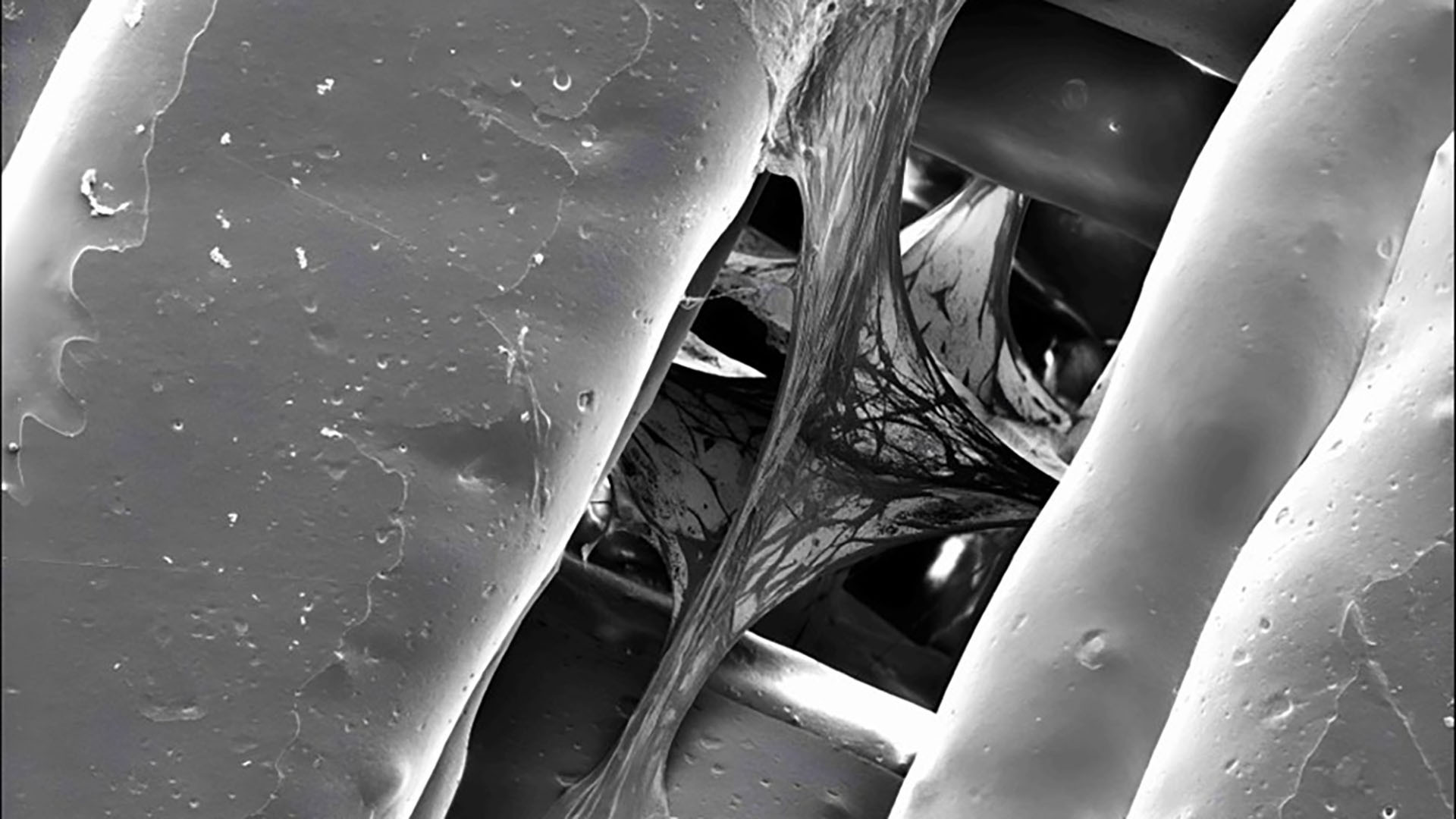
In an exciting breakthrough, researchers at Empa have developed a 3D-printed, biodegradable fungal battery that generates electricity in a completely unique way—by “feeding” on nutrients rather than being charged. This innovative technology has the potential to power sensors for agricultural applications or research in remote areas. Once its job is done, the battery digests itself from the inside, making it completely non-toxic and environmentally friendly. The study, which details this novel development, was published in ACS Sustainable Chemistry & Engineering.

Fungi, a diverse group of organisms more closely related to animals than plants, are already known for their wide range of uses—from providing food and medicine to producing pathogens. Now, Empa researchers have unlocked a new capability: fungi that generate electricity. This achievement is the result of a three-year research project led by scientists at Empa’s Cellulose and Wood Materials Laboratory.

Continue reading… “Feeding the Future: Empa’s 3D-Printed Biodegradable Fungal Battery Powers Agriculture and Research”

Revolutionary 3D Printing Technique Opens New Doors for Bone Tissue Research and Drug Development

In a groundbreaking development, researchers have harnessed the power of low-cost FDM 3D printing technology to create scaffolds that closely mimic the mineral properties of natural bone tissue. By combining poly(lactic-co-glycolic acid) (PLGA) with hydroxyapatite (HA), they’ve created a base structure that offers a realistic environment for bone research. This innovative method significantly lowers the barrier to entry for labs, as it eliminates the need for expensive bioprinters traditionally required for such work.

While high-end bioprinters can cost hundreds of thousands of dollars, this new technique shows that even inexpensive desktop 3D printers can be used to produce functional scaffolds that are suitable for complex biomedical research. This democratization of technology could allow a wider range of labs, especially those with limited funding, to engage in advanced bone tissue research.

Continue reading… “Revolutionary 3D Printing Technique Opens New Doors for Bone Tissue Research and Drug Development”

Innovative 3D-Printed Furniture Shines at Designblok 2024, Winning Best Designer Presentation

At the 2024 Designblok exhibition, four forward-thinking designers—winners of the 2023 Designblok Diploma Selection—collaborated on a groundbreaking showcase that explored the practical applications of 3D-printed wood materials in furniture design. Their innovative pieces earned them the prestigious 2024 Designblok Award for Best Designer Presentation. Partnering with Additive Tectonics, the designers demonstrated how 3D printing can be utilized to create functional, sustainable, and aesthetically pleasing furniture while improving production efficiency.

Friedrich Gerlach’s Lumo Sofa is a standout example of how 3D printing can be leveraged for both sustainability and design innovation. The sofa features a stackable structure that maximizes the printer bed space, reducing material waste and improving production efficiency. Its seat is made from 100% wool fabric and filling, making it fully biodegradable, while the simple yet elegant design ensures practicality and comfort. This modular design emphasizes the potential of 3D printing to produce furniture that not only meets modern aesthetic standards but also aligns with sustainable principles.

Continue reading… “Innovative 3D-Printed Furniture Shines at Designblok 2024, Winning Best Designer Presentation”

New 3D-Printed Hollow Suppository for CBD Delivery Shows Promise in Epilepsy Treatment

Researchers have developed an innovative 3D-printed hollow suppository designed to deliver cannabidiol (CBD) for the treatment of epilepsy. This cutting-edge device, which combines 3D printing and molding techniques, features a unique design consisting of an outer shell filled with CBD and an inner spring structure. The development aims to overcome limitations associated with traditional oral CBD medications, particularly the significant first-pass effect that reduces bioavailability when taken orally.

The hollow structure of the suppository allows it to remain in the body while adapting to normal bodily functions, making it especially beneficial for children and patients who may experience frequent bowel movements. The design ensures that the medication stays in place, providing more reliable and consistent delivery of CBD.

Continue reading… “New 3D-Printed Hollow Suppository for CBD Delivery Shows Promise in Epilepsy Treatment”

Breakthrough in Steel-Aluminum Alloy via 3D Printing: Paving the Way for Lightweight Automotive Parts

Researchers at Tohoku University’s Institute for Materials Research and New Industry Creation Hatchery Center have made a groundbreaking advancement in multi-material 3D printing, creating a durable steel-aluminum alloy that could revolutionize the production of lightweight and robust automobile components.

Metal 3D printing involves building objects layer by layer, where metal powders are fused using heat from a laser. This technique provides remarkable precision, enabling the production of intricate, highly customizable designs with minimal material waste compared to traditional manufacturing. One of the standout benefits of 3D printing is its ability to produce “multi-material structures.” These components combine different metals to optimize performance—such as pairing aluminum with steel to create lightweight parts that retain strength. This feature has made advanced 3D printing a highly promising technology for automotive manufacturing and other industries.

Continue reading… “Breakthrough in Steel-Aluminum Alloy via 3D Printing: Paving the Way for Lightweight Automotive Parts”

MedCAD Advances Facial Reconstruction with 3D-Printed Titanium Plates

MedCAD, a leading US-based medical technology company, has unveiled a significant advancement in facial reconstruction technology with the introduction of 3D-printed titanium AccuPlate reconstruction plates for mandible and midface procedures.

The innovative AccuPlate 3DTi series represents a leap forward in surgical implant technology, offering enhanced customization options while significantly reducing delivery times. These plates are designed to address a broad spectrum of surgical requirements, from routine procedures to complex reconstructions.

Continue reading… “MedCAD Advances Facial Reconstruction with 3D-Printed Titanium Plates”

Virginia Housing Invests in 3D Printing Technology to Address Affordable Housing Shortage

Virginia Housing is making a bold move to tackle the state’s housing challenges by investing $1.1 million in advanced 3D printing technology. The non-profit has awarded funds to the Virginia Center for Housing Research (VCHR) at Virginia Tech to acquire a mobile 3D construction printer with an ambitious goal: building ten affordable homes across Virginia by 2026.

Innovative Technology at the Forefront

The project centers on the Tvasta SIRA RC20, a cutting-edge robotic arm-based 3D concrete printer developed by an Indian engineering startup. Unlike traditional large gantry systems, this printer stands out for its unique characteristics:

  • Compact and mobile design, weighing four tons and standing nearly 11 feet tall
  • Precision large-scale concrete structure production
  • Eco-friendly approach with minimal waste
  • Capability to use low-carbon and recycled concrete mixes
Continue reading… “Virginia Housing Invests in 3D Printing Technology to Address Affordable Housing Shortage”
Discover the Hidden Patterns of Tomorrow with Futurist Thomas Frey
Unlock Your Potential, Ignite Your Success.

By delving into the futuring techniques of Futurist Thomas Frey, you’ll embark on an enlightening journey.

Learn More about this exciting program.