Swift Medical Launches AI Digital Wound App to Support Clinical Trials

by Jasmine Pennic 

What You Should Know:

Global digital wound care provider Swift Medical, today announced the launch of a new application specifically designed to help pharma and med device researchers conduct decentralized clinical trials. Since patients are now doing more trials at home, study coordinators have had trouble tracking skin side effects remotely — or trusting patients to conduct adequate analysis and recording on themselves.

– Swift Medical’s first product, Swift Skin and Wound, provides an AI-powered, digital wound platform that allows any patient or clinician to easily capture high-precision images of skin or wound conditions with any smartphone camera. Swift Skin and Wound autonomously determines clinical characteristics, tracks disease progression, enables remote communication, and securely shares patient data in real-time.

To date, Swift Medical’s technology is used by more than 4,000 healthcare organizations internationally, including health systems and providers of all kinds, academic institutions, research organizations and pharmaceutical companies.

Continue reading… “Swift Medical Launches AI Digital Wound App to Support Clinical Trials”
RUSSIA IS ON ITS WAY TO RULE SPACE WITH ITS NEW AI POWERED SPACE STATION

THE AI-POWERED SPACE STATION IS ON THE WAY.

by Satavisa Pati

At present, AI is being used in almost every industry on earth and now it’s time for it to go to space. Russia’s new space station will operate autonomously to a large extent, using artificial intelligence as well as include extravehicular robots. The system aims to demonstrate the intelligence of the highest level. The Roscosmos (a state corporation of the Russian federation) chief has added that robotics should be used aboard Russia’s new orbital station. The new orbital outpost in conjunction with the Zeus nuclear-powered space tug can serve as a prototype for future systems of lengthy inter-planetary flights, he said.

The agency aims to develop the new space station with a higher efficiency factor than that of the current International Space Station (ISS). In April, Russian Deputy Prime Minister Yuri Borisov announced that the condition of the ISS left much to be desired and Russia might focus on creating its own orbital outpost. The country wants to make a station whose efficiency factor will be several orders of magnitude higher than that of the ISS.

Continue reading… “RUSSIA IS ON ITS WAY TO RULE SPACE WITH ITS NEW AI POWERED SPACE STATION”

AI IN REPRODUCTIVE MEDICINE: REVOLUTIONIZING ASSISTED REPRODUCTIVE TECHNOLOGY

by Aratrika Dutta

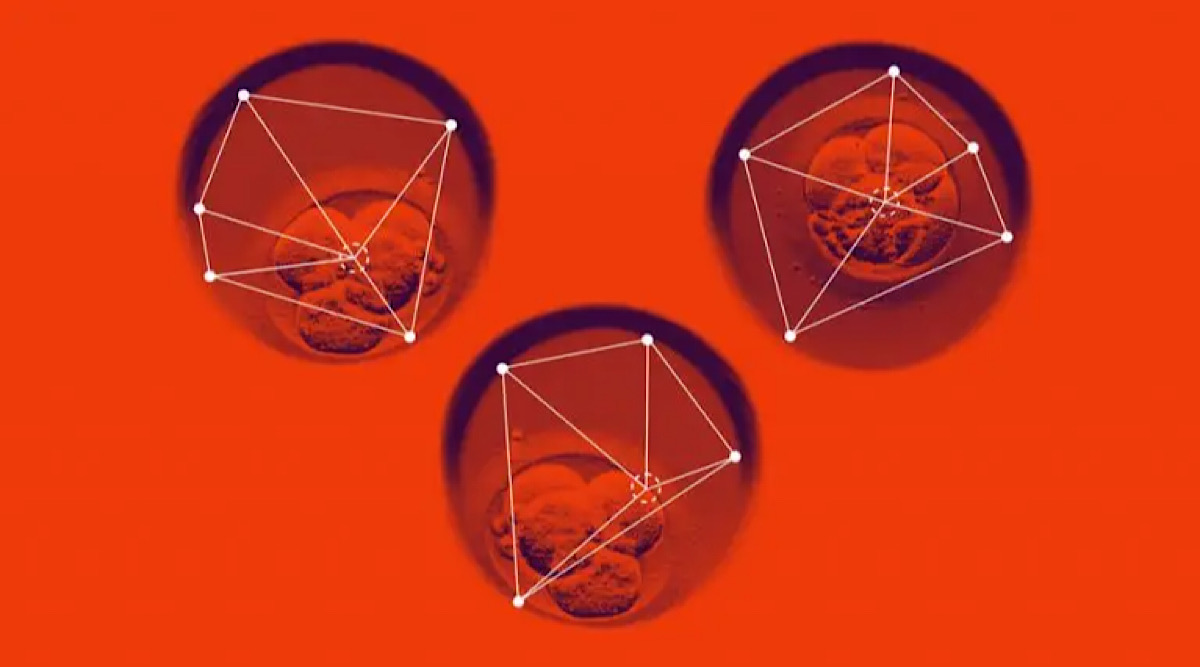
There is a rapid growth in technology, especially artificial intelligence over the past few years. AI has gone through various stages from the stage of experimental to the stage of implementation in various fields and medicine is not an exception. Can the integration of AI in reproductive medicine revolutionize assisted reproductive technology?

AI and ML are rapidly changing the practice of medicine across various disciplines. AI is proving to be increasingly applicable to healthcare. Major instances have already been made in disciplines where pattern recognition and classification are integral to the practice such as dermatology, radiology, and pathology.  The field of reproduction science has been slow to track the opportunities in AI. Despite this, multiple artificial intelligence solutions have been used to enhance the performance of assisted reproductive technology (ART).

Continue reading… “AI IN REPRODUCTIVE MEDICINE: REVOLUTIONIZING ASSISTED REPRODUCTIVE TECHNOLOGY”

Yext Launches AI-Powered Doctor Finder Solution To Make Searching For Healthcare Providers A Seamless Experience

The solution enables healthcare organizations to match patients to the right provider by understanding the meaning behind what they’re searching for online.

Yext, Inc.  the AI Search Company, announced the availability of “Find-a-Doc,” an AI-powered search solution for healthcare organizations to improve the pre-appointment patient experience. Built on Answers, Yext’s revolutionary search platform, Find-a-Doc enables patients to quickly and easily identify the right provider for their needs on a healthcare organization’s website.

When a patient searches for a specific doctor specialty, insurance type, and other criteria, Find-a-Doc will rely on advanced natural language processing (NLP) to actually understand the patient’s query and return the doctors that match their criteria — complete with headshots, contact information, and helpful prompts like “make an appointment” and “get directions.” Unlike traditional doctor finder tools, Yext’s solution does not limit a patient to the criteria they can input — rather, it allows for freedom and flexibility so patients can search for exactly what they need in natural language.

Continue reading… “Yext Launches AI-Powered Doctor Finder Solution To Make Searching For Healthcare Providers A Seamless Experience”

Researchers Pioneer Optical Technology That Can Slash the Energy Required by AI

Aug. 30, 2021 — Optical technology is used for transmitting, storing, displaying and identifying data. It provides the processing speed that data centers need by offering efficient means for communication and analysis operations. The technology comes at a time when the massive scale of today’s datasets is straining the capacity of digital and electronic computers to compile them and extract key information. The research community has a strong interest in optical-based information processing for performing the high-speed calculations necessary in machine learning tasks.

“Light transmits information without any physical interference from cables. That’s the core advantage of optical technology when it comes to transferring data,” says Demetri Psaltis, head of EPFL’s Optics Laboratory within the School of Engineering. “To take artificial intelligence as an example, many AI programs require accelerators to carry out rapid calculations using minimal power. For now, while optical technology could theoretically meet that need, it has not yet reached the applied stage – despite a half-century of research. That’s because optical computing and decision-making do not yet save either time or energy.”

Continue reading… “Researchers Pioneer Optical Technology That Can Slash the Energy Required by AI”

Google’s New AI Photo Upscaling Tech is Jaw-Dropping

Photo enhancing in movies and TV shows is often ridiculed for being unbelievable, but research in real photo enhancing is actually creeping more and more into the realm of science fiction. Just take a look at Google’s latest AI photo upscaling tech.

In a post titled “High Fidelity Image Generation Using Diffusion Models” published on the Google AI Blog (and spotted by DPR), Google researchers in the company’s Brain Team share about new breakthroughs they’ve made in image super-resolution.

In image super-resolution, a machine learning model is trained to turn a low-res photo into a detailed high-res photo, and potential applications of this range from restoring old family photos to improving medical imaging.

Continue reading… “Google’s New AI Photo Upscaling Tech is Jaw-Dropping”

New Biocompatible AI May Aid Medicine and Healthcare

European scientists apply optoelectronics to create an implantable AI platform.

By Kaja Perina

A new study published in Science Advances by European scientists working in optoelectronics have created a biocompatible artificial intelligence (AI) platform that may enable a novel way for the early detection, monitoring, and treatment of diseases and medical conditions.

“We prove the usefulness of the organic networks on a diverse set of computational tasks such as a flower classification using the Iris dataset (accuracy of 96%), time-series prediction (97%), and biofluids monitoring,” wrote the study authors led by the Technische Universität Dresden in collaboration with the Dresden Integrated Center for Applied Physics and Photonic Materials (IAPP) in Germany, the National University of Kyiv-Mohyla Academy in the Ukraine, and Alysophil SAS in France.

Optoelectronics is the field of study and application of the quantum mechanical effects of light used in electronic devices such as pharmaceutics, batteries, cosmetics, lasers, optical fiber, solar cells (photovoltaics), photodiodes, LED traffic lights, consumer electronics, and nanoscale devices.

“Early detection of malign patterns in patients’ biological signals can save millions of lives,” wrote the researchers.

Continue reading… “New Biocompatible AI May Aid Medicine and Healthcare”

Samsung Introduces Its Own AI-Designed Chip

By Asif Razzaq

Samsung is making cutting edge chips by using artificial intelligence. The South Korean company has partnered with Synopsys, a leading chip design software firm, to create the new AI-powered features in their latest line of computer processor designs.

Synopsys has a new tool that can help companies design and create chips with AI. The DSO.ai software can optimise the chip designs, which will accelerate semiconductor development to unlock novel chip designs, according to industry watchers. With years of cutting-edge semiconductor designers available for training algorithms to emulate human intelligence, this could be Synopsis’s next breakthrough technology!

Continue reading… “Samsung Introduces Its Own AI-Designed Chip”

OpenAI can translate English into code with its new machine learning software Codex

‘We see this as a tool to multiply programmers’

By James Vincent

AI research company OpenAI is releasing a new machine learning tool that translates the English language into code. The software is called Codex and is designed to speed up the work of professional programmers, as well as help amateurs get started coding. 

In demos of Codex, OpenAI shows how the software can be used to build simple websites and rudimentary games using natural language, as well as translate between different programming languages and tackle data science queries. Users type English commands into the software, like “create a webpage with a menu on the side and title at the top,” and Codex translates this into code. The software is far from infallible and takes some patience to operate, but could prove invaluable in making coding faster and more accessible. 

“IT TAKES PEOPLE WHO ARE ALREADY PROGRAMMERS AND REMOVES THE DRUDGE WORK.” 

Continue reading… “OpenAI can translate English into code with its new machine learning software Codex”

Artificial Intelligence Can Now Create Canvas Artworks

Thanks to the new art-meets-tech service, Artifly.

In 2018, Christie’s shocked the world by selling the world’s first fully AI-produced artwork. The work was entitled Portrait of Edmond de Belamy 2018 and sold for $432,500 USD, as opposed to the $10,000 USD it was expected to go for. The breakthrough was led by Hugo Caselles-Dupré, Pierre Fautrel, and Gauthier Vernier — who make up the collective Obvious Art. 

Ben Kovalis, Eyal Fisher and Guy Haimovitz are three of the many people who took inspiration from the work Obvious had created. Upon creating Art AI Gallery in 2019, the group have just launched a new tech-meets-art venture, called Artifly. The name derives from “Art on the Fly” and allows users to choose a selection of artwork that fit their style, then an advanced algorithm will muster up a personal artwork within minutes that is available for purchase. Unlike some of the exorbitant prices fetched for NFTs, Artifly’s custom artwork is fairly inexpensive, with rates as low as $29 USD for an unframed canvas.

Continue reading… “Artificial Intelligence Can Now Create Canvas Artworks”

CUPID’S ALGORITHM: ARTIFICIAL INTELLIGENCE IS BEING USED FOR MATCHMAKING

Artificial intelligence has found yet another valuable use case, finding dates! 

by Apoorva Komarraju

Artificial Intelligence is an astounding technology that is transforming many aspects of our lives, even dating! Over the last decade, online dating has become an everyday reality. Human lives are only becoming hectic and people are seeking online options to find companionship. Hence, dating app development has picked up the pace. Artificial intelligence and machine learning are making the process of finding the right match easier. Users often complain about the mismatch of profiles, but with these technologies, the searching process becomes more personalized and accurate. 

Continue reading… “CUPID’S ALGORITHM: ARTIFICIAL INTELLIGENCE IS BEING USED FOR MATCHMAKING”
Discover the Hidden Patterns of Tomorrow with Futurist Thomas Frey
Unlock Your Potential, Ignite Your Success.

By delving into the futuring techniques of Futurist Thomas Frey, you’ll embark on an enlightening journey.

Learn More about this exciting program.