The Road to Affordable EVs: Lithium-Ion Battery Prices Set to Drop by 2026

The future of electric vehicle (EV) growth hinges on making them more affordable to buy and maintain. While environmental concerns are important, most Americans are unlikely to abandon their gas-powered cars solely for climate reasons. The key to widespread EV adoption lies in reducing battery costs, and recent research from Goldman Sachs offers promising news in this regard.

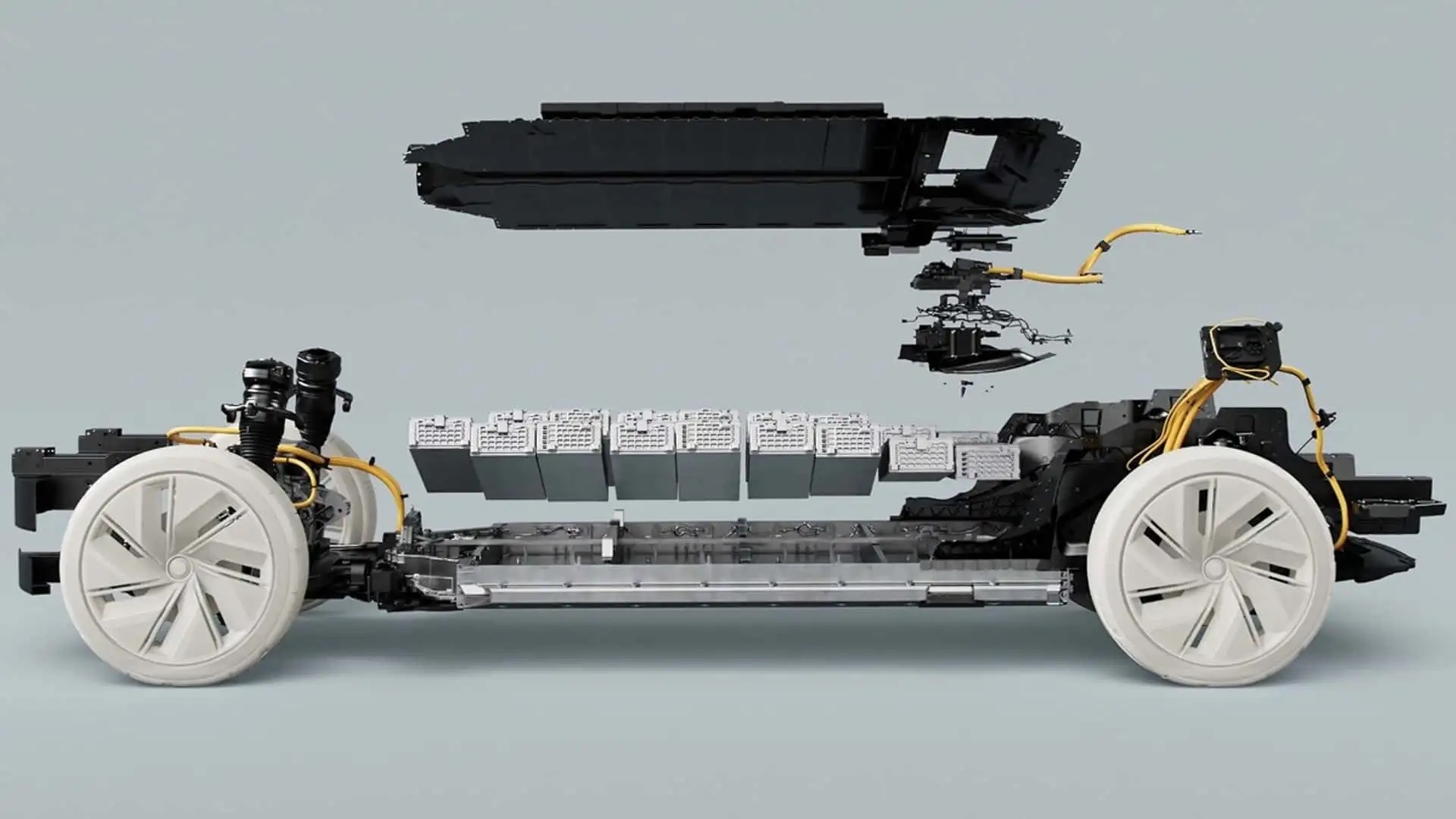
According to the report, lithium-ion battery prices are expected to continue declining significantly in the coming years. By 2026, global average battery pack prices could fall to $82 per kilowatt-hour (kWh)—a sharp drop from the 2023 average of $149/kWh. This 26% price reduction from current levels is part of a broader trend, as battery prices were as high as $780/kWh just a decade ago, in 2013.

Continue reading… “The Road to Affordable EVs: Lithium-Ion Battery Prices Set to Drop by 2026”

Asahi Kasei Unveils Flame-Retardant Fabric to Boost EV Battery Safety

Japanese technology company Asahi Kasei has introduced a groundbreaking flame-retardant nonwoven fabric called Lastan, designed to enhance the safety of electric vehicle (EV) batteries. This innovative material offers a superior alternative to traditional thermal runaway protection materials, which are crucial for preventing battery fires and explosions.

Lastan can withstand flames up to 1,300℃, while keeping its reverse side temperature below 400℃, providing critical protection in high-heat environments. It boasts a limiting oxygen index (LOI) of 50+ and has earned a UL94 5VA rating, showcasing exceptional fire resistance without compromising structural integrity.

Continue reading… “Asahi Kasei Unveils Flame-Retardant Fabric to Boost EV Battery Safety”

Predicting and Preventing Battery Overheating: New Research Tackles EV Safety Concerns

A major safety concern for electric vehicles (EVs) is managing battery temperature, as overheating can lead to hazardous situations, including fire. A University of Arizona research team, led by doctoral student Goswami, has developed a new method to predict and prevent these temperature spikes in lithium-ion batteries—the primary power source for most EVs. Supported by a $599,808 grant from the Department of Defense’s Defense Established Program to Stimulate Competitive Research, the team is pioneering a framework that combines multiphysics and machine learning models to detect and anticipate overheating, also known as thermal runaway.

The goal is to integrate this predictive system into electric vehicles’ battery management systems, offering drivers an additional layer of protection against battery malfunctions. “We need to move to green energy, but there are safety concerns associated with lithium-ion batteries,” said Goswami.

Continue reading… “Predicting and Preventing Battery Overheating: New Research Tackles EV Safety Concerns”

MIT Develops Tiny Zinc-Air Batteries to Power Microscopic Devices

Researchers at the Massachusetts Institute of Technology (MIT) have developed groundbreaking zinc (Zn)-based micro-batteries that deliver impressive energy output in volumes as small as two picoliters each. These microscopic power sources are poised to revolutionize the functionality of tiny sensors and robotic components.

Remarkably, a single 2-inch silicon wafer can produce up to 10,000 of these micro-batteries, each with the capacity to power minuscule devices. The batteries harness oxygen from their surroundings to trigger a zinc oxidation reaction, achieving an energy density between 760 and 1,070 watt-hours per liter. Despite their minuscule size—less than 100 micrometers wide and just 2 micrometers thick—these batteries pack a powerful punch.

Continue reading… “MIT Develops Tiny Zinc-Air Batteries to Power Microscopic Devices”

Pioneering Anode-Free Sodium Solid-State Batteries: A Leap Toward Sustainable Energy

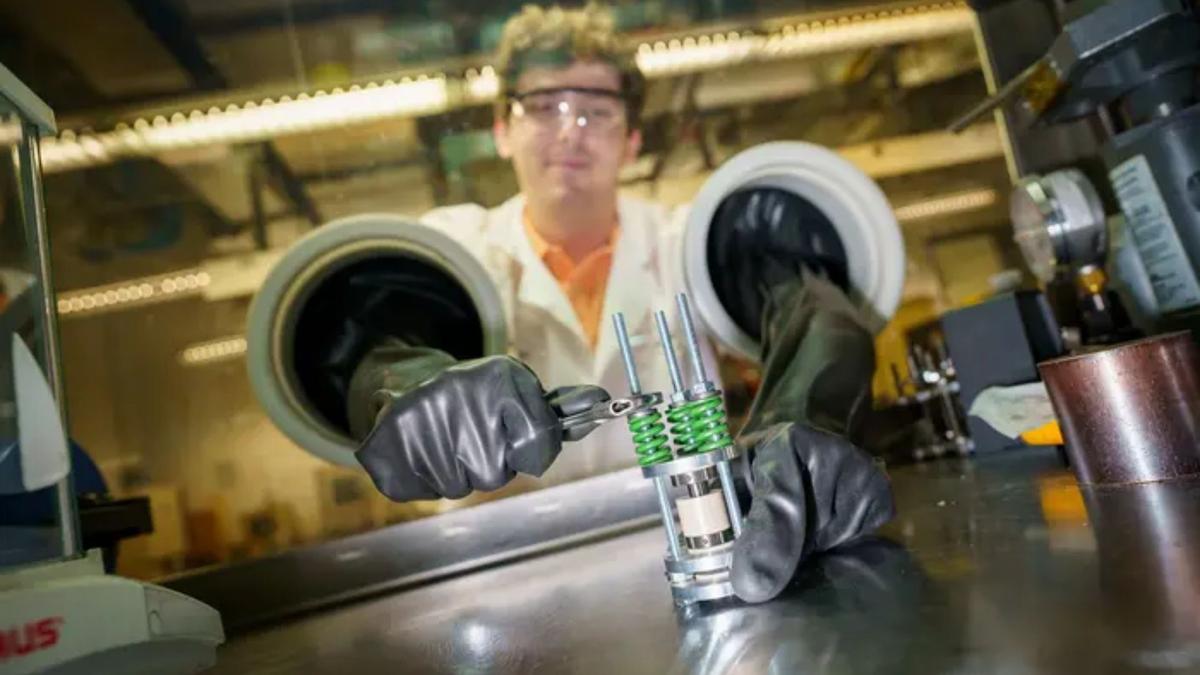
Researchers at the Laboratory for Energy Storage and Conversion (LESC), led by Professor Y. Shirley Meng, have achieved a significant breakthrough in energy storage technology by developing the first anode-free sodium solid-state battery. This innovation, a collaboration between the University of Chicago’s Pritzker School of Molecular Engineering and the University of California, San Diego’s Aiiso Yufeng Li Family Department of Chemical and Nano Engineering, marks a major step forward in creating cost-effective, fast-charging, high-capacity batteries for electric vehicles and grid storage.

Grayson Deysher, a PhD candidate at UC San Diego and the lead author of a recent paper published in Nature Energy, emphasized the novelty of this achievement. “While there have been previous advancements in sodium, solid-state, and anode-free batteries, no one has successfully combined these three concepts until now,” Deysher stated.

Continue reading… “Pioneering Anode-Free Sodium Solid-State Batteries: A Leap Toward Sustainable Energy”

Researchers Develop Soft, Stretchable ‘Jelly Batteries’ for Wearable Devices and Biomedical Implants

Researchers at the University of Cambridge have developed innovative soft, stretchable “jelly batteries” with potential applications in wearable devices, soft robotics, and even brain implants for drug delivery or treating conditions like epilepsy. Inspired by electric eels, these jelly-like materials feature a layered structure, similar to sticky Lego, enabling them to deliver an electric current.

The jelly batteries, reported in the journal Science Advances, are made from hydrogels: 3D networks of polymers containing over 60% water. These polymers are held together by reversible interactions that control the jelly’s mechanical properties. The ability to precisely control these properties and mimic human tissue characteristics makes hydrogels ideal for soft robotics and bioelectronics. However, achieving both conductivity and stretchability in such materials has been challenging.

Continue reading… “Researchers Develop Soft, Stretchable ‘Jelly Batteries’ for Wearable Devices and Biomedical Implants”

Transforming Solar Panel Waste into High-Performance Lithium-Ion Batteries

Researchers at the Qingdao Institute of Bioenergy and Bioprocess Technology (QIBEBT) have developed a groundbreaking method to recycle silicon from solar panels and repurpose it to create superior-performance lithium-ion batteries. This innovative approach is not only sustainable and cost-effective but also sets a new precedent for reusing solar panel components at the end of their life cycle.

The recent surge in solar panel installations marks a significant shift away from fossil fuels, contributing to a cleaner environment. However, it also foreshadows a looming waste problem, as these panels will reach the end of their operational life in about three decades, generating a massive amount of waste. Consequently, researchers worldwide are exploring viable roles for individual solar panel components. While metals like copper and silver will likely remain in high demand, repurposing abundant silicon has been a challenge—until now.

Continue reading… “Transforming Solar Panel Waste into High-Performance Lithium-Ion Batteries”

World’s First Anode-Free Sodium Solid-State Battery Revolutionizes Energy Storage

A team of researchers has combined the best battery technologies to create the world’s first anode-free sodium solid-state battery. This innovative design uses a stable solid electrolyte and pressure to form dense sodium metal. An aluminum current collector ensures efficient, repeatable sodium plating and stripping at high capacities and speeds.

This new type of battery will be less expensive and less harmful to the environment since the anode is removed, and sodium, which is cheap and plentiful, is used instead of lithium. “Although there have been previous sodium, solid-state, and anode-free batteries, no one has been able to successfully combine these three ideas until now,” said Grayson Deysher, a Ph.D. candidate at UC San Diego and first author of the study.

Continue reading… “World’s First Anode-Free Sodium Solid-State Battery Revolutionizes Energy Storage”

Study Reveals Electric Vehicle Battery Replacements Are Rare

A recent study from Recurrent has revealed that electric vehicle (EV) battery replacements are generally uncommon. Excluding high-profile recalls such as GM’s issues with the Chevy Bolt EV, only 2.5% of electric vehicle battery packs in model years 2011 to 2024 have been replaced thus far.

Critics of electric vehicles often cite battery replacements as a major drawback, arguing that EVs are an inferior alternative to combustion-powered cars. This criticism stems from the high cost of EV batteries, which can amount to as much as 50% of a car’s value, potentially causing significant headaches for customers. However, Recurrent’s findings offer a different perspective: “Across all years and models, outside of big recalls, only 2.5% have been replaced. This increase from last year is entirely due to older cars. For cars older than 2015, replacement rates are 13%, but under 1% for cars from 2016 and newer.”

Continue reading… “Study Reveals Electric Vehicle Battery Replacements Are Rare”

Breakthrough in Sodium-Based Batteries Could Revolutionize Electric Vehicles

Korean researchers may have solved a significant issue that makes some consumers hesitant to transition to electric vehicles (EVs). A team from the Korea Advanced Institute of Science and Technology (KAIST) has developed a sodium-based battery capable of charging in mere seconds, as reported by Techopedia.

This groundbreaking technology could significantly boost the EV industry, making the adoption of electric vehicles more appealing and potentially benefiting both humanity and the planet. Although daily charging isn’t always necessary, lengthy charging times have been a deterrent for many consumers, according to studies by the International Energy Agency and other sources. Extended charging sessions also pose safety concerns, particularly for women. The U.S. Department of Energy noted that from 2020 to 2023, the average time spent at a paid fast-charging station was 42 minutes, often including time spent in nearby stores.

Continue reading… “Breakthrough in Sodium-Based Batteries Could Revolutionize Electric Vehicles”

24M Unveils Eternalyte™: A Game-Changing Electrolyte for High-Performance Lithium-Metal Batteries

In the dynamic realm of battery technology, 24M, a company born from the innovative mind of MIT professor Yet-Ming Chiang, continues to push the boundaries. Known for transforming disruptive technology into commercially viable solutions, 24M has recently introduced Eternalyte™, a groundbreaking electrolyte designed specifically for lithium-metal batteries.

The company, dedicated to addressing the world’s need for affordable energy storage, boasts a unique battery manufacturing and product design technology set enabled by the 24M SemiSolidTM and Unit Cell manufacturing platform. This innovation aims to overcome longstanding challenges associated with energy storage products — reducing costs while enhancing performance, safety, and recyclability.

Continue reading… “24M Unveils Eternalyte™: A Game-Changing Electrolyte for High-Performance Lithium-Metal Batteries”

Revolutionizing EV Batteries: Sila’s Breakthrough Silicon Anode Technology

Panasonic, a major supplier to Tesla and responsible for about 10 percent of global EV batteries, has partnered with Sila, a groundbreaking tech company. Sila recently signed a supply agreement with Mercedes-Benz for its upcoming long-range G-class electric SUV, set to debut in 2025. This collaboration is poised to transform the electric vehicle (EV) landscape by introducing Sila’s Titan Silicon anode powder, a game-changing alternative to traditional graphite in lithium-ion batteries.

Sila’s Titan Silicon anode powder comprises micrometer-sized particles of nano-structured silicon, offering up to 10 times more energy storage than graphite. This advancement, if adopted for EV anodes, could potentially enable 500-mile nonstop trips and reduce recharge times to just 10 minutes. The revolutionary aspect of Sila’s technology lies in its ability to address silicon’s tendency to swell during repeated charging, a drawback that has historically reduced battery life.

Continue reading… “Revolutionizing EV Batteries: Sila’s Breakthrough Silicon Anode Technology”
Discover the Hidden Patterns of Tomorrow with Futurist Thomas Frey
Unlock Your Potential, Ignite Your Success.

By delving into the futuring techniques of Futurist Thomas Frey, you’ll embark on an enlightening journey.

Learn More about this exciting program.