Michigan State researchers show how new viruses evolve, and in some cases, become deadly.
Researchers at Michigan State University (MSU) have demonstrated how a new virus evolves, shedding light on how easy it can be for diseases to gain dangerous mutations. The findings appear in the current issue of the journal Science…
“This easy-to-use beauty and skincare product was developed by an ordinary housewife. Chikako Hirama was simply concerned about her own age and wanted an easy way to combat those telltale lines. Just try the yellow or pink Pupeko daily using such techniques as puffing out your cheeks or sucking them in while breathing through the mouthpiece…
They may look like other jeans, but these smell different.
These jeans look like any other pair of denim you’d see on a fashionable twentysomething. Dark, slim fit and cut perfectly, heck, I wouldn’t mind buying these myself. But unlike other jeans, this pair is made with scratch ‘n sniff raspberry scented denim. Yes. Scratch and sniff. On your freaking jeans! This is awesome…
If your choices were fog, foam or snow, wouldn’t snow be a welcome change from the others?
In the early 1990’s, Francisco Guerra started making snow for his magic act. Within a few years, special events, movies, and theme parks wanted to use this unique effect to create magical snowfall.
What is amazing about this effect is that the snow never accumulates. It evaporates within 90 seconds and leaves no residue. This biodegradable, non-toxic, non-slip, flame retardant effect can be performed indoors as well as outdoors, from a small dance floor to a theme park. Global Special Effects is known as the inventor of evaporative snow™…
Aside from the gentle rustling of leaves in the breeze, or the creaking of a bough in a winter gale, a tree’s character may best be described as ‘the strong and silent type’ — but, as so often is the case with such personalities, they just might have the most hauntingly beautiful stories to tell.
For nearly a century, dendrochronologists have practiced reading tree-rings for clues about the lives of trees. And though the field of study has helped immensely to shed light on historic growth cycles for scientists, it’s all been rather dry and clinical. But now, thanks to a special turntable designed to read tree-rings like tracks on an LP, a tree’s biography can now actually be heard as its discography…
A powerful X-ray laser pulse from SLAC National Accelerator Laboratory’s Linac Coherent Light Source comes up from the lower-left corner (shown as green) and hits a neon atom (center). This intense incoming light energizes an electron from an inner orbit (or shell) closest to the neon nucleus (center, brown), knocking it totally out of the atom (upper-left, foreground). In some cases, an outer electron will drop down into the vacated inner orbit (orange starburst near the nucleus) and release a short-wavelength, high-energy (i.e. “hard”) X-ray photon of a specific wavelength (energy/color) (shown as yellow light heading out from the atom to the upper right along with the larger, green LCLS light).
Scientists working at the U.S. Department of Energy’s (DOE) SLAC National Accelerator Laboratory have created the shortest, purest X-ray laser pulses ever achieved, fulfilling a 45-year-old prediction and opening the door to a new range of scientific discovery.
The researchers, reporting in Nature, aimed SLAC’s Linac Coherent Light Source (LCLS) at a capsule of neon gas, setting off an avalanche of X-ray emissions to create the world’s first “atomic X-ray laser.”
“X-rays give us a penetrating view into the world of atoms and molecules,” said physicist Nina Rohringer, who led the research. A group leader at the Max Planck Society’s Advanced Study Group in Hamburg, Germany, Rohringer collaborated with researchers from SLAC, DOE’s Lawrence Livermore National Laboratory and Colorado State University…
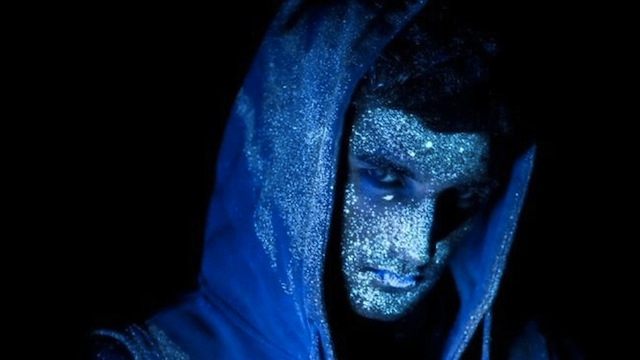
Invisible DNA mist is traceable under blacklight for two weeks.
Apparently, robbing McDonald’s has become a thing in Australia. McRobbery’s are so rampant down under that McDonald’s locations in Aussieland are taking measures to protect themselves by spraying criminals with an invisible mist of DNA. I repeat, AN INVISIBLE MIST OF DNA. The DNA seeps into the criminal’s skin and is visible under blacklight for two weeks.
Sounds ape nuts right? I mean, this sort of tech is needed at a McDonald’s? Of all places!? According to McDonald’s, this is how the SelectDNA system works…
You’ve probably seen the ad for this underground missile base in New York state that’s been on the market for some time. Now you have a chance to take a virtual tour! Scout from Scouting New York went to the site and the owners were gracious enough to let him look around and take plenty of pictures…
Futurist Thomas Frey talked about 3D food printers HERE and now we have a production model that can print with chocolate (and more). How awesome is that!
From Gizmodo:
Instead of the toxic smell of melted plastics, while the Imagine 3D printer is doing its thing, your workspace will be filled with the aroma of delicious confections. Because its printing head uses syringes that can be filled with chocolate…
Designer Prashant Chandra, an industrial designer from New Delhi, India, had come up with a solution for combining a whole lot of independent gadgets. Instead of repeating hardware — such as with an iPad acting as a larger version of an iPhone, an iPod acting like a lost part from said phone, and all of these acting as fragmented components of a laptop — this concept combines the traits of devices to create a functioning laptop in order to reduce repetition and wasted hardware…
The Nissan Leaf batteries have extended value beyond powering the car.
Reincarnation for Lithium-Ion
It’s not because a battery pack isn’t good enough for an electric or hybrid car anymore that it should go directly to a recycling plant. There are lots of potential secondary uses for batteries that can still hold more than half of their original charge. Articles have already been written about how they could be used to store wind power to reduce the intermittency problem, but a new partnership between Nissan North-America, ABB, 4R Energy, and Sumitomo Corporation of America believes that used electric car batteries (Nissan LEAF ones, in this case) could be used for residential and commercial energy storage, even acting as emergency back-up during natural disasters like last year’s earthquake and tsunami in Japan…
Energy efficiency is very important to overall U.S. energy consumption.
Buildings are blamed for as much as 40% of U.S. energy consumption, and while green construction is on the rise, identifying the best ways to make an older building more efficient can be a tedious manual endeavor. Retroficiency, whose aim is to disrupt the energy efficiency market, eases the process with the help of extensive data sets and predictive analytics.
Greening an old building traditionally involves a walk-through analysis or diagnostic hardware installation, but the Boston-based company’s newVirtual Energy Assessment (VEA) tool shows energy service providers which changes within the building will have the greatest impact on its efficiency. Retroficiency focuses on commercial real estate, which uses 18% of the country’s energy and spending close to $108 billion annually…