3D food printers have been able to create very basic food items, such as sugar sculptures and very simple pizzas — but now a team of researchers at Columbia University has developed a machine that can make more complex snacks.
At a competition in China to see who is better at recognizing faces, man or machine, Wang Yuheng, representing the humans, emerged victorious.
Wang is famous in China for his photographic memory. He successfully identified a specific glass of water out of 520 seemingly identical ones in a Chinese reality TV show. He also reportedly helped police crack a case by extracting “hidden clues” from surveillance camera footage, thanks to his exceptional observational skills.
Tara* (*Names have been changed to protect identities.) had struck gold. After spending a lazy Saturday afternoon browsing through the dating app she was currently experimenting with, she hit it off with a nice-sounding guy, and the two exchanged real names and numbers. She found herself Googling Stuart*, a Brit living in Amsterdam. He worked at a startup; he was visiting New York on business. “I was like, oh, he’s kind of cute…”
Mobile phones hold a trove of personal information that can be valuable to law enforcement investigating serious crimes, but they are notoriously hard to get into without a passcode or the owner’s fingerprint.
Police in the US found a way around this difficulty by 3D printing a murder victim’s finger to gain access to their smartphone and hopefully find evidence that would lead to the perpetrator of the crime.
Here’s a tattoo your mom might actually condone you getting.
The temporary, electronic “tattoo,” developed by a team of scientists at Tel Aviv University’s Center for Nanoscience and Nanotechnology, sticks to skin and uses a carbon electrode and a conductive polymer to measure biometric signals for hours. When worn on the face, the electrodes are sensitive enough to record variations in muscle activity, which can identify expressions and even emotions, according to a paper published last month in the journal Scientific Report.
“My name is Yoshiyuki Kawazoe. This is my hotel.” The University of Tokyo’s associate professor of architecture gestures behind himself to a flat, two-story building that doesn’t really look like a hotel. “Two-hundred people were involved in making this happen,” he says. “Experts in environmental design, engineering, architecture, robotics and construction … it’s their hotel.” The “Hen-na Hotel” will go down in tourist guides as the robot hotel, but there’s more being invested in here than just talking robots: The minds behind it hope the facility will change the world of low-cost hotels — and save the world. (Well, at least a little.)
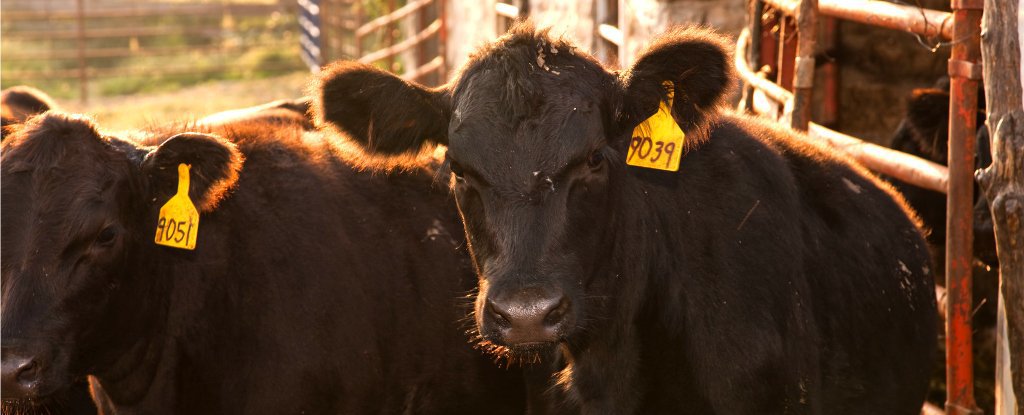
Brooklyn-based startup Modern Meadow, founded in 2011, has secured a total of US$53.5 million in funding to grow leather in labs – instead of from livestock.
The cruelty-free business model could end the slaughter of animals for leather goods, but it also has another benefit – cutting down on the physically and chemically intensive processes needed to produce leather using traditional means.
There’s a brand new product that has taken off the last couple years in the cannabis market: Mary’s Medicinals transdermal patch.
Available throughout Colorado dispensaries and now being introduced into the state of Oregon, these award-winning patches administer specific doses through the skin and straight into the bloodstream—which is the most efficient way to medicate.
New details have emerged about SpaceX’s ambitious plans to launch a huge constellation of micro-satellites designed to provide internet service here on Earth. What is the next step in this giant endeavor?
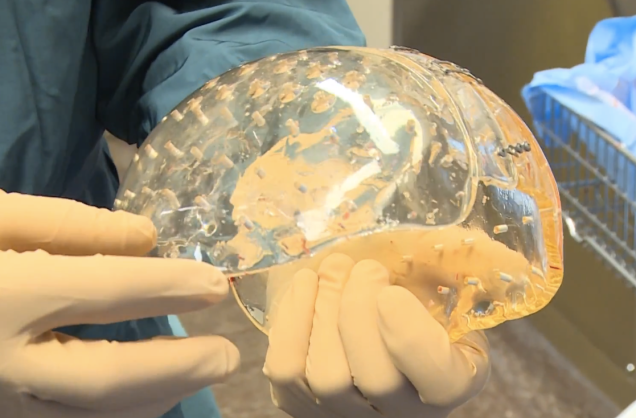
Surgeons in Holland implanted a transparent plastic skull in a woman whose skull has never stopped growing. The rare bone disease that was wrecking her vision and destroying her life has been been bested by a simple 3D printer. The team of surgeons, led by Dr. Bon Verweij at the University Medical Center in Utrecht, expect her new skull to last indefinitely.