Ethan Thornton: What He’s Doing to Defense is What Musk Did to Aerospace

By Futurist Thomas Frey

The Pattern Nobody’s Recognizing Yet

Elon Musk didn’t become Elon Musk by building better apps. He became Elon Musk by attacking civilization-scale infrastructure problems everyone else considered unsolvable: reusable rockets when aerospace experts said impossible, electric vehicles when they were jokes, solar energy when utilities controlled the grid.

The pattern was specific: hard tech, vertically integrated manufacturing, existential risk tolerance, and rebuilding foundational infrastructure rather than optimizing what exists.

That exact pattern is emerging again—not in someone famous, but in a 26-year-old MIT dropout named Ethan Thornton who’s doing to defense manufacturing what Musk did to aerospace: rebuilding it from scratch because the existing system is fundamentally broken.

Most people haven’t heard of him. But his trajectory suggests he might be the closest thing to “the next Elon Musk” currently operating—not because he acts like Musk, but because he’s running the identical playbook on a different broken industry.

Continue reading… “Ethan Thornton: What He’s Doing to Defense is What Musk Did to Aerospace”


The Tooth Regeneration Revolution: When Biology Threatens a $124 Billion Industry

By Futurist Thomas Frey

The Treatment That Works But Can’t Reach Patients

Imagine regrowing a lost tooth the way children grow their first set—complete with roots, enamel, and natural integration with your jawbone. No surgery. No implants. Just biology doing what it was designed to do.

This isn’t science fiction. Researchers at Kitano Hospital in Japan and Seoul National University achieved it in March 2025. A drug that blocks a single suppressor protein allows adults to regrow fully functional teeth in 6-8 months. Clinical trials show 68% success rate across 412 participants aged 30-70. Five-year follow-ups show zero complications.

And the dental industry is doing everything possible to prevent this technology from reaching American patients.

Continue reading… “The Tooth Regeneration Revolution: When Biology Threatens a $124 Billion Industry”

The Coming Airport Revolution: When AI, Drone Ports, Air Taxis, and Autonomous Vehicles Converge

By Futurist Thomas Frey

The Transformation Nobody’s Fully Grasping Yet

Walk through any major airport today and you’re witnessing an institution in the early stages of existential transformation. The massive parking structures generating 40-50% of non-aeronautical revenue? They’ll be largely empty by 2035. The carefully designed terminal flows optimized for passengers arriving by personal vehicle? Obsolete. The clear separation between ground transportation and air operations? Dissolved.

Future airports won’t just look different—they’ll operate on fundamentally different economic models, serve radically different transportation modes, and integrate technologies that blur the distinction between ground and air travel in ways that make today’s airports seem as quaint as train stations from the 1950s.

I’ve written about future airports several times over the past few years, covering everything from air taxis to pilotless travel to robot food delivery. But I’ve never quite grasped the full scope of the transition we’re living through right now—the uncomfortable period where old revenue models collapse before new ones fully materialize, where infrastructure designed for one transportation paradigm must adapt to serve another, and where the very definition of “airport” expands to include facilities that look nothing like what we recognize today.

Let me walk you through what airports actually become by 2035, why the transition is more disruptive than anyone’s admitting, and what replaces the business models that have sustained airports for decades.

Continue reading… “The Coming Airport Revolution: When AI, Drone Ports, Air Taxis, and Autonomous Vehicles Converge”

The Orbital Economy Ramp-Up: How Space Industry Evolves in Waves, Not All at Once

By Futurist Thomas Frey

The Question About Space That Nobody Frames Correctly

When will the space economy take off? Wrong question. It’s not a single event—it’s a sequence of distinct industrial waves, each building infrastructure for the next, each operating on different timeframes with different economics.

We’re not waiting for “the space age” to arrive. We’re entering orbital economy’s first major expansion phase, where multiple industries establish operations simultaneously but on staggered timelines. Understanding which industries deploy when—and why—reveals how orbital infrastructure develops from experimental to essential over the next two decades.

I’m actively researching how orbital industrialization will unfold and would genuinely appreciate reader input on what I’m missing, misunderstanding, or underestimating. What follows is my current thinking on the sequence—but I’m certain there are gaps, timing errors, and entire categories I haven’t identified.

Let me walk you through the waves of orbital industrialization, the economic logic driving each phase, and why 2026-2045 represents genuine inflection point where space stops being frontier and becomes economy.

Continue reading… “The Orbital Economy Ramp-Up: How Space Industry Evolves in Waves, Not All at Once”

Five Jobs That Don’t Exist Yet But Will Be Essential by 2030

By Futurist Thomas Frey

When Tools Become Agents, New Jobs Emerge

What happens when your AI doesn’t just answer questions but acts on your behalf? When machines don’t just execute commands but make autonomous decisions? When reality itself becomes blended layer of physical, digital, and AI-generated experience?

New jobs emerge. Not renamed versions of existing work, but genuinely novel roles created by capabilities that didn’t exist before, constraints we’ve never faced, and social needs we’re just beginning to recognize.

I’m currently researching future jobs—roles that will exist by 2030 that don’t exist today. What follows are five examples that feel directionally correct to me, but I’m actively seeking input, critique, and additional examples from readers. If you work in emerging fields, see patterns I’m missing, or have ideas about jobs we’ll need that aren’t on anyone’s radar yet, I genuinely want to hear from you.

Let me walk you through five jobs that will feel obvious by 2030 but sound strange today—because they address problems we’re only starting to encounter.

Continue reading… “Five Jobs That Don’t Exist Yet But Will Be Essential by 2030”

Turning Student Loans Into Startup Capital: Why the Next Generation Needs Entrepreneurship Training, Not Degrees

By Futurist Thomas Frey

The Question Nobody’s Asking About Education Debt

What if instead of borrowing $100,000 to get a degree that might not lead to employment, young people could access government-backed capital to build businesses that create employment?

The student loan system is fundamentally broken—$1.7 trillion in outstanding debt, crushing burdens, declining value from degrees. But the infrastructure exists. The lending mechanisms work. What if we redirected this entire system toward the actual most important job of the future: entrepreneurship?

Let me be clear upfront: this is a half-baked idea. I’m not presenting polished policy. I’m throwing out a concept that needs serious refinement, critique, and development. What follows has gaps, potential problems, and unresolved questions. I’m sharing it because the core insight feels valuable, even if execution needs substantial work.

Continue reading… “Turning Student Loans Into Startup Capital: Why the Next Generation Needs Entrepreneurship Training, Not Degrees”

Data Wars Update: Why the Battle for Training Data Became a Battle for Civilization

By Futurist Thomas Frey

The War That Changed Its Objective Mid-Battle

In 2023, I wrote about the coming data wars—a looming conflict where nations and corporations would battle for novel data sources to train increasingly powerful AI systems. I envisioned spy agencies competing for quantum fluctuation data, microbiome sequences, dream interpretation streams, and atmospheric electromagnetic readings. The victor in this data arms race would hold decisive strategic advantage through AI supremacy.

Two years later, the data wars are absolutely happening. But they’ve evolved into something far more profound than a competition for exotic datasets. Those novel data sources I predicted may still arrive—quantum sensors, neural dust, smart fabric readings—but they’ve been eclipsed by a more fundamental question that nobody saw coming.

The data wars aren’t really about data anymore. They’re about whose culture, whose morality, whose language, and whose values become embedded in the AI systems that will mediate human experience for generations to come. This isn’t a competition with a finish line—it’s a forever battle for the soul of machine intelligence.

Continue reading… “Data Wars Update: Why the Battle for Training Data Became a Battle for Civilization”

Silent Speech: The Wearable That Types Your Thoughts Arrives This Summer

By Futurist Thomas Frey

The Question That Changes Everything About Communication

What if you could compose emails, send messages, control your home, and communicate complex ideas without speaking a single word—or even moving your hands?

That’s not distant future speculation. It’s summer 2026. And the technology enabling it costs less than a pair of headphones.

Non-invasive brain-computer interfaces—comfortable wristbands and lightweight headbands reading your neural signals through EEG sensors—are moving from research laboratories to consumer products this year. They translate your thoughts into text, voice commands, and device controls with 80% accuracy for basic commands. No implants. No surgery. No needles piercing your skull. Just wear the device, think the command, and watch it execute.

“Turn on the lights.” Email drafted. Avatar controlled. All accomplished silently, internally, without your vocal cords vibrating or your fingers touching a keyboard.

Let me walk you through why this represents fundamental transformation in human-computer interaction, what becomes possible when thought directly controls technology, and why most people have no idea this capability is months away from mass market availability.

Continue reading… “Silent Speech: The Wearable That Types Your Thoughts Arrives This Summer”

The Cancer Treatment That Sounds Like Science Fiction Arriving This Year

By Futurist Thomas Frey

The Question Nobody’s Asking Yet

What if you could walk into a hospital with a tumor and walk out the same day without surgery, without scars, without chemotherapy’s devastating side effects—and the cancer cells are already dying inside you?

That’s not twenty years away. It’s happening in 2026. And most people have no idea this technology even exists.

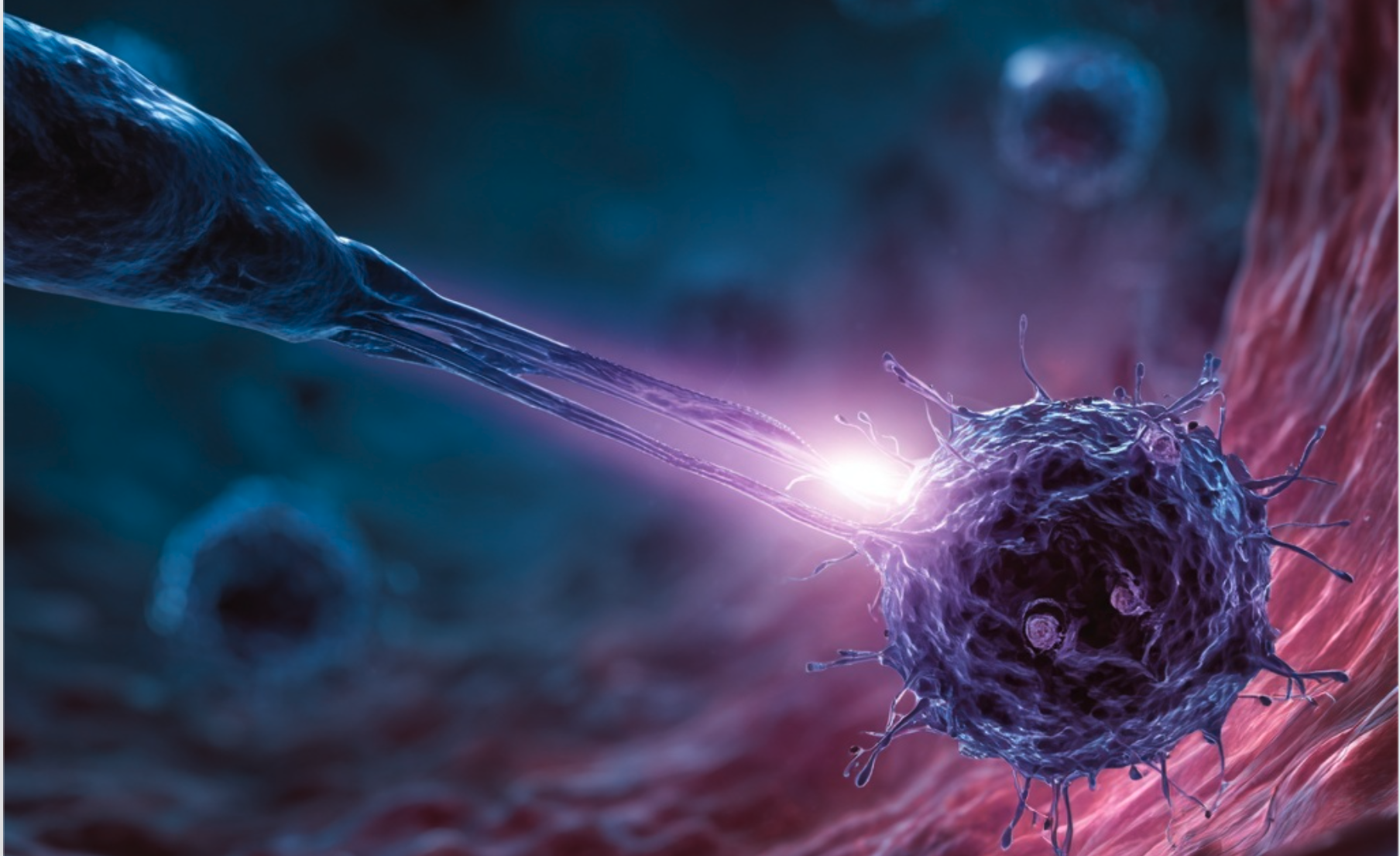
Histotripsy—therapeutic ultrasound that destroys cancer tumors without cutting anyone open—is moving from experimental trials to FDA approval this year. High-frequency sound waves focus on tumors, creating microscopic cavitation bubbles that violently collapse, releasing intense energy that mechanically shreds cancer cells from within. No scalpels. No radiation. No chemotherapy poisoning your entire body to kill localized disease.

It’s like having a microscopic demolition crew that only targets what needs destroying, leaving everything else untouched.

Continue reading… “The Cancer Treatment That Sounds Like Science Fiction Arriving This Year”

Atlas Stands Up: The Moment Humanoid Robots Stop Being Research and Start Being Real

By Futurist Thomas Frey

The Performance Nobody Expected to See

For the first time ever, a major robotics company did something unthinkable: they demonstrated a humanoid robot live, in public, without editing, without safety nets, where failure would be witnessed by hundreds of industry analysts and instantly amplified across global media.

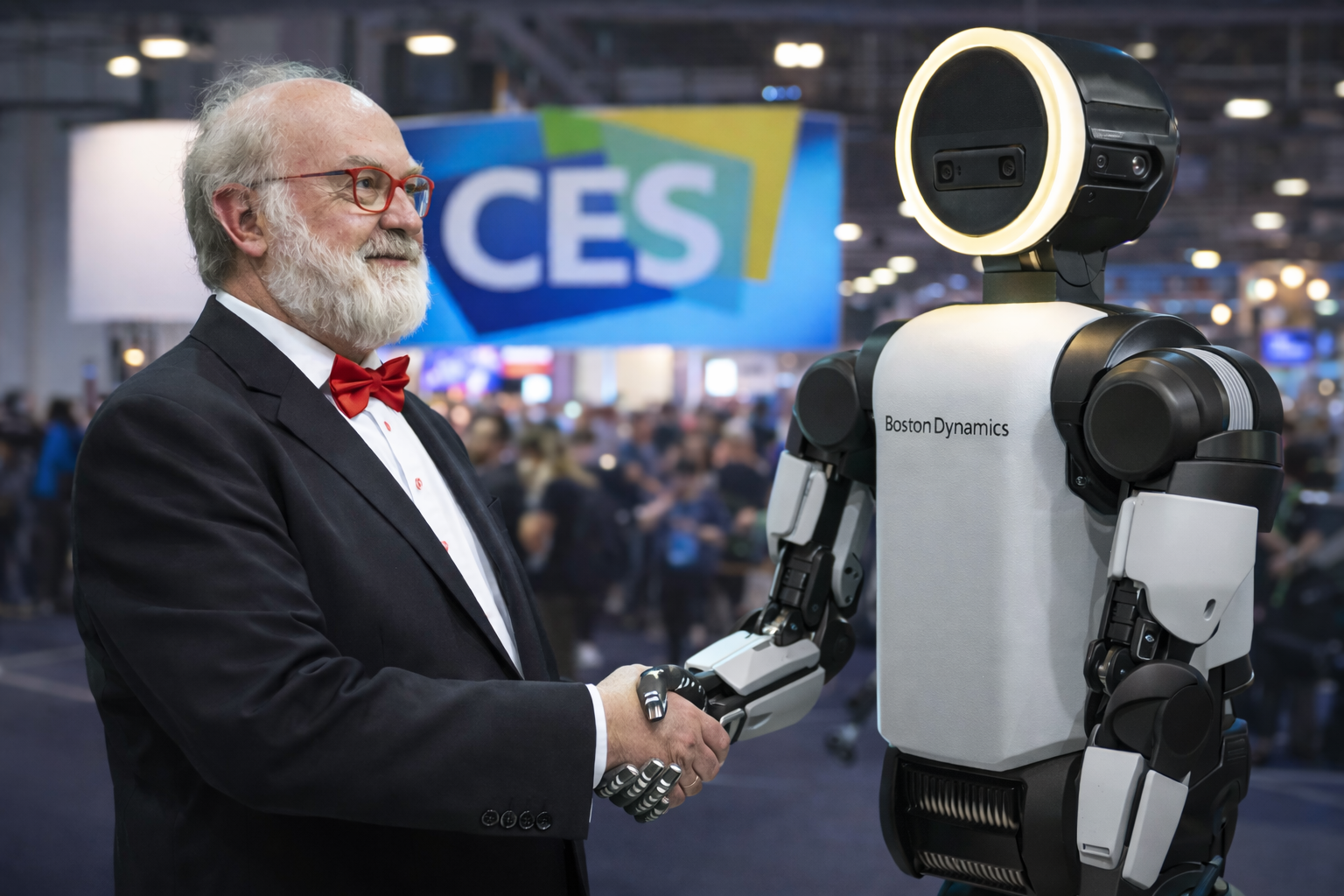
“For the first time ever in public, please welcome Atlas to the stage,” said Boston Dynamics’ Zachary Jackowski at CES 2026 in Las Vegas. The life-sized robot picked itself up from the floor, walked fluidly across the stage for several minutes, waved to the crowd, and swiveled its head like an owl. No stumbles. No falls. No frantic engineers rushing to intervene.

The demonstration itself was modest—Atlas was remotely piloted for the showcase. But the symbolism was massive. Robotics companies almost never demonstrate humanoids live because fumbles attract catastrophic attention. Russia’s first humanoid face-planted in November. That’s why everyone releases carefully edited videos on social media—maximum control, zero risk.

Boston Dynamics just threw that playbook away. And by doing so, they signaled something fundamental: Atlas isn’t a research prototype anymore. It’s becoming a product. And Hyundai isn’t experimenting with humanoid labor—they’re committing to it at industrial scale.

Continue reading… “Atlas Stands Up: The Moment Humanoid Robots Stop Being Research and Start Being Real”

When Everything Speaks: Talking to Conspiracy Theories, Recessions, and Your Own Lack of Motivation

By Futurist Thomas Frey

The Seductive Logic of Having a Conversation with Abstract Concepts

Can you talk to conspiracy theories? To economic recessions? To your own lack of motivation? What about contrails, unsolved crimes, the magnetosphere, or your personal biases?

The short answer: yes, if you’re willing to accept that you’re not actually talking to these things—you’re talking to AI models sophisticated enough to simulate their behavior, explain their mechanisms, and respond as if they were entities with agency.

The longer answer is more unsettling: we’re going to do this whether it’s philosophically coherent or not, because conversational interfaces are irresistibly compelling. And the results will range from genuinely helpful to dangerously misleading depending on what we’re trying to give voice to and why.

The concept of “talking to the defect”—using AI to transform complex systems into conversational partners—extends far beyond medicine. Any phenomenon that can be modeled can theoretically be given voice. But there’s a dangerous assumption embedded in this entire framework: that giving something a voice makes it more trustworthy, more comprehensible, more real.

Let me walk you through where conversational systems become transformative, where they become actively dangerous, and why we’re building the oracles first and planning to figure out the difference later.

Continue reading… “When Everything Speaks: Talking to Conspiracy Theories, Recessions, and Your Own Lack of Motivation”

Talking to the Defect: When Your Disease Becomes Your Diagnostic Partner

By Futurist Thomas Frey

The Question Nobody Thought to Ask

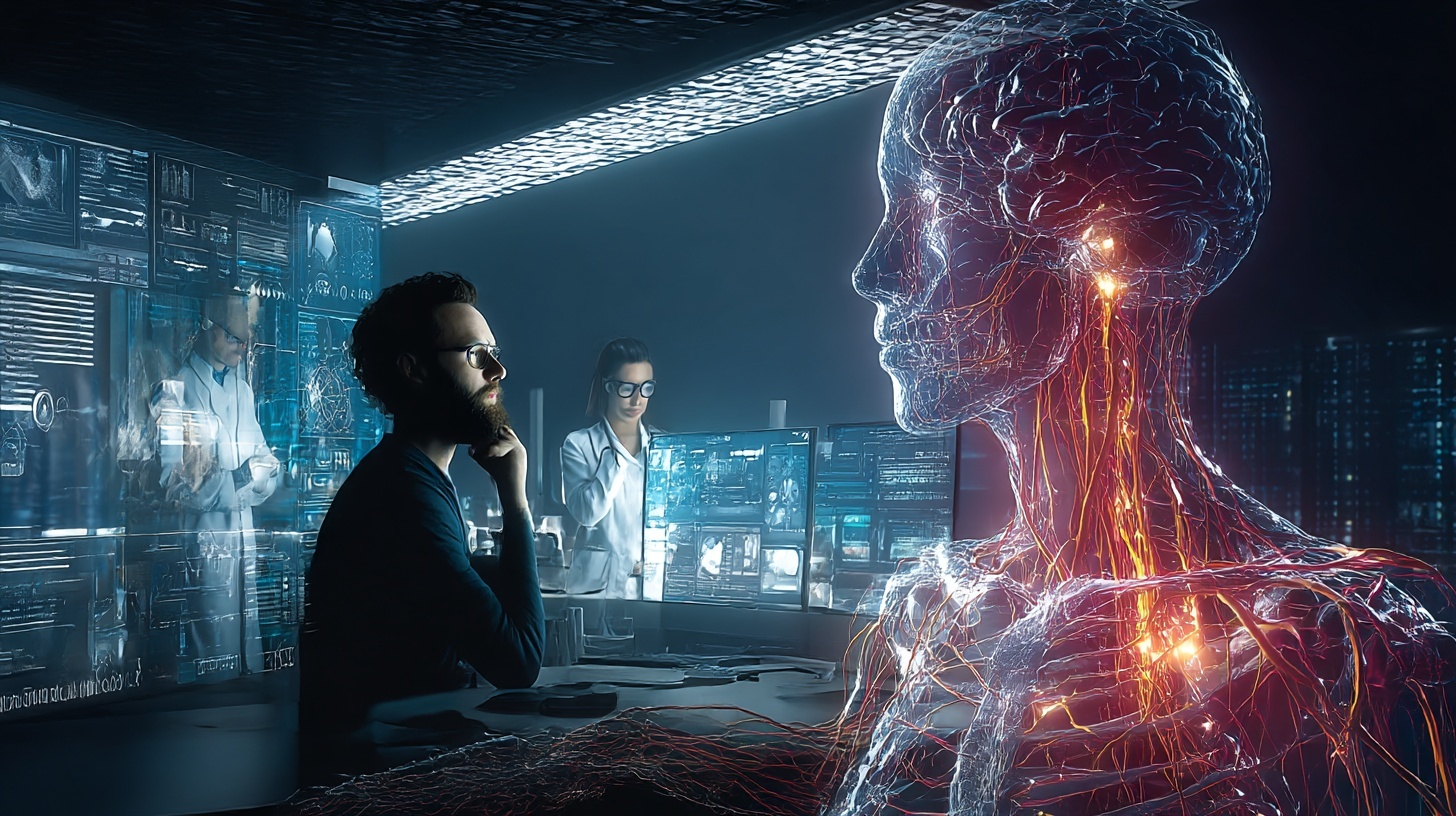
What if instead of analyzing your cancer, you could interview it? Not metaphorically—literally ask your tumor what it needs to survive, why it’s growing, what would kill it most effectively. What if your autoimmune disease could explain exactly why your immune system is attacking your body and what would make it stop?

This isn’t science fiction. It’s the logical endpoint of AI-powered diagnostic systems that can simulate complex biological processes and translate them into conversational interfaces. And it changes everything about how we diagnose, treat, and understand disease.

The concept comes from software engineering: “talking to the defect.” When code fails, instead of manually debugging thousands of lines, AI systems can simulate the defect’s behavior and explain—in plain language—what’s wrong, why it’s happening, and how to fix it. AI business developer Dave Blundin articulated this breakthrough in diagnostic methodology: give the problem a voice.

Now extend that concept to medicine. Your illness becomes your diagnostic partner. The defect in your body explains itself. The disease that’s killing you tells you how to kill it first.

Let me walk you through why this represents fundamental transformation in medical diagnosis, what becomes possible when diseases can explain themselves, and how quickly this shifts from theoretical to clinical reality.

Continue reading… “Talking to the Defect: When Your Disease Becomes Your Diagnostic Partner”
Discover the Hidden Patterns of Tomorrow with Futurist Thomas Frey
Unlock Your Potential, Ignite Your Success.

By delving into the futuring techniques of Futurist Thomas Frey, you’ll embark on an enlightening journey.

Learn More about this exciting program.