Thirty women were appointed to the previously all-male consultative Shura Council by Saudi King Abdullah in decrees published on Friday, marking a historic first as he pushes reforms in the ultra-conservative kingdom.
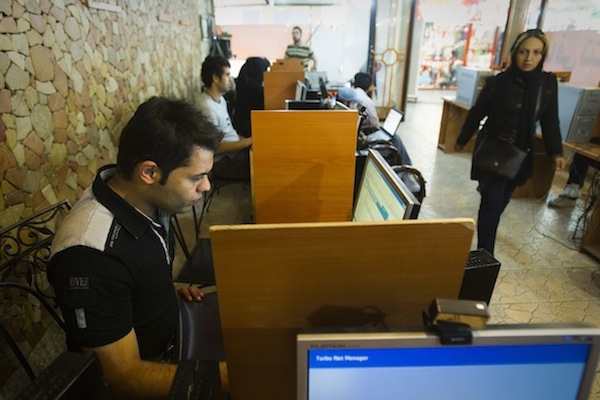
Iran has an intense relationship with the internet. The country has made many attempts to curtail its citizens’ use of social media. Iran’s supreme leader, Ayatollah Ali Khamenei, in May, issued a fatwa against anti-filtering tools that have helped citizens to access blocked material on the Internet. In December, they launched Mehr, its own version of YouTube, which allows users to upload and view content they create, and to watch videos from IRIB, Iran’s national broadcaster. They have also been building a national intranet – a government-run network that would operate “largely isolated” from the rest of the World Wide Web. Reporters Without Borders named Iran to its 2012 “Enemies of the Internet” list with Iran’s intensified online crackdowns, increased digital surveillance of citizens, and the imprisonment of web activists.
Heartspeak Productions with the Community Justice Initiatives Association has produced a 48-minute video from the Fraser region of British Columbia. The film discusses Canadian law and constitution and human rights as a fundamental basis of law.
“Absolute freedom of the network does not exist … the virtual society and social reality are inseparable.”
China wants to pass a law that will abolish online anonymity which requires citizens to identify themselves when signing up for Internet and telecommunications services.
The black boxes will be able to record all sorts of information about a vehicle.
The National Transportation Safety Agency is proposing that all new automobiles sold in the US after September of 2014 will be required to be equipped with event data recorders. The recorders are somewhat like the black boxes that are found inside aircraft.
The parliament in Iran has banned airplanes from flying in the country during the Azan call to Islamic prayer and allowed to take off only after 30 minutes has passed to give passengers time to fulfill their religious duties, the semi-official Mehr news agency reported on Wednesday.
Friday, Dec. 21 is the date some say the Mayans prophesized would be the end of the world.
More than 500 people from a fringe Christian group for spreading rumors about the world’s impending end have been detained by Chinese police, China’s state media reported Tuesday.
The current rule does prohibits the use of electronic devices during takeoff and landing.
Senator Claire McCaskill (D-MO) wants the Federal Aviation Administration to relax its long-standing rule against the use of portable electronic devices on airplanes during takeoff and landing. The agency has traditionally claimed the rule is necessary to avoid interference with an airplane’s instruments, but it is currently reconsidering the policy.
The first-to-invent patent system will be replaced with what is often called a first-inventor-to-file system for patent applications.
President Obama signed the America Invents Act (AIA) into law in September 2011. Under one of the most important provisions of the AIA, the longstanding first-to-invent patent system will be replaced with what is often called a first-inventor-to-file system for patent applications with an effective filing date of March 16, 2013 or later. In the run-up to next March, there is likely to be significant attention in the press – and plenty of misinformation – regarding how first-inventor-to-file works and how it will impact entrepreneurs.
Vint Cerf, inventor of the Internet Protocol [IP] and Transmission Control Protocol [TCP].
One of the two or three people who can rightly claim to have invented the internet is Vint Cerf. He is now worried about its survival.
Cerf is specifically concerned about the World Conference on International Telecommunications, happening now through December 14 in Dubai. At this meeting, for the first time since 1988, the countries of the world will gather to try and update international agreements on how to handle data, voice, and other communications technologies. (Video)
Director of the USPTO David Kappos delivered a keynote address last week to the Center for American Progress that focused on software patents and the smartphone “patent wars.” The speech is noteworthy for the Director’s strong defense of software patents. The entire speech is worth reading – here are a few excerpts to induce you to:
The 44-year-old CEO of UK/Canadian/Indian startup Datawind, Suneet Tuli, is having a taxing day. He says he is “underwater” as he struggles to find a cell signal outside a restaurant in Mumbai. On Sunday Nov. 11, the president of India, Pranab Mukherjee, will unveil the seven-inch Aakash 2 tablet computer Tuli’s company is selling to the government for distribution to 100,000 university students and professors. (If things go well, the government plans to order as many as 5.86 million.) In the meantime, Tuli is deluged with calls from reporters, and every day his company receives thousands of new orders for the commercial version of the Aakash 2. Already, he’s facing a backlog of four million unfulfilled pre-orders.