Just because you worked hard and your perseverance led you to create something that changed the world, it doesn’t mean that you’ll get fame, fortune, or the slightest bit of recognition out of it. Some inventors get so little credit that we completely forget about them. Here are six of them.
Recently, someone in the office came across the home that inspired Tony Stark’s house in the Iron Man movies (it’s real, but not quite as extravagantly located). Instead of talking about that actual home, we launched into a debate about Stark’s fictional palace and the many, many expensive things he’d keep inside. Debating his home lead us to another fictional character with billions of dollars and penchant for fighting crime: Batman.
It’s a little outside of what we normally post here, but come on, who hasn’t wondered this? After you review all the financials, it comes out that it’s cheaper to be Batman. He’s a bit more frugal, and seems to take better care of his stuff. He also doesn’t require the power of flight. Tony Stark is a little more cavalier with his equipment, but perhaps he recycles all those suits he trashes?
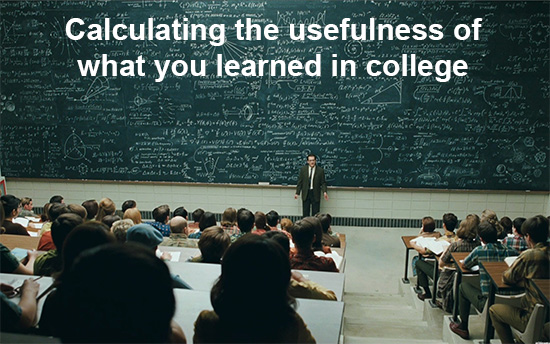
Futurist Thomas Frey: Last week I went through the process of analyzing how much of what I learned in college that I’m still using today. This ends up being a difficult thing to assess.
People in Mexico City show pictures of missing women.
During the six years of Mexico’s former President Felipe Calderon’s administration the number of people who went missing stands at 26,121 according to government officials. That figure ranks as among the worst episodes of “disappearances” in Latin American history.
Don’t forget to wish any futurists you see today a happy anniversary. February 20th is the movement’s birthday. On this date in 1909 Filippo Tommaso Marinetti, an Italian poet, technophile, and promoter of the arts, had his The Founding and Manifesto of Futurism published on the front page of Le Figaro.
According to a 2010 study by Colorado State University, about 68% of American adults take multivitamin supplements. At the same time the average American fills 12 prescriptions a year.
Virtual fencing promises radical transformation by removing the mile upon mile of barbed wire stretched across the landscape.
European farmers claimed North America with fences when they first arrived. Fences were the physical manifestation of a belief in private ownership and the proper use of land — enclosed, utilized, defended — that continues to shape the American way of life, its economic aspirations, and even its form of government. (Videos)
Researchers are creating software that analyzes 22 years of New York Times archives, Wikipedia and about 90 other web resources to predict the future.
Microsoft and Technion-Israel Institute of Technology researchers are creating software that analyzes 22 years of New York Times archives, Wikipedia and about 90 other web resources to predict future disease outbreaks, riots and deaths — and hopefully prevent them.
Futurist Thomas Frey: A recent TEDx talk about solving traffic jams started by asking the simple question, “Who is in charge of the daily bread supply for the city of London?”
Bitcoins are completely digital, so you can’t spend actual ones like these (non-digital ones) at a digital casino.
As various tech companies report their fourth-quarter 2012 earnings numbers this week, so are two gray-market, Bitcoin-based casinos—and one is turning profits in the hundreds of thousands of dollars after only six months of being in business
Recently, both SatoshiDice and bitZino released their financials. If these self-reported earnings are to be trusted (and the companies say they are, given that a Bitcoin block chain can be read by anyone), then running a Bitcoin-based casino yields a tidy profit.
“These tiny startups are hitting some major online casino pain points, they’re crushing it on those fronts and as an entrepreneur, I think that’s rad—they are leveraging a disruptive technology to try and kick a large-scale industry in the balls,” said Peter Vessenes, the CEO of CoinLab, a Bitcoin-based business, which got $500,000 of venture capital last year.
One of the biggest conspiracy theories of all time is that, in 1969, NASA did not actually land on the moon. Many different breakdowns of the photo and video footage have been used to make this point (think: flag waving, missing stars, etc), leading most conspiracy theorists to argue that the great Stanley Kubrick actually filmed the moon landing in a television studio.