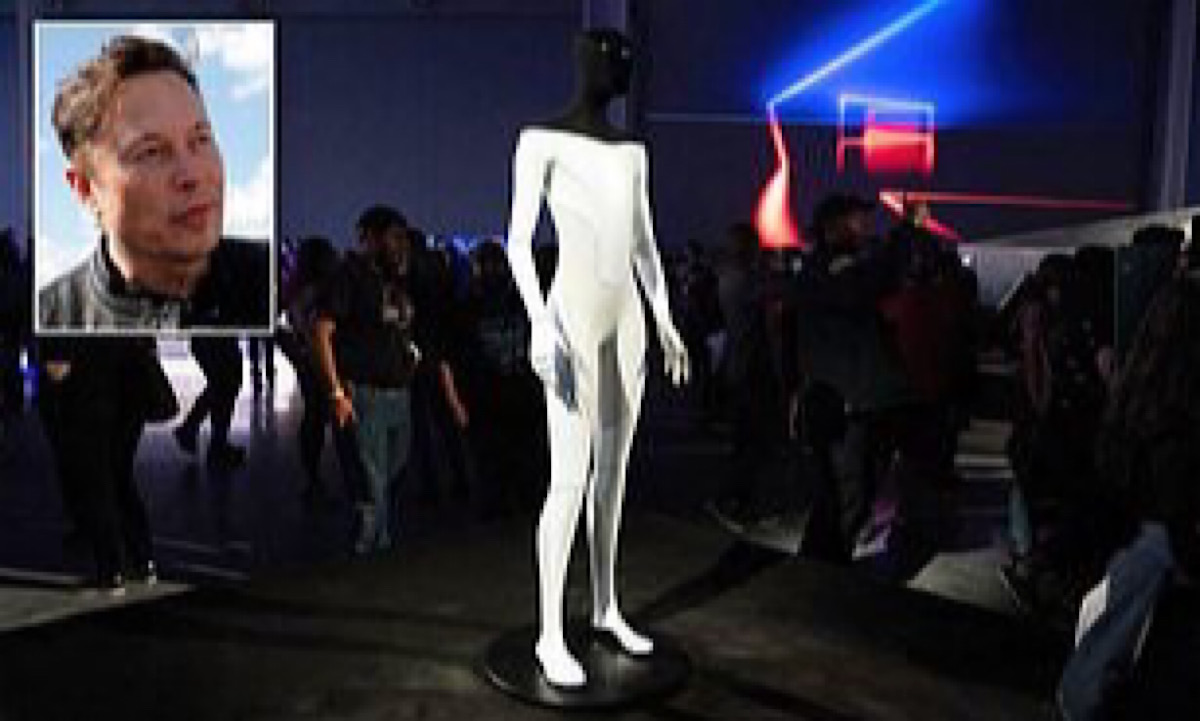
Elon Musk says Tesla’s Optimus humanoid robot will eventually cost ‘less than a car’ and people will buy them as birthday presents for their parents within a decade

By CHRISTOPHER CARBONE

  • Tesla’s Optimus humanoid robots are intended to replace humans in ‘repetitive, boring and dangerous tasks,’ according to CEO Elon Musk 
  • They will eventually serve millions – handling tasks like cooking, mowing lawns and caring for the elderly
  • Their price will come down in the future – as Tesla figures out how to scale production – eventually costing less than a car
  • Tesla’s Optimus robot is set to debut at AI Day on September 30 

Elon Musk shared new details about Tesla’s Optimus humanoid robot – including information about the cost and likely uses for it – in an essay published online. 

The robot, which is intended for industrial and domestic uses, will debut at AI Day September 30 after first being announced at AI Day in August 2021.

‘Tesla Bots are initially positioned to replace people in repetitive, boring, and dangerous tasks. But the vision is for them to serve millions of households, such as cooking, mowing lawns, and caring for the elderly,’ Musk wrote in the essay published in China Cyberspace magazine. 

Continue reading… “Elon Musk says Tesla’s Optimus humanoid robot will eventually cost ‘less than a car’ and people will buy them as birthday presents for their parents within a decade”
Google’s New Robot Learned To Take Orders By Scraping The Web

By Andrew McCollum 

Late last week, Google research scientist Fei Xia sat in the center of a bright, open-plan kitchen and typed a command into a laptop connected to a one-armed, wheeled robot resembling a large floor lamp. “I’m hungry,” he wrote. The robot promptly zoomed over to a nearby countertop, gingerly picked up a bag of multigrain chips with a large plastic pincer, and wheeled over to Xia to offer up a snack.

The most impressive thing about that demonstration, held in Google’s robotics lab in Mountain View, California, was that no human coder had programmed the robot to understand what to do in response to Xia’s command. Its control software had learned how to translate a spoken phrase into a sequence of physical actions using millions of pages of text scraped from the web.

That means a person doesn’t have to use specific preapproved wording to issue commands, as can be necessary with virtual assistants such as Alexa or Siri. Tell the robot “I’m parched,” and it should try to find you something to drink; tell it “Whoops, I just spilled my drink,” and it ought to come back with a sponge.

Continue reading… “Google’s New Robot Learned To Take Orders By Scraping The Web”

Hyundai, Boston Dynamics to invest $400M in AI robotics research

By Ishveena Singh

Remember how Hyundai Motor Group was so impressed by the robot dogs and humanoid bots developed by Boston Dynamics that it decided to acquire a majority stake in the robotics firm in 2020? Well, the two companies are now ready to take their relationship to the next level with the formation of the Boston Dynamics AI Institute.

The car manufacturer and the MIT spin-off will make an initial investment of more than $400 million in the new organization, which will be led by Marc Raibert, founder of Boston Dynamics.

At its core, Boston Dynamics AI Institute will be a research-oriented establishment. It will work on solving some of the most important and difficult challenges facing the creation of advanced robots. Combining the best features of university research labs with those of corporate development labs, the institute’s work will focus on four technical areas: cognitive AI, athletic AI, organic hardware design, as well as ethics and policy.

Continue reading… “Hyundai, Boston Dynamics to invest $400M in AI robotics research”

Xiaomi Unveils CyberOne, a Humanoid Robot That Can Sense Human Emotions

Xiaomi CyberOne is said to identify 85 types of environmental sounds and 45 classifications of human emotion.

By Nithya P Nair 

Xiaomi CyberOne can listen to human interactions.

Xiaomi unveiled its first humanoid robot named CyberOne alongside the Xiaomi Mix Fold 2 during a live event on Thursday. The robot can listen to human interactions and is capable of recognising individuals and their emotions. The CyberOne is 177cm tall, weighs 52kg, and has an arm span of 168cm. It is claimed to be capable of perceiving 3D space. The CyberOne comes equipped with technologies to recognise 85 types of environmental sounds and 45 classifications of human emotion. Xiaomi also has a quadruped robot called CyberDog, which was unveiled at the Mobile World Congress (MWC) 2022 in February.

During the Xiaomi Mix Fold 2 launch event on Thursday, Xiaomi unveiled the CyberOne. The humanoid robot handed a flower to the company’s Chief Executive Officer Lei Jun on stage and showcased some movements.

“CyberOne’s AI and mechanical capabilities are all self-developed by Xiaomi Robotics Lab. We have invested heavily in R&D spanning various areas, including software, hardware, and algorithms innovation,” said Lei Jun in a statement.

CyberOne comes with arms, legs, and supports bipedal motion and is said to reach a peak torque of up to 300Nm. It has an OLED module to display facial expressions and can see the world in 3D.

Continue reading… “Xiaomi Unveils CyberOne, a Humanoid Robot That Can Sense Human Emotions”

Swarms of Mini Robots Could Dig the Tunnels of the Future

The underground excavation industry is exploring mini robots, plasma torches, and superheated gas to replace the massive boring machines now in use.

By CHRIS BARANIUK

FOR DECADES, ENGINEERS seeking to build tunnels underground have relied on huge tube-like machines armed with a frightening array of cutting wheels at one end—blades that eat dirt for breakfast. These behemoths, called tunnel-boring machines, or TBMs, are expensive and often custom-built for each project, as were the TBMs used to excavate a path for London’s recently opened Elizabeth Line railway. The machines deployed on that project weighed over 1,000 tons each and cut tunnels over 7 meters in diameter beneath the UK capital.

But British startup hyperTunnel has other ideas. The firm proposes a future in which much smaller, roughly 3-meter-long robots shaped like half-cylinders zoom about underground via predrilled pipes. These pipes, around 250 millimeters (10 inches) in diameter, would follow the outline of the proposed tunnel’s walls. Once inside them, the bots would use a robotic arm topped with a milling head to penetrate into the surrounding earth and carve out small voids that would then get filled with concrete or some other strong material. Piece by piece like this, the structure of a new tunnel would come together.

“We’re talking about thousands of them,” says hyperTunnel’s director of engineering, Patrick Lane-Nott. “Much like an ant colony or a termite colony works in swarms.”

Continue reading… “Swarms of Mini Robots Could Dig the Tunnels of the Future”

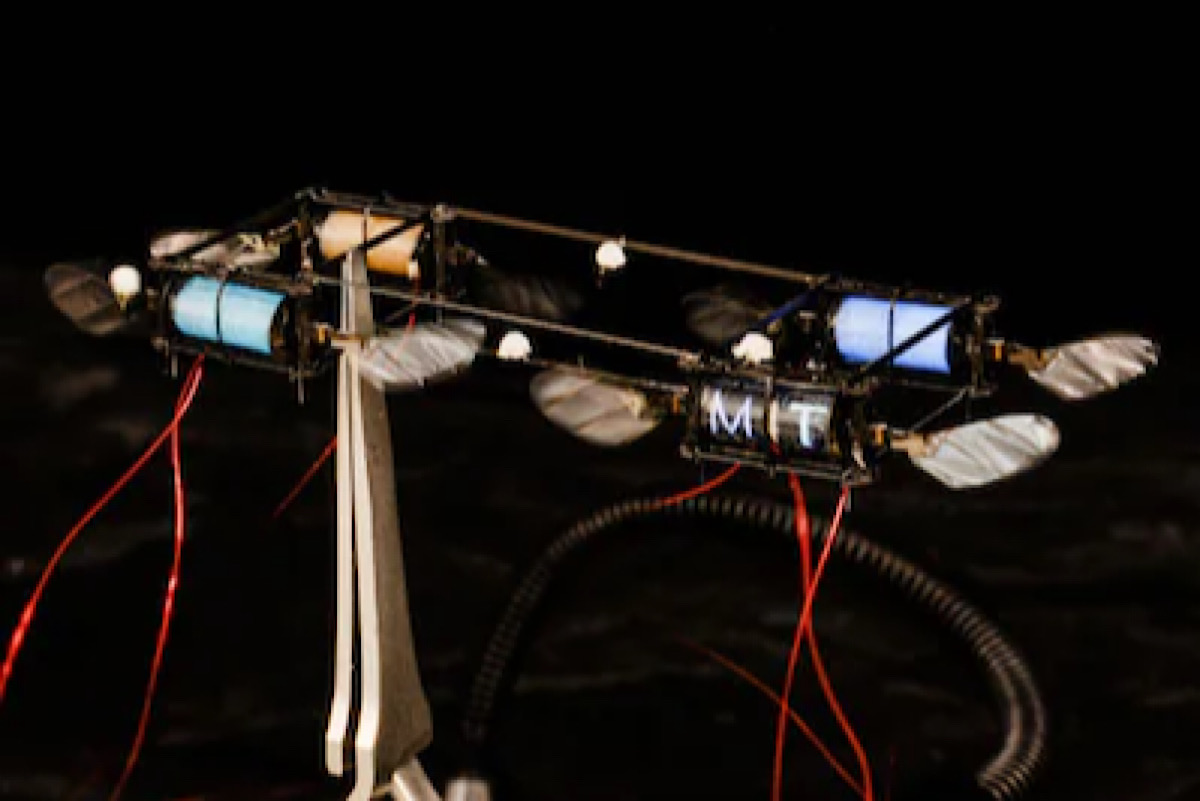
MIT Researchers Develop Insect-Sized Robot Fireflies That Emit Light When Flying

Each illuminating actuator served as an active marker that can be tracke

The ability of these tiny robots to emit light can enable them to communicate with each other.

  • Robot’s actuators work as muscles enabling them to flap their wings
  • Artificial muscles were made using ultrathin layers of elastomer 
  • Team could almost accurately tell the position and altitude of the robot

A team of researchers at the Massachusetts Institute of Technology, inspired by fireflies, created insect-sized robots that emit light when they fly. Fireflies are known for their luminescence which they use for communication purposes. The MIT researchers who created these tiny robots intended something similar.

Continue reading… “MIT Researchers Develop Insect-Sized Robot Fireflies That Emit Light When Flying”

Robot dogs could soon patrol US Space Force’s station

They could be part of safety protocols and emergency responses

By Ameya Paleja

  • Robot dogs can work well in natural as well as man-made environments
  • They are ideal for repetitive tasks and can also be controlled remotely
  • Patrol dogs are much better than their gun-totting counterparts

The U.S. Space Force conducted a demonstration using robot dogs in a bid to automate repetitive security tasks at its Cape Canaveral spaceport, a military press release said. 

Robot dogs have been touted as replacements for many routines and highly hazardous tasks since they can get the job done without being exposed to risk, truly man’s best friend. While companies like Boston Dynamics have planned to use them for civilian and emergency purposes, those like Ghost Robotics are working to develop military applications for the same technology. 

Continue reading… “Robot dogs could soon patrol US Space Force’s station”

Telexistence to install AI re-stocking robots in 300 convenience stores across Japan

 BY MAI TAO

Telexistence has started the mass production of its originally developed artificial intelligence robot, TX SCARA, to be installed in 300 FamilyMart stores, Japan’s top-tier convenience store chain in major metropolitan areas, starting later this month, validating its AI-based “robot-as-a-service” solution for grocery retailers.

TX SCARA was created to do the specific task of restocking refrigerated shelves with bottles and cans, a repetitive, tedious job generally performed by employees in often uncomfortable settings.

TX SCARA can be in operation 24/7, replenishing shelves at a pace of up to 1,000 bottles and cans per day, relying almost completely on its AI system – known as “GORDON” – to know when and where products need to be placed on the shelves. 

The implementation of AI robots in FamilyMart stores will allow retailers to take advantage of the newly created time and economic “surplus” in the store environment. Retailers can focus on further improvements in the store environment for both employees and customers, as well as the profitability of each store.

Tomohiro Kano, general manager of store development department and railway and corporate franchisee department, of FamilyMart, says: “The decline in Japan’s labor population is one of the key management issues for FamilyMart to continue stable store operations.

Continue reading… “Telexistence to install AI re-stocking robots in 300 convenience stores across Japan”

Panda Express developed a robot wok

The beginning of the end for fast food workers?

Written by Greg Nichols

As employees are becoming harder to find, fast casual restaurants have been investing in more automation. According to one estimate, the global food technology market is estimated to reach $342 billion by 2027, and there are ample signs that fast food, in particular, is embracing automation.

The latest example? Panda Express has rolled out a robotic wok, dubbed the Panda Auto Wok (PAW). The move comes on the heels of fast-casual restaurants like White Castle, Chipotle, and Jack in the Box adopting robotic systems for the back of the house cooking. Is this the end of the fast food worker? Do consumers even care in a pandemic-influenced market where convenience and touchless delivery reign supreme? 

I connected with Stanley Liu, VP of Operation Services, to talk about tofu, changing priorities in the food business and robots. The bottom line is that the restaurant industry is hyper-competitive, and efficiency is the only way to survive. 

Continue reading… “Panda Express developed a robot wok”

A bartending robot that can engage in personalized interactions with humans

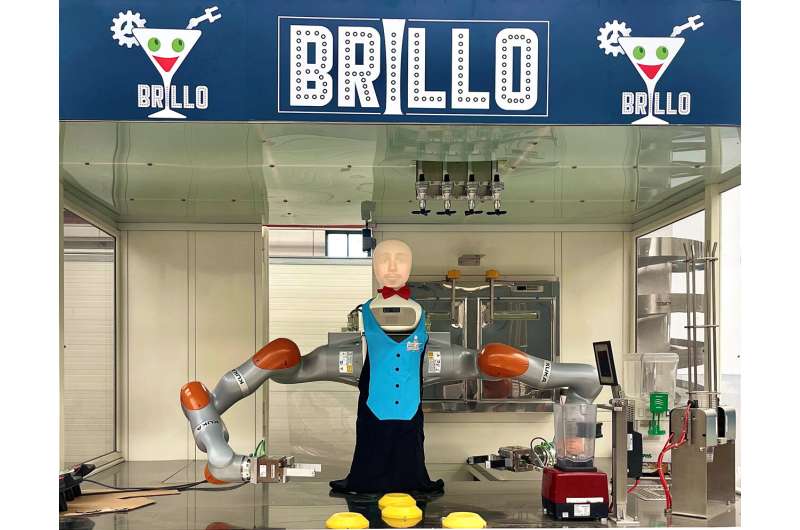
The robot created by the researchers.

by Ingrid Fadelli

A widely discussed application of social robots that has so far been rarely tested in real-world settings is their use as bartenders in cafés, cocktail bars and restaurants. While many roboticists have been trying to develop systems that can effectively prepare drinks and serve them, so far very few have focused on artificially reproducing the social aspect of bartending.

Researchers at University of Naples Federico II in Italy have recently developed a new interactive robotic system called BRILLO, which is specifically designed for bartending. In a recent paper published in UMAP ’22 Adjunct: Adjunct Proceedings of the 30th ACM Conference on User Modeling, Adaptation and Personalization, they introduced a new approach that could allow their robot to have personalized interactions with regular customers.

“The bartending scenario is an extremely challenging one to tackle using robots, yet it is also very interesting from a research point of view,” Prof. Silvia Rossi, one of the researchers who carried out the study and the scientific coordinator of the project, told TechXplore. “In fact, this scenario combines the complexity of efficiently manipulating objects to make drinks with the need to interact with the users. Interestingly, however, all current applications of robotics for bartending scenarios ignore the interaction part entirely.”

Silvia Rossi and her colleagues Alessandra Rossi and Nitha Elizabeth John believe that to effectively take on the role of a bartender, a robot should not only be able to interact with humans, but it should also create a “profile” of users. This would allow it to personalize its interactions with regular customers, increasing the likelihood that they will like and continue using the robotic bartending service.

Continue reading… “A bartending robot that can engage in personalized interactions with humans”

Beyond Imagination receives order for 1,000 humanoid robots

Robotics innovator Beyond Imagination has entered into an agreement with SELF Labs to provide at least 1,000 humanoid robots for use in agricultural “grow boxes”. This is believed to be the largest deal of its kind.

 BY DAVID EDWARDS 

SELF and Beyond are announcing a partnership to develop automated off-the-grid grow boxes. Each box will be equipped with solar panels, windmills, atmospheric water generators, 5G, and an advanced version of Beyond Imagination’s Beomni robot with its Omni-Purpose AI Brain.

By aligning the visions of Milan Cheeks of SELF and Dr Harry Kloor of Beyond, this futuristic take on farming will be made possible through a uniquely powerful combination of Omni-Purpose AI, humanoid robotics, blockchain, and game technology. 

The deal with SELF represents one of the largest agreements to purchase humanoid robots in the world.

Cheeks says: “We are committed to purchasing at least 1,000 robots in the next five years, but if the effectiveness of our combined technology is as we project, that number could easily grow to ten thousand or more.”

Continue reading… “Beyond Imagination receives order for 1,000 humanoid robots”

NASA Space Robotics Dive into Deep-Sea Work

What’s the difference between deep space and the deep sea? For a robot, the answer is: not much. Both environments are harsh and demanding, and, more importantly, both are far removed from the machine’s operator.

By Loura Hall

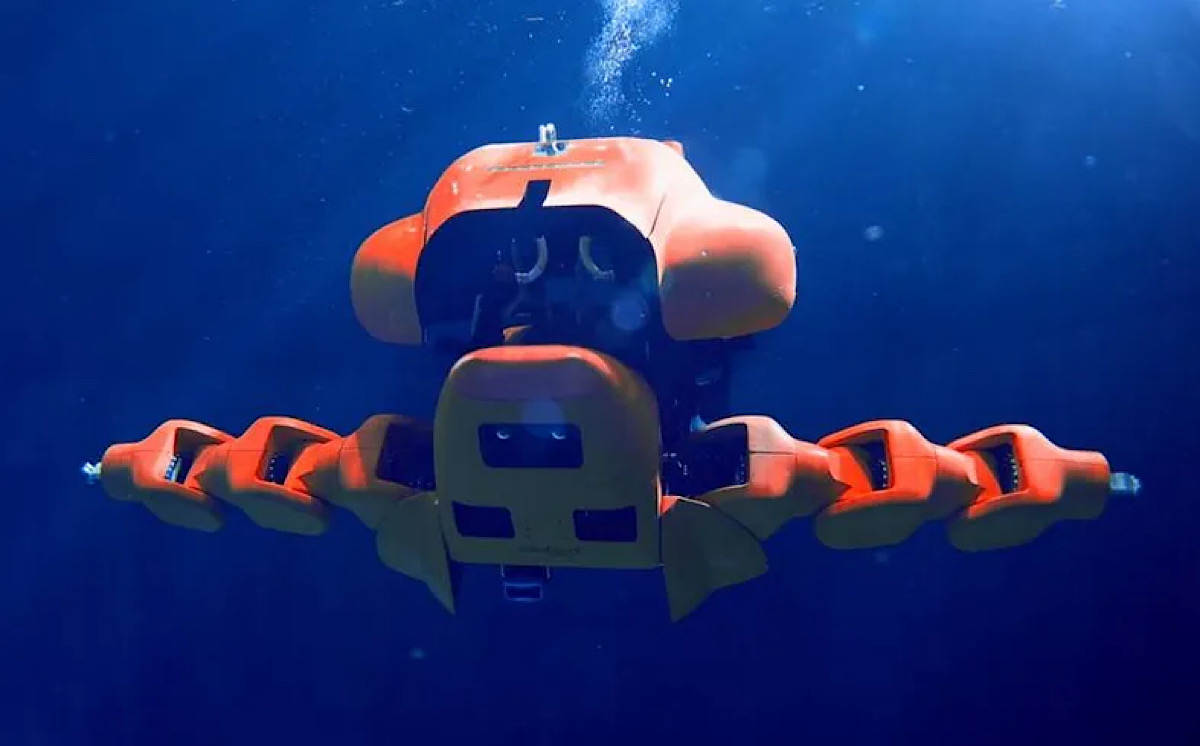
Nauticus Robotics’ Aquanaut robot can swim to a destination and carry out tasks with minimal supervision, saving money for offshore operations from oil wells and wind turbines to fish farms and more. Credits: Nauticus Robotics Inc.

What’s the difference between deep space and the deep sea? For a robot, the answer is: not much. Both environments are harsh and demanding, and, more importantly, both are far removed from the machine’s operator.

That’s why a team of roboticists from NASA’s Johnson Space Center in Houston decided to apply their expertise to designing a shape-changing submersible robot that will cut costs for maritime industries.

Continue reading… “NASA Space Robotics Dive into Deep-Sea Work”
Discover the Hidden Patterns of Tomorrow with Futurist Thomas Frey
Unlock Your Potential, Ignite Your Success.

By delving into the futuring techniques of Futurist Thomas Frey, you’ll embark on an enlightening journey.

Learn More about this exciting program.