Kawasaki Bex: All-Electric Rideable Goat Robot That Can Carry 220 lbs. of Cargo, Fully Modular

KAWASAKI BEX: RIDEABLE GOAT FROM INTERNATIONAL ROBOT EXHIBITION

By Isaiah Richard

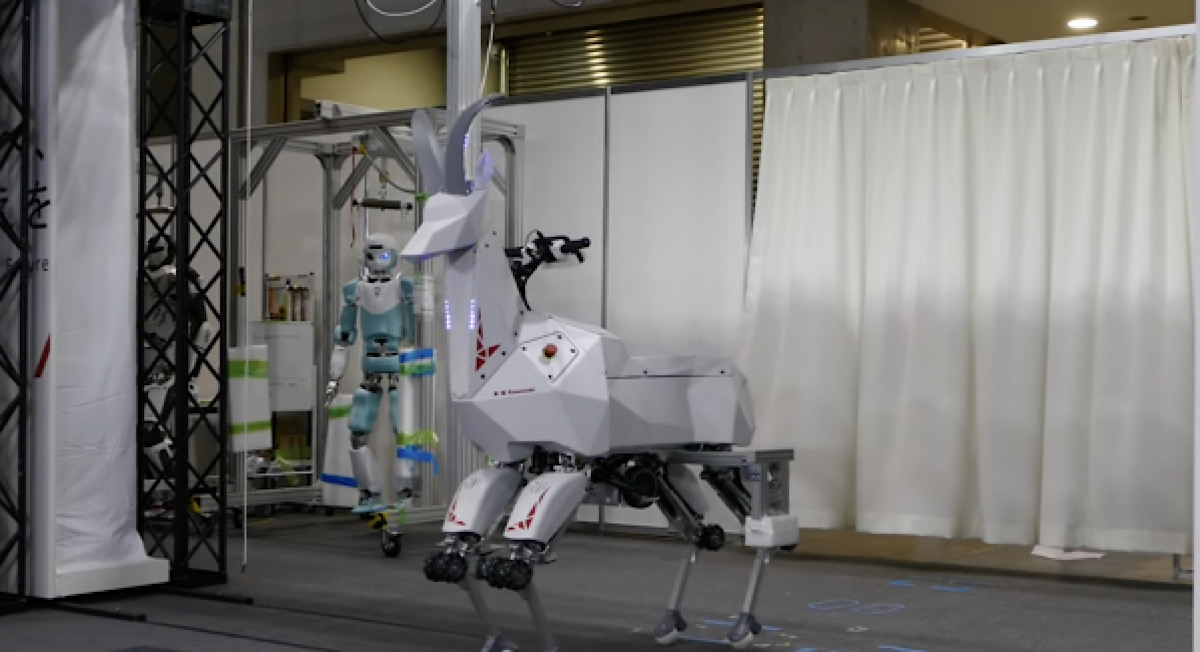
Kawasaki made a rideable electric goat, and the company released this for the world to see via the International Robot Exhibition in Tokyo, Japan. Instead of a bipedal human that resembles the method of humans by standing on their two feet, it stands on all fours. Unlike humans, the new Kawasaki Bex robot is a quadruped device that owners can modify to anything fully modular. 

According to an online video posted via YouTube by Kazumichi Maruyama, Kawasaki’s take on the IREX 2022 event in Tokyo is to bring a rideable goat as its latest innovation for mobile machines. The device resembles the Ibex, a wild goat usually found in mountainous regions of East Africa, North Africa, and Eurasia.

Kawasaki named this the “Bex” and is a quadruped robot that walks on all four legs and has been a long-term project from the company since 2015. The Bex came from the Kaleido Program. Its focus is to give the world a robot that can perform multiple tasks by carrying the load and transporting it, even for mountainous regions.

Continue reading… “Kawasaki Bex: All-Electric Rideable Goat Robot That Can Carry 220 lbs. of Cargo, Fully Modular”

Giant 180-ton robot trucks are mining gold

As global demand soars, extractive industries are embracing automation.

Written by Greg Nichols

A mining outfit in Australia is making a big bet on big robots. Following a recent proof of concept at a gold mine, mining contractor MACA will retrofit a fleet of 100 very large vehicles to create one of the largest autonomous heavy equipment fleets in the world.

This is a pretty significant rollout and a proverbial canary in the gold mine for the sector’s broader automation ambitions. With the world hungrier than ever for precious and rare earth metals, technology is increasingly called on to make mining operations more efficient and cost-effective while unlocking increasingly scarce resources.

Powering the new rollout is autonomous heavy equipment company SafeAI and its Australian partner, Position Partners. This new generation of autonomous heavy vehicle technology is a major upgrade from the first generation retrofits, which had limited onboard processing power and took a long time to see ROI in most cases. Early versions of autonomous vehicle technology in the sector also operated with closed legacy systems, preventing mixed fleets from communicating. Industries like mining have had this tech for 20 years now, but the lack of accessibility means it hasn’t really taken off yet.

Autonomy 2.0 is changing that. AI-powered and armed with multimodal sensors (lidar, radar, camera), these new systems have significant onboard processing power to reduce network reliance and enable fast decisions. It’s also open, interoperable, and vehicle-agnostic — meaning tech like SafeAI’s retrofit autonomy can be applied to any vehicle, at pretty much any age from any manufacturer.

Continue reading… “Giant 180-ton robot trucks are mining gold”

WORMS AND COCKROACHES INSPIRED THIS ROBOT THAT CAN UNCLOG ANY PIPE

Have a clogged pipe? GE has a new robot that could help.

Everyone who lives in an older home knows that plumbing is hell. The smallest problem involves a plumber cursing at your bathtub with a metal snake, or worse, a giant truck drilling its way through tree roots that are causing backups. You might even need to have a new pipe installed . . . simply to access your old ones! It’s as costly as it is absurd.

But what if there were something like a Roomba for keeping your piping clear? That’s exactly what’s being developed by GE Research as it debuts the Pipe-worm. It’s a long, soft-bodied robot that inches its way through pipes, just like an earthworm—while mapping its way in the dark, just like a cockroach. The tool is being designed for city infrastructure first, but could make its way into houses in the future.

“You could imagine, you put it inside your pipe and you never have to think about it again,” says Deepak Trivedi, a mechanical engineer at GE Research. “Because the robot lives there and takes care of your pipes without you ever worrying about it.”

Continue reading… “WORMS AND COCKROACHES INSPIRED THIS ROBOT THAT CAN UNCLOG ANY PIPE”

Robots May Soon Fix and Fuel Satellites in Space

Within a few years, NASA’s OSAM-1 mission will launch into space and use a robotic arm to refuel the Landsat 7 Earth-observation satellite, as shown in this animation. NASA

By Kurt Kleiner

Orbiting machines that grip, grapple and maneuver could one day maintain the fleet of small spacecraft that encircle Earth.

For more than 20 years, the Landsat 7 satellite circled Earth every 99 minutes or so, capturing images of almost all the planet’s surface each 16 days. One of many craft that observed the changing globe, it revealed melting glaciers in Greenland, the growth of shrimp farms in Mexico and the extent of deforestation in Papua New Guinea. But after Landsat 7 ran short on fuel, its useful life effectively ended. In space, regular servicing has not been an option.

Now, though, NASA has a potential fix for such enfeebled satellites. In a few years, the agency plans to launch a robot into orbit and maneuver it to within grabbing distance of Landsat 7. The robot will use a mechanical arm to catch hold of it and refuel it, mid-air.

If successful, the mission would mark a milestone — the first time a satellite would be refueled in space. And this mission is just one of a number of planned public and private ventures intended to use robots to repair and improve the billions of dollars’ worth of satellites in orbit.

Eventually, efforts like these could lead to better and cheaper satellites that lower the cost of Internet and cell phone networks, provide better weather forecasts and give unprecedented views of planetary change and of the universe. They could even enable a new wave of in-orbit construction, with armies of robots building satellites, space stations and even Mars-bound spaceships.

Continue reading… “Robots May Soon Fix and Fuel Satellites in Space”

These tiny robots are about to explore the Moon like never before

THE COLMENA PROJECT WILL PUT ROBOTS ON THE MOON THIS YEAR

By Joshua Hawkins

The Colmena Project has officially launched with the support of the Ministry of Foreign Affairs and the Mexican Space Agency. The state of Hidalgo has also backed the project which will put five robots on the surface of the Moon next June. UNAM, the National University of Mexico, leads the project, which has been made possible thanks to over 200 students involved with the Space Instrumentation Laboratory (LINX).

The Colmena Project is a monumental move for Mexico. Omar Fayad, Governor of Hidalgo, says that it is a representation of the country’s priority for the future. This is a unique moment for the world’s push for space, and Mexico playing a part will help spur even more science and progression throughout the country’s universities.

“COLMENA highlights all the values of the UNAM, and gives Mexican society a new way of seeing and understanding the modern world and the confidence that things are possible and that we can overcome our own limits,” Fayad said in a press release. Fayad says that the move may even inspire the next astronaut or leader of future missions.

Continue reading… “These tiny robots are about to explore the Moon like never before”

Tiny robots made in Mexico to explore moon in scientific first

The mission is poised to launch on a United Launch Alliance Vulcan rocket and would be the first American spacecraft to land on the moon in nearly 50 years.

The bots are scheduled to launch in June on Astrobotic’s Peregrine lander, originally developed for Google’s Lunar-X-Prize. (representative Image)

Five tiny robots designed and made in Mexico will blast off for the moon later this year, part of a first-of-its-kind scientific mission that envisions the two-wheeled bots scrambling across the lunar surface while taking sophisticated measurements.

The so-called nano robots developed by researchers at Mexico’s National Autonomous University (UNAM) will work together like a swarm of bees, the senior scientist told Reuters, once they make the nearly 240,000 mile (386,000 km) trip from earth aboard a rocket from closely held U.S. firm Astrobotic Technology.

The mission is poised to launch on a United Launch Alliance Vulcan rocket and would be the first American spacecraft to land on the moon in nearly 50 years.

Continue reading… “Tiny robots made in Mexico to explore moon in scientific first”

Solar-powered robotic mower for vineyards

The Virtrover mower robot.

By EMILIANO BELLINI

Developed by a French start-up, the robotic mower can be used in a 50-unit herd across a property of around 50 hectares and a radius of 20 km. It is powered by polycrystalline cells and equipped with battery storage. The system can operate with a maximum slope of 15% and reach a speed of 300m/h.

French start-up Vitirover has developed an automated PV-powered robotic mower for applications in vineyards and other agricultural fields.

“The robots are built at our headquarters in Saint-Émilion, in the Gironde department of the Nouvelle-Aquitaine region in southwestern France,” the company’s CEO and founder, Arnaud de la Fouchardiere, told pv magazine.

The 20 W device relies on polycrystalline solar cells, a battery and MPPT optimization. “Their price depends on the terrain, the state of the soil, the number of obstacles per hectare, the height of the solar panels, the way in which the motors are installed if they are trackers, and many other variables,” de la Fouchardiere explained.

Continue reading… “Solar-powered robotic mower for vineyards”

Here’s an Idea: A Jumping ‘SpaceBok’ Robot Makes Giant Leaps Toward the Moon and Mars

The Spacebok robot (shown here) has the ability to leap across complex terrains.

The Mars-bound Perseverance rover is as sophisticated as it gets. The robotic vehicle features six science instruments, six cameras, six aluminum wheels, and even a helicopter. 

But can it jump?

Hendrik Kolvenbach, PhD researcher at the ETH Zurich Robotics Systems Lab, sees the best way to get around on the Moon as less of a step and more of a giant leap. Listen to our episode of Here’s an Idea to learn how Kolvenbach and his team are creating a technology that’s part space robot and part African springbok.

The “SpaceBok” can hop three feet in the air, continuously. The pogo-like hop is an efficient way to someday get around the low-gravity surfaces of the Moon, according to the robot inventor. 

“We have footage of astronauts who had been on the Moon and who would use a jump or a skipping gait, and they find it as the best way to travel,” Kolvenbach told us in our latest episode of Here’s an Idea.

SpaceBok measures about 2.5 feet long by 1.5 feet wide — the size of a small dog, says Kolvenbach. 

Continue reading… “Here’s an Idea: A Jumping ‘SpaceBok’ Robot Makes Giant Leaps Toward the Moon and Mars”

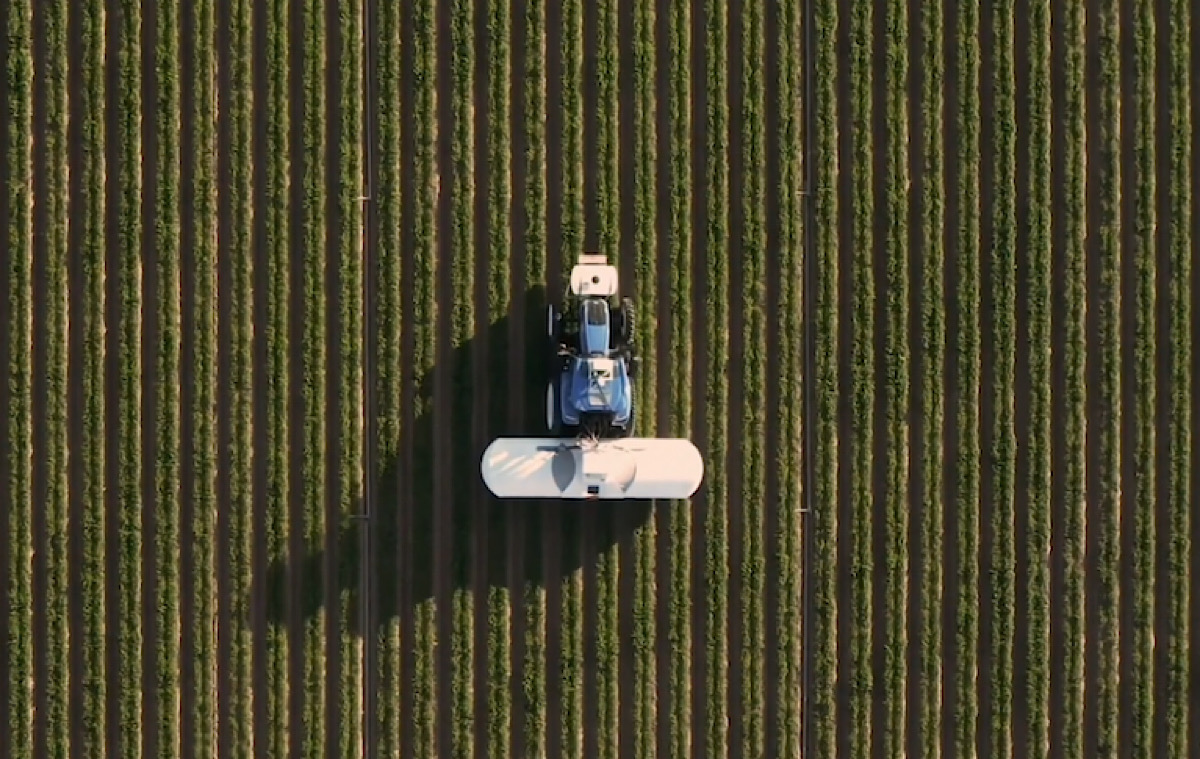
Verdant Robotics launches multi-action agricultural robot for ‘superhuman farming’

BY DAVID EDWARDS 

To meet farmers’ demands for more sustainable and profitable growing practices, Verdant Robotics has expanded its robot-as-a-service (RaaS) model to ensure access for more specialty crop farmers.

Founded in late 2018 by a leading roboticist, a software engineer, and a California farmer, Verdant has raised $21.5 million to develop the industry’s first multi-action, autonomous farm-robot capable of millimeter-accurate spraying, laser weeding, and AI-based digital crop modeling. 

Together with farming partners, Verdant uses these tools to deliver better outcomes: larger produce, greater yields and significant savings.

Verdant has already contracted to service approximately 40 percent of the US carrot market exclusively for the next five years and is currently scaling to meet the needs of the US multi-billion-dollar fruit and vegetable industry.

Continue reading… “Verdant Robotics launches multi-action agricultural robot for ‘superhuman farming’”

Robots paint luxury building in Dubai, bots ten times faster than humans

Usually, a single apartment unit takes up to 4 man-days of manual painting, while MYRO can auto-paint it within 4 hours

Arab News

Dubai: UAE-based Emaar Properties has deployed robots to complete the painting works of its luxury high-rise residential project in Downtown Dubai.

The robots for painting works are developed by MYRO International, a Singapore-based company known for distributing robotic products and automation solutions for the construction, painting, and coating sectors.

MYRO bots are currently deployed to Emaar’s residential project Forte, for a stage 1 trial. 

The productivity of these robots is nearly 1000 sq ft/hour, which is ten times faster than manual painting. 

Usually, a single apartment unit takes up to 4 man-days of manual painting, while MYRO can auto-paint it within 4 hours.

Continue reading… “Robots paint luxury building in Dubai, bots ten times faster than humans”

California company zips into Austin with robot food delivery in 15 minutes

Coco bites into Texas. Photo courtesy of Coco

By Chantal Rice 

Austin’s decades-long transformation into a tech mecca is officially complete.

Sure, we’ve got more than our fair share of tech behemoths — Dell, Tesla, Oracle, WP Engine, Indeed, Google, and Bumble — and a healthy smattering of smaller tech enterprises that further advance the Capital City as the next Silicon Valley.  

But the true indicator that a city has become a tech hub is found in its proclivity to not rage against the machine. And that’s precisely what drew the city’s newest robots to Austin.

Coco, the Los Angeles-based business that offers a remotely piloted delivery service, has hit the streets of Austin with its food-delivery bots as part of its expansion to targeted markets. Fueled by a recent funding round that garnered the company $56 million, Coco’s expansion plans also include rolling out bots in the Houston, Dallas, and Miami markets soon.

“When evaluating markets for expansion, Austin stood out to the team as a perfect match,” says Zach Rash, co-founder and CEO of Coco, via a release. “Austin’s entrepreneurial spirit, top-notch food scene, and commitment to supporting small businesses makes it an ideal fit for Coco.”

Here’s how it works: Customers place a restaurant order like usual, then a Coco bot — operated by a “trained pilot” — drives to the restaurant to pick it up. The restaurant staff loads the bot as soon as the food is ready, and Coco arrives at the customer’s door within 15 minutes. Each bot is locked until it reaches the customer, so no one can tamper with your pizza or egg rolls.

Continue reading… “California company zips into Austin with robot food delivery in 15 minutes”

Feature Article: Robot Dogs Take Another Step Towards Deployment at the Border

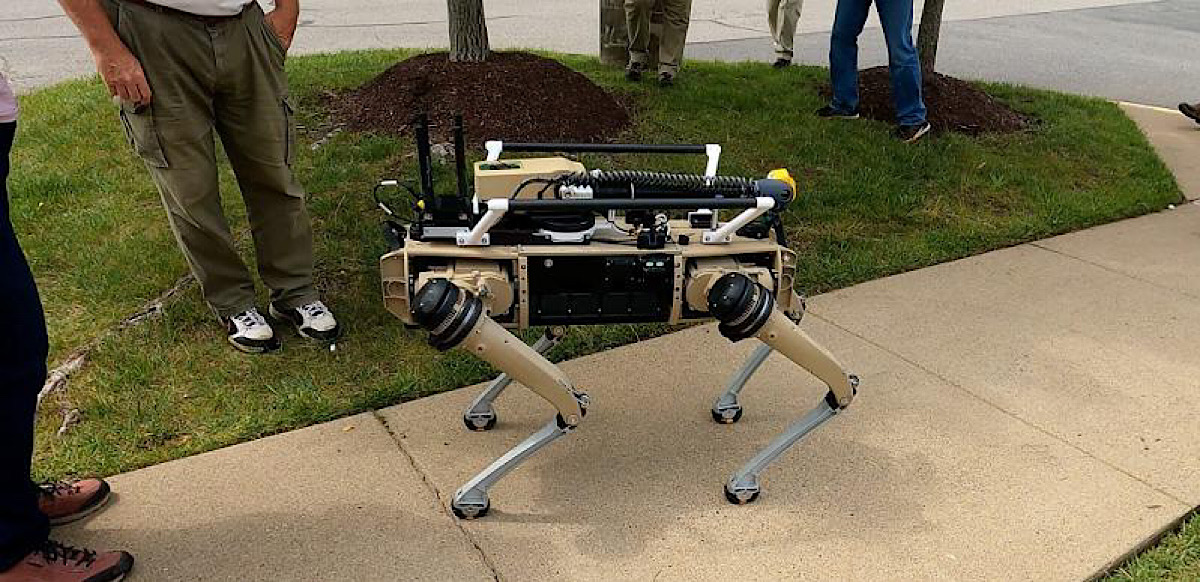
A robot dog showing off capabilities during testing in Lorton, Virginia.

The American Southwest is a region that blends a harsh landscape, temperature extremes and various other non-environmental threats that can create dangerous obstacles for those who patrol the border. The territory is vast and monitoring it is critical to our nation’s security. That’s why the Science and Technology Directorate (S&T) is offering U.S. Customs and Border Protection (CBP) a helping hand (or “paw”) with new technology that can assist with enhancing the capabilities of CBP personnel, while simultaneously increasing their safety downrange.

S&T has a deep understanding of CBP’s technology needs in the field. In its role as the research and development arm of the Department of Homeland Security (DHS), S&T is always identifying solutions to support the complex CBP mission. For instance, S&T is currently supplementing CBP’s bipedal human personnel with quadruped mechanical reinforcements to help the agency better allocate resources. In this case, Man’s best friend comes with a very futuristic twist.

“The southern border can be an inhospitable place for man and beast, and that is exactly why a machine may excel there,” said S&T program manager, Brenda Long. “This S&T-led initiative focuses on Automated Ground Surveillance Vehicles, or what we call ‘AGSVs.’ Essentially, the AGSV program is all about…robot dogs.” 

Continue reading… “Feature Article: Robot Dogs Take Another Step Towards Deployment at the Border”
Discover the Hidden Patterns of Tomorrow with Futurist Thomas Frey
Unlock Your Potential, Ignite Your Success.

By delving into the futuring techniques of Futurist Thomas Frey, you’ll embark on an enlightening journey.

Learn More about this exciting program.