Space startup Gitai raises $17.1M to help build the robotic workforce of commercial space – TechCrunch

By Laurie Foti

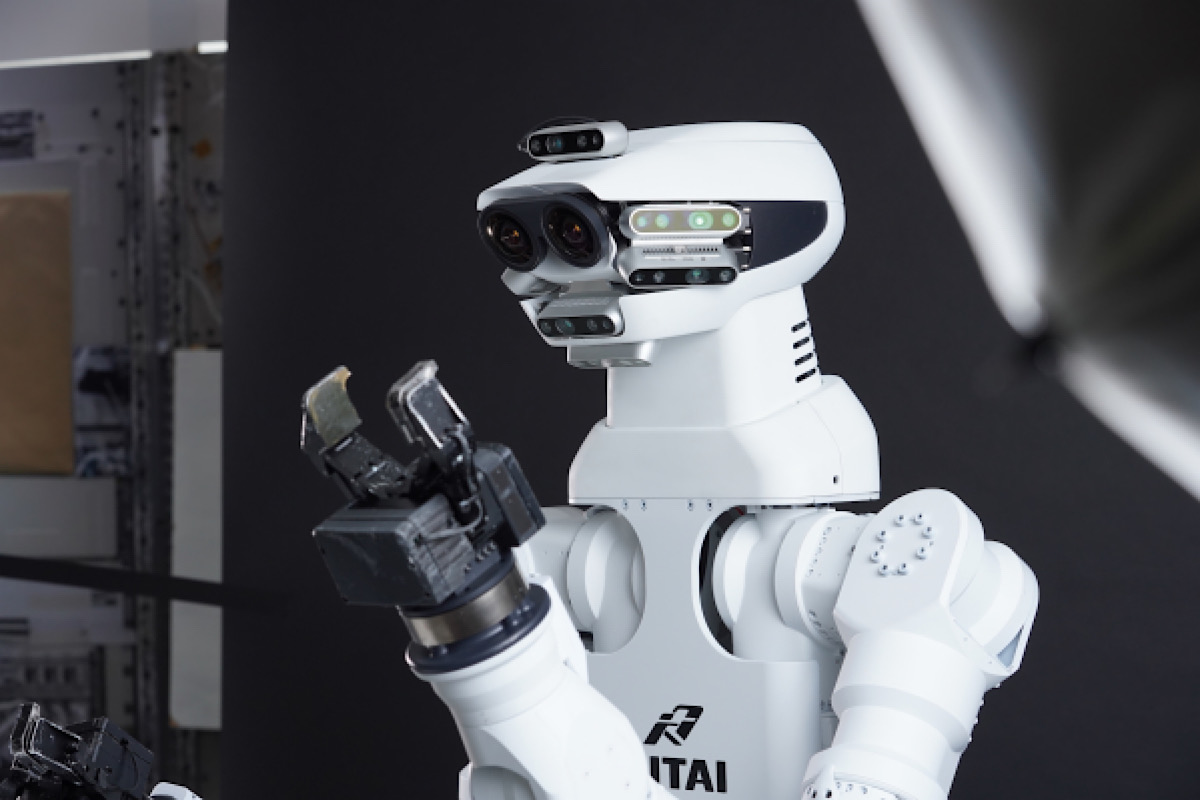
Gitai will also be staffing up in the U.S., specifically, as it seeks to expand its stateside presence in a bid to attract more business from that market.

“We are proceeding well in the Japanese market, and we’ve already contracted missions from Japanese companies, but we haven’t expanded to the U.S. market yet,” explained Gitai founder and CEO Sho Nakanose in an interview. So we would like to get missions from U.S. commercial space companies, as a subcontractor first. We’re especially interested in on-orbit servicing, and we would like to provide general-purpose robotic solutions for an orbital service provider in the U.S.”

Nakanose told me that Gitai has plenty of experience under its belt developing robots which are specifically able to install hardware on satellites on-orbit, which could potentially be useful for upgrading existing satellites and constellations with new capabilities, for changing out batteries to keep satellites operational beyond their service life, or for repairing satellites if they should malfunction.

Continue reading… “Space startup Gitai raises $17.1M to help build the robotic workforce of commercial space – TechCrunch”
Autonomous robot performs its first intramuscular injection without needles

By Shane McGlaun 

One of the things that many people hate most about getting vaccinations and taking certain types of medication is needles. Any medication that has to be delivered intramuscular typically requires a needle and a skilled medical professional to administer it. However, that may change in the future with a new autonomous robot created by a company called Cobionix, founded at the University of Waterloo.

The autonomous robot utilizes the company’s Cobi platform to perform injections without using needles. Cobi is described as a versatile robotic platform that can be deployed rapidly and complete tasks completely autonomously. The robot was fitted with a needle-free injection system. It demonstrated the ability to deliver intramuscular injections to patients without needing needles and without supervision by a healthcare professional.

The robot developers believe that Cobi and solutions like it could help protect healthcare workers, reduce the cost of healthcare, and help improve patient outcomes. Researchers believe the autonomous design of the robot will dramatically reduce the requirements for vaccine clinics and could help deliver vaccines and other medications to remote populations with limited access to healthcare.

Continue reading… “Autonomous robot performs its first intramuscular injection without needles”

Self-Driving Farm Robot Uses Lasers To Kill 100,000 Weeds An Hour, Saving Land And Farmers From Toxic Herbicides

The nutrient content of our vegetables is down 40% over the last two decades and our soil health is suffering due to increasingly harsh herbicide use, according to Carbon Robotics founder Paul Mikesell. And farmers are increasingly concerned about the long-term health impacts of continually spraying chemicals on their fields.

But not weeding will cost half your crop, killing profitability.

The solution?

A self-driving farm robot that kills 100,000 weeds an hour … by laser.

Continue reading… “Self-Driving Farm Robot Uses Lasers To Kill 100,000 Weeds An Hour, Saving Land And Farmers From Toxic Herbicides”

Waterloo startup performs first ever robotic intramuscular injection

A company founded at the University of Waterloo’s flagship incubator has performed the first autonomous robotic intramuscular injection, paving the way to improved patient care in an industry faced with labour shortages.

Cobionix, an autonomous robotics company located in Kitchener-Waterloo, performed the injection-without needles-using their Cobi platform.

“Cobi is a versatile robotics platform that can be rapidly deployed to complete tasks with 100 per cent autonomy,” said Tim Lasswell, co-founder and CEO of Cobionix. “We outfitted Cobi to use a needle-free injection technology and to demonstrate that patients could receive intramuscular injections, such as vaccines, without needles and no involvement from a healthcare professional.”

Nima Zamani, co-founder and CTO of Cobionix, said there are many benefits to the new technology.

“Autonomous solutions such as Cobi could protect healthcare workers, reduce healthcare costs, and improve patient outcomes,” Zamani said. “The autonomous nature of Cobi also dramatically reduces the infrastructure requirements of vaccine clinics which could help reach populations in remote areas with limited access to medical care.”

Continue reading… “Waterloo startup performs first ever robotic intramuscular injection”

Skyscraper Window Washing Robots Are Here to Take Over One of Our Most Terrifying Jobs

Window washers are the next in line to see their jobs replaced by robots.

ByAndrew Liszewski

Even if they’re not afraid of heights, it still takes someone with nerves of steel to work as a window washer, dangling a hundred floors above the ground with a squeegee in hand. A company called Skyline Robotics wants to make window washing much safer because instead of humans, the lift that’s lowered down the side of a building is staffed with robots instead.

According to Skyline Robotics, the window cleaning industry, including those towering structures dotting the skylines of major metropolises, is a lucrative business with over $40 billion in revenue every year. The problem is that 74% of trained window washers are over 40 years old, and there’s not enough young blood to replace them. It’s easy to see why that’s the case. As anyone who’s ever seen the local news reporting on a daring window washer rescue already knows. It’s a risky gig, even if it comes with amazing views. One possible solution? Enter the robots.

Continue reading… “Skyscraper Window Washing Robots Are Here to Take Over One of Our Most Terrifying Jobs”

LionsBot Launches ‘King-Size’ Autonomous Cleaning Robot

By Alex McFarland

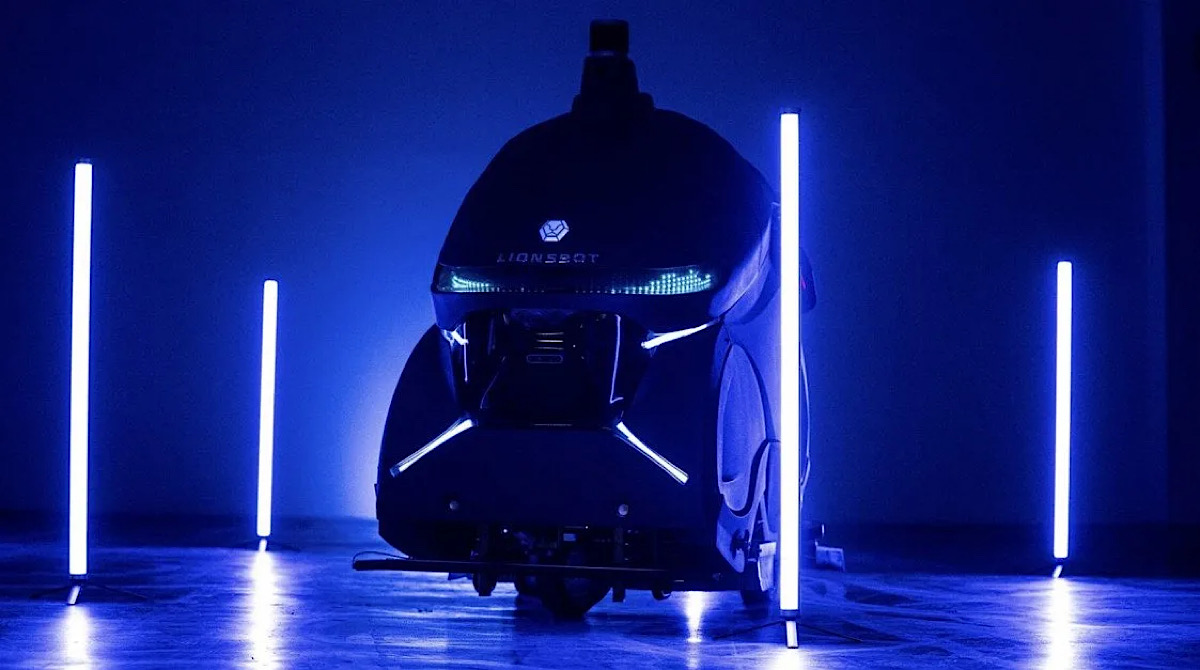
Singapore-headquartered smart robotics company LionsBot has released its first ‘king-sized’ autonomous cleaning robot for large commercial spaces. The scrubbing robot called Rex was designed with the aim to “empower the cleaning workforce and to keep them safe.”

Rex was engineered specifically for commercial and industrial settings like airports, warehouses, convention centres, and carparks. It is designed for ease of operation and accessibility, and it allows a single cleaner to handle multiple cleaning robots simultaneously through the LionsClean app. This frees up their time to focus on higher value tasks. 

Continue reading… “LionsBot Launches ‘King-Size’ Autonomous Cleaning Robot”

A Robotic Mini-Armada Will Probe the Secrets of Hurricanes

By Sierra Mitchell

This year, as hurricanes race into the warming coastal waters of the U.S., an array of seagoing robots will be waiting for them.

The torpedo-shaped machines will be positioned in what amounts to no man’s land, places where no ships or humans might survive and where space satellites can’t gauge the potency of storm action.

But for the stubby-winged and narwhal-horned “Slocum ocean glider,” this is the world it was made for.

The mini-armada is one way scientists are trying to better understand how the howling storms are changing as warming oceans amplify their intensity and extend their inland reach.

The robots’ work appears as blips of new data on computer screens, put there by a growing navy of autonomous vehicles waiting for hurricanes in the choppy water, or cruising just beneath it.

“We have gliders that have gone through two or three hurricanes already,” explained Gustavo Goni, a lead scientist at the Atlantic Oceanographic and Meteorological Laboratory in Miami, which is run by NOAA.

Continue reading… “A Robotic Mini-Armada Will Probe the Secrets of Hurricanes”

World’s first ‘human-like’ robot nurse to care for elderly: ‘Feeling of connection’

A REVOLUTIONARY new ‘robot’ nurse designed to look and act like a human being, and capable of solving complex problems, is one of the star guests at a conference on Alternative Intelligence in California.

By CIARAN MCGRATH

And one of the scientists behind the pioneering technology said the “nursing assistant” machine, named Grace, designed to provide help and companionship to elderly people – will even be able to discuss the weather with them. Grace will make just her second public appearance at the 14th Conference on Artificial General Intelligence, alongside Dr Ben Goertzel, the founder of AI research company SingularityNET.

She is described by the company as the “little sister” of Sophia, a “social humanoid robot” developed by Hong Kong-based Hanson Robotics and activated in 2016.

Janet Adams, Chief Operating Officer at SingularityNET, told Express.co.uk: “Grace’s hardware is based on the same Hanson Robotics platform as Sophia.

“However, their AI software is quite different.”

Continue reading… “World’s first ‘human-like’ robot nurse to care for elderly: ‘Feeling of connection’”

Blockchain Technology Could Act as a Communication Tool for Teams of Robots

ByAlex McFarland

New research out of the Massachusetts Institute of Technology (MIT) demonstrates how blockchain technology could be used as a communication tool for a team of robots, providing security against deception. The research was a collaboration between MIT and the Polytechnic University of Madrid, and it was published in IEEE Transactions on Robotics.

The new research could impact multi robot systems of self-driving cars, which deliver goods and transport people in certain cities. 

Continue reading… “Blockchain Technology Could Act as a Communication Tool for Teams of Robots”

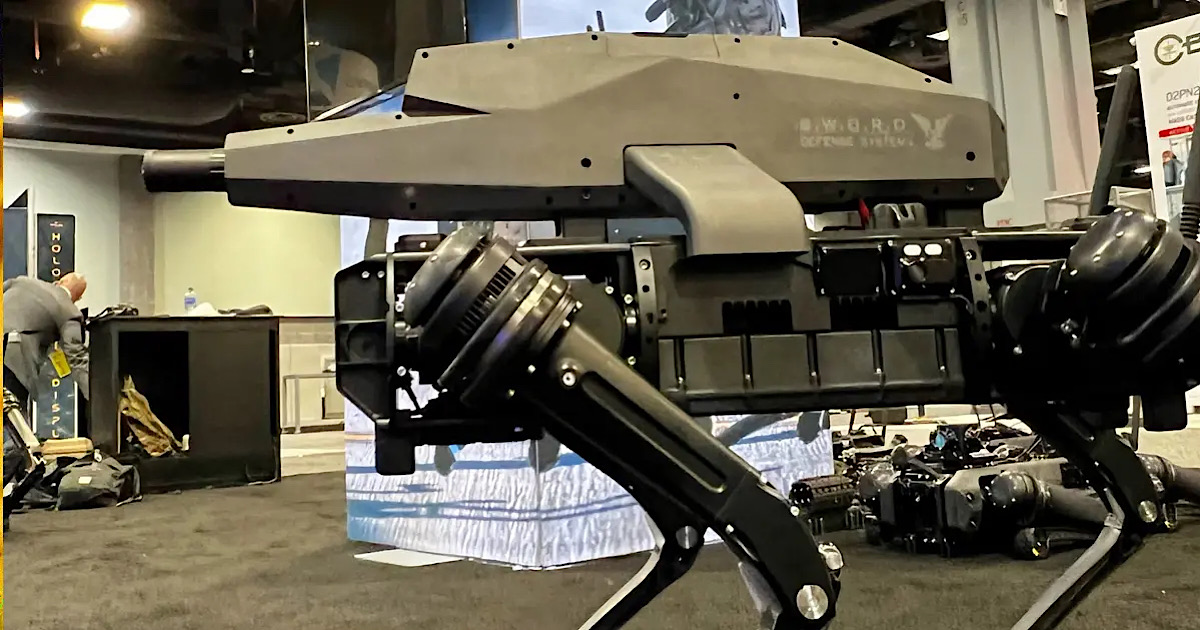
Uh Oh, They Strapped a Sniper Rifle to a Robot Dog

It’s what experts have been warning about for years.

For years, we’ve been warning that it was only a matter of time — and now, the inevitable has happened.

Somebody strapped an honest-to-god sniper rifle to the back of a quadrupedal robot dog.

An image shared on Twitter by military robot maker Ghost Robotics shows the terrifying contraption in all its dystopian glory.

“Keeping our [special ops] teams armed with the latest lethality innovation,” the caption reads.

It’s a nightmare come to life, a death machine designed to kill with precision on the battlefield.

“This is sad,” one Twitter user commented. “In what world is this a good idea? I bet police is salivating at the chance to use these.”

Continue reading… “Uh Oh, They Strapped a Sniper Rifle to a Robot Dog”

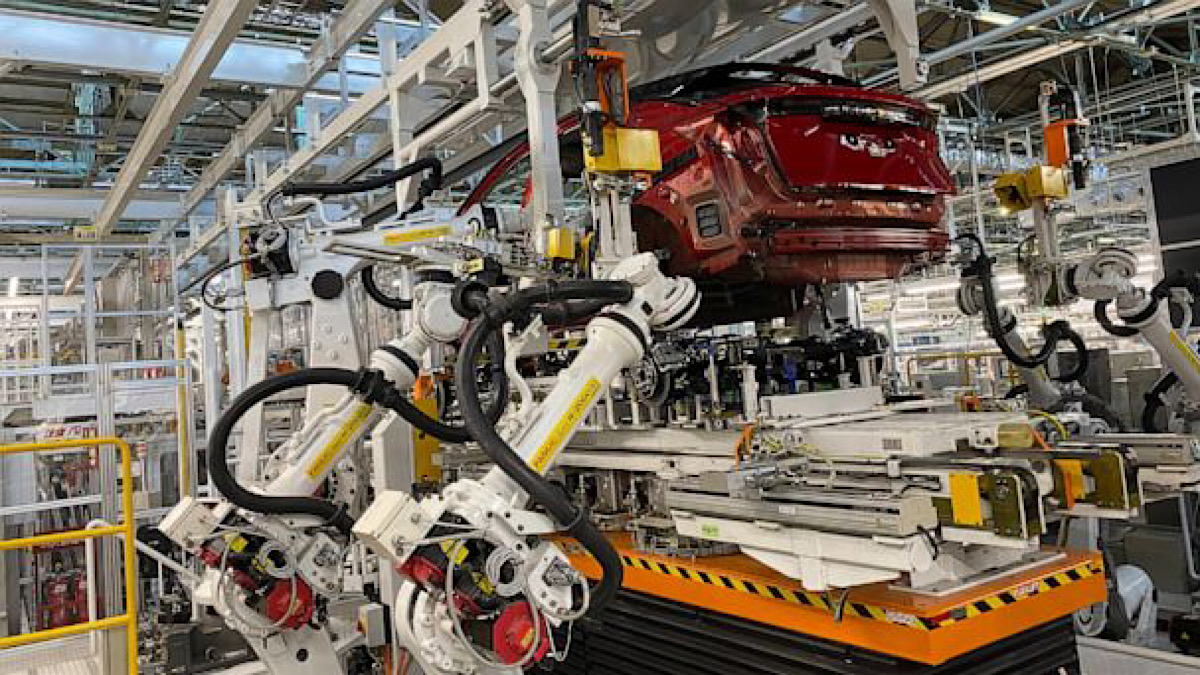
Smart robots do all the work at Nissan’s ‘intelligent’ plant

Nissan’s “intelligent factory” hardly has any human workers

By YURI KAGEYAMA

KAMINO KAWA, Japan — Nissan’s “intelligent factory” hardly has any human workers. The robots do the work, including welding and mounting. They do the paint jobs and inspect their own paint jobs.

The factory, on the outskirts of Tokyo, is set to be up and running sometime before April, according to Nissan Motor Co.

Its assembly line is designed so that all three types of models — electric; e-Power, which has both a motor and an engine, and those powered by regular combustion engine — can be built on the same line. Each vehicle is equipped with the right powertrain as it moves along the line.

The workers at the factory can focus on more skilled work such as analyzing data collected by the robots, and on maintaining the equipment.

All automakers are working on robotic technology that can increase adaptability and enable them to respond quickly to market demand.

During the tour, giant mechanical arms equipped with large displays shone light from the displays on to the car’s surfaces from various angles so that cameras could detect the tiniest flaws.

A mechanism quickly wound wires around a metal object that looked like a giant spool, a motor part that Nissan is using to replace magnets now used in electric vehicles. The company says the innovation eliminates the need for rare earth materials, cutting costs.

Continue reading… “Smart robots do all the work at Nissan’s ‘intelligent’ plant”

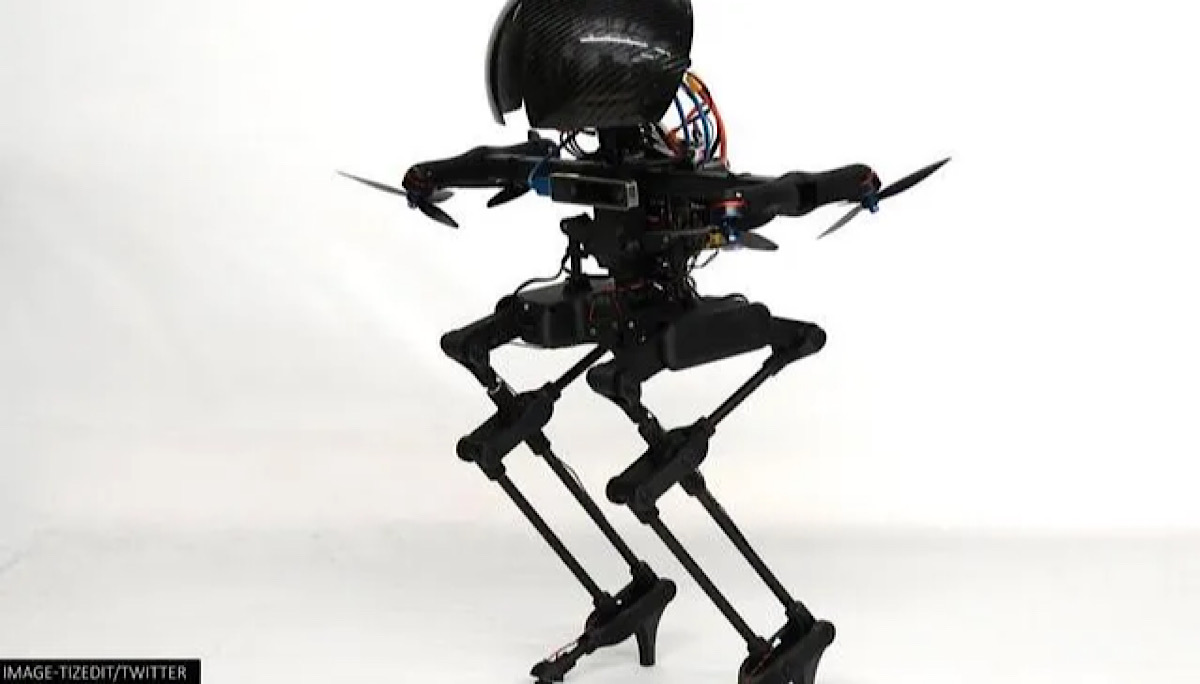
Caltech Researchers Develop Bipedal Robot LEONARDO, Which Can Walk, Fly And Even Skate

Bipedal robots like LEONARDO are being considered extremely promising as they are able to tackle complex real-world terrains more easily than humans.

By Harsh Vardhan 

In a stunning development, researchers from the California Institute of Technology (Caltech) have developed a bipedal robot named LEONARDO that seamlessly works on two types of locomotion i.e. walking and flying. According to Caltech’s official report, this new technology will make even the most complex of movements extremely smooth. Moreover, the scientists believe that if successful, LEONARDO can be deployed for missions on alien planets like Mars or Saturn’s moon Titan.

Continue reading… “Caltech Researchers Develop Bipedal Robot LEONARDO, Which Can Walk, Fly And Even Skate”
Discover the Hidden Patterns of Tomorrow with Futurist Thomas Frey
Unlock Your Potential, Ignite Your Success.

By delving into the futuring techniques of Futurist Thomas Frey, you’ll embark on an enlightening journey.

Learn More about this exciting program.