The Cannibal Machines Are Coming—and They’re Evolving Without You

For decades, we’ve been focused on building smarter robot minds. Now, scientists have unlocked the next frontier: bodies that grow, heal, and scavenge.

In a stunning leap out of Columbia University, researchers have created robots that can physically rebuild themselves—not in a factory, but in the wild, using parts from their surroundings or even other robots. Dubbed “Robot Metabolism,” this new form of machine autonomy marks the beginning of self-sustaining, self-improving machines that blur the line between design and evolution.

Continue reading… “The Cannibal Machines Are Coming—and They’re Evolving Without You”
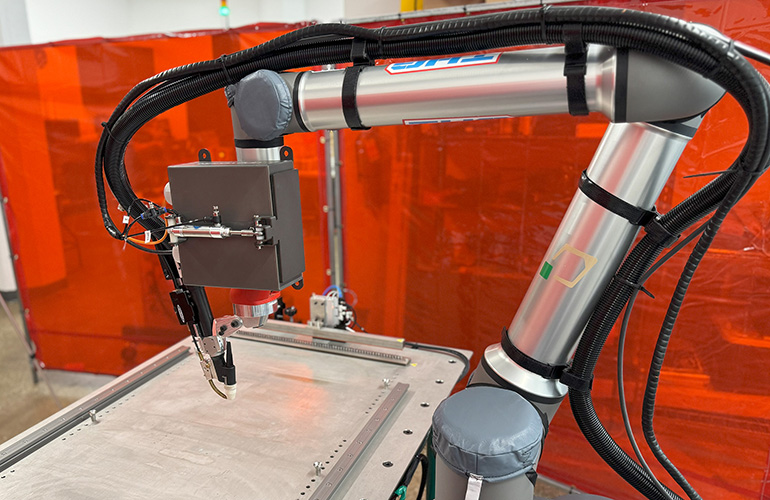
Welding Without Welders: The Smart Workcell That Doesn’t Need You

Welders used to rule the shop floor.

Their sparks were the signature of a skilled trade—equal parts craftsmanship, grit, and danger. But what happens when the torch passes to a machine that doesn’t sweat, doesn’t miss, and doesn’t complain?

This week, Cohesive Robotics answered that question loud and clear with the launch of its Smart Welding Robotic Workcell, a fully autonomous welding system that doesn’t just automate tasks—it replaces the art of welding with code, cameras, and algorithms.

Welcome to the new frontier of fabrication, where the welder’s helmet is traded for a machine-learning model, and experience is measured in training data—not decades on the job.

Continue reading… “Welding Without Welders: The Smart Workcell That Doesn’t Need You”

Berkeley Humanoid Lite: Making Robotics More Accessible

Engineers at UC Berkeley have introduced the Berkeley Humanoid Lite, a low-cost, fully open-source humanoid robot aimed at lowering the barrier to entry for robotics enthusiasts. Designed with accessibility and affordability in mind, the robot uses 3D-printed parts and readily available components, keeping the overall cost below $5,000 and requiring no specialized equipment to build.

Standing about one meter tall and weighing 35.2 pounds (16 kilograms), the humanoid features modular actuators powered by cycloidal gears—an efficient and durable mechanical design. The robot’s entire hardware, software, and training resources are openly available, enabling users to build, modify, and enhance the system with ease.

Continue reading… “Berkeley Humanoid Lite: Making Robotics More Accessible”

Nature-Inspired Soft Robot Mimics Worms and Snakes for Search-and-Rescue Missions

Researchers from the University of Southern Denmark (SDU) have developed a groundbreaking soft robot inspired by limbless creatures like snakes and earthworms. This flexible, bioinspired machine is capable of crawling across flat surfaces and navigating obstacle-laden environments, mimicking the natural locomotion of its biological counterparts.

The research, published in Cyborg and Bionic Systems, was accompanied by a video showcasing the robot in motion. In the footage, the robot bends and moves in a way that closely resembles the fluid movement of snakes and worms, highlighting the success of its biologically inspired design.

Continue reading… “Nature-Inspired Soft Robot Mimics Worms and Snakes for Search-and-Rescue Missions”

Veho and RIVR Launch Delivery Robots to Enhance E-Commerce Logistics

U.S.-based parcel delivery platform Veho has partnered with robotics company RIVR to enhance the efficiency and quality of e-commerce deliveries using advanced delivery robots. The collaboration aims to support human drivers rather than replace them, with robots handling part of the last-mile delivery process to boost overall speed, reduce physical strain, and improve customer satisfaction.

The pilot program has already begun in Austin, where Veho is deploying RIVR’s wheeled-legged robots to deliver parcels directly from delivery vehicles to customers’ doorsteps. These robots follow customer instructions and use the Veho app to provide photographic proof of delivery.

Continue reading… “Veho and RIVR Launch Delivery Robots to Enhance E-Commerce Logistics”

Robots Learn to “Feel” Objects by Shaking Them: A New Era in Sensor-Free Perception

In a major step forward for robotics, researchers from MIT, Amazon Robotics, and the University of British Columbia have developed a novel technique that allows robots to assess the properties of objects—such as weight, softness, or internal contents—by simply picking them up and giving them a gentle shake. Remarkably, this method relies solely on internal sensors, eliminating the need for external cameras or tactile systems.

This innovative approach mimics a common human behavior: gauging what’s inside a box by lifting and shaking it. By enabling robots to do the same, the team has created a low-cost, efficient method for robots to interpret the physical world, especially in environments where vision-based systems are impractical—like dark basements or disaster-stricken buildings.

Continue reading… “Robots Learn to “Feel” Objects by Shaking Them: A New Era in Sensor-Free Perception”

Breakthrough in Robotic Touch: Researchers Solve Key Sensor Flaw for Smarter, More Sensitive Robots

A team of researchers from Northwestern University and Tel Aviv University has made a critical discovery that could revolutionize robotic touch by making it more sensitive, accurate, and affordable. The advancement addresses a previously unnoticed flaw in the materials commonly used in flexible sensors—paving the way for robotic skins that better mimic the human sense of touch.

At the heart of the breakthrough is a deeper understanding of conductive elastomer composites, materials often used in robotic sensors and wearable electronics. The team discovered that a thin, nearly invisible insulating layer forms on the surface of these composites during manufacturing. This layer interferes with electrical conductivity and causes inconsistent, unreliable data from touch sensors.

Continue reading… “Breakthrough in Robotic Touch: Researchers Solve Key Sensor Flaw for Smarter, More Sensitive Robots”

Adaptable Robots Poised to Revolutionize E-Waste Recycling in Europe

A team of European researchers has developed adaptable, AI-driven robots that could transform the way electronic waste is recycled — offering major benefits for both the environment and the economy.

At Electrocycling GmbH, one of Europe’s largest e-waste recycling facilities located near Goslar, Germany, up to 80,000 metric tons of electronic waste are processed annually. Despite modern equipment, over half of the staff still manually dismantle discarded electronics. This often involves removing dangerous lithium batteries from increasingly compact and complex devices — a process that is repetitive, labor-intensive, and potentially hazardous.

Continue reading… “Adaptable Robots Poised to Revolutionize E-Waste Recycling in Europe”

Protoclone: The Most Anatomically Accurate Android Yet from Clone Robotics

Clone Robotics has unveiled a new video showcasing its musculoskeletal humanoid robot, Protoclone, marking a major milestone in the evolution of lifelike androids. Built on a human skeletal framework and powered by artificial muscles, Protoclone is being hailed as the most anatomically accurate robot ever developed.

The android’s design mimics the human body in remarkable detail. Using Clone’s proprietary Myofiber artificial muscles—synthetic musculotendon units attached to anatomically correct bone points—Protoclone moves in a way that closely resembles natural human motion. This biologically inspired structure gives it over 200 degrees of freedom, more than 1,000 Myofibers, and 500 sensors, enabling dynamic and responsive movement.

Continue reading… “Protoclone: The Most Anatomically Accurate Android Yet from Clone Robotics”

Flexible Soft Robots Poised to Transform Disaster Response and Medicine

A new generation of soft, flexible robots is emerging with the potential to save lives in disaster zones and revolutionize how medicine is delivered within the human body. Developed by an international research team led by Penn State, these robots combine flexible electronics with magnetically guided movement, enabling them to crawl through tight spaces or navigate internal organs.

Unlike traditional rigid machines, these soft robots are made from pliable materials that mimic the natural motion of living organisms. Their ability to squeeze through confined areas makes them ideal for complex environments like collapsed buildings or the human gastrointestinal tract. Until now, one of the main challenges in soft robotics has been embedding sensors and electronics without compromising flexibility.

Continue reading… “Flexible Soft Robots Poised to Transform Disaster Response and Medicine”

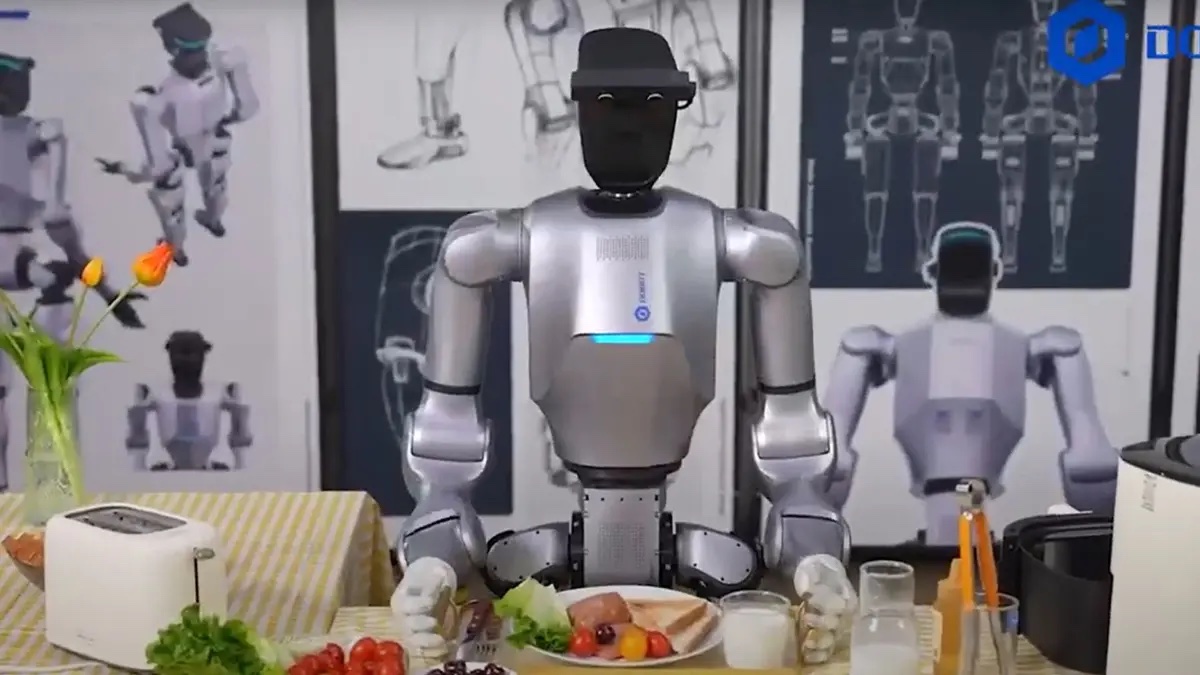
Dobot’s Humanoid Robot, Atom, Shows Off Culinary Skills in a New Video

Chinese robotics company Dobot has unveiled its first humanoid robot, Atom, showcasing its impressive culinary abilities in a recently released video. This marks the company’s debut in the competitive humanoid robotics market.

In the video, Atom displays remarkable precision and dexterity, preparing a nutritious breakfast. The robot expertly toasts bread and handles delicate ingredients like lettuce and cherries, demonstrating its advanced capabilities in a real-world setting. While the company has not yet released detailed specifications, the video clearly showcases Atom’s autonomous operation, giving a glimpse of its potential for household tasks.

Continue reading… “Dobot’s Humanoid Robot, Atom, Shows Off Culinary Skills in a New Video”

Revolutionary Robot Collective Mimics Embryonic Development for Shape-shifting and Self-healing Capabilities

Smart materials, which can alter their shape or form in response to external stimuli, have become essential for applications ranging from medical devices to automotive industries. Now, a research team led by scientists from UC Santa Barbara and TU Dresden has taken this concept to the next level by creating a robotic collective that functions similarly to a smart material. This innovative collective is capable of changing its shape and transitioning between solid and fluid states, all while maintaining cohesion, supporting significant weight, and even demonstrating self-healing abilities.

The inspiration behind this groundbreaking development comes from the remarkable processes observed during embryonic development. During this phase, simple cells transform into complex tissues and organs through coordinated movement and shifts in mechanical properties. Prof. Otger Campàs, a co-author of the study, highlighted the significance of these processes: “Living embryonic tissues are the ultimate smart materials. To sculpt themselves, cells in embryos can make the tissues switch between fluid and solid states.” This unique ability of living cells to adapt their physical states served as the blueprint for the team’s robot collective.

Continue reading… “Revolutionary Robot Collective Mimics Embryonic Development for Shape-shifting and Self-healing Capabilities”
Discover the Hidden Patterns of Tomorrow with Futurist Thomas Frey
Unlock Your Potential, Ignite Your Success.

By delving into the futuring techniques of Futurist Thomas Frey, you’ll embark on an enlightening journey.

Learn More about this exciting program.