Robot-Powered “Spitball Printing” Aims to Revolutionize Sustainable Construction

A new “spitball-throwing” robot, developed by a team at ETH Zurich led by Lauren Vasey, could reshape sustainable building practices. This technology, known as impact printing, shoots out a clay-based material at high speed, allowing for quick construction without the need for cement or curing time—a leap forward in reducing construction’s carbon footprint.

The building sector faces mounting pressure to curb CO2 emissions, especially from materials like concrete, which is slow to 3D-print and heavily dependent on cement. “The building sector needs to dramatically decrease our CO2 emissions from new construction and move towards more circular supply chains,” Vasey explained in a video introduction to the technology.

Continue reading… “Robot-Powered “Spitball Printing” Aims to Revolutionize Sustainable Construction”
Toronto Zoo Launches Eco-Friendly Delivery Robots to Reduce Carbon Footprint

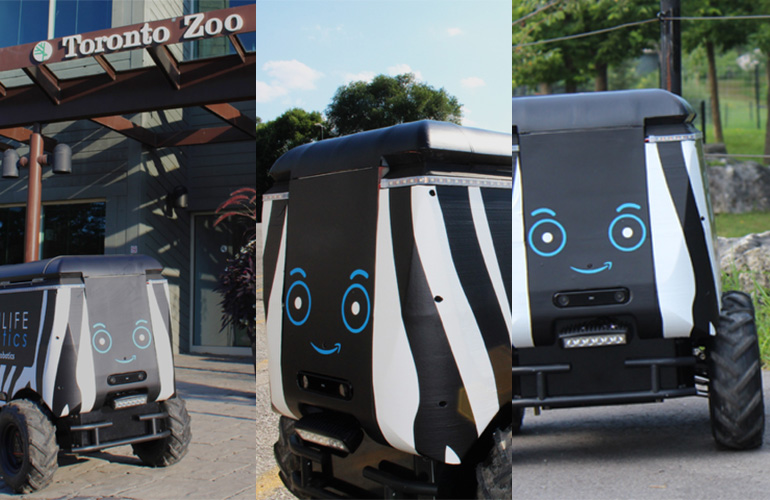
Real Life Robotics Inc. has officially introduced its innovative delivery robot platform, BUBS, as part of a pilot project at the Toronto Zoo. The launch, held on August 15, coincided with the zoo’s 50th-anniversary celebration and is part of its broader goal to become a cutting-edge conservation campus. The program, named “Zoober,” aims to lower the environmental impact of delivering food to animal habitats by replacing traditional fossil fuel-based vehicles with autonomous robots.

The zoo, which covers 500 acres and delivers between 1 and 1.5 tons of food daily, hopes to achieve net-zero emissions by 2030 with the help of BUBS. These robots, designed for last-mile delivery, operate entirely within the zoo’s grounds, transporting meals from the central kitchen to various animal enclosures. Visitors may spot the robots on public trails and behind-the-scenes roads.

Continue reading… “Toronto Zoo Launches Eco-Friendly Delivery Robots to Reduce Carbon Footprint”

Revolutionary Thin Soft Robots to Transform Inspections in Challenging Environments

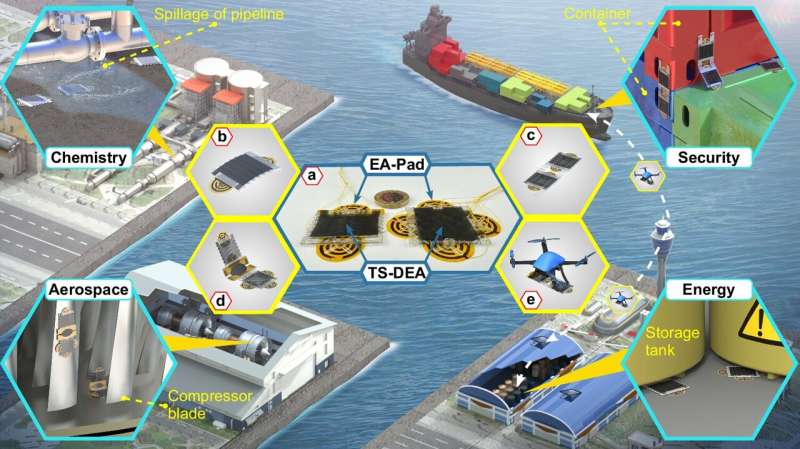
Researchers at the Rolls-Royce University Technology Centre (UTC) in Manufacturing and On-Wing Technology, based at the University of Nottingham, have developed ultra-thin, soft robots capable of navigating narrow and complex spaces. These groundbreaking robots, called Thin Soft Robots (TS-Robots), are set to revolutionize inspections and maintenance in industries like power plants, bridges, and aero engines. The study, published in Nature Communications, highlights their advanced capabilities.

TS-Robots are remarkably thin, measuring only 1.7mm in thickness, allowing them to maneuver through tight spaces such as millimeter-wide gaps under doors or within intricate machinery. Powered by dielectric elastomers, they feature multimodal locomotion, enabling them to crawl, climb, swim, and transition between solid and liquid terrains. This adaptability makes them highly suitable for navigating environments with obstacles like narrow gaps, trenches, walls, and liquids.

Continue reading… “Revolutionary Thin Soft Robots to Transform Inspections in Challenging Environments”

The Rise of Biohybrid Robots: Blurring the Line Between Machine and Life

In 2014, researchers at the University of Illinois achieved a groundbreaking feat by creating a microscopic swimming robot, but what truly set it apart was its composition—cardiac muscle cells derived from rats. This innovation was among the first “biohybrid robots,” blending biological components with mechanical systems, challenging the traditional notion of robots as non-living, metal-based entities.

Two years later, Harvard researchers expanded on this concept, creating a 16-millimeter biohybrid “animal” resembling a stingray. With an elastomer body, a gold skeleton, and rat muscle cells, this creature glided through water, powered and guided by light. Since then, biohybrid robots have evolved, with recent advancements including a robot that walks with a human-like gait and a robotic hand equipped with biological neural networks.

Continue reading… “The Rise of Biohybrid Robots: Blurring the Line Between Machine and Life”

Robots Gain an Innate Sense of Touch Through Advanced Sensor Integration

Researchers in Germany have developed a groundbreaking method that equips robots with an innate sense of touch by integrating their existing internal force-torque sensors with machine learning algorithms. This innovative approach, developed by a team at the Deutschen Zentrums für Luft- und Raumfahrt (DLR), allows robots to sense and interpret human touch without the need for expensive synthetic skins or additional external sensors.

“The intrinsic sense of touch we proposed in this work can serve as the basis for an advanced category of physical human-robot interaction that has not been possible yet, enabling a shift from conventional modalities towards adaptability, flexibility, and intuitive handling,” the researchers stated.

Continue reading… “Robots Gain an Innate Sense of Touch Through Advanced Sensor Integration”

MIT CSAIL Develops Real-to-Sim-to-Real Model for Versatile Robot Training

Researchers at MIT’s Computer Science and Artificial Intelligence Laboratory (CSAIL) have developed an innovative Real-to-Sim-to-Real model to enhance robotic learning in diverse real-world conditions. This model, named RialTo, is designed to train robots to perform everyday tasks efficiently in specific environments.

While the goal of many developers is to create robots that can operate universally under all conditions, MIT CSAIL’s team focused on making robots adept at functioning in particular settings. The RialTo method improves robot policies by 67% compared to traditional imitation learning, even with the same number of demonstrations. This approach allows robots to handle tasks such as opening toasters, placing books on shelves, and opening drawers and cabinets.

Continue reading… “MIT CSAIL Develops Real-to-Sim-to-Real Model for Versatile Robot Training”

Innovative Robot Developed to Control Weeds Without Harmful Herbicides

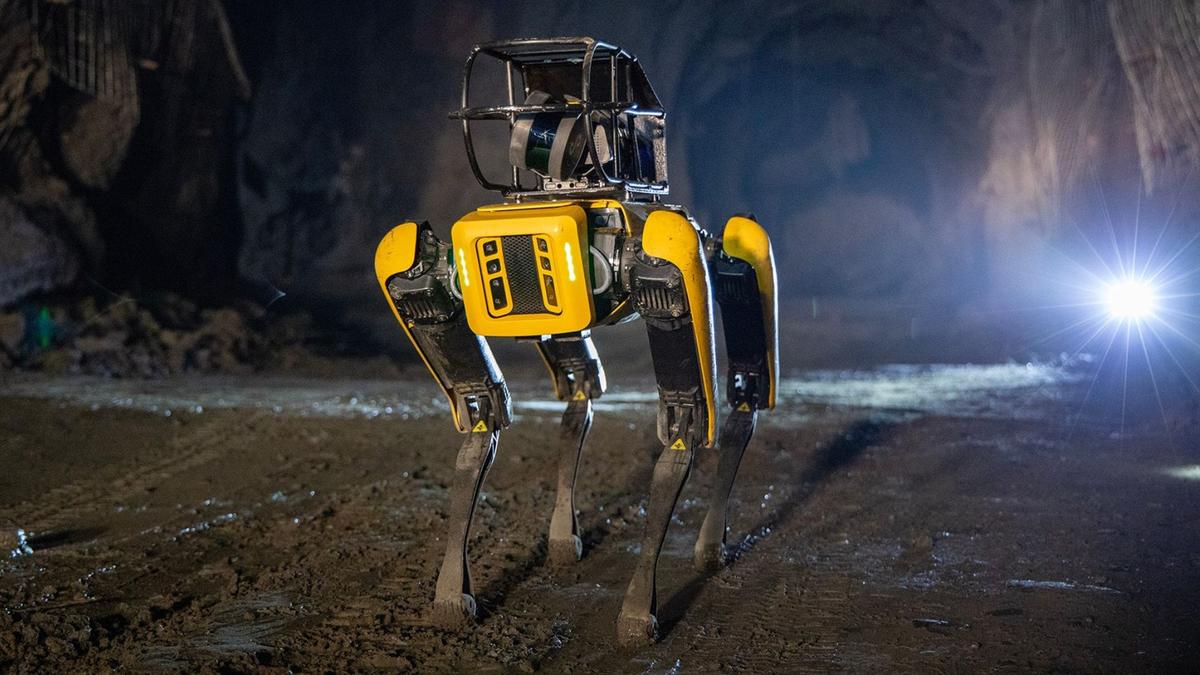
Researchers at Texas A&M University have developed a groundbreaking robotic system to control weeds on farms without the use of harmful herbicides. This new method leverages a Boston Dynamics Spot quadruped robot, equipped with a flexible end effector and a propane torch, to effectively manage weed growth.

Weed infestation is a persistent issue in agriculture, as weeds compete with crops for essential nutrients, water, and sunlight. Traditional methods, such as manual removal and mechanized herbicide spraying, are either labor-intensive or environmentally damaging. The Texas A&M team’s robotic solution offers a sustainable and efficient alternative.

Continue reading… “Innovative Robot Developed to Control Weeds Without Harmful Herbicides”

Leveraging Online Videos for Advanced Robot Training

To be effectively utilized in real-world scenarios, robots must reliably perform a variety of everyday tasks, from household chores to industrial processes. Tasks such as manipulating fabrics, folding clothes, or assisting individuals with mobility impairments in knotting ties, are particularly challenging for robotic systems. Training robots to handle these tasks often involves imitation learning, which uses videos, motion capture footage, and other data of humans completing the tasks. However, this method requires substantial amounts of human demonstration data, which can be costly and difficult to obtain. Existing open-source datasets also tend to lack sufficient data compared to those used for training other computational techniques like computer vision or generative AI models.

Researchers at the National University of Singapore, Shanghai Jiao Tong University, and Nanjing University have recently proposed an alternative approach to enhance and simplify the training of robotics algorithms using human demonstrations. This approach, detailed in a paper pre-published on arXiv, utilizes the vast number of videos posted online daily as sources of human demonstrations for various tasks.

Continue reading… “Leveraging Online Videos for Advanced Robot Training”

Insect-Inspired Navigation Revolutionizes Tiny Autonomous Robots

Researchers at TU Delft have drawn inspiration from the natural world to develop an innovative autonomous navigation strategy for tiny, lightweight robots. Inspired by how ants visually recognize their environment and count their steps to find their way back home, this strategy could drastically improve the efficiency and application of small autonomous robots.

The TU Delft researchers designed an insect-inspired navigation system that allows tiny robots to return home after long journeys with minimal computation and memory requirements—just 0.65 kilobytes per 100 meters. This breakthrough has the potential to extend the use of small autonomous robots in various fields, such as warehouse inventory monitoring and detecting gas leaks at industrial sites.

Continue reading… “Insect-Inspired Navigation Revolutionizes Tiny Autonomous Robots”

Transforming Human-Robot Interaction: UC San Diego’s Humanoid Robot Learns Expressive Movements

Engineers at the University of California, San Diego have made significant strides in humanoid robotics by training a robot to perform a wide range of expressive movements effortlessly. This includes simple dance routines and gestures like waving, high-fiving, and hugging, all while maintaining a steady gait on various terrains. The enhanced expressiveness and agility of this humanoid robot hold promise for improving human-robot interactions in diverse settings, such as factory assembly lines, hospitals, homes, and hazardous environments like laboratories or disaster sites.

“Through expressive and more human-like body motions, we aim to build trust and showcase the potential for robots to coexist harmoniously with humans,” said Xiaolong Wang, a professor in the Department of Electrical and Computer Engineering at the UC San Diego Jacobs School of Engineering. “We are working to help reshape public perceptions of robots as friendly and collaborative rather than terrifying like The Terminator.”

Continue reading… “Transforming Human-Robot Interaction: UC San Diego’s Humanoid Robot Learns Expressive Movements”

West Japan Railway Unveils Humanoid Robot for Maintenance Tasks

It resembles a malevolent robot from 1980s sci-fi, but West Japan Railway’s new humanoid employee was designed with nothing more sinister in mind than a spot of painting and gardening. Starting this month, the machine, which features a crude head and coke-bottle eyes mounted on a truck that can drive on rails, will be put to use for maintenance work on the firm’s network.

The operator sits in a cockpit on the truck, “seeing” through the robot’s eyes via cameras and operating its powerful limbs and hands remotely. With a vertical reach of 12 meters (40 feet), the machine can use various attachments for its arms to carry objects as heavy as 40 kilograms (88 pounds), hold a brush to paint, or use a chainsaw. Initially, the robot’s primary tasks will focus on trimming tree branches along rails and painting metal frames that hold cables above trains, according to the company.

Continue reading… “West Japan Railway Unveils Humanoid Robot for Maintenance Tasks”

Robot Pets: A New Frontier in Combating Loneliness Among Older Adults

In the early 1990s, a researcher at Japan’s National Institute of Advanced Industrial Science and Technology began work on what would become Paro, a therapeutic robot resembling a doe-eyed seal pup. Over 30 years later, Paro remains the best-known example of a robot designed to provide companionship for older adults. In 2011, Paro even made an unofficial cameo on “The Simpsons,” highlighting its cultural impact.

Japan has long been a leader in age-tech robotics due to its rapid adoption of new technology and its aging population, with 29% of its citizens being 65 or older. While increased life expectancy is generally positive, it can also erode traditional support structures. Robots have been proposed as a solution to supplement human care shortages and alleviate loneliness among older adults.

Continue reading… “Robot Pets: A New Frontier in Combating Loneliness Among Older Adults”
Discover the Hidden Patterns of Tomorrow with Futurist Thomas Frey
Unlock Your Potential, Ignite Your Success.

By delving into the futuring techniques of Futurist Thomas Frey, you’ll embark on an enlightening journey.

Learn More about this exciting program.