New Model Uncovers How Cellular Senescence Is Triggered and Reversed in Worms

Researchers have induced a senescent-like state in worms by modifying the activity of the transcription factor TFEB. Under normal conditions, worms experience regeneration and signs of rejuvenation after fasting followed by refeeding. However, when TFEB is absent, this recovery fails to occur. Instead, the worms’ stem cells enter a state that closely resembles cellular senescence.

This senescent condition is characterized by several hallmark features: DNA damage, enlarged nucleoli, elevated levels of mitochondrial reactive oxygen species (ROS), and activation of inflammatory signals—all traits commonly observed in aging mammalian cells.

Continue reading… “New Model Uncovers How Cellular Senescence Is Triggered and Reversed in Worms”

Artificial Lightning and Electrolysis: A Greener Path to Ammonia Production

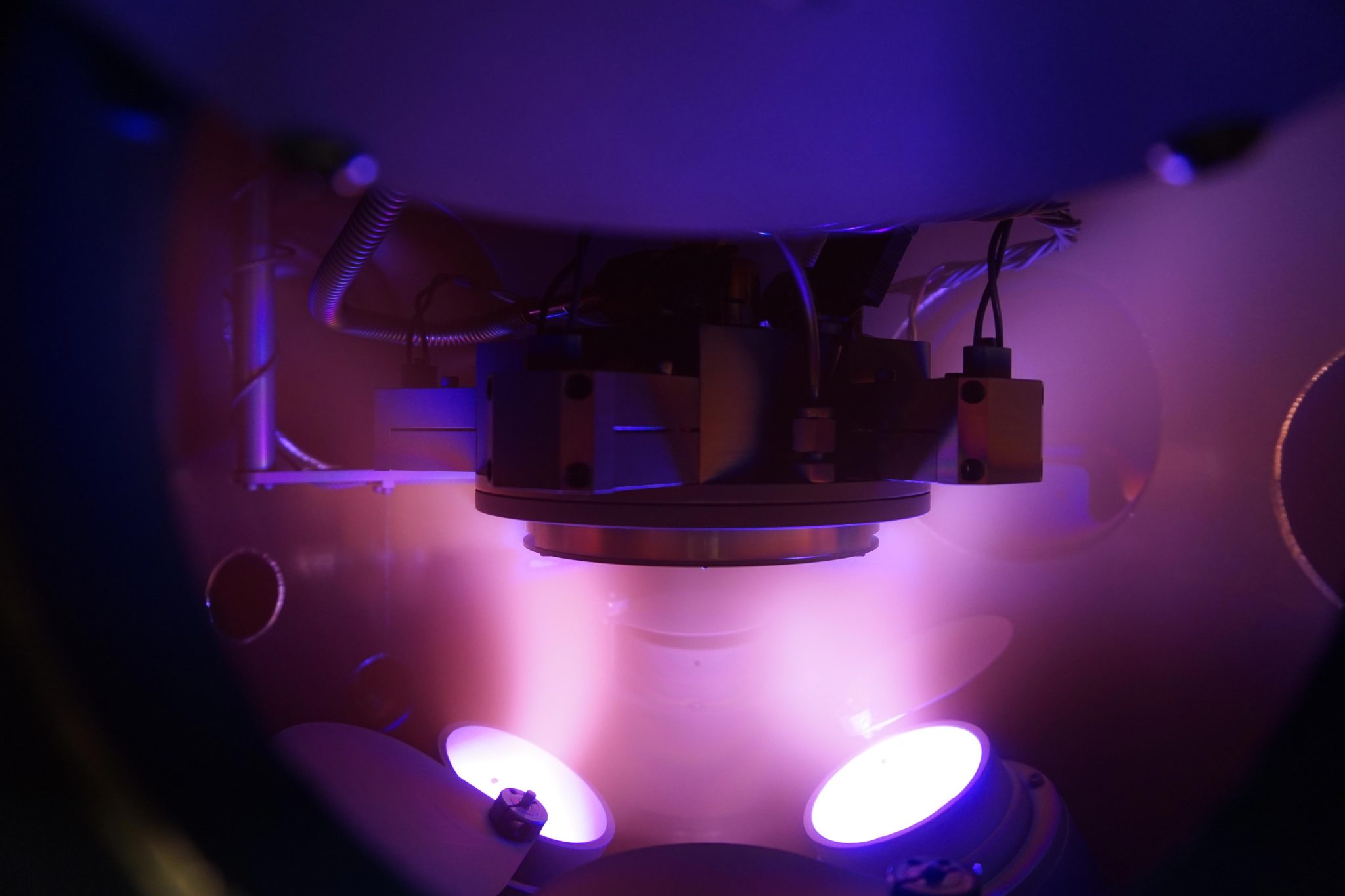
Researchers at the University of Sydney have developed a transformative method for producing ammonia using electricity and plasma—mimicking the effect of artificial lightning. This innovation offers a cleaner, decentralized alternative to the traditional Haber-Bosch process, which currently dominates global ammonia production but carries a heavy environmental cost.

Ammonia is a critical ingredient in fertilizers and plays a vital role in supporting nearly half of global food production. However, conventional ammonia production relies on high heat, high pressure, and fossil fuels, making it one of the most carbon-intensive industrial processes in existence.

Continue reading… “Artificial Lightning and Electrolysis: A Greener Path to Ammonia Production”

Breakthrough in Gentle Testing Unlocks Micro-LED Manufacturing Potential

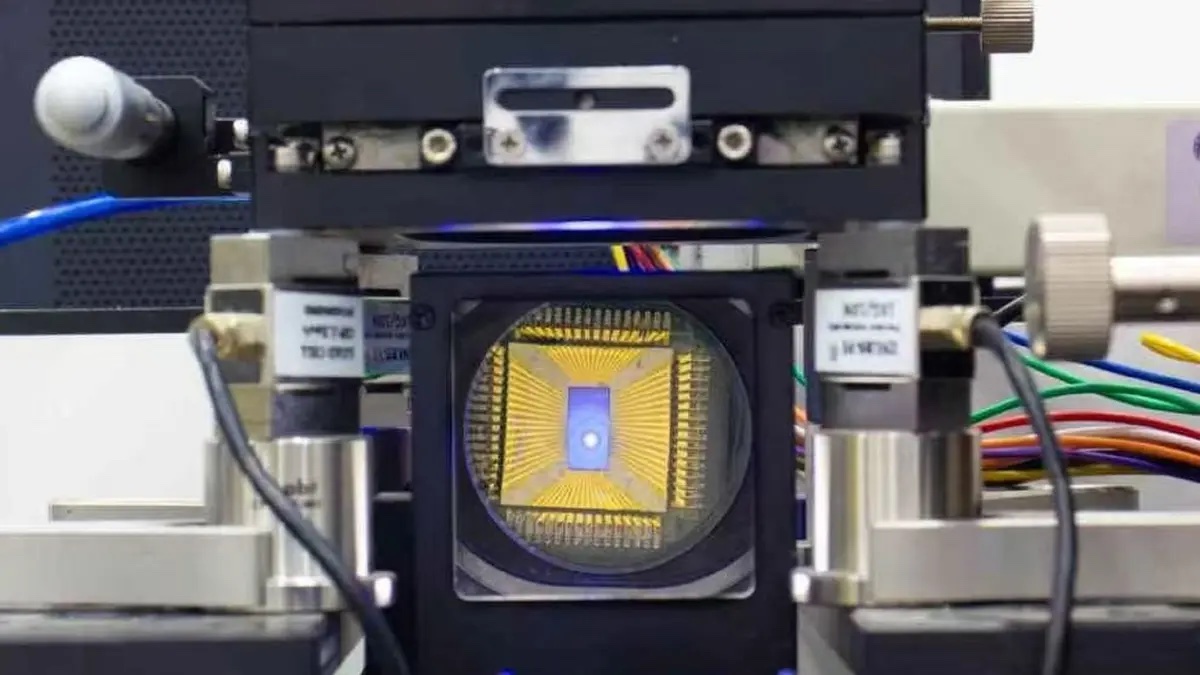
At Tianjin University, scientists have developed a revolutionary method to test micro-LED wafers without causing damage—solving a key obstacle that has long hindered the high-end display industry. Using just 0.9 megapascals of pressure, the team has introduced a soft-contact approach that offers a viable path to scaling up production of ultra-bright, energy-efficient screens for everything from luxury televisions to next-generation wearables.

Micro-LED technology holds immense promise, but commercial success hinges on achieving exceptionally high yields during wafer fabrication. Even minor defects in these tiny LED structures can degrade performance, increase costs, and delay production. As a result, rigorous quality testing is essential—but testing itself has been a persistent problem.

Continue reading… “Breakthrough in Gentle Testing Unlocks Micro-LED Manufacturing Potential”

Quantum Leap: Researchers Achieve First Unconditional Exponential Speedup

Quantum computing has taken a major step forward with a breakthrough demonstrating an unconditional exponential speedup—a long-awaited milestone in the field. Led by Daniel Lidar, a professor of engineering at the University of Southern California (USC) and a leading expert in quantum error correction, the research was carried out in collaboration with teams from USC and Johns Hopkins University. Their findings were published in Physical Review X.

Quantum computers have promised transformative capabilities: solving complex equations, designing next-generation medicines, breaking encryption, and discovering new materials. However, one persistent barrier has slowed progress—noise. These small but constant errors disrupt quantum operations, often rendering results less reliable than those from traditional classical computers.

Continue reading… “Quantum Leap: Researchers Achieve First Unconditional Exponential Speedup”

Turning Coffee Waste into Climate-Smart Bricks

Australian researchers at Swinburne University of Technology have created strong, sustainable bricks using used coffee grounds, offering a promising solution for reducing the construction industry’s carbon footprint.

On June 27, Swinburne signed an intellectual property licensing agreement with startup Green Brick to bring these eco-friendly bricks to market.

Continue reading… “Turning Coffee Waste into Climate-Smart Bricks”

Cracking the Taxol Code: How Scientists Are Rebuilding a Cancer Drug Without Killing Yew Trees

This breakthrough marks a powerful convergence of ancient botanical wisdom and modern science, showing how plants can be tapped more sustainably for life-saving medicine. For decades, the chemotherapy drug Taxol—used to treat breast, ovarian, lung, and other aggressive cancers—was derived from the bark of the Pacific yew tree.

But harvesting Taxol in this way kills the tree, posing a major ecological and supply challenge since yews grow slowly and live for centuries. In recent years, scientists discovered that a precursor chemical called baccatin III, which can be chemically converted into Taxol, is produced in the tree’s needles and can be harvested without harming the plant.

Continue reading… “Cracking the Taxol Code: How Scientists Are Rebuilding a Cancer Drug Without Killing Yew Trees”

Rochester Quantum Network Achieves Long-Distance Photon-Based Communication

Researchers from the University of Rochester and Rochester Institute of Technology (RIT) have successfully established a functional quantum communications network between their campuses using fiber-optic infrastructure. The system, named the Rochester Quantum Network (RoQNET), transmits data through single photons sent over 11 miles of optical fiber—operating at room temperature and using standard optical wavelengths.

RoQNET represents a significant step forward in the development of secure quantum communications, a technology that could redefine how sensitive data is transmitted. Quantum networks offer unprecedented security, as any attempt to intercept or copy quantum information would alter the data and be immediately detectable. This is achieved through the use of qubits, the fundamental units of quantum information. Among the various forms qubits can take—such as atoms, trapped ions, or diamond defects—photons are considered ideal for long-distance quantum transmission.

Continue reading… “Rochester Quantum Network Achieves Long-Distance Photon-Based Communication”

Sodium Metal Fuel Cells Could Revolutionize Clean Power for Aircraft, Ships, and Trains

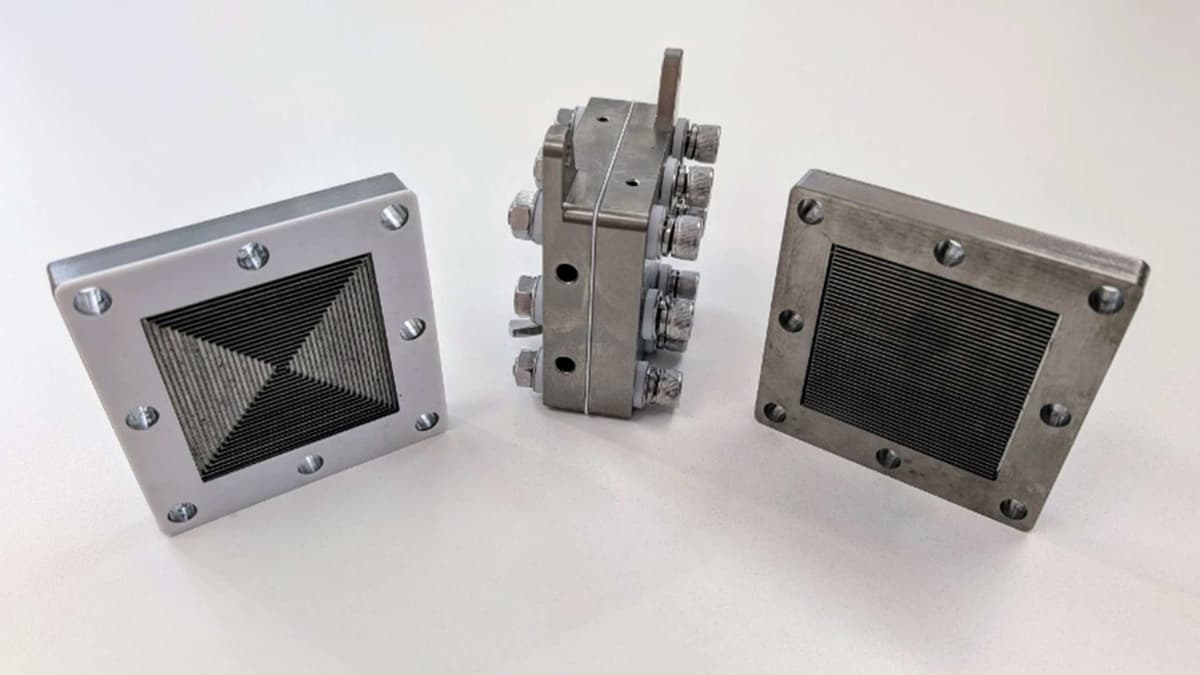
A new breakthrough in energy storage technology could transform how we power transportation systems that are hard to decarbonize. Researchers have developed a sodium metal fuel cell capable of delivering three times the energy densityof conventional lithium-ion batteries—offering a safer, faster-refueling, and more sustainable alternative for powering aircraft, trains, and ships.

While metals like lithium and sodium have long been recognized for their high energy potential, their use in practical energy systems has been hindered by the limitations of traditional battery designs. Metal-air batteries, although promising in theory, have struggled with reliability and rechargeability. Now, researchers are sidestepping those challenges by adapting the electrochemical principles of metal-air reactions into a refuelable fuel cell system.

Continue reading… “Sodium Metal Fuel Cells Could Revolutionize Clean Power for Aircraft, Ships, and Trains”

UK Scientists Launch First-Ever Synthetic Human Genome Project

In a groundbreaking move, UK researchers have begun work on the first synthetic human genome, aiming to unlock new frontiers in medicine, biotechnology, and genetics. Backed by an initial £10 million investment from the Wellcome Trust, the Synthetic Human Genome Project (SynHG) seeks to lay the foundation for building human DNA entirely from scratch.

This ambitious effort marks a new chapter in genomic science, moving from reading and editing DNA to writing complete genetic structures, such as chromosomes. The technology has the potential to transform how scientists understand disease, develop treatments, and engineer biological systems.

Continue reading… “UK Scientists Launch First-Ever Synthetic Human Genome Project”

Stratospheric Connectivity: New High-Altitude Platform Could Restore Internet During Disasters

A new class of airborne technology is poised to revolutionize emergency communications and internet access in remote areas. Sceye, a U.S.-based aerospace company specializing in High-Altitude Platform Systems (HAPS), has announced a significant partnership with global telecommunications leader SoftBank Corp. to advance stratospheric connectivity solutions.

Operating from the stratosphere, roughly 60,000 to 65,000 feet above Earth, Sceye’s HAPS are designed to deliver consistent, high-quality internet service and environmental monitoring where conventional infrastructure fails—such as during natural disasters, or in isolated regions like mountains and remote islands.

Continue reading… “Stratospheric Connectivity: New High-Altitude Platform Could Restore Internet During Disasters”

Bioplastic Film Offers Powerful, Eco-Friendly Solution for Passive Cooling

As extreme heatwaves and rising temperatures become increasingly common, keeping buildings cool during the summer months has become both a public health priority and an environmental challenge. Traditional air conditioning systems, while effective, contribute significantly to energy consumption and carbon emissions. In response, scientists are exploring passive cooling alternatives that work without electricity.

One promising solution comes in the form of a bioplastic film that can dramatically reduce building temperatures by reflecting nearly all incoming sunlight. Developed by researchers at Zhengzhou University in China and the University of South Australia, the material reflects 98.7 percent of sunlight and passively cools surfaces by up to 9.2°C (16.56°F) in laboratory conditions.

Continue reading… “Bioplastic Film Offers Powerful, Eco-Friendly Solution for Passive Cooling”

THE COMING HYPERCYCLE EARTHQUAKE: WHEN SILICON VALLEY’S ELITE REALIZE THEY’RE BUILDING ON SAND

HyperCycle is triggering the iPhone moment for AI—an unstoppable shift 
that will render centralized infrastructures obsolete almost overnight.

There’s a moment in every technological revolution when the old guard suddenly realizes the ground beneath them has shifted. For the music industry, it was Napster. For taxis, it was Uber. For retail, it was Amazon. For hospitality, it was Airbnb. Now, as HyperCycle’s node network prepares for full activation, Silicon Valley’s most powerful CEOs are about to experience their own “holy shit” moment—and the frantic 72-hour strategy sessions that follow will reshape the entire AI landscape.

The tech elite won’t see it coming until it hits. One day, they’ll be discussing quarterly earnings and competitive moats. The next, they’ll be staring at metrics showing their centralized AI infrastructures becoming as relevant as dial-up modems. This isn’t hyperbole. This is what happens when a truly disruptive technology doesn’t just improve the game—it changes the rules entirely.

Continue reading… “THE COMING HYPERCYCLE EARTHQUAKE: WHEN SILICON VALLEY’S ELITE REALIZE THEY’RE BUILDING ON SAND”
Discover the Hidden Patterns of Tomorrow with Futurist Thomas Frey
Unlock Your Potential, Ignite Your Success.

By delving into the futuring techniques of Futurist Thomas Frey, you’ll embark on an enlightening journey.

Learn More about this exciting program.