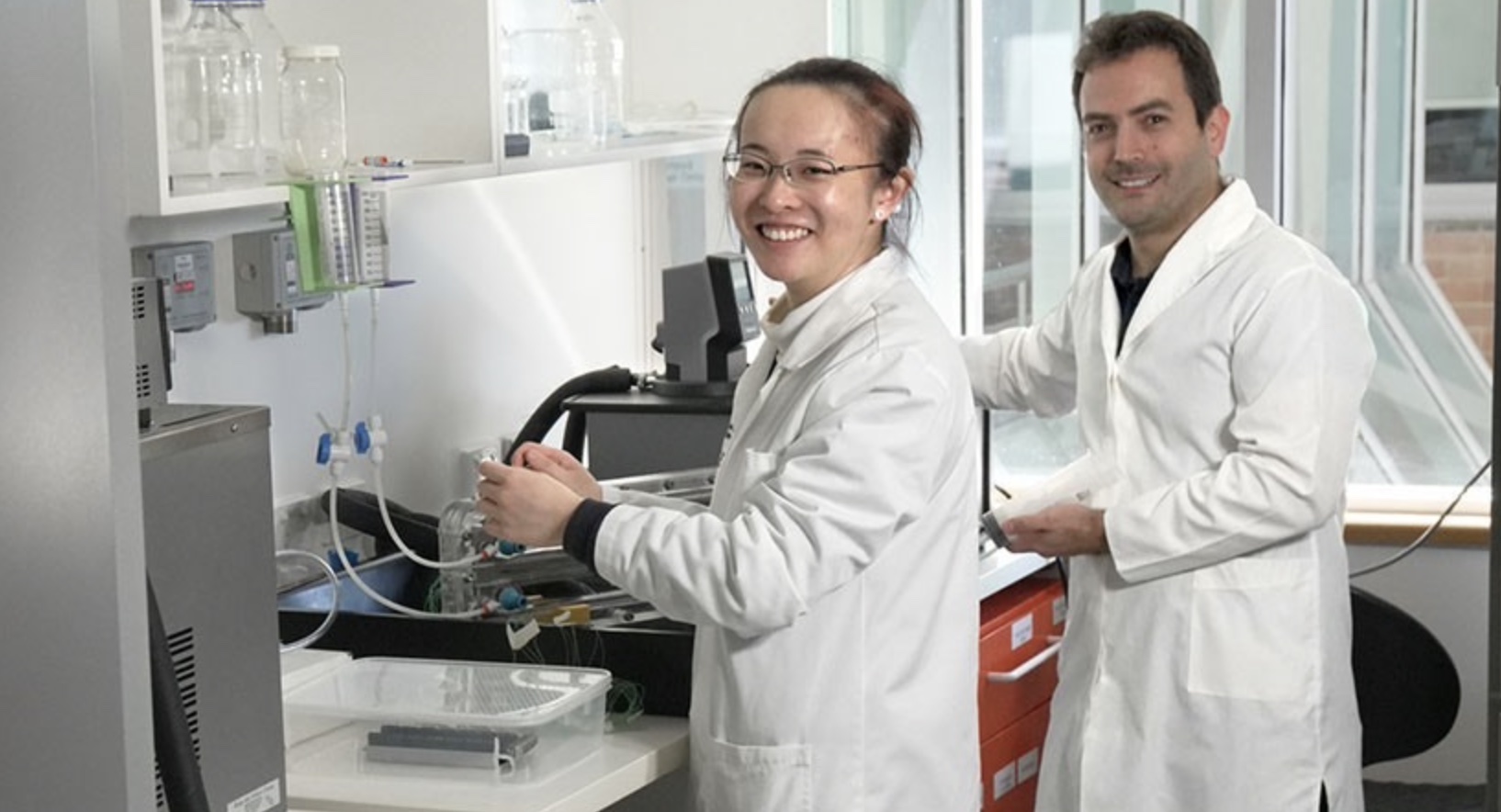
BrainBridge Unveils Revolutionary Head Transplant System

In a groundbreaking announcement, neuroscience and biomedical engineering startup BrainBridge has unveiled the world’s first head transplant system. This mind-bending concept proposes grafting a patient’s head onto a donor body, offering new hope to those suffering from untreatable conditions such as stage-4 cancer, paralysis, and neurodegenerative diseases like Alzheimer’s and Parkinson’s.

The ambitious procedure involves transplanting a patient’s head onto a healthy, brain-dead donor body, ensuring the preservation of consciousness, memories, and cognitive abilities. BrainBridge aims to make this futuristic system available within eight years, integrating advanced robotics and artificial intelligence to carry out the transplantation procedures.

Continue reading… “BrainBridge Unveils Revolutionary Head Transplant System”
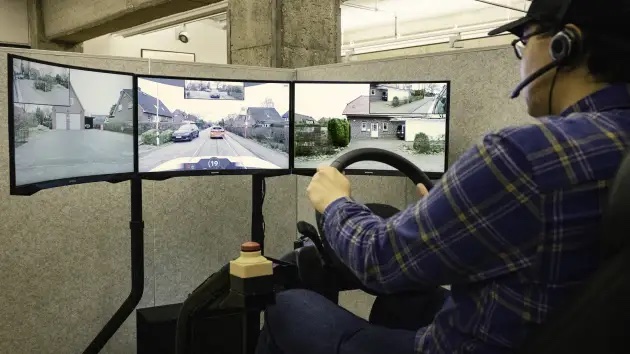
Peugeot Partners with Vay to Integrate Teledriving Technology for Last-Mile Deliveries

PARIS, France — French automotive giant Peugeot has announced a partnership with Vay, a German mobility startup, to integrate “teledriving” technology into its vehicles. This innovative tech offers an alternative to autonomous cars, allowing vehicles to be remotely driven by human operators. The collaboration will focus on assessing the use of Vay’s teledriving technology in “last-mile delivery” vans and smaller logistics vehicles, targeting business-to-business (B2B) customers.

The concept aims to replicate the typical journey a delivery vehicle takes from an order fulfillment center to its final destination, whether it be households or businesses. Unlike self-driving cars, which operate without human intervention, teledriven cars are controlled remotely by human drivers who navigate using a live feed of the vehicle’s surroundings. These teledrivers undergo several weeks of rigorous training and must receive certification before operating one of Vay’s teledrive stations.

Continue reading… “Peugeot Partners with Vay to Integrate Teledriving Technology for Last-Mile Deliveries”

Powerless Computing: How Smart Rubber Can Revolutionize Mechanical Tasks

In the absence of electronic computational tasks, our daily lives would be drastically different. Everyday devices like elevators, vending machines, turnstiles, washing machines, and traffic lights rely on simple electronic computing to switch states. But what if these devices could operate without a power supply? A research team led by Martin van Hecke from Leiden University and AMOLF has demonstrated how smart rubber structures can carry out these computational tasks. “We now know how to design simple materials so they can process information,” van Hecke stated.

Their study, published on May 20 in the Proceedings of the National Academy of Sciences, showcases a groundbreaking approach to computation using mechanical systems. Traditionally, electronic devices perform calculations with digital bits and complex circuits. However, the researchers have found an innovative way to compute using slender rubber elements as mechanical bits, assembling them into a “metamaterial.” The key to making these materials function as machines lies in controlling the interactions between the individual bits.

Continue reading… “Powerless Computing: How Smart Rubber Can Revolutionize Mechanical Tasks”

Revolutionizing Auto Repair: The Emergence of 3D Printing in MRO Operations

Though the automotive industry has long utilized 3D printing technology, its potential in end-part production and maintenance, repair, and overhaul (MRO) operations has been underutilized. While companies like BMW are developing automated additive manufacturing (AM) lines for car components, MRO applications lag behind. Harold Sears, a Ford veteran and 3D printing expert, emphasized the importance of standards and quality control for applying AM in auto repair. This need prompted Sears and others to launch the 3D Printing in Auto Repair Task Force with the International Bodyshop Industry Symposium (IBIS).

Following the Task Force’s report on the state of AM in auto repair published in October 2023, progress has been anticipated in this crucial segment. At the IBIS Worldwide event in Greece, a new business named Auto Additive emerged, leveraging the Task Force’s expertise and technology to address AM for auto repair.

Continue reading… “Revolutionizing Auto Repair: The Emergence of 3D Printing in MRO Operations”

Revolutionizing Construction: Carbon-Zero Cement from Recycled Concrete and Steel

Concrete and steel production are major contributors to CO2 emissions, but researchers from Cambridge University have developed a revolutionary solution that could recycle both materials simultaneously. By introducing old concrete into steel-processing furnaces, the process not only purifies iron but also produces “reactivated cement” as a byproduct. When powered by renewable energy, this method could potentially yield carbon-zero cement.

Scientists have long sought to make concrete more environmentally friendly. Efforts include altering the concrete mix to replace the most polluting ingredients, such as limestone, or designing concrete to absorb more CO2 from the atmosphere after being laid. In their new study, Cambridge researchers explored how waste concrete could be transformed back into clinker—the dry component of cement—ready for reuse.

Continue reading… “Revolutionizing Construction: Carbon-Zero Cement from Recycled Concrete and Steel”

Revolutionary Method for Diamond Synthesis at Atmospheric Pressure

Scientists have developed a groundbreaking technique to synthesize diamonds at normal atmospheric pressure without the need for a starter gem, potentially simplifying the production of these precious gemstones in the lab.

Traditionally, natural diamonds form in Earth’s mantle, the molten zone buried hundreds of miles beneath the planet’s surface. This natural process occurs under immense pressures of several gigapascals and scorching temperatures exceeding 2,700 degrees Fahrenheit (1,500 degrees Celsius).

Continue reading… “Revolutionary Method for Diamond Synthesis at Atmospheric Pressure”

Pioneering Thermal Desalination: A Breakthrough in Water Security

“It’s exciting to see a phenomenon that no one has seen before,” said Shuqi Xu, a PhD candidate at the Australian National University (ANU). “I don’t want people to think I am a workaholic, but I often come to the lab on Sundays. I can’t wait to find out the results of our experiments.”

Xu’s dedication has led to the world’s first thermal desalination method where water remains in the liquid phase throughout the process. This power-saving and potentially lifesaving approach is detailed in a new study published in Nature Communications.

Continue reading… “Pioneering Thermal Desalination: A Breakthrough in Water Security”

Revolutionary Ferroelectric Diode Enables Computing in Extreme Heat

A groundbreaking development in computing storage, capable of operating at temperatures so high that rock begins to melt, promises to enable computers to function in the harshest environments on Earth and even on Venus for the first time.

Current non-volatile memory (NVM) devices, such as solid-state drives (SSDs), fail at temperatures of 572 degrees Fahrenheit (300 degrees Celsius). However, scientists have now developed a new ferroelectric diode—a semiconductor switching device—that remains functional for hours at a staggering 1,112 degrees Fahrenheit (600 degrees Celsius). This advancement means that sensors and computing devices using this diode can be used in extreme environments, such as nuclear plants, deep-field oil and gas exploration, and our solar system’s hottest planet, where previous devices would fail within seconds.

Continue reading… “Revolutionary Ferroelectric Diode Enables Computing in Extreme Heat”

Reimagining the Future: The Power of Backcasting

In science fiction, the Grandfather Paradox suggests that traveling into the past and altering key events can dramatically change or even obliterate the future. But what if we flipped this idea on its head? Instead of worrying about the potential disruptions of time travel, we could define a desirable future and then reverse engineer the necessary steps to achieve it. Unlike the Grandfather Paradox, which resides in the realm of sci-fi, the concept of backcasting is not only feasible but also practical.

Backcasting, first outlined by Professor John B. Robinson from the University of Waterloo nearly 35 years ago, starts with a clear vision of the end goal and works backward to identify the steps needed to achieve it. This method contrasts with traditional forecasting, which predicts the future by extrapolating from past trends. In 2014, futurist Thomas Frey presented eight backcasting scenarios to better understand the future. These scenarios included ambitious visions such as controlling hurricanes or extending human lifespan beyond 200 years, and then mapped out the necessary technologies, policies, and actions to realize these visions.

Continue reading… “Reimagining the Future: The Power of Backcasting”

Naval Officer’s Underwater Study Reverses Aging by a Decade

Retired naval officer Joseph Dituri embarked on an extraordinary mission, staying underwater for over three months as part of a groundbreaking scientific study. Researchers sought to understand the effects of living in a pressurized underwater environment on the human body. The results were astonishing: Dituri appeared to have “reversed” his aging by ten years when he resurfaced after more than three months in the depths of the Atlantic Ocean.

Medical assessments revealed remarkable changes in Dituri’s body. His telomeres, the DNA caps at the ends of chromosomes that usually shorten with age, had grown 20 percent longer. Additionally, his stem cell count increased, and his overall health saw a significant boost. Dituri reported notable improvements in his metabolism as well.

Continue reading… “Naval Officer’s Underwater Study Reverses Aging by a Decade”

Bamboo: The Next Transparent Building Material

Glass might soon face competition from an unlikely contender: bamboo. Scientists in China have transformed regular bamboo into a transparent material that is also resistant to fire and water and suppresses smoke.

Traditionally, silica glass, made from sand, is the preferred building material for applications requiring transparency and strength, such as windows. However, it is not particularly sustainable and can be heavy and brittle. Transparent wood has emerged as a viable alternative in recent years. By chemically removing lignin from wood fibers and treating the remaining material with plexiglass or epoxy, researchers have created a transparent, renewable material that rivals or exceeds the strength of glass while being lighter and a better thermal insulator.

Continue reading… “Bamboo: The Next Transparent Building Material”

ISRO Achieves Milestone with 3D-Printed PS4 Engine

The Indian Space Research Organisation (ISRO) has successfully completed a long-duration test of its PS4 engine, which has been re-engineered using advanced additive manufacturing (AM) techniques, commonly known as 3D printing. This breakthrough was achieved with the collaboration of Indian industry, ISRO announced on Friday.

The newly designed engine, now a single piece, offers remarkable efficiency improvements, saving 97% of raw materials and reducing production time by 60%. This milestone was marked by a successful hot test of the liquid rocket engine, which was manufactured using AM technology and operated for 665 seconds on May 9, according to an official release from ISRO.

Continue reading… “ISRO Achieves Milestone with 3D-Printed PS4 Engine”
Discover the Hidden Patterns of Tomorrow with Futurist Thomas Frey
Unlock Your Potential, Ignite Your Success.

By delving into the futuring techniques of Futurist Thomas Frey, you’ll embark on an enlightening journey.

Learn More about this exciting program.