Unveiling DARPA’s Mysterious Manta Ray Robotic Submarine: A Breakthrough in Underwater Technology

DARPA has finally lifted the veil on its secretive Manta Ray robotic sub, revealing impressive new images of the prototype Uncrewed Underwater Vehicle (UUV) as it undergoes its inaugural sea trials off the coast of Southern California.

Resembling a fusion of the B-21 Raider bomber and a relic from a 1960s science fiction series, the Manta Ray exudes an air of mystery. While DARPA has provided some insights into the sub, essential details regarding specifications and performance have been shrouded in secrecy. Positioned to spearhead a new era of UUVs characterized by extended range, prolonged endurance, and versatility in handling various payloads, the Manta Ray offers a revolutionary approach to underwater operations.

Continue reading… “Unveiling DARPA’s Mysterious Manta Ray Robotic Submarine: A Breakthrough in Underwater Technology”
Unleashing Superhuman Exploration: The X1 All-Terrain Exoskeleton

Prepare to redefine your outdoor adventures with the revolutionary X1 all-terrain exoskeleton, crafted by Chinese startup Dnsys. With this groundbreaking gear, you’ll transcend the limits of conventional exploration, unlocking a realm of superhuman capabilities amidst the wilderness.

Harnessing the power of motorized artificial intelligence, the X1 exoskeleton straps seamlessly to your waist and thighs, infusing your natural abilities with an extraordinary 900 watts of power. Whether you’re hiking, climbing, or running, the X1 amplifies your performance while effortlessly shouldering up to 83 pounds of gear.

Continue reading… “Unleashing Superhuman Exploration: The X1 All-Terrain Exoskeleton”

Sony’s Reon Pocket 5: Your Personal Climate Control Companion

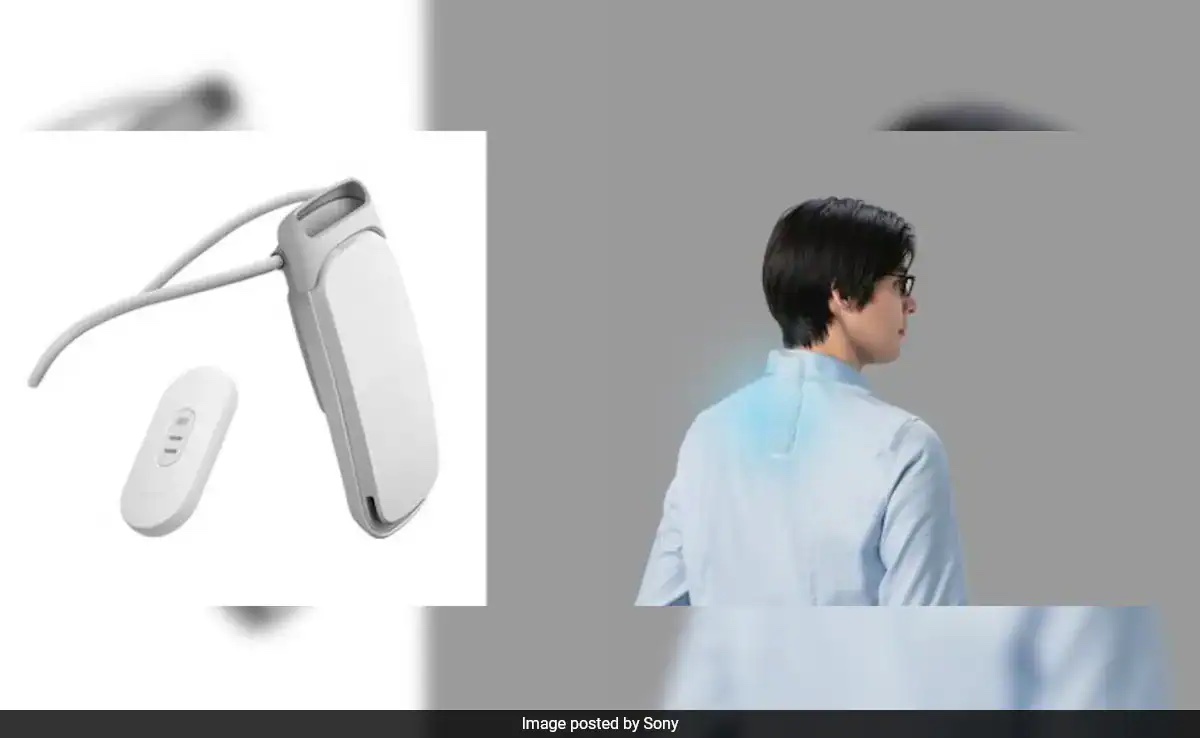
Sony has unveiled its latest high-tech gadget, the Reon Pocket 5, a futuristic body air conditioner designed to provide personalized comfort wherever you go. This innovative device, released on April 23, offers a potential alternative to traditional hand fans, revolutionizing the way we stay cool or warm on the move.

Worn discreetly on the back of your neck, the Reon Pocket 5 utilizes advanced thermos module technology and a suite of sensors to deliver tailored temperature regulation. With five cooling levels for hot days and four warming levels for cooler environments, it adapts seamlessly to various situations, from crowded trains to chilly airplane cabins.

Continue reading… “Sony’s Reon Pocket 5: Your Personal Climate Control Companion”

Revolutionizing Diamond Production: A Breakthrough Method Emerges

The age-old process of diamond creation, steeped in high temperatures and pressures, may soon undergo a remarkable transformation. Scientists at Korea’s Institute for Basic Science have unveiled a groundbreaking method that promises to revolutionize diamond production, potentially rendering it more accessible and cost-effective than ever before.

Traditionally, synthetic diamonds have been cultivated through arduous processes involving extreme temperatures and pressure conditions akin to those found deep within the Earth’s mantle. However, the latest innovation defies convention by harnessing liquid metal catalysts and ordinary atmospheric pressure to facilitate diamond growth. By utilizing a liquid metal alloy comprising gallium, iron, nickel, and silicon in a hydrogen/methane atmosphere, researchers have achieved remarkable results without the need for gigapascal-range pressures.

Continue reading… “Revolutionizing Diamond Production: A Breakthrough Method Emerges”

Pyroelectrochemical Cells: A Breakthrough in Powering Wireless Sensors

Researchers at the University of Utah’s College of Engineering have uncovered a groundbreaking solution to power wireless devices used in monitoring automobiles, industrial machinery, and agricultural products.

Their discovery revolves around a novel battery concept known as the pyroelectrochemical cell, offering a promising alternative to traditional power sources for system sensors deployed in remote locations. Unlike conventional batteries, which often struggle to maintain efficiency in the field, the pyroelectrochemical cell harnesses temperature fluctuations in the environment to generate electricity.

Continue reading… “Pyroelectrochemical Cells: A Breakthrough in Powering Wireless Sensors”

Balancing Progress and Preservation: Navigating AI’s Environmental Impact

In the midst of celebrating the rapid advancements in Artificial Intelligence (AI), it’s imperative not to overlook the significant environmental footprint accompanying these strides. The ecological ramifications of AI demand our focused attention and proactive measures to ensure sustainable development.

At the core of this challenge lies the immense energy demand within the AI ecosystem, spanning hardware, training protocols, and operational techniques. The exponential growth in computational power required to sustain AI’s ascent poses a pressing concern, with energy consumption doubling approximately every 100 days. Left unchecked, AI’s energy demand could surpass that of entire nations, exacerbating environmental strain.

Continue reading… “Balancing Progress and Preservation: Navigating AI’s Environmental Impact”

Enhancing Robotic Household Chores: MIT’s Innovative Approach

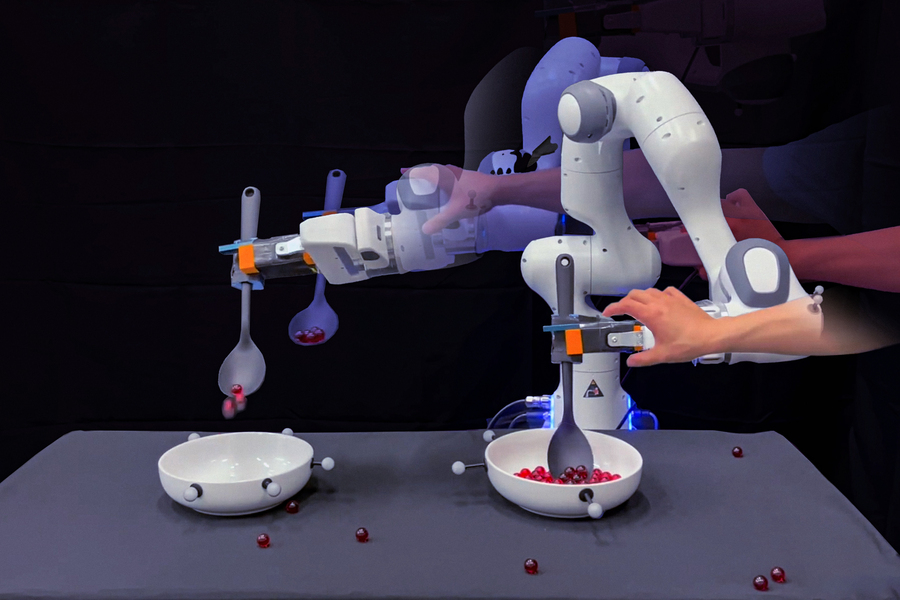
Robots are steadily advancing from simple tasks like cleaning spills to more complex household duties. Many of these robotic helpers are trained through imitation, mimicking the movements guided by humans. However, without the ability to adapt to unexpected obstacles or disruptions, robots often struggle to navigate unforeseen challenges, requiring them to restart tasks from the beginning.

Addressing this limitation, MIT engineers have devised a groundbreaking method to imbue robots with a degree of common sense when confronted with deviations from their trained paths. Their approach integrates robot motion data with the expansive “common sense knowledge” stored in large language models (LLMs).

Continue reading… “Enhancing Robotic Household Chores: MIT’s Innovative Approach”

Capturing Light’s Blink: MIT’s Trillion Frames per Second Camera Revolutionizes Photography

In a groundbreaking leap forward for photographic technology, MIT has unveiled a revolutionary camera capable of capturing a staggering trillion frames per second. Contrasting this with the mere 24 frames per second of a traditional movie camera, this innovation has propelled scientists into a realm where they can now photograph the fastest phenomenon known to mankind: light itself.

The development of this cutting-edge camera, described as a milestone in the realm of scientific imaging, has unlocked the ability to freeze-frame events occurring in a mere nanosecond. Astonishingly, the camera can then extend this fleeting moment to a duration as long as twenty seconds, providing researchers with an unprecedented window into the behavior of light.

Continue reading… “Capturing Light’s Blink: MIT’s Trillion Frames per Second Camera Revolutionizes Photography”

Weaving the Future: NTU Scientists Pioneer Ultra-Thin Semiconductor Fibers for Smart Textiles

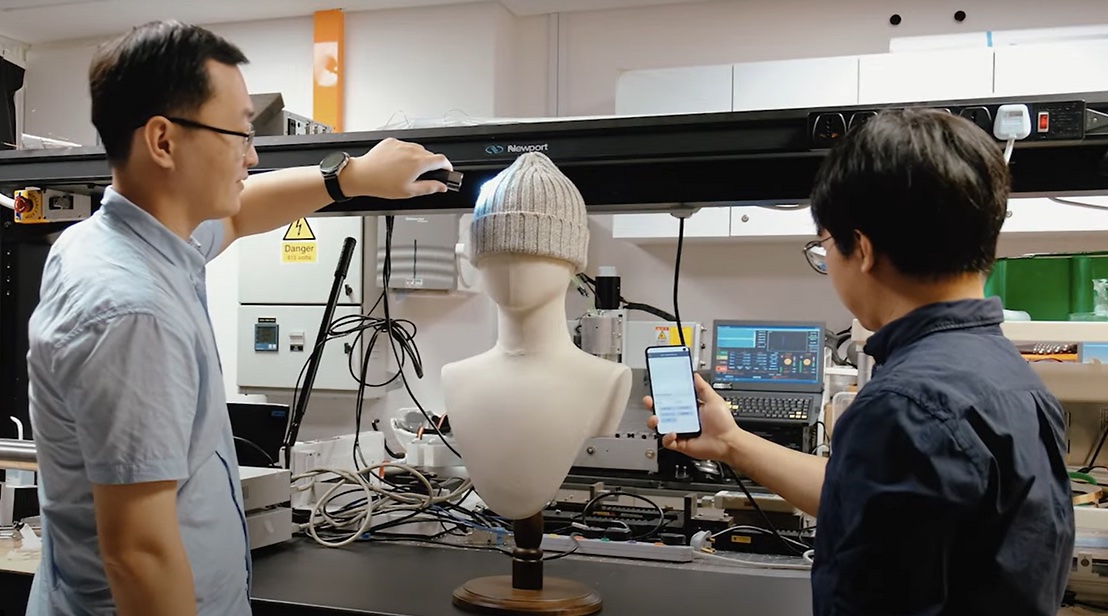
A groundbreaking achievement in wearable technology has emerged from the labs of Nanyang Technological University, Singapore (NTU Singapore), where scientists have developed ultra-thin semiconductor fibers that seamlessly integrate into fabrics, revolutionizing ordinary textiles into smart electronics.

The impetus for this breakthrough stemmed from the demand for flexible and defect-free materials crucial for stable signal transmission. Traditional manufacturing methods often resulted in stress-induced cracks and deformities, impeding performance and scalability. To overcome this challenge, NTU scientists conducted rigorous modeling and simulations to identify stress factors during manufacturing, leading to a meticulous selection of materials and production techniques.

Continue reading… “Weaving the Future: NTU Scientists Pioneer Ultra-Thin Semiconductor Fibers for Smart Textiles”

Harnessing the Body: The Future of Implantable Batteries

Innovations in battery technology are extending beyond traditional applications, as demonstrated by experts at China’s Tianjin University of Technology. By leveraging a combination of gold, salt, and the body’s own oxygen, researchers are pioneering body-based batteries with the potential to power life-saving medical devices and even combat diseases.

These remarkable batteries, highlighted in a research summary from ScienceDaily, represent a promising advancement in the field of medical technology. Initial studies conducted on rats have shown the compatibility of this technology within a biological system, without any adverse effects observed. If successfully implemented in humans, these innovative power sources could eliminate the need for surgical interventions when batteries fail in crucial implants like pacemakers and neurotransmitter devices.

Continue reading… “Harnessing the Body: The Future of Implantable Batteries”

Harnessing Heat: Finland’s Innovative Sand Battery

In a bid to combat the challenges of cold polar winters, Finland is set to introduce an industrial-scale ‘sand battery’ boasting impressive power and thermal energy capacities. Developed by Polar Night Energy, this groundbreaking technology promises to revolutionize energy storage and utilization in the region.

The new sand battery, approximately 10 times larger than its pilot predecessor operational since 2022, presents a clever concept. Essentially, it comprises a sizable steel silo filled with sand or a similar solid material, heated via a buried heat exchanger at its core. This process utilizes surplus electricity from the grid, particularly during renewable energy spikes, making it an environmentally friendly solution.

Continue reading… “Harnessing Heat: Finland’s Innovative Sand Battery”

Biomimicry in Action: Australian Scientists Develop Super Strong, Lightweight Metamaterial Inspired by Nature

Drawing inspiration from the remarkable resilience of plants, Australian scientists have pioneered a groundbreaking metamaterial, leveraging lasers and metal powder to achieve unprecedented strength-to-weight ratios. This sci-fi-like creation, born from nature’s blueprint, holds immense potential across diverse industries.

The quest for materials that combine strength with lightweight properties has long captivated material scientists, with applications ranging from medical implants to aerospace engineering. Seeking to emulate the hollow lattice structures found in resilient plants like the Victoria water lily, researchers have endeavored to replicate nature’s design in metal. However, previous attempts utilizing conventional manufacturing methods fell short, primarily due to an uneven distribution of load stress.

Continue reading… “Biomimicry in Action: Australian Scientists Develop Super Strong, Lightweight Metamaterial Inspired by Nature”