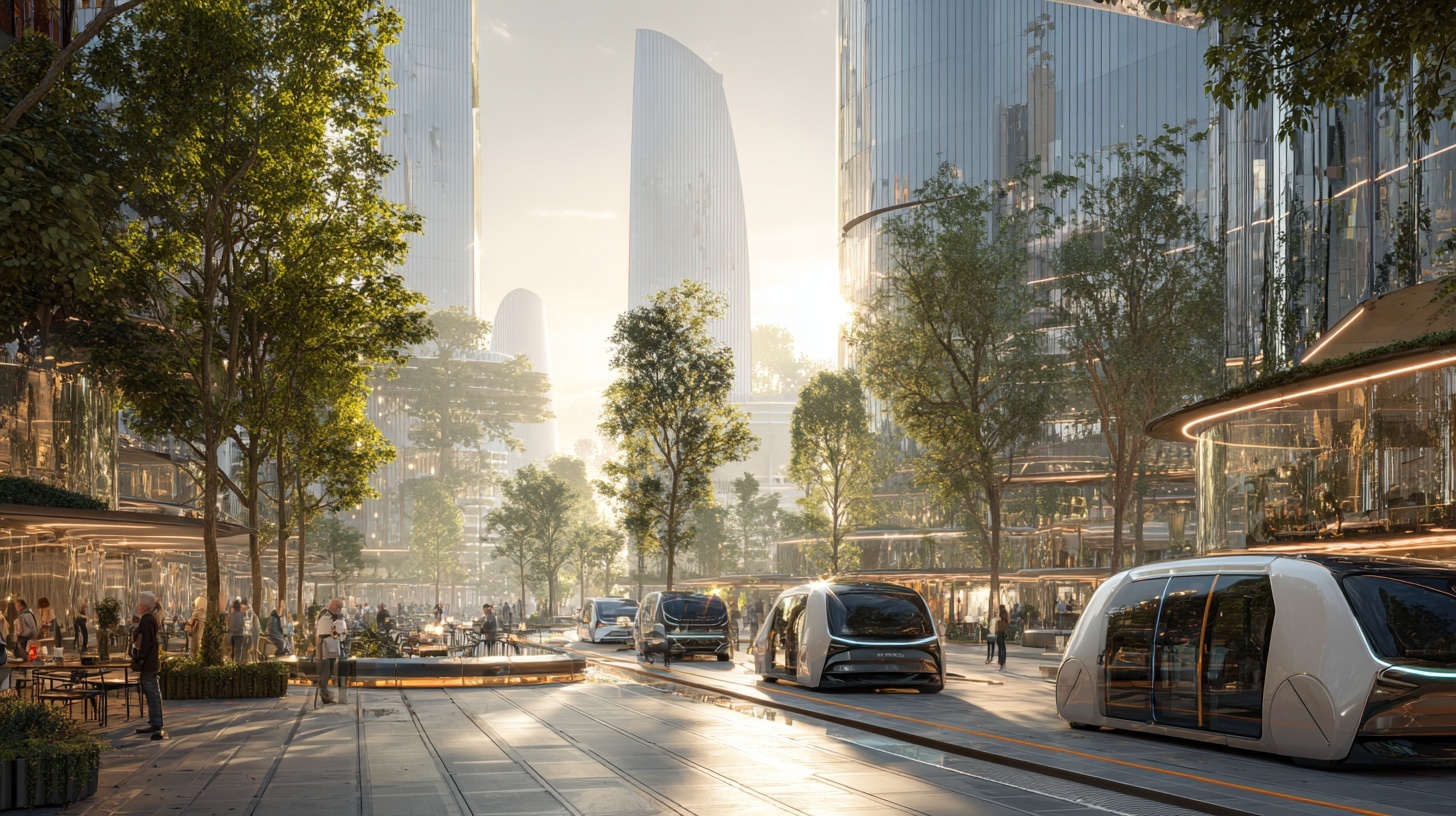
The Driverless Revolution Series Part 1: The Infrastructure Apocalypse—What Happens to Parking Lots, Drive-Thrus, and Gas Stations

By Futurist Thomas Frey

The Most Valuable Land Nobody Wants

There’s a parking lot across from where my office used to be in downtown Denver. It’s an ugly scar of asphalt covering half a city block. On a good day, it generates maybe $30,000 a year in parking fees.

The land it sits on? Worth about $15 million.

That’s a 0.2% return on asset value. Possibly the worst-performing real estate investment in the entire city. And there are thousands just like it across America.

By 2040, that parking lot will be gone. So will virtually every parking lot in downtown Denver. And Seattle. And Austin. And every other American city.

They’ll be replaced by apartment buildings, offices, parks, restaurants—anything that actually generates value from expensive urban land.

This isn’t speculation. It’s inevitable math. Driverless cars don’t need to park near their destination. They drop you off and leave—returning home, picking up another passenger, or repositioning for the next ride. Parking becomes obsolete.

And parking is just the beginning. When autonomous vehicles arrive in the late 2020s and early 2030s, they’ll trigger the largest infrastructure transformation in American history. Everything designed around human drivers—parking lots, drive-thrus, gas stations, even traffic lights—becomes instantly obsolete.

The physical landscape of America is about to change more in 20 years than it has in the previous 70.

Continue reading… “The Driverless Revolution Series Part 1: The Infrastructure Apocalypse—What Happens to Parking Lots, Drive-Thrus, and Gas Stations”

Florida will allow autonomous cars with no safety drivers on public roads starting July 1

 4B9665A1-3CB3-4A49-AD5B-8CAC8DE9069E

The new law is intended to make Florida competitive with other states that have welcomed self-driving vehicles and testing.

Self-driving vehicles without any safety driver in the vehicle will be allowed on Florida roads starting July 1.

As Florida’s governor signed the new bill into law, he stated the intention is to remove “barriers to the advancement of autonomous vehicles” in the state.

Anyone who is onboard is also exempted from laws against texting or other distracted-driving activities in the vehicle.

Continue reading… “Florida will allow autonomous cars with no safety drivers on public roads starting July 1”

China’s rolling out dedicated highway lanes for self-driving cars


51A5D912-ED5B-4684-BF61-170D969AFD37

KEEP LEFT

In a bid to lead the race to fully-autonomous vehicles, China is building highways with dedicated lanes for self-driving cars.

A new 62-mile stretch of freeway will have two lanes dedicated to autonomous vehicles (AVs), according to FutureCar. The idea is that the infrastructure investment will give AVs access to real-world traffic conditions — but also that the separate lanes will ensure that the still-limited AV tech is tested in a way that minimizes risk for human drivers.

Continue reading… “China’s rolling out dedicated highway lanes for self-driving cars”

AUTONOMOUS CARS: ALTERING ONE IN NINE JOBS

 Self-Driving-Interior_ummeax

It seems clear that driverless vehicles are coming, although the timeline for their arrival remains unclear. David Beede, Regina Powers and Cassandra Ingram of the Economics and Statistics Administration at the US Department of Commerce look at one aspect, “The Employment Impact of Autonomous Vehicles,” in ESA Issue Brief #05-17 (August 11, 2017). They set the stage this way:

“In September 2016, the U.S. Department of Transportation and the National Highway Traffic Safety Administration (NHTSA) published policy guidelines for AVs [autonomous vehicles], recognizing their potential as “the greatest personal transportation revolution since the popularization of the personal automobile nearly a century ago” (NHTSA 2016). … The worldwide number of advanced driver-assistance systems (ADAS), such as backup cameras and adaptive cruise control, increased from 90 million to 140 million units between 2014 and 2016. Consumers have indicated a willingness to pay $500-$2,500 per vehicle for ADAS. Sensor technologies are rapidly advancing to provide sophisticated information to vehicle operating systems about the surrounding environment, such as road conditions and the location of other nearby vehicles. However, slower progress has been made in developing software that can mimic human driver decision-making, so that fully autonomous vehicles may not be introduced for another ten or more years …”

Continue reading… “AUTONOMOUS CARS: ALTERING ONE IN NINE JOBS”

Discover the Hidden Patterns of Tomorrow with Futurist Thomas Frey
Unlock Your Potential, Ignite Your Success.

By delving into the futuring techniques of Futurist Thomas Frey, you’ll embark on an enlightening journey.

Learn More about this exciting program.