MIT researchers reveal an interface that allows us to plug our brain into a computer

christina tringides

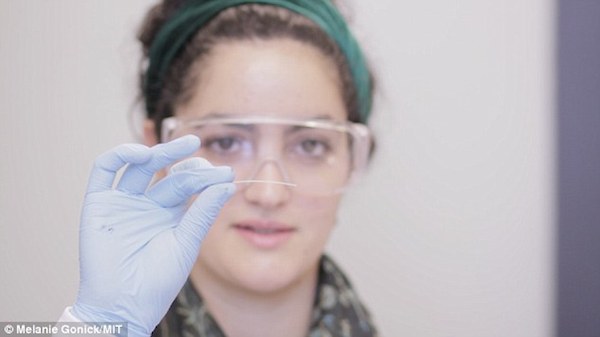
MIT senior, Christina Tringides, holds a sample of the multifunction fiber.

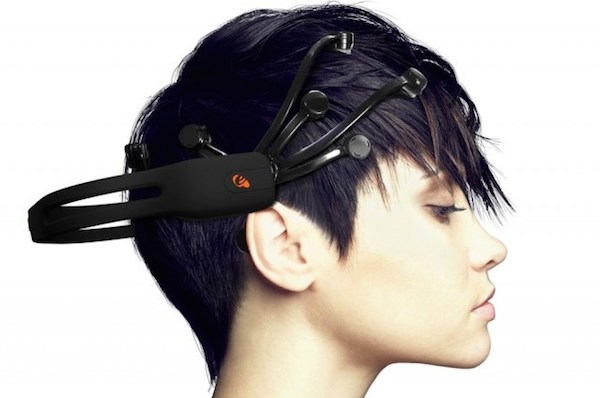
MIT researchers reveal an interface that could make plugging our brain into a computer a reality. Their system uses new fibers less than a width of a hair that could deliver optical signals and drugs directly into the brain, along with electrical readouts to continuously monitor the effects of the various inputs.


Continue reading… “MIT researchers reveal an interface that allows us to plug our brain into a computer”

Study finds nasal spray effective treatment for Alzheimer’s and memory loss

nasal-383544

Nasal spray could improve memory in people with Alzheimer’s disease.

A new study published in the Journal of Alzheimer’s Disease found that an insulin nasal spray can improve cognitive function in those with Alzheimer’s disease and normal age-related memory problems. The study involved 60 adults who had normal age-related memory problems or mild to moderate Alzheimer’s (Claxton et al., 2015).


Continue reading… “Study finds nasal spray effective treatment for Alzheimer’s and memory loss”

Sound training can help an aging brain ignore distractions

training brain

The goal of the research was to focus on the target frequencies while ignoring the distractor frequencies.

As we get older, we have an increasingly harder time ignoring distractions. According to new research in the Cell Press journal Neuron, by learning to discriminate a sound amidst progressively more disruptive distractions, we can diminish our distractibility.


Continue reading… “Sound training can help an aging brain ignore distractions”

Deep brain stimulation beats out caffeine for boosting mental agility

tDCS

tDCS

“Transcranial direct current stimulation” (tDCS) involves passing electricity through your head. The current is relatively weak, so it’s not like the electro-convulsive therapy (ECT) used to treat extreme depression in mental institutions; sometimes called “deep brain stimulation.”


Continue reading… “Deep brain stimulation beats out caffeine for boosting mental agility”

Why we need radical change in the disease-model of mental health

conversation with a therapist

It is difficult reliably to distinguish different “disorders.”

By Peter Kinderman: The idea that our more distressing emotions such as grief and anger can best be understood as symptoms of physical illnesses is pervasive and seductive. But in my view it is also a myth, and a harmful one. Our present approach to helping vulnerable people in acute emotional distress is severely hampered by old-fashioned, inhumane and fundamentally unscientific ideas about the nature and origins of mental health problems. We need wholesale and radical change, not only in how we understand mental health problems, but also in how we design and commission mental health services.


Continue reading… “Why we need radical change in the disease-model of mental health”

Will robot brains catch up to human-level intelligence in 25 years?

robot brain

Computers are improving at an exponential rate.

Futurists started predicting that in just a few decades machines would be as smart as humans soon after computers evolved in the 1940’s. Every year, the prediction seems to get pushed back another year. The consensus now is that it’s going to happen in … you guessed it, just a few more decades.


Continue reading… “Will robot brains catch up to human-level intelligence in 25 years?”

Good storytelling – why your brain loves it

brain and storytelling

Paul J. Zak: It is quiet and dark. The theater is hushed. James Bond skirts along the edge of a building as his enemy takes aim. Here in the audience, heart rates increase and palms sweat.  I know this to be true because instead of enjoying the movie myself, I am measuring the brain activity of a dozen viewers. For me, excitement has a different source: I am watching an amazing neural ballet in which a story line changes the activity of people’s brains.


Continue reading… “Good storytelling – why your brain loves it”

Genetically engineered humans could have IQ’s of 1,000

super intelligent

Tweaking our genomes we could make humans drastically smarter.

Scientist Stephen Hsu’s theory is that genetically engineered human beings could have IQs of 1000 or higher. Hsu is something of a scientific polymath, who has done work pertaining to quantum physics, dark energy, finance, and information security, as well as genomics and bioinformatics, or the application of computer science and statistics to biological data. He officially holds the title of Vice-President for Research and Graduate Studies at Michigan State, where he is also a professor of Theoretical Physics.


Continue reading… “Genetically engineered humans could have IQ’s of 1,000”

Top 7 neuromyths that many teachers believe

neuromyths

About half of the educators surveyed believed that people only use 10% of their brains.

Surveys of teachers in the UK, Turkey, Holland, Greece and China have revealed that many believe seven common myths about the brain, likely because the simple explanations are often attractive, even if totally wrong. The results of the surveys were reported in the journal Nature Reviews Neuroscience.


Continue reading… “Top 7 neuromyths that many teachers believe”

Memory loss from Alzheimer’s disease reversed with lifestyle changes

alzheimer's

This is the first time researchers have been able to reverse the memory loss caused by the disease.

The first time ever, huge lifestyle interventions seems to have reversed memory loss caused by Alzheimer’s disease in some patients.. The findings stemmed from the joint efforts of a team from UCLA’s Mary S. Easton Center for Alzheimer’s Disease Research and the Buck Institute for Research on Aging.


Continue reading… “Memory loss from Alzheimer’s disease reversed with lifestyle changes”

Discover the Hidden Patterns of Tomorrow with Futurist Thomas Frey
Unlock Your Potential, Ignite Your Success.

By delving into the futuring techniques of Futurist Thomas Frey, you’ll embark on an enlightening journey.

Learn More about this exciting program.