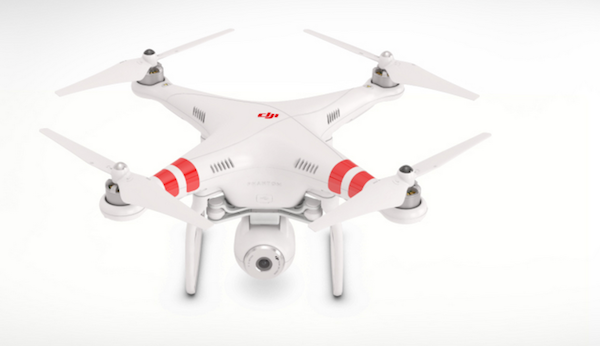
A man crashed a quadcopter on a busy street in New York City in September. Footage has accidentally been shot of the inside of someone’s apartment. Drones cause problems, but the technology is too exciting to write off. (Video)
Google might want to partner its technology with auto manufacturers rather than making and selling the cars itself.
Almost all the world’s automotive manufacturers are scrambling to develop self-driving cars. But, it appears, the world would rather buy a self-driving car made by a tech company. Consumers are more likely to splurge on a self-driving car made by Mercedes-Benz than Nissan; they’re even likelier to buy one made by the likes of Google and Apple, according to a study released by audit and advisory firm KPMG on Oct. 10.
25% increase in the use of mobile phones in retail stores.
More shoppers are using their mobiles for ‘showrooming’, checking prices and product information while shopping in stores. There has been a 25% increase in the use of mobiles in retail stores, which has significant implications for retailers, according to JiWire’s Mobile Audience Insights Report for Q2 2013.
Maps and geography have helped humans understand their surroundings in the context of their neighbors, their town, their country, the Earth, and the Universe for about the past 2,000 years. For about 400 years, since Mercator figured out how to portray the curved Earth on a flat piece of paper, not much changed in the world of geography — until the launch of 24 GPS satellites by the U.S. Department of Defense about 30 years ago.
The bottled water industry in Australia has finally gone too far. Seven makers were forced to drop claims that their product “organic” while another chose to remove their brand from sale. The manufacturers got rid of their spin under threat of enforcement action from the Australian Competition and Consumer Commission, which is cracking down on misleading “credence” claims.
The technology-enabled business trends will not only be a boon for consumers but also stimulate growth.
McKinsey & Company described ten information technology three years ago that enabled business trends that were profoundly altering the business landscape. Since then, the pace of technology change, innovation, and business adoption has been stunning. Consider that the world’s stock of data is now doubling every 20 months; the number of Internet-connected devices has reached 12 billion; and payments by mobile phone are hurtling toward the $1 trillion mark.
Currently in the business world we are witnessing something like the epic collision of two galaxies — a rapid convergence of two very unlike systems that will cause the elements of both to realign. It’s all thanks to the Internet of Things.
Consumers agree the value of online communities comes from sharing information and ideas.
According to Technorati’s 2013 Digital Influence Report, blogs are more influential than social networks in shaping consumers’ opinions and purchase decisions.
Time spent consuming information and entertainment goods is an important element of the overall satisfaction.
Netflix released all 13 episodes of House of Cards last week, allowing subscribers to watch the series in marathon sessions. ”The efficiency that makes binge viewing so compelling also accelerates the time a consumer spends with Netflix,” Variety noted. This novel release schedule highlights the question of how consumers value paid content relative to consumption time.
When it comes to making decisions, people are anything but rational.
Daniel McFadden, an economist has a new paper, “The New Science of Pleasure,” that shows the many ways economics fails to explain how we make decisions — and what it can learn from psychology, anthropology, biology, and neurology.
“Paid apps work because they provide the great experience people deserve as customers.”
Time is money, and apps don’t last forever. All the weeks you spent on your apps and you’re never going get back all those hours you spent on them. And all of the free apps are dangerous, yet free is the dominant business model most mobile apps are taking these days. The idea is to grow as quickly as possible then insert ads of some kind or get acquired. For consumers it offers a crummy set of choices: either losing the countless hours you put into the app or have your private data sold to marketers — since as well all know, when the product is free, you are the product.
51% of all online activity came from mobile devices.
More than fifty percent of consumer activity during Christmas day took place on mobile devices, according to a study released today by mobile analytics platform Mixpanel. Based on its analysis of over 695 million actions, the study shows a 11 percent increase the week prior to the holiday.