3D Printing Blood Vessels to Rethink Stroke Treatment

The human brain’s blood vessels are like a complex highway network—narrow, winding, and constantly in motion. When a blockage forms, it’s not just a traffic jam; it’s the beginning of a stroke, one of the leading causes of death and disability worldwide. Current medical fixes—like stents, balloons, and surgical bypasses—help clear the jam, but they’re blunt tools that can’t replicate the intricate biology of the brain’s vascular system.

Now, researchers in South Korea have pulled off something extraordinary: they’ve 3D-printed brain blood vessels that can recreate both healthy and diseased blood flow, opening the door to more realistic stroke models and personalized therapies.

Continue reading… “3D Printing Blood Vessels to Rethink Stroke Treatment”
When Your Inner Voice Finds Its Way Out

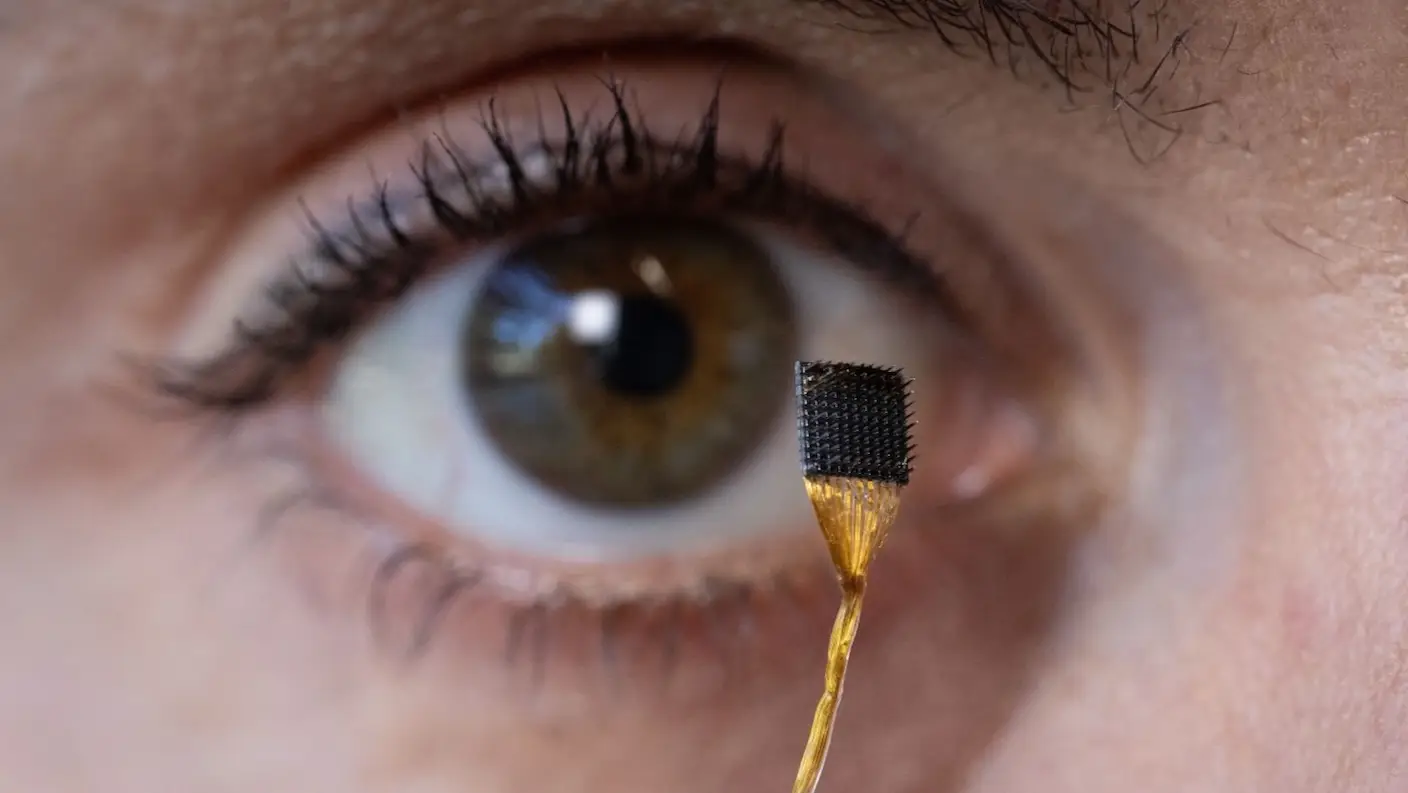
We all have a voice in our heads. It’s the whispered rehearsal before a big presentation, the silent pep talk before asking for a raise, or the self-critique that reminds us what we wish we hadn’t said. For most of human history, this inner monologue has been locked away, private, and unreachable. But researchers at Stanford University are now tugging at the boundary between private thought and public expression, building brain implants that can decode inner speech—the silent conversations we have with ourselves—and translate them into audible words.

Continue reading… “When Your Inner Voice Finds Its Way Out”

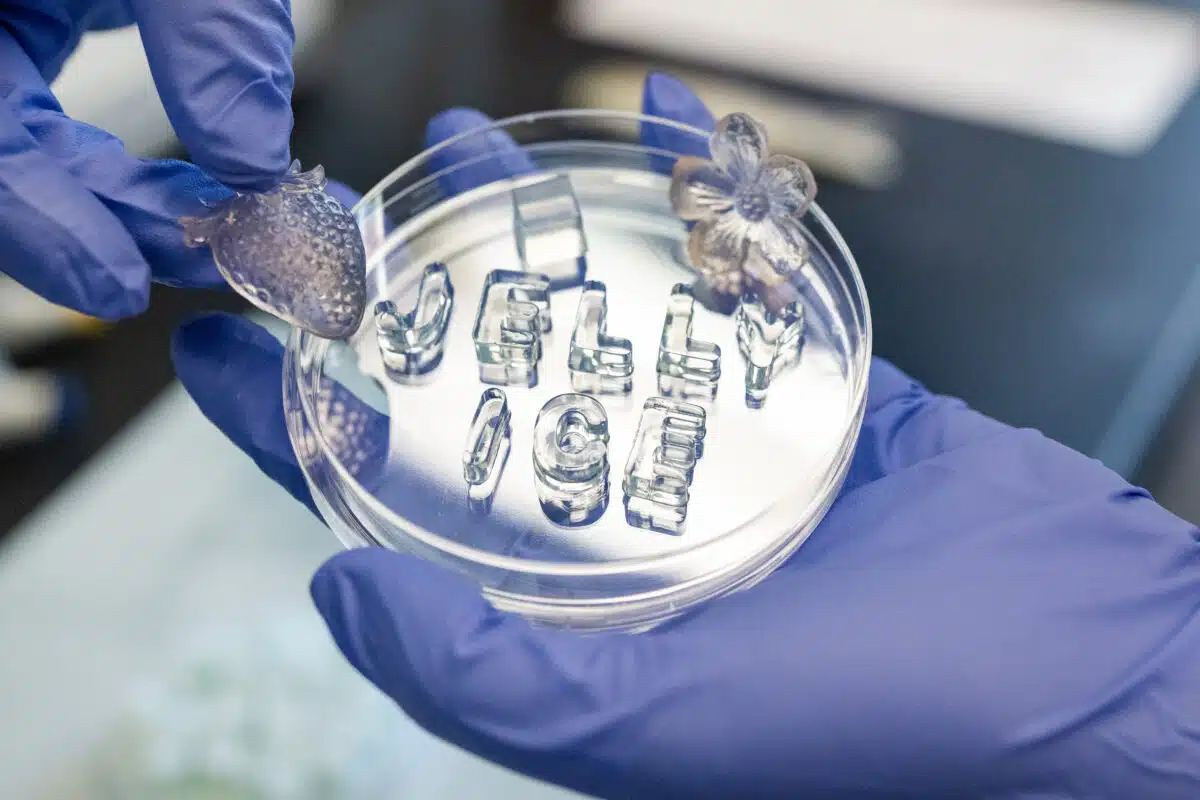
Jelly Ice: The End of the Meltwater Mess

Ice has a fatal flaw—it melts. That puddle at the bottom of your cooler or the slush in a seafood case isn’t just messy, it can spread contamination, ruin food, and waste energy. Now researchers at UC Davis have flipped the script with a breakthrough material: jelly ice—a reusable, compostable, and customizable substitute that stays solid without turning into a watery disaster.

Made from gelatin, the same stuff that makes Jell-O jiggle, jelly ice traps water inside a hydrogel matrix that holds its shape even after repeated freeze-thaw cycles. It’s 90% water, food-safe, and just as effective as traditional ice for cooling—up to 80% of the efficiency—but unlike ice, it doesn’t leave a mess when it warms up.

Continue reading… “Jelly Ice: The End of the Meltwater Mess”

China’s CFR-1000 Reactor: A Measured Step Toward the Next Era of Nuclear Power

China has taken a significant step in nuclear technology with the development of the CFR-1000 fast neutron reactor, a design capable of generating 1.2 gigawatts of power—enough to supply electricity to around one million homes. While the reactor is still under development and not expected to become operational until 2034, it highlights a broader global trend: the push toward advanced nuclear systems that aim to improve efficiency and reduce waste.

Unlike traditional reactors, which rely on slow neutrons and produce large volumes of long-lived radioactive waste, the CFR-1000 is designed to operate with fast neutrons. This allows it to “breed” new fuel, such as plutonium-239, from non-fissile uranium-238. In practice, this means greater fuel efficiency and the potential to recycle some nuclear waste.

Continue reading… “China’s CFR-1000 Reactor: A Measured Step Toward the Next Era of Nuclear Power”

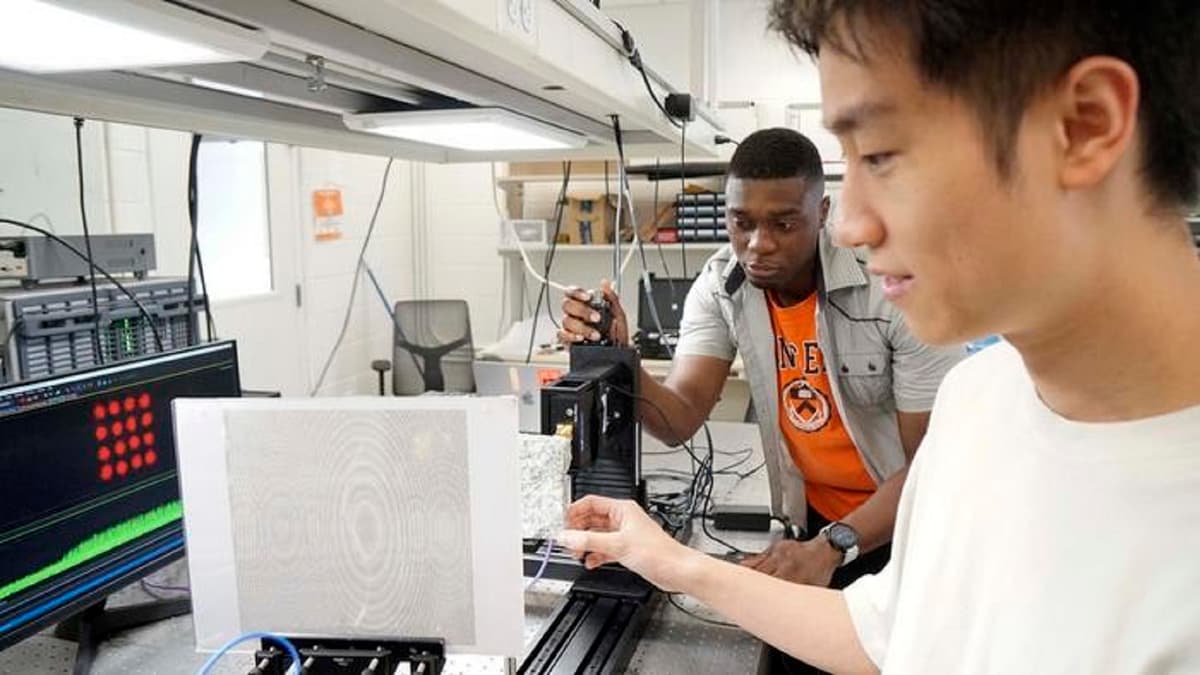
Curveball Internet: Princeton’s Airy Beams Promise Wireless That Dodges Walls

The dream of wireless networks fast enough to power fully immersive VR and fleets of autonomous vehicles has always run into one humiliating obstacle: walls. High-frequency signals—especially in the sub-terahertz spectrum—carry enormous bandwidth, but they collapse the moment a chair, a bookcase, or a human body gets in the way.

Princeton engineers just rewrote the rules. Their system doesn’t bounce signals around obstacles with clunky reflectors—it bends the signal itself. Think curveball physics applied to Wi-Fi.

Continue reading… “Curveball Internet: Princeton’s Airy Beams Promise Wireless That Dodges Walls”

The Antenna That Refuses to Sit Still

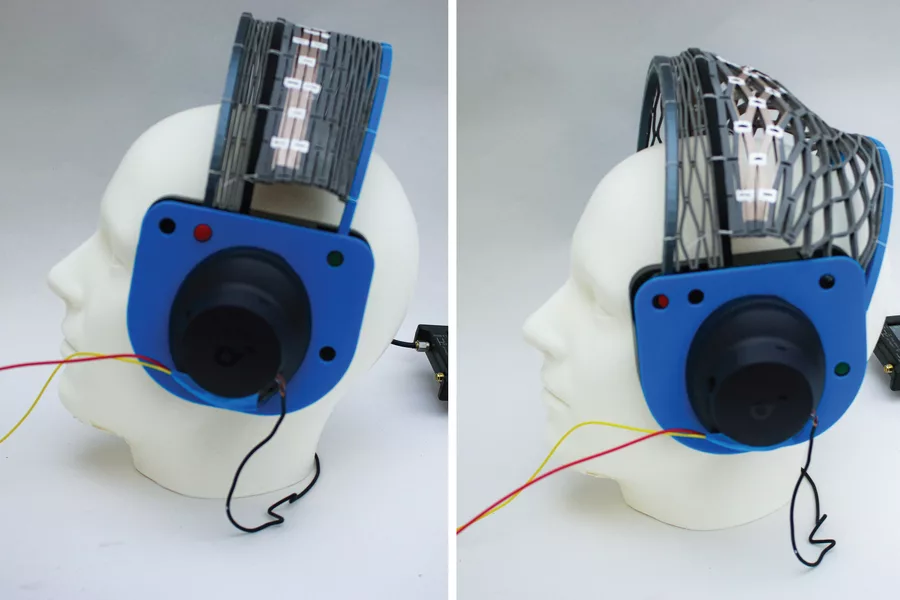
For decades, antennas have been dumb pieces of metal—rigid, fixed, and locked into a single job. MIT engineers just blew that idea apart. Their new “meta-antenna” doesn’t sit idle—it bends, stretches, and contorts itself like a gymnast to switch frequencies, sense motion, and reconfigure itself on demand. No gears. No motors. Just geometry and raw ingenuity.

This isn’t just a better antenna—it’s an entirely new category of technology. Imagine headphones that adjust their wireless mode by flexing their structure, AR glasses that track your movement through tiny shifts in resonance, or wearable gadgets that beam energy wirelessly without swapping hardware. In the future, your antenna won’t just send and receive—it will think, adapt, and respond.

Continue reading… “The Antenna That Refuses to Sit Still”

The Future of Regional Innovation: Why Venture Studios Are the New Economic Engine

For decades, regional economic development followed a predictable playbook: attract a major employer, offer tax incentives, build a business park, cut the ribbon. But that era is ending. Today’s economy is driven by smaller firms, distributed innovation, and talent that no longer defaults to coastal hubs. Instead of chasing yesterday’s employers, forward-thinking regions are building tomorrow’s companies.

The model leading this transformation? The venture studio.

Continue reading… “The Future of Regional Innovation: Why Venture Studios Are the New Economic Engine”

Printing the Future: Microgravity Metal Manufacturing Pushes Space Industry Into a New Era

The dream of building and repairing hardware directly in space just took a giant leap forward. A research team at Leibniz University Hannover has successfully demonstrated, for the first time, 3D printing with metal powder in microgravity. This is more than a technical milestone—it’s a glimpse at how the very logistics of space exploration could be rewritten.

For decades, one of the biggest bottlenecks in human expansion beyond Earth has been our dependence on Earth-bound supply chains. Break a part on Mars or the Moon, and you either pack spares in advance or face disaster. Now imagine astronauts simply fabricating new titanium or nickel components on the spot. That’s what Hannover’s team just tested—laser-based metal deposition adapted for the chaotic environment of zero gravity.

Continue reading… “Printing the Future: Microgravity Metal Manufacturing Pushes Space Industry Into a New Era”

The Genetic “Swiss Army Knife” That Could Rewrite Medicine Without Leaving Scars

Gene therapy has always carried a built-in paradox: the very act of “fixing” DNA risks creating permanent scars that could linger for generations. Now Yale researchers say they’ve cracked a safer way forward—genetic surgery without the scars.

Instead of hacking DNA, which is permanent and fraught with risk, they’ve turned their attention to RNA—the fragile middleman between DNA and proteins. RNA doesn’t last, and mistakes here don’t echo through generations. That makes it the perfect target for rewriting genetic messages without reshaping the human blueprint.

Continue reading… “The Genetic “Swiss Army Knife” That Could Rewrite Medicine Without Leaving Scars”

95% of Corporate AI Pilots Are Failing—And the Divide Is Only Getting Wider

Generative AI is supposed to be the miracle engine of modern business—replacing expensive outsourcing, slashing inefficiencies, and accelerating growth. But a new MIT report reveals a brutal truth: 95% of AI pilots inside large companies are dead on arrival.

The report, The GenAI Divide: State of AI in Business 2025, based on hundreds of interviews and case studies, found that while a handful of startups are rocketing from zero to $20 million in revenue in a year, most corporate AI projects are stalling. The problem isn’t the models themselves—it’s the way enterprises are deploying them.

Continue reading… “95% of Corporate AI Pilots Are Failing—And the Divide Is Only Getting Wider”

Space Babies: How Frozen Stem Cells Survived the Harshness of Orbit

The future of human reproduction in space just took a giant leap forward—thanks to some very small passengers.

Japanese researchers at Kyoto University have pulled off an audacious experiment: they cryopreserved mouse spermatogonial stem cells, shipped them to the International Space Station, left them in orbit for six months, brought them back down, thawed them out, and used them to create healthy offspring.

Yes, you read that right—mice conceived from stem cells that had been sitting in space freezers for half a year are alive and well.

Continue reading… “Space Babies: How Frozen Stem Cells Survived the Harshness of Orbit”

Sonic Agriculture: When Robots Start Listening to Your Crops

Robots are learning to hear what we can’t—and it could change farming forever.

At Carnegie Mellon University’s Robotics Institute, researchers have unveiled SonicBoom, a sensing tool that identifies crops not with cameras or lasers, but by listening to their vibrations. Forget the eye: this technology gives robots a new sense—the ability to “feel” and “hear” fruit through the clutter of leaves and branches.

For decades, the Achilles’ heel of farm robotics has been manipulation. Human hands can blindly reach through foliage and grab an apple with ease. Robots? Not so much. Their reliance on cameras makes them clumsy in orchards, where leaves hide fruit and confuse machine vision.

Continue reading… “Sonic Agriculture: When Robots Start Listening to Your Crops”
Discover the Hidden Patterns of Tomorrow with Futurist Thomas Frey
Unlock Your Potential, Ignite Your Success.

By delving into the futuring techniques of Futurist Thomas Frey, you’ll embark on an enlightening journey.

Learn More about this exciting program.