Futurist Thomas Frey: In the 1980s, as a young human factors engineer at IBM, I spent much of my time working with anthropometric tables, a compilation of statistical data about the human body used for designing a product’s ergonomic interface.
Sustainable farming, which often ties into organic growing, has been reaping profits.
Last week, in an auditorium at the UCLA Anderson School of Management, startup companies sought out investors to help take their ideas to the next level. This wasn’t a tech conference. Venture capitalists were here to check out sustainable farming.
An investigation a few years ago bu USA Today found that, of the 250,000 fatal cardiac arrests that occur outside of U.S. hospitals every year, up to 76,000 cases were treatable. That is, the patients would have survived if the ambulance had got there in time. A quick zap with a defibrillator was all that was needed, but many cities could not promise a response within six minutes–the standard survival window.
Futurist Thomas Frey: In July 2011, as a cost cutting measure, the U.S. Postal Service put together a list of 3,700 post offices that it wanted to close.
Virtual assistants will be useful for nany of us by the early 2020’s
Here are four interesting statements about the future:
1. Chemical brain preservation is a technology that may soon be validated to inexpensively preserve the key features of our memories and identity at our biological death. 2. If either chemical or cryogenic brain preservation can be validated to reliably store retrievable and useful individual mental information, these medical procedures should be made available in all societies as an option at biological death. 3. If computational neuroscience, microscopy, scanning, and robotics technologies continue to improve at their historical rates, preserved memories and identity may be affordably reanimated by being “uploaded” into computer simulations, beginning well before the end of this century. 4. In all societies where a significant minority (let’s say 100,000 people) have done brain preservation at biological death, significant positive social change will result in those societies today, regardless of how much information is eventually recovered from preserved brains.
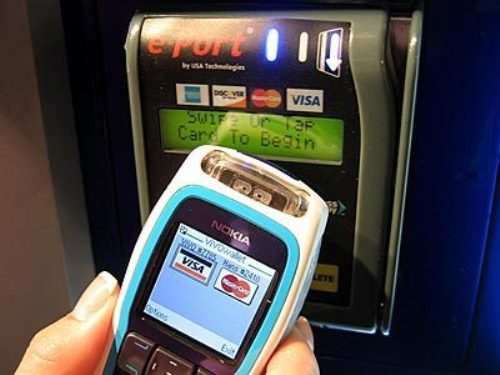
In the U.S. proximity mobile payments are not yet very popular. It is estimated that such point-of-sale payments using a mobile phone as a payment device, whether via near-field communications or other contactless technology, will total just $640 million this year. But that’s an increase of 283% over last year’s even smaller base, and a number that will rise a further 234% by the end of next year.
Futurist Thomas Frey: When Charles Corry walked onto the stage of the Shark Tank-like Piranha Pit at Saturday’s DaVinci Inventor Showcase, his iExpander product was still $6,000 away from making the goal of $125,000 on Kickstarter. As of this morning, he has not only passed his goal, now exceeding $140,000, but still has 6 more days to go.
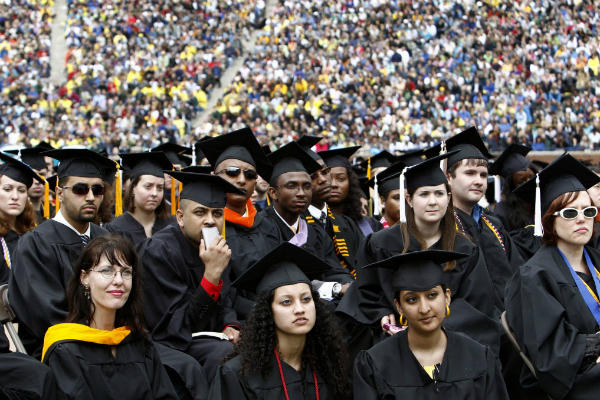
Online courses will revolutionize higher education and cut the cost to near zero for most students over the next decade.
In as little as ten years a quality higher education couldl be largely free—unless, of course, nothing much has changed. It all depends on whom you believe. But one thing is clear: The debate about financing education grows louder by the day.
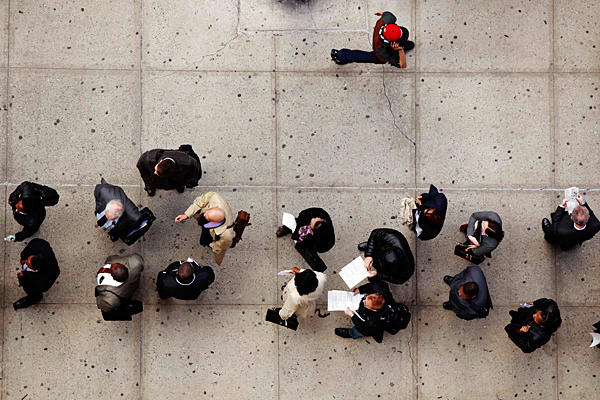
More jobs now have specific technical requirements and need a higher level of education.
This is not a for-or-against argument about a college degree. This is an argument for how to boost your chances of getting hired in the next three to five years.
Futurist Thomas Frey: The next big innovation in healthcare may very well be a printer. But this is no ordinary printer.
Professor Lee Cronin heads up a world-class team of 45 researchers at Glasgow University in England. His team has figured out how to turn a 3D printer into a sort of universal chemistry set capable of “printing” prescription drugs via downloadable chemistry.
One day, in the near future everyone who wants one is going to have a drone. The price of these unmanned aerial vehicles is plummeting from two sides. On the one hand, you’ve got the toys like the $70 iHelicopter you control with an iPhone. This little guy even has two plastic missiles you can fire! (Videos)
A very inspiring keynote was given by Georges Nahon, head of Orange Silicon Valley, to a panel of blogger in in which he shared his vision with regard to what is happening in IT in general, and in the Silicon Valley in particular. Here is are the detailed conclusions of Georges’s presentation.