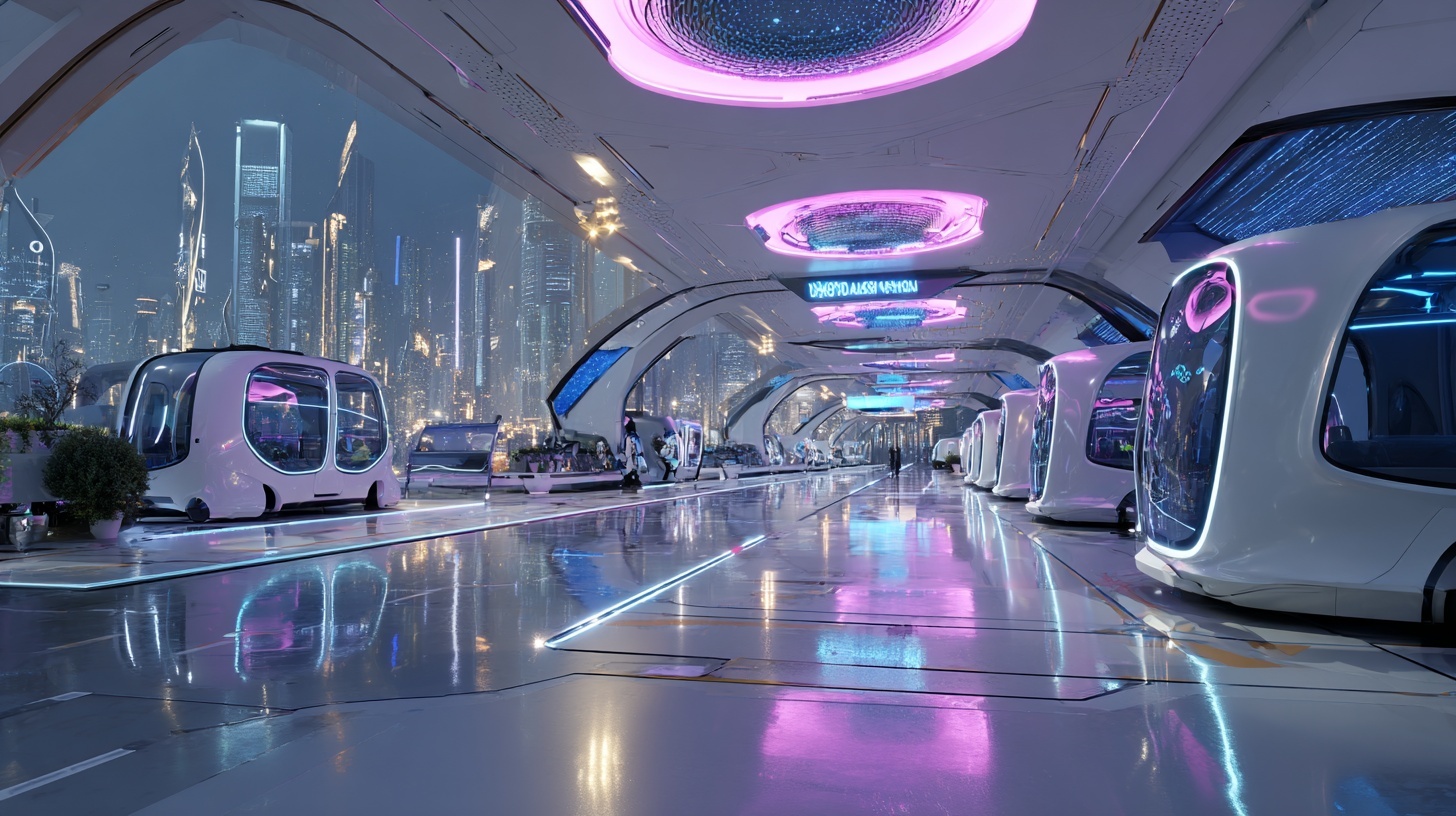
When vehicles drive themselves, they become venues—unlocking unexpected
experiences no engineer planned, and entire industries built on motion, not destination.
By Futurist Thomas Frey
Every transformative technology creates a second-order invention that nobody saw coming.
The automobile gave us the drive-in movie. The internet gave us the flash mob. The smartphone gave us the pop-up bar. These weren’t the inventions the engineers were working on — they were what happened when creative humans got their hands on a new capability and started asking questions the original designers never thought to ask.
Self-driving vehicles are about to produce one of the most gloriously unexpected second-order inventions in recent memory.
The driverless party bus.
Think about what autonomous vehicles actually change, beyond the obvious. They don’t just move you from place to place without a human at the wheel. They transform the interior of a vehicle from a place where someone has to remain alert and sober into a fully social space where every occupant is free to do whatever they want for the duration of the journey. Nobody is responsible for getting everyone home safely. The vehicle is.
For the first time in the history of motorized transportation, a moving vehicle becomes a true venue.
The Feature That Changes Everything
Before we even get to the party, there’s something the driverless party bus can do that no party vehicle in history has been able to do.
You give it a list of friends. Their names, their addresses, their preferred pickup times. And the bus — on its own, without you lifting a finger — plots the optimal route, dispatches itself across the city, and picks every single one of them up.
No more designated coordinator spending forty-five minutes on the phone. No more “can you grab Sarah on your way?” logistics. No more three people arriving an hour late because nobody could find a driver. You finalize the guest list, the bus handles the rest. It arrives at each doorstep, waits the appropriate amount of time, adjusts the route dynamically if someone’s running behind, and assembles the entire group at a predetermined rendezvous — or simply becomes the party the moment the first person steps aboard and keeps growing until the last friend is collected.
At the end of the night, the same logic runs in reverse. The bus reads the room, takes requests, and drops everyone home — safely, efficiently, and without anyone having to negotiate who’s sober enough to drive.
This is not a small quality-of-life improvement. It is the complete elimination of the single biggest logistical headache in group social life. And it makes the party bus not just a vehicle but an autonomous social coordinator — one that can be summoned, loaded, and dismissed with the same ease you’d use to order a pizza.
What That Actually Unlocks
The social and cultural implications of this are larger than most transportation analysts are discussing, because most transportation analysts are thinking about efficiency and logistics. They’re asking how autonomous vehicles will reduce traffic fatalities and optimize commute times. Those are important questions. But they’re not the questions that a 28-year-old event planner in Austin or a hospitality entrepreneur in Nashville or a wedding coordinator in Charleston is going to ask.
Those people are going to ask: what can I do with a vehicle that moves through a city, holds twenty people, picks up the guests itself, and has no driver?
The answer to that question is going to generate an entire industry.
The driverless party bus will be customizable in ways that fixed venues never can be — because the venue moves. It can weave through a city’s most scenic neighborhoods, cross a bridge at sunset, pull up alongside a waterfront, disappear into the countryside, and return downtown without anyone inside needing to think about logistics or designated drivers or cab fares. The journey itself becomes part of the experience. The destination becomes optional.
Here’s a partial list of what people will do with that.
The Parties Nobody Has Thrown Yet
The rolling cocktail party. Guests are picked up from their homes across the city and find a cocktail party already in progress when they step aboard. By the time the last person is collected, the first arrivals are already on their second drink and the party is fully alive.
The progressive dinner on wheels. Courses served as the bus moves between neighborhoods. Appetizers in the arts district, entrées along the waterfront, dessert parked outside the city’s best view. Catered, curated, and rolling.
The birthday pub crawl — minus the crawl. No more walking between bars in uncomfortable shoes. The bus stops at each venue, guests pile in and out, and the vehicle serves as the home base between stops. Nobody loses track of anyone. Nobody strands themselves at bar three.
The wine and vineyard tour. For cities near wine country, a driverless luxury coach makes the vineyard tour genuinely indulgent. Nobody holds back because they’re driving. Everyone is collected from their door and returned to it.
The sunset and skyline experience. A timed route designed entirely around the light — chasing golden hour across a city or along a coast, with the inside of the vehicle set up for photography, conversation, or pure appreciation. The bus picks up its passengers with enough time to reach the first viewpoint before the light changes.
The bachelorette and bachelor party circuit. The traditional bachelorette party involves logistics nightmares — coordinating transportation for fifteen people between five locations over six hours. The driverless party bus eliminates every logistics problem, collects the whole group from wherever they’re staying, and replaces the chaos with a single, seamless, rolling experience.
The corporate team entertainment event. Companies spend enormous amounts on team events. A private driverless bus — branded, catered, dispatched to collect employees from across the metro area — turns a two-hour city tour into a memorable experience that doesn’t require anyone to drive to a central location first.
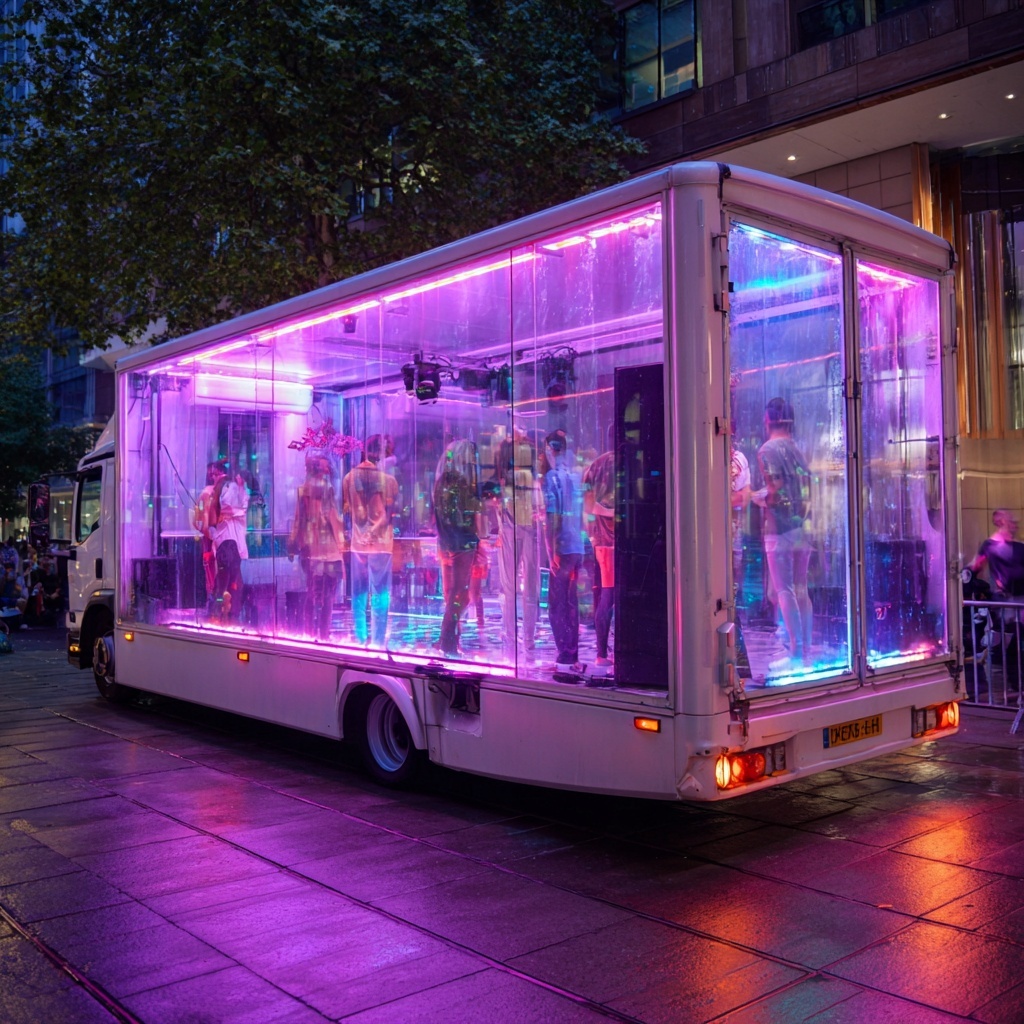
The rolling concert experience. A performer or DJ set up inside a large autonomous vehicle, playing a live set as the bus moves through a city. Tickets sold by the seat. The bus collects ticketholders from designated pickup zones, assembles the crowd on the move, and deposits everyone within walking distance of home when the last song ends.
The murder mystery tour. Actors placed at predetermined stops throughout the city. The bus collects its passengers with a cryptic invitation — no explanation, just a time and an address — and the mystery begins the moment the doors close. Clues delivered between stops. The city is the set.
The cinema on the move. A screen, a sound system, a carefully designed route. A film that uses the real city passing by the windows as a complement to what’s playing on screen. Synchronized to show the right scene as the bus crosses the right bridge at the right moment.
The brewery and distillery circuit. Craft beverage tourism is already a significant industry. The driverless party bus makes it dramatically more accessible — a curated tour of local producers with tastings at each stop, the bus waiting patiently outside each one, nobody worrying about who’s in any condition to drive.
The elopement experience. A small, intimate wedding in a moving vehicle — officiant, couple, closest friends, champagne, the city sliding past the windows. The bus collects the wedding party from their hotels, holds the ceremony in transit, and deposits everyone at the reception venue already celebrating.
The immersive escape room. Puzzles and challenges built into the vehicle itself, timed to the route. Solving one puzzle reveals the next location. The bus navigates accordingly. The city becomes the game board and the guests become the players.
The ghost tour after dark. A narrated journey through a city’s most haunted and historically significant locations, after midnight, with theatrical lighting and sound design inside the vehicle. The bus collects its passengers from a single dimly lit corner and the atmosphere begins before the doors close.
The farm-to-table rolling dinner. Stops at local farms, markets, and producers during the day — purchasing ingredients at each stop — culminating in a chef-prepared meal inside the vehicle on the return journey. The bus knows the schedule, knows the stops, and keeps everything on time.
The sunrise breakfast run. For a different kind of night owl — the bus collects its passengers at 5am, routes through the city as the light changes, and serves a full breakfast as dawn breaks over the skyline. Delivered home before the rest of the world is awake.
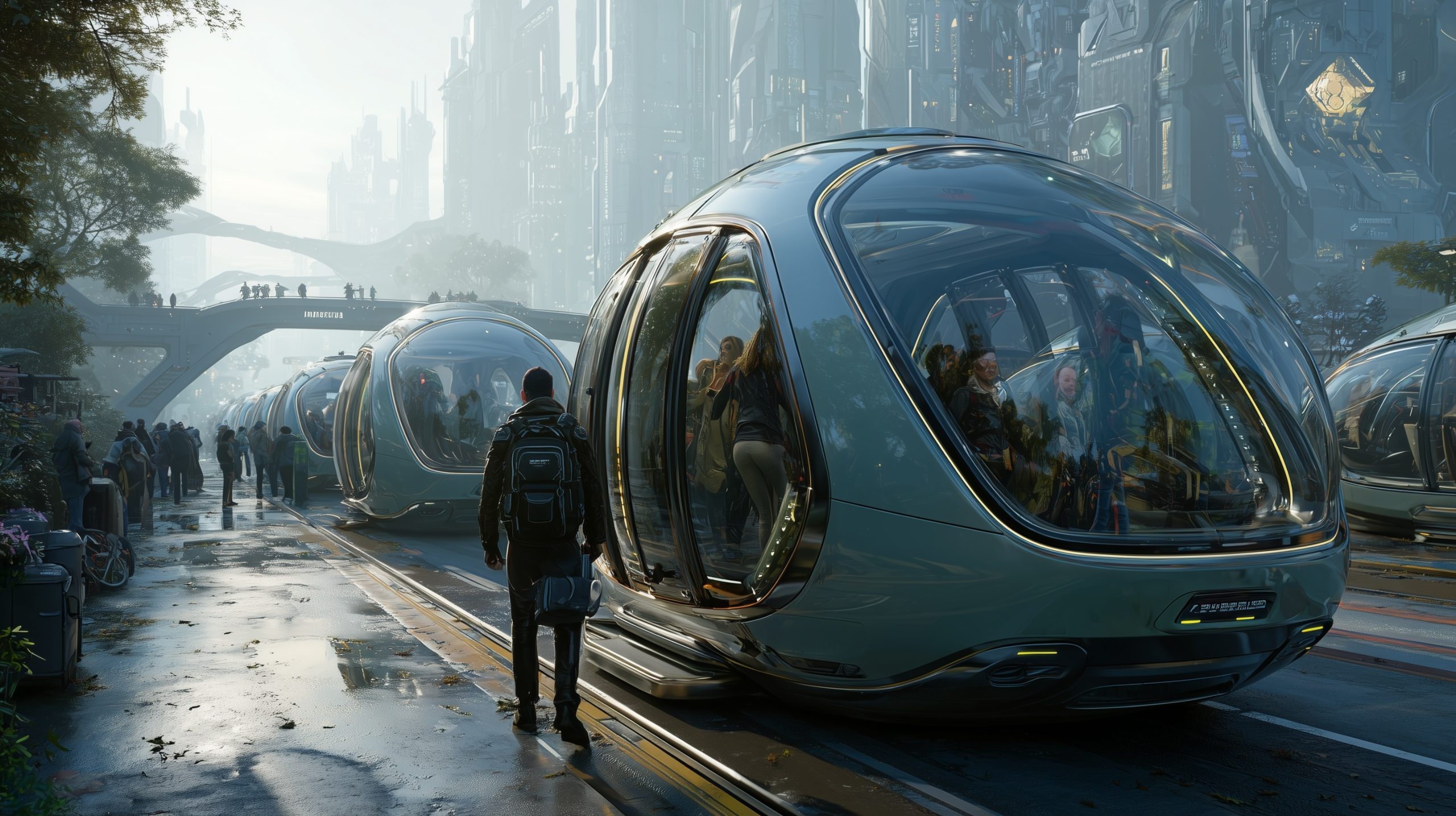
Regulation says stop. Technology reroutes. When rules lag, innovation moves—literally—shifting activity beyond city lines until policy catches up with what already exists.
The Regulatory Response — and the End Run Around It
Cities will not know how to handle this at first. Zoning laws weren’t written for venues that move. Liquor licensing regulations weren’t designed for a bar on wheels that crosses multiple jurisdictions in two hours. Noise ordinances apply to fixed addresses. The question of who is legally responsible for passengers in an autonomous vehicle — when there is no driver to hold liable — will occupy lawyers for years.
The early driverless party bus operators are going to encounter a regulatory environment that defaults to “no” while it figures out what the rules should be. Some cities will welcome the innovation and move to license and regulate the industry sensibly. Others will attempt to ban or severely restrict it — capping speeds, limiting routes, requiring a human operator to be present even when no human is driving.
And here is where the technology’s most elegant feature comes into play.
The driverless party bus doesn’t have to stay in the city. A vehicle that can navigate autonomously can just as easily navigate to where the regulations are more accommodating — the county line, the rural highway, the stretch of coast outside municipal jurisdiction. Party operators in restrictive cities will simply design routes that exit the city limits, hold the most festive portions of the journey outside urban regulatory reach, and return guests downtown at the end of the night.
This is not a bug in the system. It’s a feature. It’s exactly how the regulatory tension between innovation and governance has always played out — the technology moves faster than the rules, the users move to where the rules haven’t caught up yet, and eventually the regulations mature to reflect the reality that the technology has already established.
The best cities will figure this out quickly. They’ll see the driverless party bus not as a liability but as a tourism asset — a new category of experience economy that keeps people spending money locally, generates tax revenue, and creates jobs in hospitality, entertainment, and event design. The cities that try to regulate it out of existence will simply watch the parties drive to their neighbors.
The Bigger Picture
I’ve been studying how new technologies create new social behaviors for a long time. The pattern is consistent: the first applications of any new capability are direct translations of what came before. The interesting applications come later, when creative people stop asking “how do we do what we already do, but faster” and start asking “what becomes possible now that wasn’t before?”
The driverless vehicle is still in its first phase. We’re mostly asking how it will change commuting and logistics. Those are the right questions for now. But they’re not the only questions.
The people who will build the most interesting businesses around autonomous vehicles are the ones already asking the second question. What becomes possible when a vehicle is a venue? When movement is the amenity? When the bus can collect your friends, assemble the party, navigate the city, and deliver everyone home — and you never had to think about any of it?
When the journey and the destination are the same thing, and the guest list takes care of itself?
The driverless party bus is a ridiculous idea in the best possible way. Ridiculous ideas are almost always where the future actually lives — right up until the moment they’re obvious.
Give it your friends’ addresses. It’ll handle the rest.
Related Reading
The Second-Order Effects of Autonomous Vehicles Nobody Is Talking About
RAND Corporation — A serious look at how self-driving technology will reshape not just transportation but the social, commercial, and urban behaviors that transportation has always constrained
The Experience Economy: Why People Pay for How Things Feel
Harvard Business Review — The foundational framework for understanding why experiences have become the dominant form of consumer spending — and why moving venues are the logical next frontier
How Cities Regulate Innovation — and Why They Usually Get It Wrong at First
Brookings Institution — A historical analysis of how municipal governments have responded to disruptive technologies, from taxicabs to Airbnb, and what the pattern suggests about what’s coming for autonomous vehicle regulation