We totally get why women are living long, happy lives in Hawaii.
It should not be a surprise to anyone that you’re less likely to be depressed there than anywhere else in America when you live in a tropical island paradise like Hawaii.
The smartphone-enabled checkup will actually improve doctor-patient relationships.
Can you imagine a comprehensive, clinically relevant well-patient checkup using only smartphone-based devices? The data obtained during the checkup is immediately readable and fully uploadable to an electronic health record. The patient understands – and even participates – in the interaction far beyond faking a cough and gulping a deep breath.
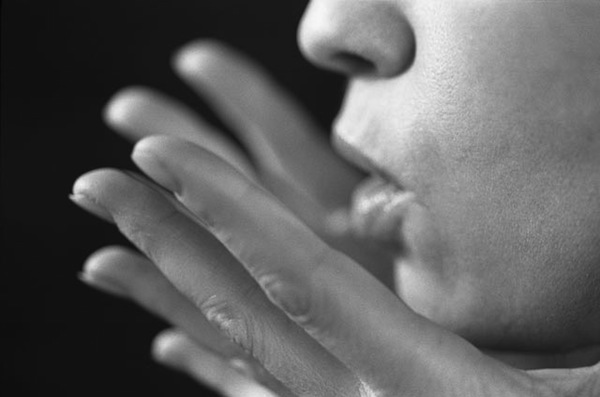
Our breathprint could be used to detect signature metabolites associated with disease.
Our fingerprints are unique to us, but so may be our breath. Compounds in exhaled air produce a unique and stable molecular autograph or “breathprint” – one that could be used to monitor disease or track response to medication.
Facing the aging of the baby boom generation, the U.S. is unprepared for the coming surge in the cost and cases of dementia.
How much does it cost to care for American’s with dementia? A new study has found that the financial burden is at least as high as that of heart disease or cancer, and it may be even higher. And both the costs and the number of people with dementia will more than double within 30 years, skyrocketing at a rate that rarely occurs with a chronic disease.
Scientific research suggests that all the antibacterial-wiping, germ-killing cleanliness of the developed world may actually be making us more prone to getting sick — and that a little more dirt might help us stay healthier in the long run.
Joe Landolina pictured on the far left created Veti-Gel.
Twenty-year-old New York University student Joe Landolina is working toward an MS in Biomedical Engineering and Biomaterials. While trying to get a degree, he has created a gel called “Veti-Gel” that instantly stops bleeding wounds and starts the healing process. (Video)
Wearable health devices are playing an enormous role in this revolution by helping track your metrics passively.
Swissnex San Francisco explored the topic of Big Data and Health Devices together with The Hive, a Silicon Valley Big Data incubator on March 6th. Roger Magoulas (Director of Research at O’Reilly Media), Ian Blumenfeld (Data Scientist and Co-Founder of InSample), and Rachel Kalmar (Data Scientist at Misfit Wearables) talked about how data science is transforming healthcare, and how we can improve our health by using devices and better analyzing the metrics we track. (videos)
Every month, 14 million Americans get a disability check.
The number of Americans who are on disability has skyrocketed in the past thirty years. Medical advances have allowed many more people to remain on the job, and new laws have banned workplace discrimination against the disabled, but disability is still on the rise. Fourteen million people now get a disability check from the government every month.
Parenting toddlers is not an easy job. Consider the 2-year-old to-do list: Get tantrums under control. Potty train. Transition from whole milk to low-fat milk.
Researchers worry that gene patents compromise their ability to tailor treatments to individuals based on their DNA.
One day in December 1995, scientists at Myriad Genetics, a a genetic diagnostics company in Salt Lake City, Utah, were competing in a race to discover the sequences of two genes, BRCA1 and BRCA2, that reveal a woman’s risk of hereditary breast and ovarian cancer. Sean Tavtigian rushed to his job that day at Myriad because he knew he could solve the final piece of the puzzle just in time to win Myriad the rights over both genes.
A new study suggests languages shape how we think about the future, and how we plan for it.
New research by Keith Chen of Yale Business School suggests that the language we speak can determine how healthy and rich we will be. The structure of languages affects our judgments and decisions about the future and this might have dramatic long-term consequences.