In a world first, scientists rewrite DNA to cure ‘genetic heart conditions’

By Mert Erdemir

An international team of scientists from the U.K., U.S., and Singapore is working together to develop an injectable cure for genetic heart conditions by rewriting DNA. The team named CureHeart has been awarded a £30 million grant from the British Heart Foundation (BHF).

The researchers will employ precision genetic techniques in the heart for the first time with the aim of silencing defective genes and develop and test the first treatment for genetic heart diseases. Animal tests had already proven before that the techniques work.

“This is a defining moment for cardiovascular medicine,” said Professor Sir Nilesh Samani, the BHF’s medical director. “Not only could CureHeart be the creators of the first cure for inherited heart muscle diseases by tackling killer genes that run through family trees, it could also usher in a new era of precision cardiology.”

Continue reading… “In a world first, scientists rewrite DNA to cure ‘genetic heart conditions’”

A machine learning system that is capable of virtually removing buildings from a live view

Fig.1. Overview of the proposed method. An image of the current landscape is acquired by the mobile terminal and sent to the server PC. The server detects the target building and generates a mask. The area to be complemented is set from the mask image, and the input image is automatically altered based on the features around the target area. The output image based on the digital completion is sent to the mobile terminal as a future landscape after demolition to be displayed on the DR display. Credit: Takuya Kikuchi et al.

Scientists at Osaka University have created a machine learning system that is capable of virtually removing buildings from a live view. By using generative adversarial networks (GAN) algorithms running on a remote server, the team was able to stream in real-time on a mobile device. This work can help accelerate the process of urban renewal based on community agreement.

Continue reading… “A machine learning system that is capable of virtually removing buildings from a live view”

Augmented reality could be the future of paper books, according to new research

Augmented reality might allow printed books to make a comeback against the e-book trend, according to researchers from the University of Surrey.

Surrey has introduced the third generation (3G) version of its Next Generation Paper (NGP) project, allowing the reader to consume information on the printed paper and screen side by side.

Dr. Radu Sporea, senior lecturer at the Advanced Technology Institute (ATI), comments:

“The way we consume literature has changed over time with so many more options than just paper books. Multiple electronic solutions currently exist, including e-readers and smart devices, but no hybrid solution which is sustainable on a commercial scale.

“Augmented books, or a-books, can be the future of many book genres, from travel and tourism to education. This technology exists to assist the reader in a deeper understanding of the written topic and get more through digital means without ruining the experience of reading a paper book.”

Continue reading… “Augmented reality could be the future of paper books, according to new research”

MIT researchers create 3D printed sensor for satellites at a fraction of the cost

It is well known that one of the most expensive fields of engineering is aerospace, and specifically, anything that goes into space. Recognising the challenges faced by low-cost space systems, MIT researchers have recently developed a 3D printing process that can create sensors at a fraction of the cost of existing solutions while still offering the same performance. What challenges does spaceflight present to engineers, what did the researchers demonstrate, and how could 3D printing technologies help to lower the economic barriers faced by spaceflight?

Continue reading… “MIT researchers create 3D printed sensor for satellites at a fraction of the cost”

Scientists Invent a Tiny Robot With ‘Human-Like Hands’ That Can Lift 1000 Times Its Own Weight!

By Joaquin Victor Tacla

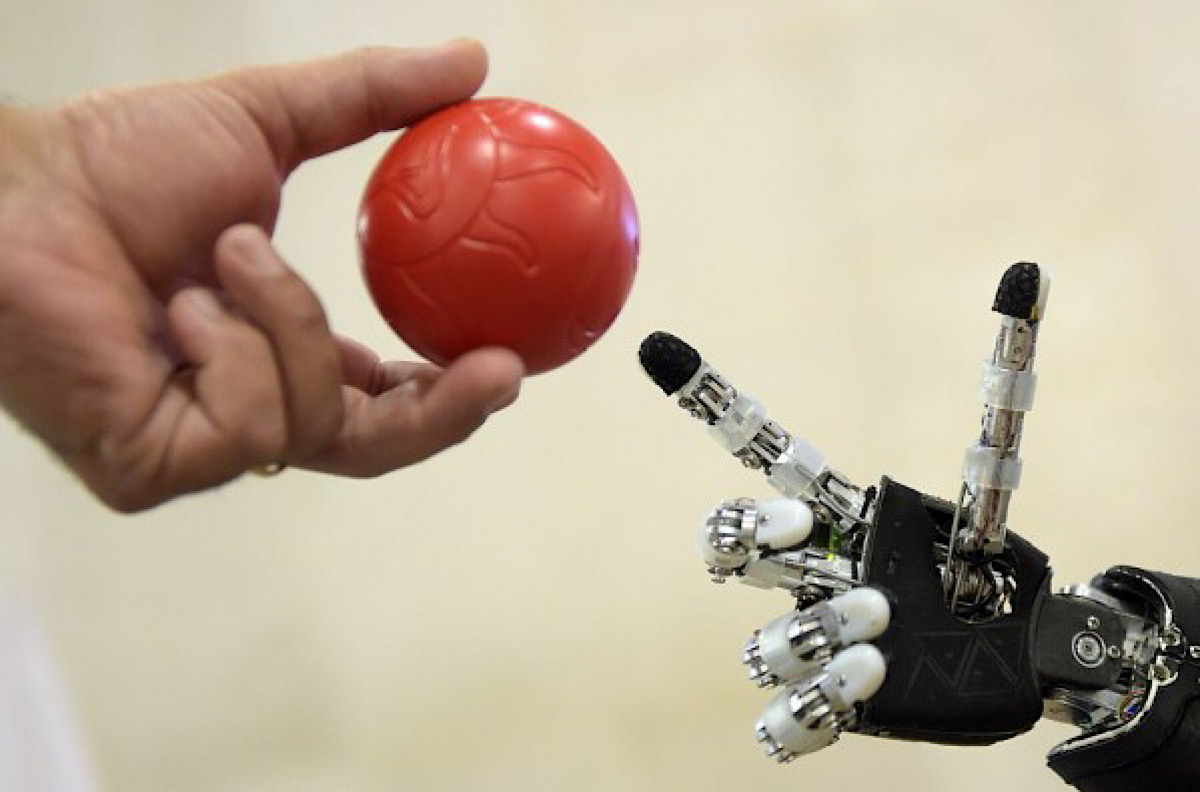
For the first time ever, a group of scientists from the Italian Institute of Technology has created a new class of highly effective artificial muscles that can stretch and contract like human muscles. More importantly, it can lift 1000 times its own weight!
A man approaches a plastic ball toward the finger of humanoid robot iCub during the 2014 IEEE-RAS International Conference on Humanoid Robots in Madrid on November 18, 2014. The iCub is the humanoid robot developed at IIT (Instituto Italiano di Tecnologia) as part of the EU project RobotCub and subsequently adopted by more than 20 laboratories worldwide. It has 53 motors that move the head, arms & hands, waist, and legs.

Continue reading… “Scientists Invent a Tiny Robot With ‘Human-Like Hands’ That Can Lift 1000 Times Its Own Weight!”

The world’s first smart mailbox is ready for drone deliveries

DroneDek’s ‘Mailbox of the Future’ debuts next week in Indianapolis suburb

Jack Daleo

The iPhone has quickly become one of the most ubiquitous products in history, right up there with the lightbulb and gas-powered car.

It’s a short list. But Dan O’Toole thinks his smart mailbox could make the cut.

“You take a picture of your family right now and everybody’s on their iPhone — nobody’s looking at the camera, right? This has the ability to insinuate itself into the fabric of our lives every day in the same way that the iPhone has,” O’Toole, the CEO of DroneDek, told Modern Shipper in an interview in October.

At the time, O’Toole’s vision was just that — a vision. But on Monday it will finally begin to take shape when DroneDek completes the first deliveries to its “mailbox of the future” in Lawrence, Indiana. The high-tech receptacle will receive deliveries of both traditional mail and hot food that will be airdropped via drone.

DroneDek’s mailbox is built to handle delivery in all of its many forms. It boasts a list of features as long as the iPhone’s terms and conditions, but each is put to good use to make the receptacle as secure, sustainable and self-reliant as possible.

Continue reading… “The world’s first smart mailbox is ready for drone deliveries”

10 Predictions About a Typical Future Day in the Life

by Gary Pullman

No one, including futurists, has a crystal ball. Despite centuries of attempts to divine the future using everything from animal innards to tea leaves, little progress has been made, except, in some cases, by scientists (meteorology is one example of relative success). So the future remains, for the most part, relatively obscure. However, that fact hasn’t stopped futurists from trying, as predictions have been put forth concerning almost every aspect of human existence.

This list relates to activities associated with a typical future day in the life of most ordinary people, as they are expected to live it, according to the predictions of futurists, who know (or think they know) what the future holds. This includes what our houses will look like, how we will travel, the instruction schools will provide, how childcare will work, how we will take care of our pets, what our workplaces will be like, where and what (not whom) we will worship, how we will garden, what will entertain us, and how and where we will vacation. So let’s look at ten predictions about our typical day in the future.

Continue reading… “10 Predictions About a Typical Future Day in the Life”

Blockchain Will Coordinate Airspace so Delivery Drones Don’t Crash

Blockchain and drones: How will we control the new highways of the skies above us as small aircraft fill the the space above our cities?

By Nicole Buckler 

Blockchain is a new industry. And yet, there are systems being conceived around it that are even newer. And this concept is one of them. For those of us with kids, we are being told to prepare them for jobs that don’t exist yet. So read on.

It has been predicted that within a couple of years, drones will be above us all the time. They will operate in a sub-layer of the sky, below commercial flight paths and military jets. But their flight paths will need to be coordinated. This is so they don’t smash into each other while delivering cargo, ferrying people, and inspecting things like wind turbines and bridges. No one needs to be rained on by smashing drones, thanks.

A sub-layer of air traffic control has been conceived to address this. It will work using both distributed ledger tech (DLT), blockchain, and automation. Research around this new sub-layer in the aviation industry is already well underway. The idea is to improve safety, cybersecurity and interoperability.

Continue reading… “Blockchain Will Coordinate Airspace so Delivery Drones Don’t Crash”

South Korean researchers develop nanotech tattoos as health monitoring devices

Researchers in South Korea are developing a new health monitoring device in the form of an e-tattoo that can automatically alert the wearer to potential health problems.

The team at the Korea Advanced Institute of Science and Technology have created an electronic tattoo ink made of liquid metal and carbon nanotubes that effectively functions as a bioelectrode.

The device could be used to send a readout of the wearer’s vital signs if connected to biosensors, including for instance an electrocardiogram.

Alongside heart rates it could be used to read glucose or lactate levels for people with diabetes or sepsis.

But the researchers plan to do away with the biosensors and design the e-tattoo as a fully self-contained device.

“In the future, what we hope to do is connect a wireless chip integrated with this ink, so that we can communicate, or we can send signal back and forth between our body to an external device,” said the project leader Professor Steve Park.

The e-tattoo ink is non-invasive and doesn’t require a needle to be implanted beneath the skin like a traditional tattoo.

Continue reading… “South Korean researchers develop nanotech tattoos as health monitoring devices”

Ottonomy.IO raises $3.3 million to expand network of autonomous robots for deliveries

By Jagmeet Singh

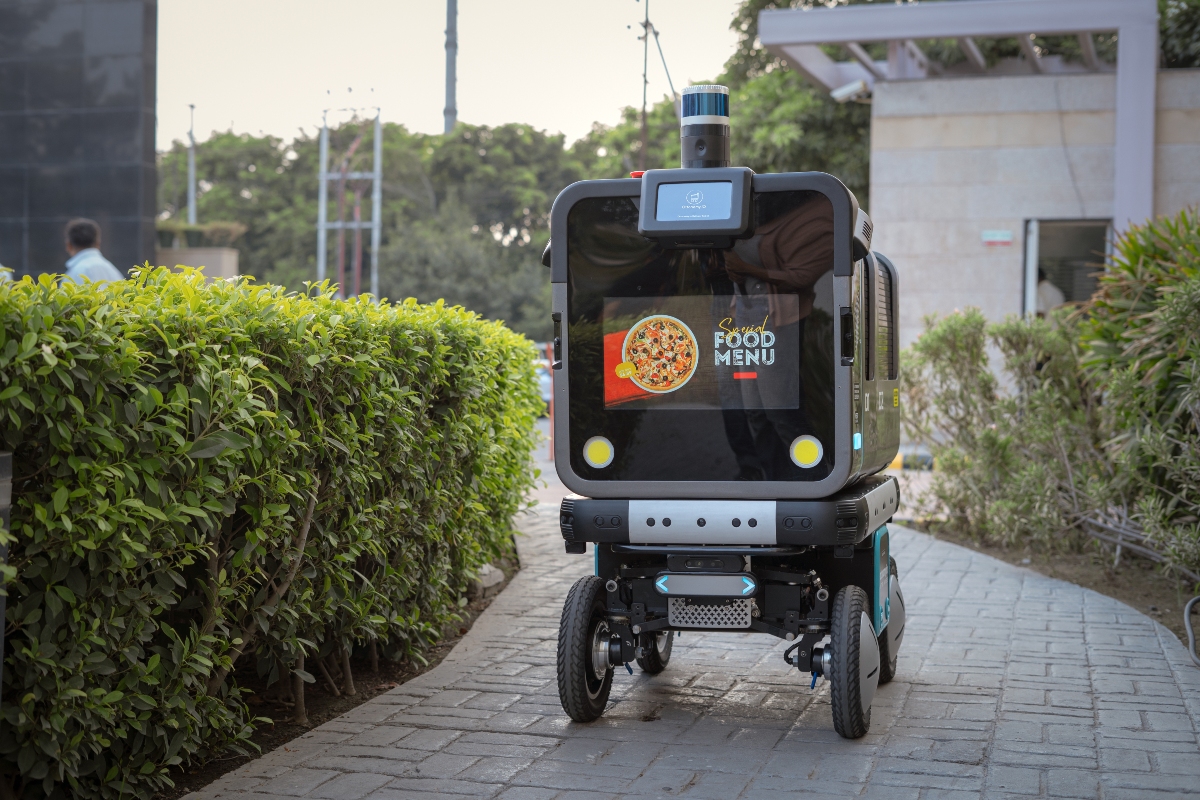
Ottonomy.IO, a startup working on solving delivery problems using autonomous robots, has raised $3.3 million in a seed funding round as it looks to expand its market and deploy robots to existing customers.

Led by Bengaluru-based Pi Ventures, the latest funding round included participation from Connetic Ventures and Branded Hospitality Ventures. Sangeet Kumar, founder and chief executive of Uttar Pradesh-based Addverb Technologies, also joined the round.

Founded in late 2020 by Ritukar Vijay along with Pradyot Korupolu, Ashish Gupta and Hardik Sharma, New York-headquartered Ottonomy.IO develops robots that feature sensors, including 3D lidar sensors and cameras. The company, which employs about 25 people in the U.S. and India, also writes software and AI algorithms to power the sensors.https://jac.yahoosandbox.com/1.2.0/safeframe.html

“One of the most important problems which we are trying to solve with these autonomous delivery robots is around labor shortages,” said Vijay, who serves as the chief executive of Ottonomy.IO, in an interaction with TechCrunch. He added that due to the labor shortages, there is a substantial increase in the hourly wages of laborers — to $18 to $45 per hour from $9 to $12 — in the U.S.

“So, that’s almost a 100% hike in hourly wages, making it very difficult for enterprise customers to provide the same services to the customers they were given earlier. And what happens at the end is that customers start paying more for deliveries.”

Continue reading… “Ottonomy.IO raises $3.3 million to expand network of autonomous robots for deliveries”

Hyundai shows off smart city concept incorporating underground autonomous networks

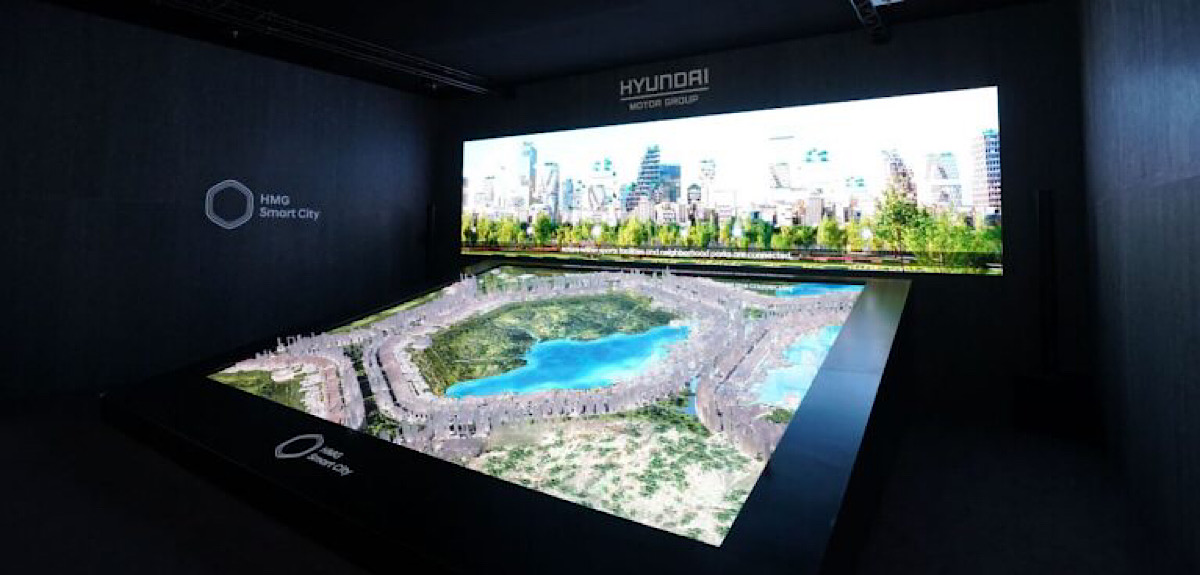
Hyundai Motor Group (HMG) has revealed its Smart City master model, which it presents as a philosophy to create cities which are “human-centered, coexist with nature, and embrace the future.”

 By LAWRENCE BUTCHER

HMG president and chief innovation officer Youngcho Chi said, “The HMG Smart City master model is our vision for a human-centered city that will revitalize urban communities. In the future smart cities, our ambition is for humankind to live with nature while embracing technology. Our air and ground mobility solutions will redefine urban boundaries, connect people in meaningful ways, and revitalize cities. We will continue to work with governments around the globe to bring our smart city vision to reality, while rapidly advancing capabilities in future mobility solutions.”

The HMG Smart City concept, inspired by a honeycomb pattern, envisions a hexagonal-shaped city with a human-centered surface layer and function-centered underground layer. On the surface layer, the buildings encircle nature, in the form of parks and forest, which sit at the center of the city, effectively minimizing the gross area developed.

The buildings are divided into three sections by population density – high, medium and low. The density decreases nearer the parks and forests in the city center, affording people an unobstructed view of nature from any part of the city. Buildings are arranged within these sections according to their purposes. For instance, city landmarks will be in the high-density area, while security infrastructure will be located in the medium density area, enabling effortless access to any section.

Continue reading… “Hyundai shows off smart city concept incorporating underground autonomous networks”
Discover the Hidden Patterns of Tomorrow with Futurist Thomas Frey
Unlock Your Potential, Ignite Your Success.

By delving into the futuring techniques of Futurist Thomas Frey, you’ll embark on an enlightening journey.

Learn More about this exciting program.