The Hanboost C1 Wireless Ultrasonic Cutter: Precision Cutting at Your Fingertips

From soldering guns to smartphone microscopes, there are certain gadgets that immediately spark our curiosity and make us wonder how we ever lived without them. The Hanboost C1 wireless ultrasonic cutter is one of those devices that falls squarely into this category. A versatile tool with a range of applications, it’s not just aimed at DIY makers and crafters but appeals to a broader audience. Whether you’re a sculptor, 3D printer, or model builder, this gadget promises to elevate your precision cutting game with ease.

The Hanboost C1 can slice through an impressive range of materials — including wood, plastic, leather, rubber, and paper — with the utmost precision. Operating at a remarkable 40,000 vibrations per second, it cuts silently, gliding through your work without the usual tearing, scratching, or scoring you might encounter with traditional tools. The result? Clean, smooth cuts every time.

Continue reading… “The Hanboost C1 Wireless Ultrasonic Cutter: Precision Cutting at Your Fingertips”


Revolutionizing Energy: 52 Billion Solar Panels Could Cover America’s Highways

A bold and visionary proposal suggests that solar panels could soon cover America’s highways, potentially transforming the country’s energy landscape. Researchers from esteemed institutions such as the Chinese Academy of Sciences, Tsinghua University, the Chinese Academy of Geosciences, and Columbia University have put forward a groundbreaking plan to integrate solar energy across the world’s major highway systems. If implemented, this initiative could generate a significant portion of global electricity while dramatically reducing carbon emissions.

The idea, outlined in the study “Roofing Highways With Solar Panels Substantially Reduces Carbon Emissions and Traffic Losses” published in Earth’s Future, envisions solar panels covering up to 3.2 million kilometers of highway network across the globe. The proposed project, involving the installation of 52 billion solar panels, could generate up to 17,578 terawatt-hours (TWh) of electricity annually—equivalent to more than 60% of the world’s electricity consumption in 2023. This initiative could not only help power billions of homes but also reduce global carbon emissions by up to 28% and potentially cut road accident rates by 11%.

Continue reading… “Revolutionizing Energy: 52 Billion Solar Panels Could Cover America’s Highways”

Meta’s $10 Billion Subsea Cable Project: Taking Control of Its Global Infrastructure

Meta, the parent company of Facebook, Instagram, and WhatsApp, has long been a powerhouse in global internet usage, with its services driving 10% of all fixed internet traffic and 22% of mobile traffic worldwide. As Meta continues to expand its artificial intelligence capabilities and global reach, the company is taking a bold step to ensure it has the infrastructure to support its growing business: by building its own subsea fiber-optic cable network.

TechCrunch has confirmed, through sources close to the company, that Meta plans to construct a new, massive subsea cable that will span over 40,000 kilometers across the globe. This project is estimated to cost upwards of $10 billion, and notably, Meta will be the sole owner and operator of the cable, marking a significant milestone in its infrastructure strategy.

Continue reading… “Meta’s $10 Billion Subsea Cable Project: Taking Control of Its Global Infrastructure”

Why AI Won’t Replace Software Engineers — But Can Supercharge Their Work

As the field of generative AI continues to grow, many are wondering if artificial intelligence could one day replace software engineers. According to a report by Grand View Research, the AI market is expected to expand at an impressive rate of 36.6% per year between 2024 and 2030, with AI applications in software development being a major area of investment.

As the CEO of a software development company, I often hear comments joking that AI tools, like ChatGPT, could easily replace my team. While there is a growing role for AI in software development, I firmly believe that AI will not replace software engineers — and here’s why.

Continue reading… “Why AI Won’t Replace Software Engineers — But Can Supercharge Their Work”

MIT’s Solar-Powered Desalination System Offers Affordable Clean Water for Water-Stressed Communities

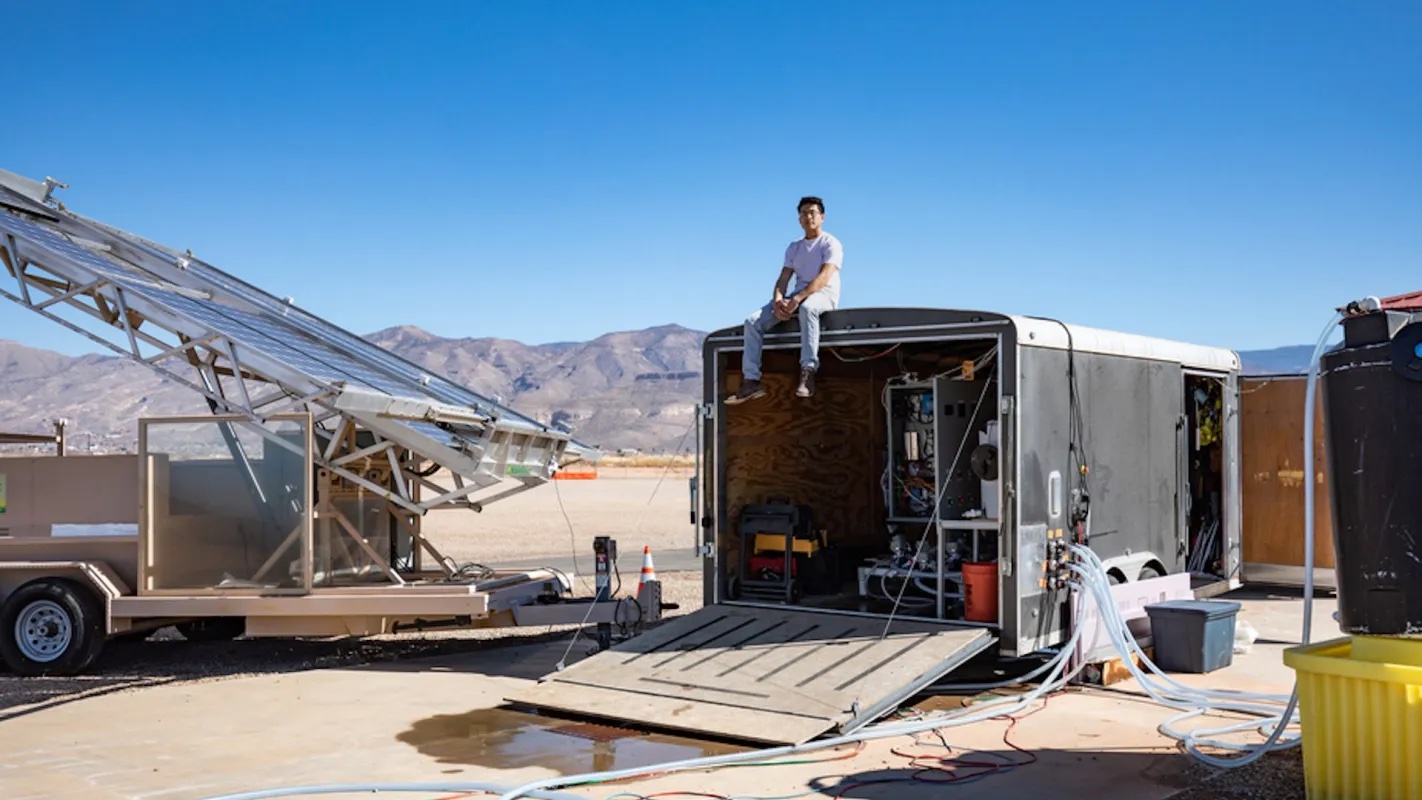
A revolutionary solar-powered desalination system developed by researchers at the Massachusetts Institute of Technology (MIT) is paving the way for affordable, clean drinking water in communities facing water scarcity. This cutting-edge technology eliminates the need for expensive backup batteries, offering a sustainable solution for desalination that is both cost-effective and energy-efficient.

Unlike traditional desalination systems, which often require batteries or grid power to operate in cloudy or stormy weather, MIT’s system adapts to the natural patterns of the sun. It increases desalination output during peak sunlight hours and scales back during overcast periods, making the process more efficient and helping to reduce costs significantly. This adaptability ensures that fresh water can be produced consistently, regardless of weather conditions.

Continue reading… “MIT’s Solar-Powered Desalination System Offers Affordable Clean Water for Water-Stressed Communities”

China Reveals Plans for First Crewed Moon Mission, Showcasing Progress on Lunar Hardware

China’s human spaceflight agency has unveiled an exciting video outlining its ambitious plans for a crewed mission to the Moon, highlighting key advancements in the development of lunar hardware. The promotional video, released by the China Manned Space Agency (CMSA) on November 21, offers both detailed animations of the planned mission activities and a closer look at the hardware currently being tested for the lunar mission.

Scheduled to take place before 2030, China’s historic moon landing will involve a two-stage launch of the Long March 10 rocket, which is still under development. The first stage will send a crewed spacecraft, named Mengzhou, into lunar orbit, while the second stage will deploy a lunar landing stack, called Lanyue. Once in lunar orbit, the two spacecraft will dock, allowing a pair of astronauts to transfer from Mengzhou to Lanyue and descend to the Moon’s surface.

Continue reading… “China Reveals Plans for First Crewed Moon Mission, Showcasing Progress on Lunar Hardware”

How Emerging Technology Could Revolutionize Road Safety in the Coming Decade

As the holiday season approaches, many drivers hit the road with an ever-present concern: the risk of accidents and unsafe drivers. With the National Highway Traffic Safety Administration reporting approximately 40,000 fatalities on U.S. roads each year, the urgency to improve road safety has never been greater. Experts believe that technology could play a key role in keeping drivers safer in the years ahead. In the next 12 to 15 years, the majority of vehicles in the U.S. could be equipped with C-V2X, or Cellular Vehicle-to-Everything communications—a technology that could transform the way cars interact with each other and their environment.

C-V2X enables cars to “talk” to one another in real-time, helping prevent collisions before they happen. “It’s cars communicating with each other so they don’t crash into each other,” explained Dr. Billy Kihei, an Assistant Professor at Kennesaw State University in the Department of Electrical and Computer Engineering. He believes this technology has the potential to significantly reduce accidents, especially those involving impaired drivers.

Continue reading… “How Emerging Technology Could Revolutionize Road Safety in the Coming Decade”

The Powerful Synergy of AI and CRISPR: Transforming Medicine, Agriculture, and Climate Change in 2025

In 2025, AI and machine learning are set to significantly amplify the impact of CRISPR genome editing across multiple fields, including medicine, agriculture, climate change, and the foundational research driving these areas. While the AI field is filled with grand promises, it’s important to recognize that real, tangible advancements are already occurring in genomics and life sciences. Unlike many technological breakthroughs that take years to show results, the fusion of AI and CRISPR is already transforming the way we approach genetic research.

In genomics, where vast datasets are the norm, researchers often face a challenge: even supercomputers can take weeks or months to analyze subsets of data. As a result, we’re forced to limit the scope of our inquiries, focusing only on the most manageable datasets. AI and machine learning are now breaking these barriers, enabling us to quickly analyze complex genomic data. In my own lab, for example, we used AI to discover small gene-editing proteins that had been hidden in public genome databases—simply because we lacked the computational tools to uncover them before.

Continue reading… “The Powerful Synergy of AI and CRISPR: Transforming Medicine, Agriculture, and Climate Change in 2025”

KIMS Scientists Develop World’s First Ultra-Thin Composite Material to Absorb Over 99% of Electromagnetic Waves

A team of scientists from the Korea Institute of Materials Science (KIMS) has achieved a groundbreaking feat by developing the world’s first ultra-thin composite material capable of absorbing more than 99% of electromagnetic waves across multiple frequency bands, including 5G/6G, WiFi, and autonomous vehicle radar. This innovative material, less than 0.5mm thick, offers an extraordinary combination of low reflectance (less than 1%) and high absorbance (over 99%) across three critical frequency bands.

Electromagnetic waves emitted by electronic components can cause significant interference, degrading the performance of nearby devices. Electromagnetic shielding materials are typically used to prevent this interference, but traditional shielding methods are often not efficient enough. Conventional materials tend to reflect over 90% of electromagnetic waves, with actual absorbance levels often as low as 10%. Additionally, most materials with higher absorbance are limited to absorbing waves in a single frequency band, making them unsuitable for multi-functional applications.

Continue reading… “KIMS Scientists Develop World’s First Ultra-Thin Composite Material to Absorb Over 99% of Electromagnetic Waves”

Dream Chaser: Sierra Space’s Historic Commercial Spaceplane Set for 2025 Launch

Sierra Space’s Dream Chaser spaceplane is poised to make history with its first mission, SSC Demo-1, slated for launch “no earlier than May 2025.” Initially designed for resupply missions, Dream Chaser is set to evolve into a crewed vehicle capable of transporting astronauts to low-Earth orbit (LEO). Sierra Space proudly describes it as “the only commercial runway-capable spaceplane,” a groundbreaking achievement in space exploration.

“The Dream Chaser spaceplane is the first-ever winged commercial spaceplane that will open shared access to space and foster international collaboration for all humankind,” said Sierra Space. “Our multi-mission spaceplane fleet will not only carry cargo but also crew to LEO and can be customized for both domestic and international customers, supporting global operations.”

Continue reading… “Dream Chaser: Sierra Space’s Historic Commercial Spaceplane Set for 2025 Launch”

Innovative Solutions in Seawater Desalination: OceanWell’s Modular Deep-Sea Technology

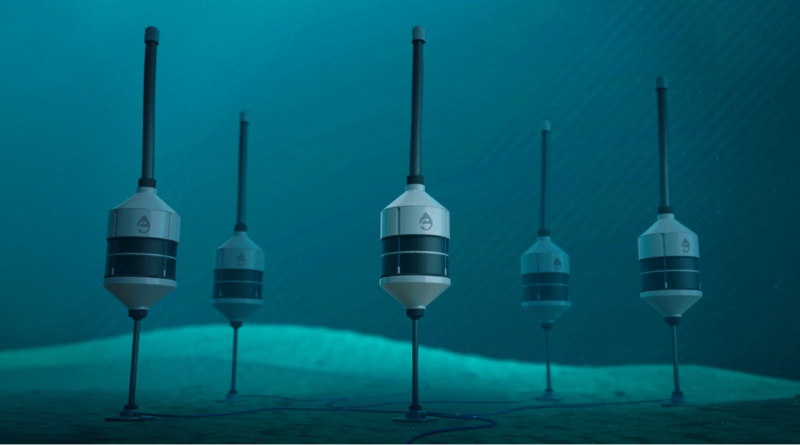
Seawater desalination systems have traditionally been large, energy-intensive, and costly structures occupying valuable coastal real estate. Yet, as freshwater resources are increasingly strained, the demand for sustainable desalination solutions continues to rise. Addressing this challenge, California-based startup OceanWell has developed a groundbreaking approach: modular desalination pods positioned deep underwater.

The desalination industry has made strides in energy efficiency and cost reduction over recent years, bolstered by the integration of renewable energy. However, the construction of large-scale desalination facilities remains resource-intensive and controversial. For example, a proposed $1.4 billion, 50-million-gallon-per-day facility in Huntington Beach, California, faced two decades of debate before the California Coastal Commission ultimately rejected it in 2022. The project’s environmental impact, power demands, and vulnerability to sea-level rise highlighted the challenges of traditional desalination efforts.

Continue reading… “Innovative Solutions in Seawater Desalination: OceanWell’s Modular Deep-Sea Technology”
Discover the Hidden Patterns of Tomorrow with Futurist Thomas Frey
Unlock Your Potential, Ignite Your Success.

By delving into the futuring techniques of Futurist Thomas Frey, you’ll embark on an enlightening journey.

Learn More about this exciting program.