IV-Lab: Revolutionary Implantable Multi-Sensor Device to Monitor Cardiovascular Health

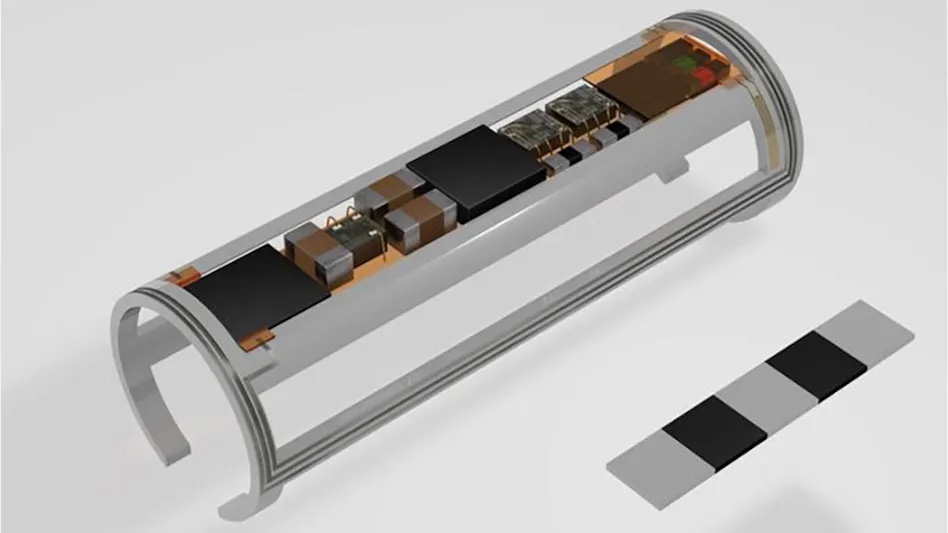
The EU-funded project IV-Lab, coordinated by the Istituto Italiano di Tecnologia (IIT-Italian Institute of Technology), has officially launched. This innovative project aims to develop a multi-sensing device that can be implanted into blood vessels, such as peripheral veins or arteries, to monitor various body parameters and the overall health of individuals. Once implanted in patients with cardiovascular diseases, the microsensor system will create a versatile platform capable of detecting both hemodynamic and biochemical parameters.

The IV-Lab project, which stands for “In-vessel implantable smart sensing device for personalized medicine,” has secured more than 4 million euros from the European Innovation Council (EIC) under the Horizon Europe program for research and innovation. Coordinated by Virgilio Mattoli, a researcher at IIT in Pisa, the project involves several IIT groups: the Soft Micro-Electronic Materials Group at the Center for Materials Interfaces (CMI) in Pontedera, the Printed and Molecular Electronics group in Milan, and the Electronic Design Laboratory in Genoa.

Continue reading… “IV-Lab: Revolutionary Implantable Multi-Sensor Device to Monitor Cardiovascular Health”

Reimagining the Future: The Power of Backcasting

In science fiction, the Grandfather Paradox suggests that traveling into the past and altering key events can dramatically change or even obliterate the future. But what if we flipped this idea on its head? Instead of worrying about the potential disruptions of time travel, we could define a desirable future and then reverse engineer the necessary steps to achieve it. Unlike the Grandfather Paradox, which resides in the realm of sci-fi, the concept of backcasting is not only feasible but also practical.

Backcasting, first outlined by Professor John B. Robinson from the University of Waterloo nearly 35 years ago, starts with a clear vision of the end goal and works backward to identify the steps needed to achieve it. This method contrasts with traditional forecasting, which predicts the future by extrapolating from past trends. In 2014, futurist Thomas Frey presented eight backcasting scenarios to better understand the future. These scenarios included ambitious visions such as controlling hurricanes or extending human lifespan beyond 200 years, and then mapped out the necessary technologies, policies, and actions to realize these visions.

Continue reading… “Reimagining the Future: The Power of Backcasting”

Breakthrough in Sodium-Based Batteries Could Revolutionize Electric Vehicles

Korean researchers may have solved a significant issue that makes some consumers hesitant to transition to electric vehicles (EVs). A team from the Korea Advanced Institute of Science and Technology (KAIST) has developed a sodium-based battery capable of charging in mere seconds, as reported by Techopedia.

This groundbreaking technology could significantly boost the EV industry, making the adoption of electric vehicles more appealing and potentially benefiting both humanity and the planet. Although daily charging isn’t always necessary, lengthy charging times have been a deterrent for many consumers, according to studies by the International Energy Agency and other sources. Extended charging sessions also pose safety concerns, particularly for women. The U.S. Department of Energy noted that from 2020 to 2023, the average time spent at a paid fast-charging station was 42 minutes, often including time spent in nearby stores.

Continue reading… “Breakthrough in Sodium-Based Batteries Could Revolutionize Electric Vehicles”

Naval Officer’s Underwater Study Reverses Aging by a Decade

Retired naval officer Joseph Dituri embarked on an extraordinary mission, staying underwater for over three months as part of a groundbreaking scientific study. Researchers sought to understand the effects of living in a pressurized underwater environment on the human body. The results were astonishing: Dituri appeared to have “reversed” his aging by ten years when he resurfaced after more than three months in the depths of the Atlantic Ocean.

Medical assessments revealed remarkable changes in Dituri’s body. His telomeres, the DNA caps at the ends of chromosomes that usually shorten with age, had grown 20 percent longer. Additionally, his stem cell count increased, and his overall health saw a significant boost. Dituri reported notable improvements in his metabolism as well.

Continue reading… “Naval Officer’s Underwater Study Reverses Aging by a Decade”

Hopper Mobility’s Pedal-Electric Hybrid: The Future of Urban Commuting

Pedal-electric, semi-enclosed bicycle/car hybrids are rapidly gaining popularity, and one of the newest contenders is the Hopper. This innovative vehicle, developed by Hamburg-based startup Hopper Mobility, has already garnered significant attention on the streets of Germany. Initially announced as a concept in 2020, the Hopper offers a blend of convenience and eco-friendliness, designed to navigate both bike lanes and roads.

The Hopper, reminiscent of the Veemo, is a three-wheeled vehicle featuring an open-sided body that provides substantial weather protection. It places the rider in a comfortable, car-like driving position. Legally classified as an e-bike, the Hopper benefits from being able to bypass traffic by using bike lanes and paths while also being road-legal.

Continue reading… “Hopper Mobility’s Pedal-Electric Hybrid: The Future of Urban Commuting”

Revolutionary Water-Based Battery: A Safer and More Efficient Alternative to Lithium-Ion

Chinese researchers have unveiled a groundbreaking water-based battery design that promises enhanced safety and energy efficiency compared to traditional lithium-ion batteries. This innovative battery boasts a lifespan of over 1,000 charge-discharge cycles, as reported in the April 23 issue of Nature Energy.

A key property of any battery is its energy density, which measures the amount of energy it holds relative to its size or weight. Lithium-ion batteries, known for their high energy density, are widely used in electric vehicles and portable electronics. However, the organic chemicals in their electrolytes pose fire and explosion risks if the system overheats. Water-based batteries, while inherently safer, typically suffer from lower energy density due to their limited voltage range.

Continue reading… “Revolutionary Water-Based Battery: A Safer and More Efficient Alternative to Lithium-Ion”

Inversion Space: Revolutionizing Military Logistics with Space-Based Warehousing

Inversion Space, a pioneering startup founded in 2021, aims to transform military logistics by introducing innovative “space warehouse” capabilities. The company is developing reusable reentry capsules designed to store cargo in orbit, ready for rapid delivery to Earth within an hour when needed.

This groundbreaking technology is set to be tested during Inversion Space’s upcoming “Ray” pathfinder mission, scheduled for early October. The mission will be part of SpaceX’s Transporter-12 rideshare mission, where Inversion Space will deploy and test key technologies essential for developing larger cargo capsules.

Continue reading… “Inversion Space: Revolutionizing Military Logistics with Space-Based Warehousing”

British Defense Boosts Firepower with New Cost-Effective Directed Energy Weapon

The British defense sector is unveiling a new directed energy weapon aimed at enhancing the nation’s military capabilities in a cost-effective manner. The Radio Frequency Directed Energy Weapon (RFDEW) offers a powerful alternative to traditional missiles, with each shot costing a mere 13 cents compared to the multi-million dollar price tags of conventional missiles.

This initiative aligns with the British government’s strategy to adapt to a changing geopolitical landscape, increasing defense spending to 2.5% of GDP by 2030. Part of this strategy includes expediting the deployment of advanced technologies such as lasers and other directed energy weapons. These innovations are crucial for economic and tactical reasons; using a missile worth millions to destroy a drone costing a few thousand dollars is impractical, as highlighted by the US$1.3-2.5 million Sea Viper missile used to down a US$20,000 drone, according to Navy Lookout. Moreover, the limited stockpile of missiles could be quickly depleted by swarms of inexpensive drones.

Continue reading… “British Defense Boosts Firepower with New Cost-Effective Directed Energy Weapon”

Bamboo: The Next Transparent Building Material

Glass might soon face competition from an unlikely contender: bamboo. Scientists in China have transformed regular bamboo into a transparent material that is also resistant to fire and water and suppresses smoke.

Traditionally, silica glass, made from sand, is the preferred building material for applications requiring transparency and strength, such as windows. However, it is not particularly sustainable and can be heavy and brittle. Transparent wood has emerged as a viable alternative in recent years. By chemically removing lignin from wood fibers and treating the remaining material with plexiglass or epoxy, researchers have created a transparent, renewable material that rivals or exceeds the strength of glass while being lighter and a better thermal insulator.

Continue reading… “Bamboo: The Next Transparent Building Material”

Revolutionary Solar Cell Efficiency: MLU Researchers Achieve 1,000-Fold Increase

Researchers at Martin Luther University Halle-Wittenberg (MLU) have unveiled a groundbreaking method to enhance solar cell efficiency by a factor of 1,000. This significant breakthrough was achieved by engineering crystalline layers of barium titanate, strontium titanate, and calcium titanate in an alternating lattice structure.

Their findings, published in the journal Science Advances, have the potential to transform the solar energy industry.

Continue reading… “Revolutionary Solar Cell Efficiency: MLU Researchers Achieve 1,000-Fold Increase”

Transforming Brewery Waste: Yeast as a Solution for Lead-Contaminated Water

Every year, beer breweries discard thousands of tons of surplus yeast. Researchers from MIT and Georgia Tech have discovered an innovative method to repurpose this yeast to absorb lead from contaminated water.

Using a process known as biosorption, yeast can quickly absorb even trace amounts of lead and other heavy metals from water. The researchers have demonstrated that yeast can be encapsulated within hydrogel capsules to create an effective filter for removing lead. These capsules allow for easy removal of the yeast once the water is purified.

Continue reading… “Transforming Brewery Waste: Yeast as a Solution for Lead-Contaminated Water”

Sony Enters the Surgical Robotics Market with Advanced Microsurgery Assistance Robot

Sony, the Tokyo-based electronics giant, is stepping into the surgical robotics arena with its innovative microsurgery assistance robot. Designed to aid in precision microsurgical procedures, this robot marks Sony’s ambitious entry into a rapidly evolving field.

Sony’s newly developed robot is engineered to handle the delicate and precise tasks required in microsurgery, such as working on veins and nerves. The system includes a highly sensitive control device that tracks the movements of a surgeon’s hands and fingers, replicating these movements on a small surgical instrument. This instrument mimics the dexterity and range of motion of the human wrist, enhancing the precision and efficiency of surgical procedures.

Continue reading… “Sony Enters the Surgical Robotics Market with Advanced Microsurgery Assistance Robot”
Discover the Hidden Patterns of Tomorrow with Futurist Thomas Frey
Unlock Your Potential, Ignite Your Success.

By delving into the futuring techniques of Futurist Thomas Frey, you’ll embark on an enlightening journey.

Learn More about this exciting program.