Welding Without Welders: The Smart Workcell That Doesn’t Need You

Welders used to rule the shop floor.

Their sparks were the signature of a skilled trade—equal parts craftsmanship, grit, and danger. But what happens when the torch passes to a machine that doesn’t sweat, doesn’t miss, and doesn’t complain?

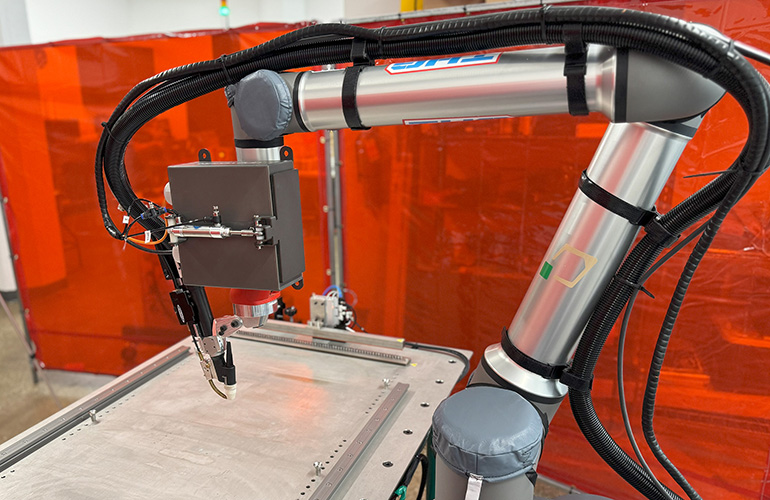
This week, Cohesive Robotics answered that question loud and clear with the launch of its Smart Welding Robotic Workcell, a fully autonomous welding system that doesn’t just automate tasks—it replaces the art of welding with code, cameras, and algorithms.

Welcome to the new frontier of fabrication, where the welder’s helmet is traded for a machine-learning model, and experience is measured in training data—not decades on the job.

Continue reading… “Welding Without Welders: The Smart Workcell That Doesn’t Need You”

The Molecule That Fights Stroke—and Might Rewrite the Future of Brain Health

Imagine a drug that protects your brain six hours after a stroke. Now imagine that same molecule quietly holds the key to reversing Alzheimer’s and other neurological killers—without the usual side effects, without the heartbreak, and without the ticking clock.

That’s the promise behind GAI-17, a small molecular disruptor developed by researchers in Japan that may become one of the most important brain interventions of our time.

And no one saw it coming.

Continue reading… “The Molecule That Fights Stroke—and Might Rewrite the Future of Brain Health”

Concrete Goes Blue: How Seaweed and AI Are Cracking Cement’s Dirtiest Secret

It’s hard to overstate the paradox of cement: it holds up our buildings, our bridges, our entire civilization—yet it also quietly poisons the process. Pound for pound, producing cement releases almost as much CO₂ as the material itself weighs. It’s an unavoidable chemistry problem baked into the modern world.

Until now.

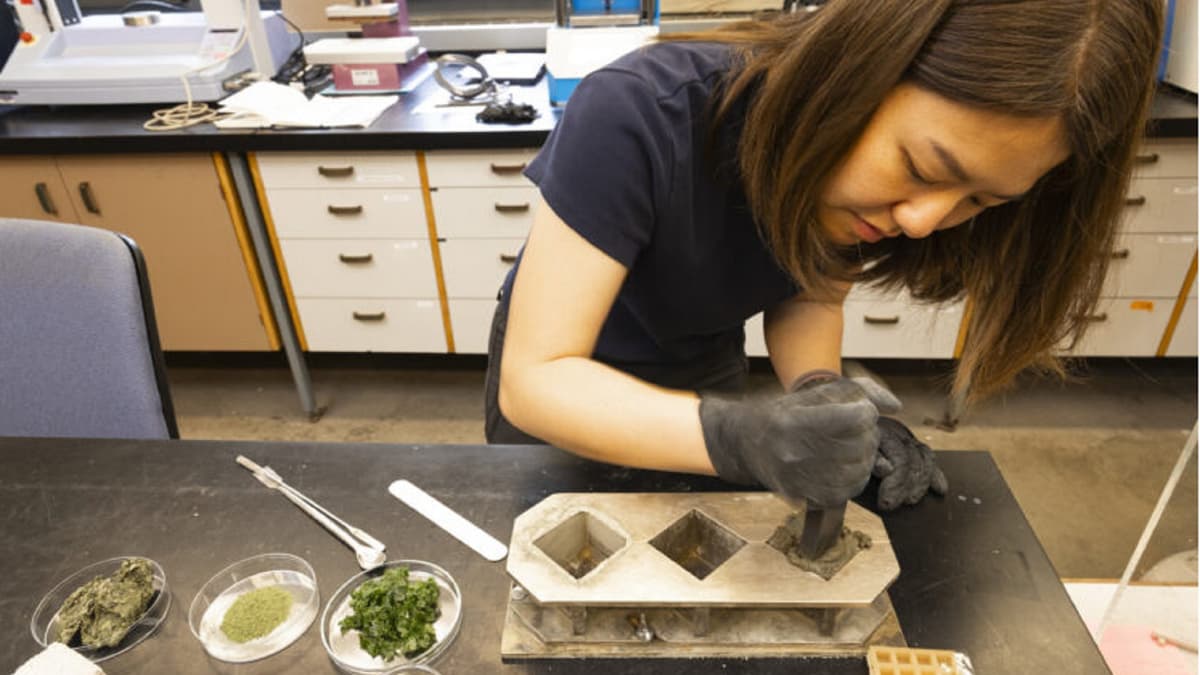
A team of scientists at the University of Washington, working in partnership with Microsoft, has taken an unexpected detour through the ocean—and come back with powdered seaweed as a concrete additive that radically alters the equation.

This isn’t just a quirky material swap. It’s the beginning of a full-blown materials intelligence revolution—where biology meets AI to rewrite what we think infrastructure should be made of.

Continue reading… “Concrete Goes Blue: How Seaweed and AI Are Cracking Cement’s Dirtiest Secret”

Reprogramming Nature: How Gene Editing Could Rescue the Species We’ve Already Failed

For decades, conservation has been about slowing the bleeding—captive breeding, protected habitats, desperate triage for species spiraling toward extinction. But what if we stopped trying to preserve nature like a museum exhibit and started engineering its comeback?

A new wave of scientists thinks we can. And they’re not talking about protecting animals—they’re talking about reprogramming them.

In a landmark paper published in Nature Reviews Biodiversity, an international team of researchers argues that gene editing—yes, the same tech used to make drought-resistant corn and revive mammoths—can now be applied to rescue endangered species. Not metaphorically. Literally.

This isn’t about keeping a few more pandas alive. This is about restoring lost genetic diversity, reversing evolutionary collapse, and using 21st-century tools to solve problems we created in the 20th.

Let that sink in: We may soon edit animals back to health.

Continue reading… “Reprogramming Nature: How Gene Editing Could Rescue the Species We’ve Already Failed”

The Death of Google Search: Why Google’s Results Are Now Worse Than Its Competitors

If you’re wondering if Google search is not as good as it used to be, you’re not alone. Try searching for anything meaningful these days—a product review, a technical question, even basic factual information—and you’ll likely find yourself swimming through a sea of AI-generated spam, affiliate marketing garbage, and Reddit threads that somehow rank higher than actual expert sources. Want proof? Try doing the same search on Bing, DuckDuckGo, Startpage, Searx, or even Yandex. The results are often vastly different, and increasingly, they’re better.

What you’re witnessing isn’t just your imagination or nostalgia for simpler times. It’s the documented collapse of what was once the internet’s most trusted gatekeeper, and the cause isn’t some inevitable decay of the web. It’s corporate panic, greed, and a series of deliberate decisions that prioritized short-term revenue over the very quality that made Google indispensable in the first place.

Continue reading… “The Death of Google Search: Why Google’s Results Are Now Worse Than Its Competitors”

Rochester Quantum Network Achieves Long-Distance Photon-Based Communication

Researchers from the University of Rochester and Rochester Institute of Technology (RIT) have successfully established a functional quantum communications network between their campuses using fiber-optic infrastructure. The system, named the Rochester Quantum Network (RoQNET), transmits data through single photons sent over 11 miles of optical fiber—operating at room temperature and using standard optical wavelengths.

RoQNET represents a significant step forward in the development of secure quantum communications, a technology that could redefine how sensitive data is transmitted. Quantum networks offer unprecedented security, as any attempt to intercept or copy quantum information would alter the data and be immediately detectable. This is achieved through the use of qubits, the fundamental units of quantum information. Among the various forms qubits can take—such as atoms, trapped ions, or diamond defects—photons are considered ideal for long-distance quantum transmission.

Continue reading… “Rochester Quantum Network Achieves Long-Distance Photon-Based Communication”

3D-Printed, Bioresorbable Nerve Implants Gain FDA Approval in Breakthrough for Regenerative Medicine

In a major advancement for regenerative medicine and medical 3D printing, the U.S. Food and Drug Administration (FDA) has granted de novo approval for a new bioresorbable implant designed for peripheral nerve repair. The product, named COAPTIUM Connect, is the result of a collaboration between 3D Systems and French medical technology company Tissium, combining advanced 3D printing techniques with programmable, biocompatible materials.

The implant offers a suture-free, atraumatic solution for reconnecting damaged peripheral nerves. Traditional nerve repair often requires stitches, which can increase trauma and healing time. In contrast, COAPTIUM Connect uses a photopolymer-based elastomeric material that is not only biocompatible and flexible but also fully bioresorbable, meaning the body can naturally break it down over time.

Continue reading… “3D-Printed, Bioresorbable Nerve Implants Gain FDA Approval in Breakthrough for Regenerative Medicine”

Sodium Metal Fuel Cells Could Revolutionize Clean Power for Aircraft, Ships, and Trains

A new breakthrough in energy storage technology could transform how we power transportation systems that are hard to decarbonize. Researchers have developed a sodium metal fuel cell capable of delivering three times the energy densityof conventional lithium-ion batteries—offering a safer, faster-refueling, and more sustainable alternative for powering aircraft, trains, and ships.

While metals like lithium and sodium have long been recognized for their high energy potential, their use in practical energy systems has been hindered by the limitations of traditional battery designs. Metal-air batteries, although promising in theory, have struggled with reliability and rechargeability. Now, researchers are sidestepping those challenges by adapting the electrochemical principles of metal-air reactions into a refuelable fuel cell system.

Continue reading… “Sodium Metal Fuel Cells Could Revolutionize Clean Power for Aircraft, Ships, and Trains”

UK Scientists Launch First-Ever Synthetic Human Genome Project

In a groundbreaking move, UK researchers have begun work on the first synthetic human genome, aiming to unlock new frontiers in medicine, biotechnology, and genetics. Backed by an initial £10 million investment from the Wellcome Trust, the Synthetic Human Genome Project (SynHG) seeks to lay the foundation for building human DNA entirely from scratch.

This ambitious effort marks a new chapter in genomic science, moving from reading and editing DNA to writing complete genetic structures, such as chromosomes. The technology has the potential to transform how scientists understand disease, develop treatments, and engineer biological systems.

Continue reading… “UK Scientists Launch First-Ever Synthetic Human Genome Project”

Stratospheric Connectivity: New High-Altitude Platform Could Restore Internet During Disasters

A new class of airborne technology is poised to revolutionize emergency communications and internet access in remote areas. Sceye, a U.S.-based aerospace company specializing in High-Altitude Platform Systems (HAPS), has announced a significant partnership with global telecommunications leader SoftBank Corp. to advance stratospheric connectivity solutions.

Operating from the stratosphere, roughly 60,000 to 65,000 feet above Earth, Sceye’s HAPS are designed to deliver consistent, high-quality internet service and environmental monitoring where conventional infrastructure fails—such as during natural disasters, or in isolated regions like mountains and remote islands.

Continue reading… “Stratospheric Connectivity: New High-Altitude Platform Could Restore Internet During Disasters”

Bioplastic Film Offers Powerful, Eco-Friendly Solution for Passive Cooling

As extreme heatwaves and rising temperatures become increasingly common, keeping buildings cool during the summer months has become both a public health priority and an environmental challenge. Traditional air conditioning systems, while effective, contribute significantly to energy consumption and carbon emissions. In response, scientists are exploring passive cooling alternatives that work without electricity.

One promising solution comes in the form of a bioplastic film that can dramatically reduce building temperatures by reflecting nearly all incoming sunlight. Developed by researchers at Zhengzhou University in China and the University of South Australia, the material reflects 98.7 percent of sunlight and passively cools surfaces by up to 9.2°C (16.56°F) in laboratory conditions.

Continue reading… “Bioplastic Film Offers Powerful, Eco-Friendly Solution for Passive Cooling”

THE COMING HYPERCYCLE EARTHQUAKE: WHEN SILICON VALLEY’S ELITE REALIZE THEY’RE BUILDING ON SAND

HyperCycle is triggering the iPhone moment for AI—an unstoppable shift 
that will render centralized infrastructures obsolete almost overnight.

There’s a moment in every technological revolution when the old guard suddenly realizes the ground beneath them has shifted. For the music industry, it was Napster. For taxis, it was Uber. For retail, it was Amazon. For hospitality, it was Airbnb. Now, as HyperCycle’s node network prepares for full activation, Silicon Valley’s most powerful CEOs are about to experience their own “holy shit” moment—and the frantic 72-hour strategy sessions that follow will reshape the entire AI landscape.

The tech elite won’t see it coming until it hits. One day, they’ll be discussing quarterly earnings and competitive moats. The next, they’ll be staring at metrics showing their centralized AI infrastructures becoming as relevant as dial-up modems. This isn’t hyperbole. This is what happens when a truly disruptive technology doesn’t just improve the game—it changes the rules entirely.

Continue reading… “THE COMING HYPERCYCLE EARTHQUAKE: WHEN SILICON VALLEY’S ELITE REALIZE THEY’RE BUILDING ON SAND”
Discover the Hidden Patterns of Tomorrow with Futurist Thomas Frey
Unlock Your Potential, Ignite Your Success.

By delving into the futuring techniques of Futurist Thomas Frey, you’ll embark on an enlightening journey.

Learn More about this exciting program.