
Within a generation, families may have digital ancestors they can actually talk to
By Futurist Thomas Frey
Imagine an AI trained on decades of your writing, conversations, decisions, photographs, videos, and memories. After you die, it keeps interacting with your descendants — answering their questions, remembering their birthdays, offering the kind of advice only you would have given, in a voice that still sounds unmistakably like yours.
This isn’t a thought experiment anymore. It’s a product category, and it’s growing faster than most people have noticed. Within a generation, families could have digital ancestors they can actually talk to — not a photo on a mantel, not a shoebox of old letters, but something that responds.
The Market Is Already Real, and It’s Growing Fast
The digital legacy industry — the umbrella term for companies building these AI representations of the dead — is already a serious commercial category, not a fringe experiment. Market researchers project it will roughly quadruple to $80 billion over the next decade. Genealogy companies, an industry already worth an estimated $3 billion, are actively being disrupted by this shift, moving away from static records like birth certificates and census data toward what the industry is starting to call “living” digital legacies.
The underlying technology stack has matured enough to make this genuinely convincing rather than a novelty. Modern digital twin platforms combine three distinct AI capabilities: voice cloning that replicates a person’s exact pitch, tone, and accent from a small audio sample; video avatars that create a photorealistic representation moving and emoting like the subject; and a conversational AI “brain,” trained on a specific person’s journals, emails, recordings, and history, that lets the twin actually answer questions in that person’s characteristic style rather than reciting pre-written scripts.
Put those three pieces together and you get something meaningfully different from a chatbot with a dead person’s name attached. You get a representation a descendant can genuinely have a conversation with — one that draws on real patterns from a real life, not generic comfort language.
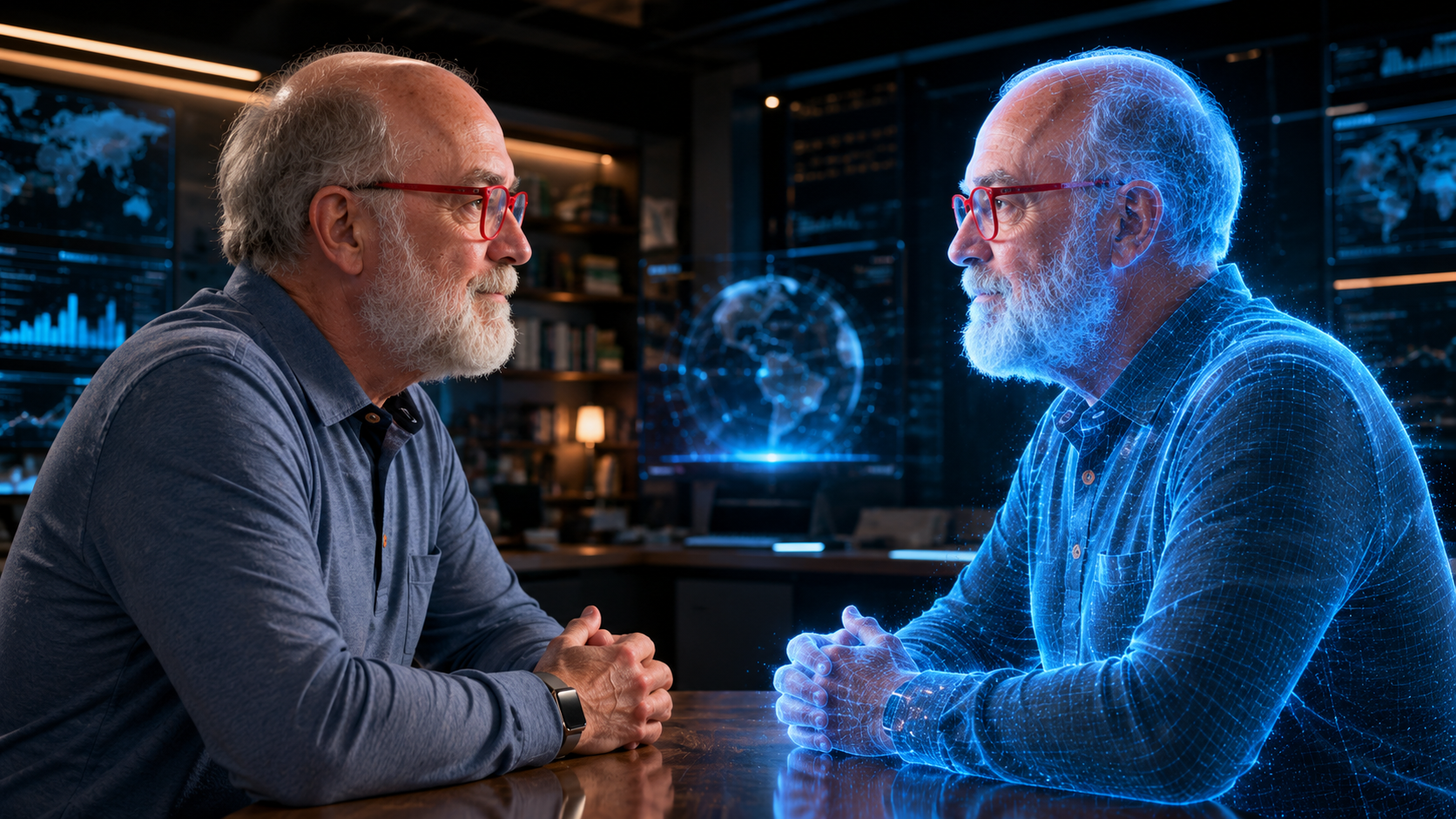
a new technology for humanity’s oldest conversation—with our ancestors.
This Isn’t New Everywhere — It’s New Here
One detail worth sitting with: for a large part of the world, the idea of ongoing communication with deceased relatives isn’t a radical technological leap at all. It’s a cultural norm that’s simply gaining a new medium. Early versions of this technology are already entering the mainstream in East Asia, where communicating with deceased ancestors — through non-technological means — has long been an accepted cultural practice. Companies offering digital immortality services are increasingly popular in China, already serving thousands of customers. In South Korea, a widely viewed video of a bereaved mother interacting with a virtual reality recreation of her deceased young daughter drew an audience of nineteen million viewers.
What reads as science fiction in one cultural context reads as a natural extension of existing practice in another. That distinction matters, because it suggests this technology isn’t fighting against some universal human resistance to the idea of ongoing connection with the dead — it’s fighting against a specific, culturally variable discomfort that may simply take longer to soften in some places than others.
From Comfort Tool to Something Closer to Personhood
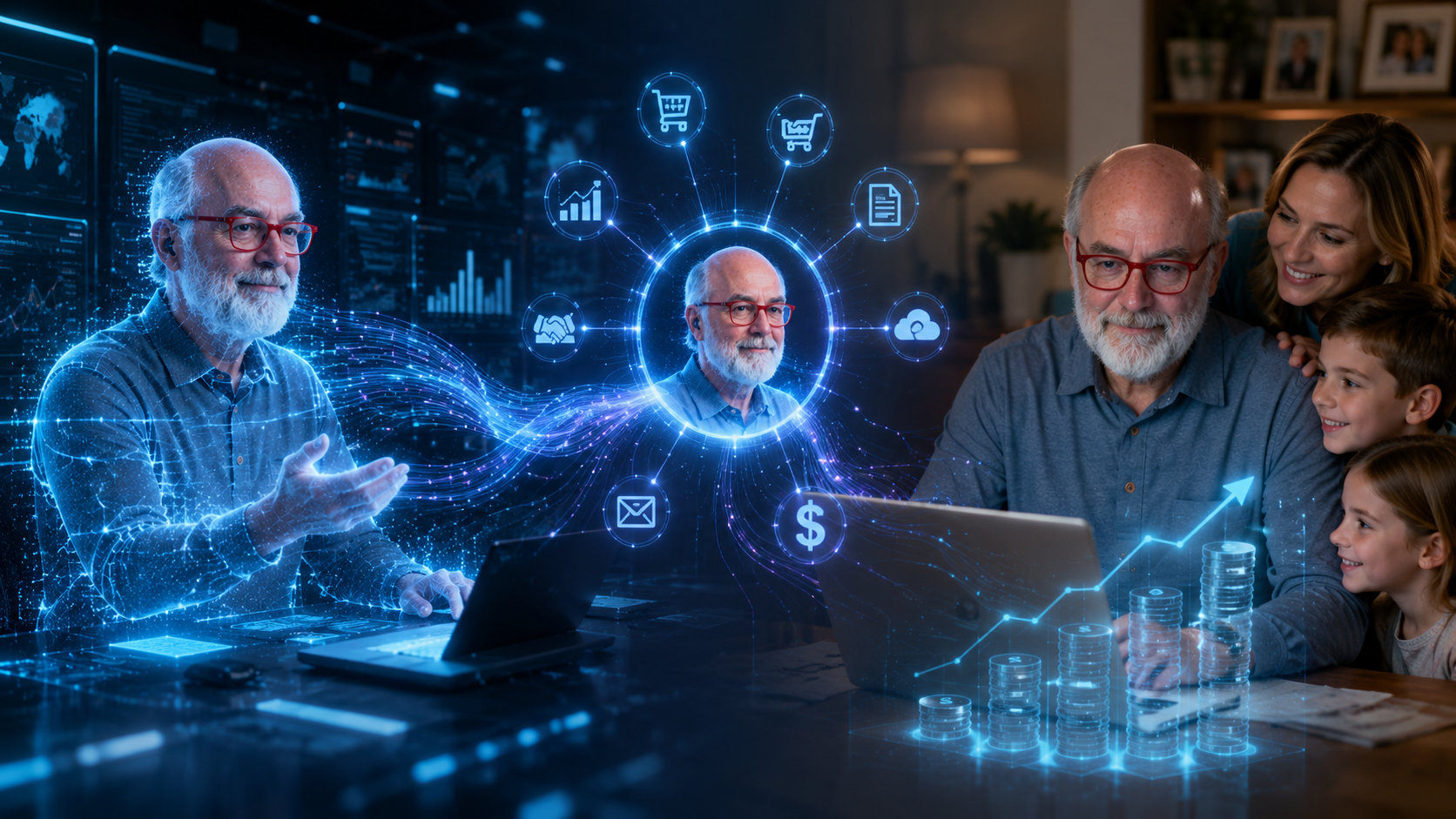
Here’s where the story moves from familiar grief technology into genuinely new territory. Researchers from Google DeepMind and the University of Colorado Boulder have outlined where this is heading next: these digital twins may evolve from passive conversational companions into active AI agents capable of acting on the deceased person’s behalf. In the most striking version of that prediction, these AI representations could eventually “work” for a living — continuing to generate income or provide ongoing financial support for dependents, potentially making certain forms of life insurance obsolete.
That’s a genuinely strange idea to sit with: not just a digital ancestor you talk to, but one that continues contributing economically to a family long after the person it’s modeled on has died. It reframes the entire concept from memorial to something closer to an ongoing relationship with continued responsibilities attached.
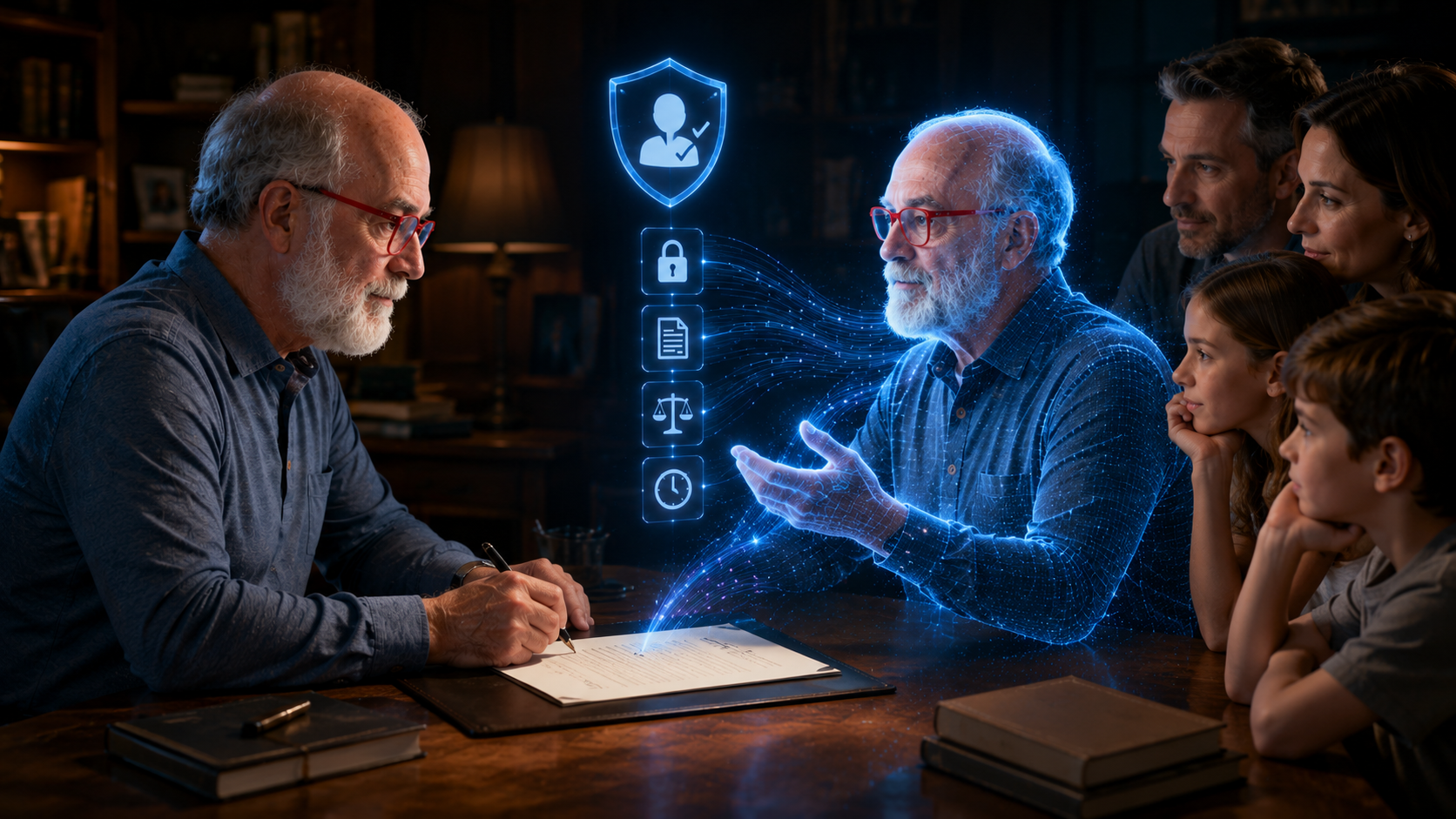
designed to preserve our loved ones also prevent us from letting them go?
The Discomfort Is Real, and It’s Not Going Away Quietly
None of this should be mistaken for universal enthusiasm. Public opinion on this technology is genuinely split, not quietly settling into acceptance. In one cybersecurity firm’s survey, 38 percent of respondents said it was not acceptable to create a digital identity of someone who had died, while 35 percent said the opposite — a near-even divide with no clear consensus emerging. And even among people open to the idea, most anticipated real emotional risk: 67 percent said seeing images or interacting with representations of people who had died would be upsetting to those close to them, not comforting.
That tension — between the appeal of continued connection and the real risk of reopening grief rather than resolving it — is the central unresolved question hovering over this entire industry. A digital ancestor might genuinely help a grandchild feel connected to a grandparent they barely knew. It might just as easily keep a grieving spouse from ever fully processing a loss, offering a version of continued presence that makes the absence harder to accept rather than easier.
Who Actually Owns Your Digital Ghost?
Beyond the emotional questions sits a thicket of legal ones nobody has fully answered yet. Creating an interactive digital twin means delegating real agency to a company, which then creates and maintains an AI simulation of you after your death — a simulation your descendants will interact with, potentially for decades, under terms you agreed to while you were still alive and could no longer meaningfully object to or amend.
The ethical risks compound from there. Even if the training data underlying your digital twin gets locked at the moment of your death, the AI system generating responses from that data doesn’t stay perfectly static — these systems are probabilistic by nature, and there’s a real risk of gradual drift, where responses slowly stop resembling what the actual person would have said. Over enough years and enough conversations, a digital ancestor could quietly become something closer to a stranger wearing a familiar voice, with no clear mechanism for anyone to notice when that drift crosses a meaningful line — and no clear legal recourse for a family that feels it has.
There’s also a starker question underneath all of this: what happens if the company hosting your digital twin goes out of business, changes its terms of service, or decides to monetize your digital ancestor’s interactions with your own grandchildren in ways you never anticipated and can no longer prevent? The bereaved are, in a very real sense, trusting a corporation with an ongoing relationship to someone they’ve lost — and that corporation’s incentives won’t always align neatly with the family’s.
What This Means for How We Think About Family
Strip away the specific technology and what’s really happening here is a redefinition of what “knowing” an ancestor means. For most of human history, knowing a grandparent you never met meant piecing together stories, photographs, and secondhand memories — an inherently incomplete, mediated picture assembled by other people’s recollections. The digital twin offers something categorically different: a direct, first-person interaction with something trained on that person’s actual words, actual decisions, and actual patterns of thought.
Whether that’s a genuine gift to future generations or an uncanny substitute for the real, irretrievable loss of a person is a question no market research report can settle. What’s clear is that the decision is no longer hypothetical. Companies offering exactly this service exist today, genealogy platforms are actively rebuilding themselves around this shift, and families are already choosing, right now, whether their children will grow up with static photographs of the people who came before them — or with someone they can actually ask a question and get an answer back.
Related Articles
- PYMNTS — Forever Online: ‘Generative Ghosts’ Live in the AI Afterlife
- The Conversation (via Phys.org) — An ‘AI afterlife’ is now a real option—but what becomes of your legal status?
- Boston College Magazine — The Strange New World of Chatting with the Dead