
AI can now generate believable, interactive worlds on demand. The next big subscription may not be a streaming service, but an entire reality built just for you.
By Futurist Thomas Frey
If AI can generate increasingly convincing environments on demand, people may eventually subscribe to personalized worlds rather than simply streaming entertainment. The most disruptive question: what happens when someone’s preferred world becomes more appealing than the real one?
Think about how we’ve paid for entertainment over the years. Our grandparents bought tickets. Our parents bought records, tapes, and DVDs. We stopped owning things altogether and started subscribing, paying a monthly fee for access to music, movies, and games.
Each step moved us further from owning a thing and closer to renting an experience. The next step may be the strangest one yet. Instead of subscribing to content, we may start subscribing to entire worlds.
That idea moved a little closer to reality this week.
What Google Just Showed Us
On October 27, Google DeepMind announced Genie 4, a new world model that brings much greater realism and native audio to real-time interactive simulation.
Here’s what that means in plain English. You can type a description, and the system builds a world you can move through. Then, while you’re inside it, you can change things using ordinary language, like moving the camera, changing the weather, or adding new characters. Every world also generates its own sound on the fly, including ambient noise, music, and dialogue.
According to TechCrunch, Genie 4 can hold a consistent scene for up to two minutes, twice as long as its predecessor, with better physics and more humanlike characters.
Two minutes doesn’t sound like much. But Genie 3 arrived only a little over a year ago. At this pace, two minutes becomes twenty, then two hours, and eventually a world you can live in for as long as you like.
And notice the business model. Google says Genie 4 is coming soon to Google AI Ultra subscribers in Project Genie. In other words, the first generation of AI-built worlds is already being sold the way we buy Netflix.
From Owning to Streaming to Living In
For most of history, reality was the one thing nobody could sell you. You might buy a vacation, a movie ticket, or a theme park pass, but the world itself was free and shared by everyone.
AI-generated worlds change that equation. If a company can build a convincing environment tailored to your tastes, reality becomes something you can customize, upgrade, and pay for monthly. You won’t just choose what to watch. You’ll choose where to be.
Where Custom Worlds Will Show Up First
Entertainment will get the headlines, but I think the real disruption will come in industries that have nothing to do with games.
1.) Education
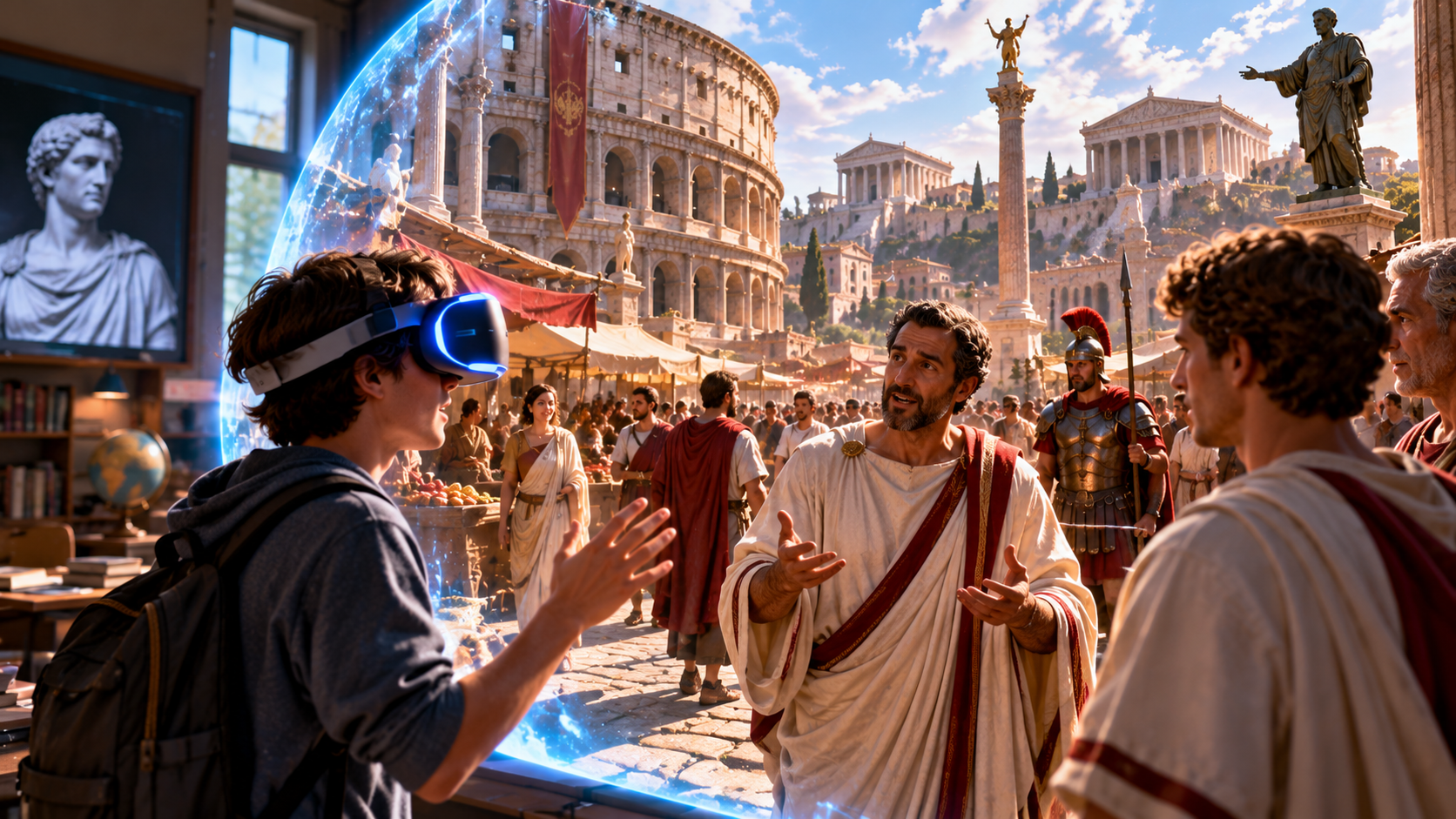
Imagine a history class where students don’t read about ancient Rome but walk its streets. TechCrunch described one possible example for Genie 4: stepping into a painting of a historical scene and talking with the people in it. A student studying the Constitutional Convention could sit in the room and ask questions. Learning would shift from memorizing facts to living through them.
2.) Tourism
Why fly 14 hours to Kyoto when you can visit a version of it during cherry blossom season, with no crowds, perfect weather, and a personal guide who speaks your language? Physical travel won’t disappear, but a whole new category of “virtual tourism” could appeal to people who are older, busier, or simply can’t afford the trip.
3.) Therapy
This one is already happening. In 2021, RelieVRx became the first virtual reality prescription therapy to receive FDA authorization for chronic lower back pain. By 2024, insurer Highmark made it a covered treatment for more than 4 million plan members. Now imagine therapy environments generated specifically for each patient, a calm beach for anxiety, a gradual exposure to heights for phobias, or a safe rehearsal space for difficult conversations.
4.) Shopping
Instead of scrolling product photos, you’ll step into your future kitchen with the new cabinets already installed, or walk through a vacation rental before booking it. Retailers will compete not just on price, but on the worlds they build around their products.
5.) Socializing
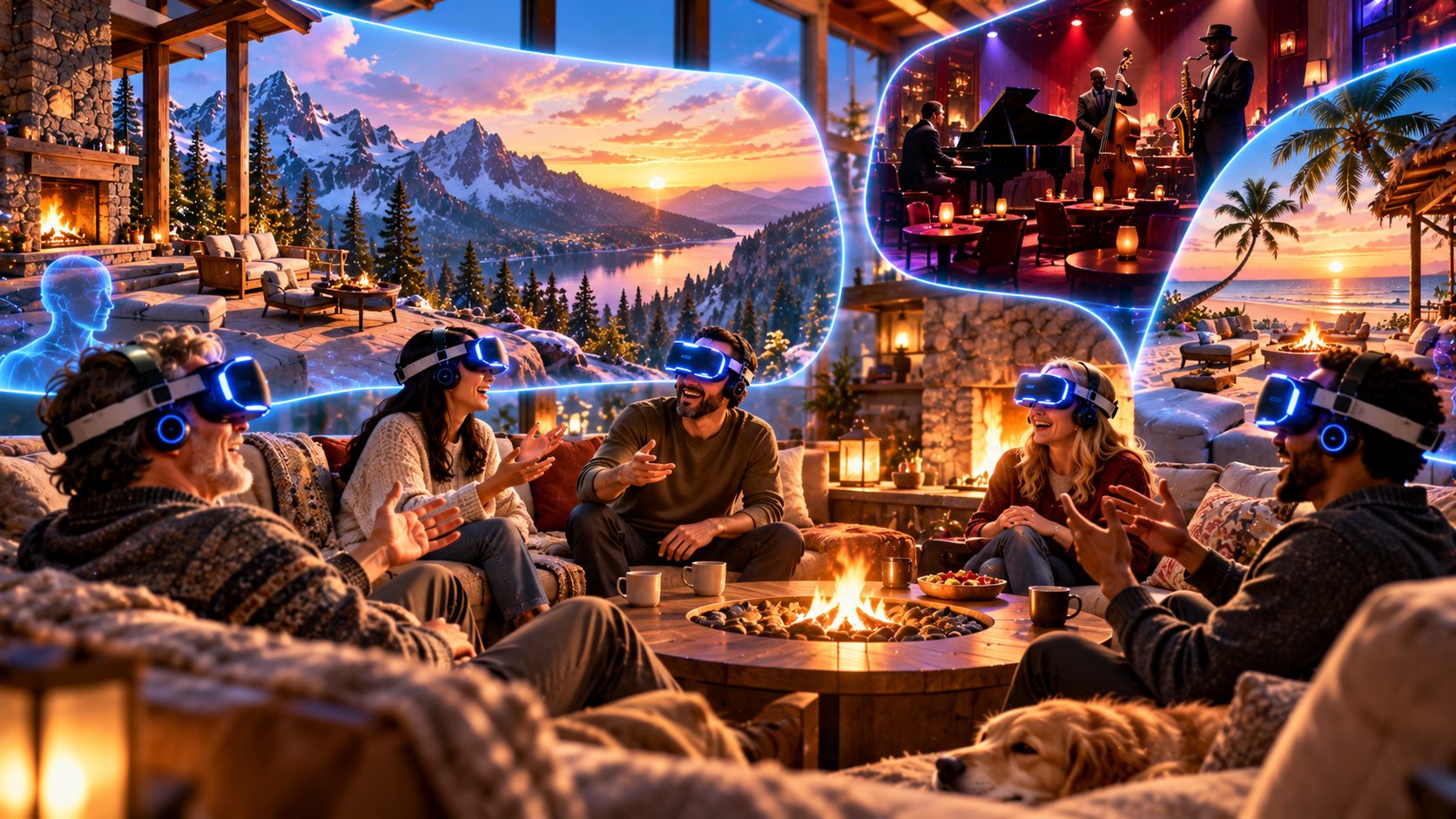
Friends scattered across the country could meet each week in a world they designed together, maybe a mountain cabin one week and a jazz club the next. For lonely or isolated people, these shared spaces could be a lifeline.
The Money Is Already Moving
Big companies see where this is heading. TechCrunch reports that the world model industry is already consolidating, with AMD acquiring Fei-Fei Li’s World Labs, Amazon in talks to buy Decart, and Rivian purchasing a world model startup for self-driving testing.
When chipmakers, retailers, and carmakers all start buying the same technology, it’s a sign that synthetic worlds won’t stay a niche product for long.
The Most Disruptive Question
Now for the uncomfortable part. What happens when someone’s preferred world becomes more appealing than the real one?
The real world has bills, traffic, rejection, bad weather, and people who disagree with us. A personalized world can remove all of that. It can make us more admired, more successful, and more comfortable than we’ve ever been.
We’ve seen early versions of this pull before. People already lose hours to video games, social media, and streaming. But those were windows we looked through. Custom worlds are rooms we walk into, and some people may not want to walk back out.
There’s a quieter risk as well. If millions of people each live in their own customized version of reality, what happens to shared experience? Societies rely on common ground, places, events, and facts that everyone experiences together. A world made of private realities could become a world where people have very little in common.
What We’ll Need Before This Goes Mainstream
I don’t believe the answer is to avoid these worlds. The benefits for learning, health, and connection are too big to ignore. But we’ll need some new guardrails.
1.) Clear Reality Labels
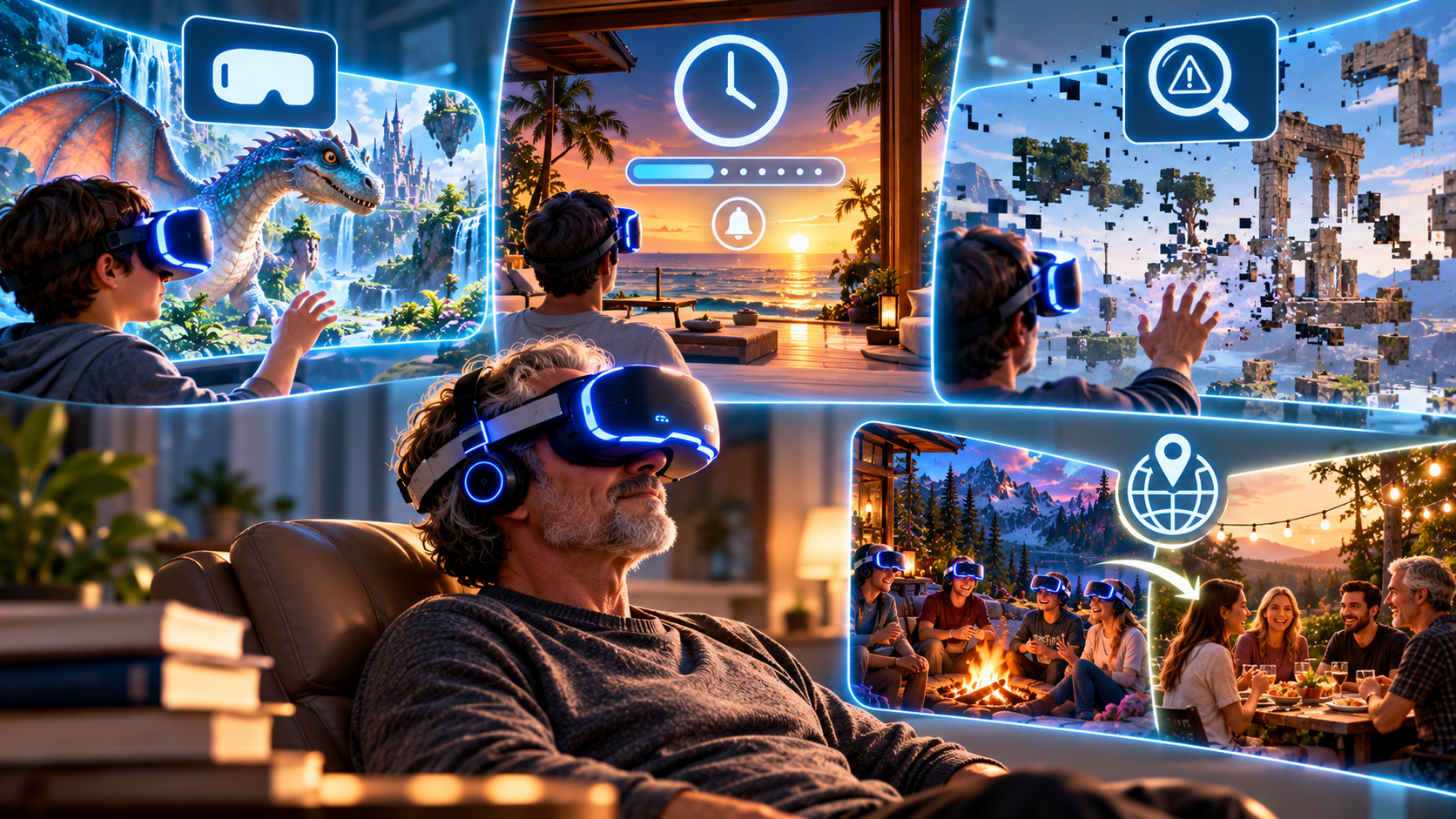
People should always know when they’re inside a generated world, especially children and anyone using it for therapy or news.
2.) Built-In Exit Ramps
Just as some apps remind us how long we’ve been scrolling, world subscriptions should include natural stopping points and time awareness, not endless loops designed to keep us inside.
3.) Honest Limits
Google itself acknowledges that details and objects can drift the longer a Genie 4 simulation runs. Users deserve to know what these worlds get wrong, not just what they get right.
4.) Real-World Anchors
The healthiest use of synthetic worlds will be to enrich real life, not replace it. A virtual trip to Kyoto should make us more curious about the real one, and a virtual meeting with friends should lead to a real dinner.
Final Thoughts
Every major technology has changed our relationship with reality a little. Books let us visit other minds. Movies let us see other places. The internet let us talk to the whole world.
AI-generated worlds go further. They don’t just show us reality. They offer to replace it, one personalized experience at a time, for a monthly fee.
That could unlock extraordinary things: classrooms without walls, therapy without waiting lists, travel without borders. It could also tempt us to retreat into worlds so comfortable that the real one starts to feel like a chore.
The future may come down to a simple choice. We can use these worlds as places to visit, or we can let them become places to hide. Which one we choose will say a lot about who we are, and who we’re becoming.
Related Articles
- Google: We’re announcing Genie 4, our new world model for real-time interactive simulation
- TechCrunch: Google’s Genie 4 world model adds audio, more realistic worlds, and real-time steering
- Fierce Healthcare: AppliedVR’s flagship VR device for chronic lower back pain now in network for Highmark members