
Creating a Black Market for Human Purpose
The Man Who Paid to Be Needed
By Futurist Thomas Frey
It’s 2034. Daniel is 52, and until three years ago he was a logistics manager. An AI system that never sleeps, never complains, and never asks for a raise now handles his old job. His severance was generous and his universal income stipend covers the bills. He’s never been more comfortable, or more miserable.
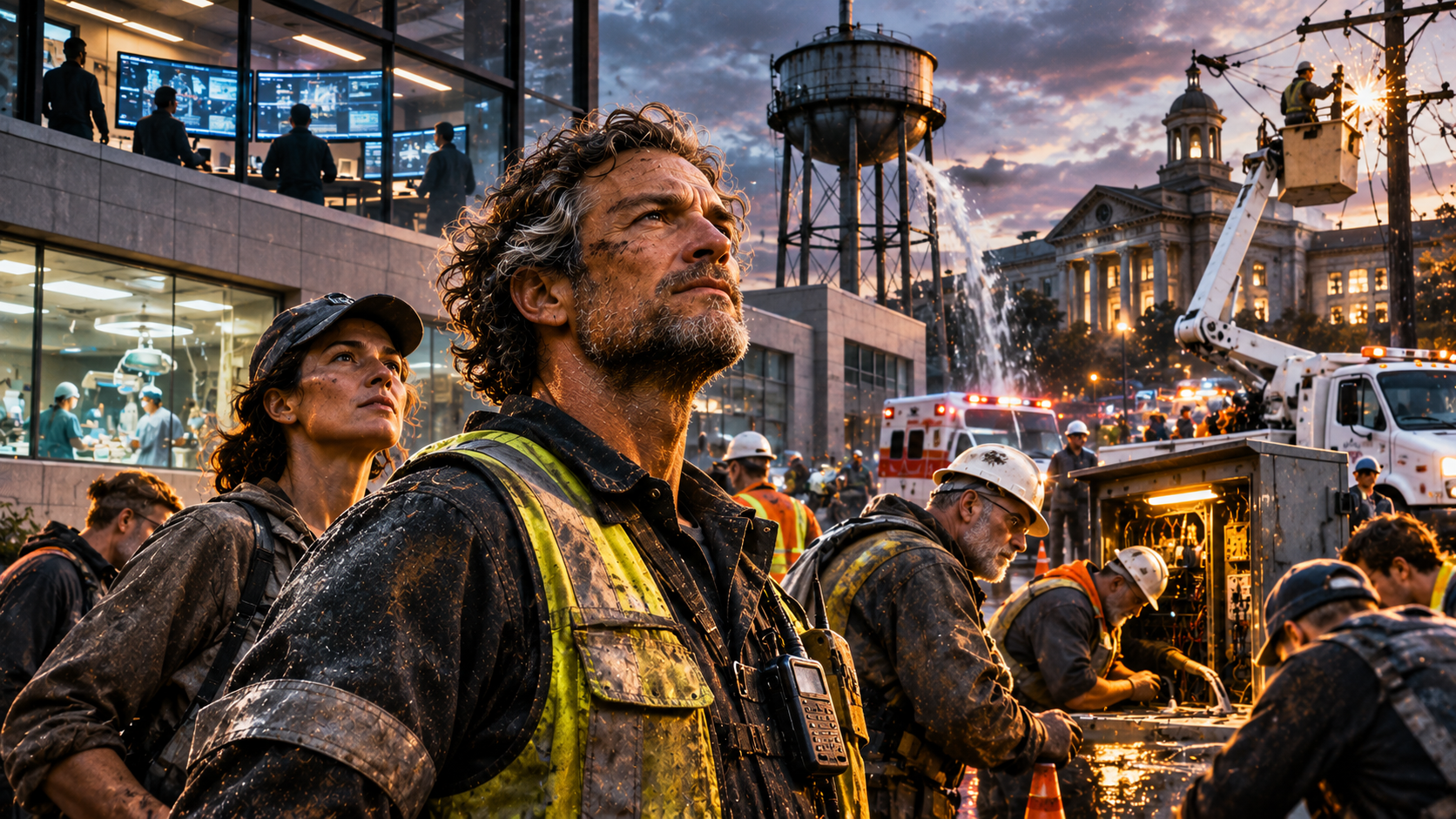
So every Tuesday night, Daniel pays $400 a month to a company that has no website, no logo, and no public listing. In return, he gets a phone call at 2:17 a.m. A small water treatment facility in a rural town, a real one, has a “problem.” Daniel has 90 minutes to diagnose it, coordinate three other volunteers, and keep the town’s water flowing.
He doesn’t know that the crisis was staged. The facility’s AI could have fixed it in four seconds. The company designed the failure on purpose, and the town’s leaders signed off on it in exchange for a fee.
Daniel hangs up at 3:50 a.m., shaking, exhausted, and more alive than he has felt in years. Someone needed him. He made a difference.
Or at least he paid to believe he did.
The Scarcity Nobody Is Talking About
For most of human history, we’ve had more responsibility than we wanted. Crops had to be planted, children fed, machines repaired, and the night shift covered. Purpose was never something we went looking for. It came with being alive.
That’s about to flip.
As AI and robotics take over more of the work that once filled our days, we’re heading toward an odd kind of poverty: plenty of resources and not enough reasons. When an algorithm can do your job better, faster, and cheaper, the problem goes deeper than losing a paycheck. You lose the sense that your presence matters.
Whenever something valuable becomes scarce, a market forms around it. When that thing is too awkward, too embarrassing, or too ethically murky to sell openly, the market goes underground.
I believe we’re about to see the first black market for human purpose.

Why It Will Be a “Black” Market
The word “black” may seem extreme. After all, we already pay for escape rooms, Tough Mudder races, and wilderness survival courses. Nothing about those is hidden.
The difference is this. Purpose only works if you believe it’s real. An escape room is fun because you know it’s a game. Feeling needed falls apart the moment you learn that nobody actually needed you.
That creates a strange business requirement. The product has to be hidden from the person buying it. Customers will pay to be deceived, and the deception only works if they never find out. That pushes the industry toward secrecy, opaque contracts, and gray-zone agreements with real institutions willing to stage real-looking emergencies.
That’s the anatomy of a black market. It will grow because people don’t want to admit they’re buying what they’re buying, not because the product is illegal.
The Business Model: Five Revenue Streams
Let me lay out how a company, which I’ll call Burden Brokers, could turn this into a credible enterprise.
1. Engineered Emergencies
This is the premium tier. Burden Brokers partners with municipalities, hospitals, small utilities, and nonprofits that run mostly on AI. The partners agree to allow controlled “failures” that only humans are allowed to fix. Clients get emergency calls, real stakes, and real public thanks. Partners get paid, along with a pool of trained human backup they would otherwise have no way to keep.
Example: A regional airport lets its AI-run baggage system “fail” during a holiday rush. Twelve subscribers get called in to sort luggage by hand and keep flights moving. Travelers thank them. Local news runs the story. Nobody mentions the subscription fee.
2. Artificial Careers
Some people don’t want a single adrenaline rush. They want the long arc of a career: a boss, a promotion, office politics, a title worth printing on a business card. Burden Brokers sells immersive, multi-year “career tracks” inside shell companies with real clients, real deadlines, and AI that quietly does 90% of the work in the background.
Example: A former attorney “joins” a boutique law firm. She argues cases before arbitration panels, mentors junior associates (also subscribers), and makes partner after six years. The firm’s only real employee is a legal AI that drafts everything she submits.
3. Manufactured Adversity
Struggle builds character, and comfortable people know it. This tier sells hardship on purpose: financial setbacks, rival competitors, and broken equipment at the worst possible moment.
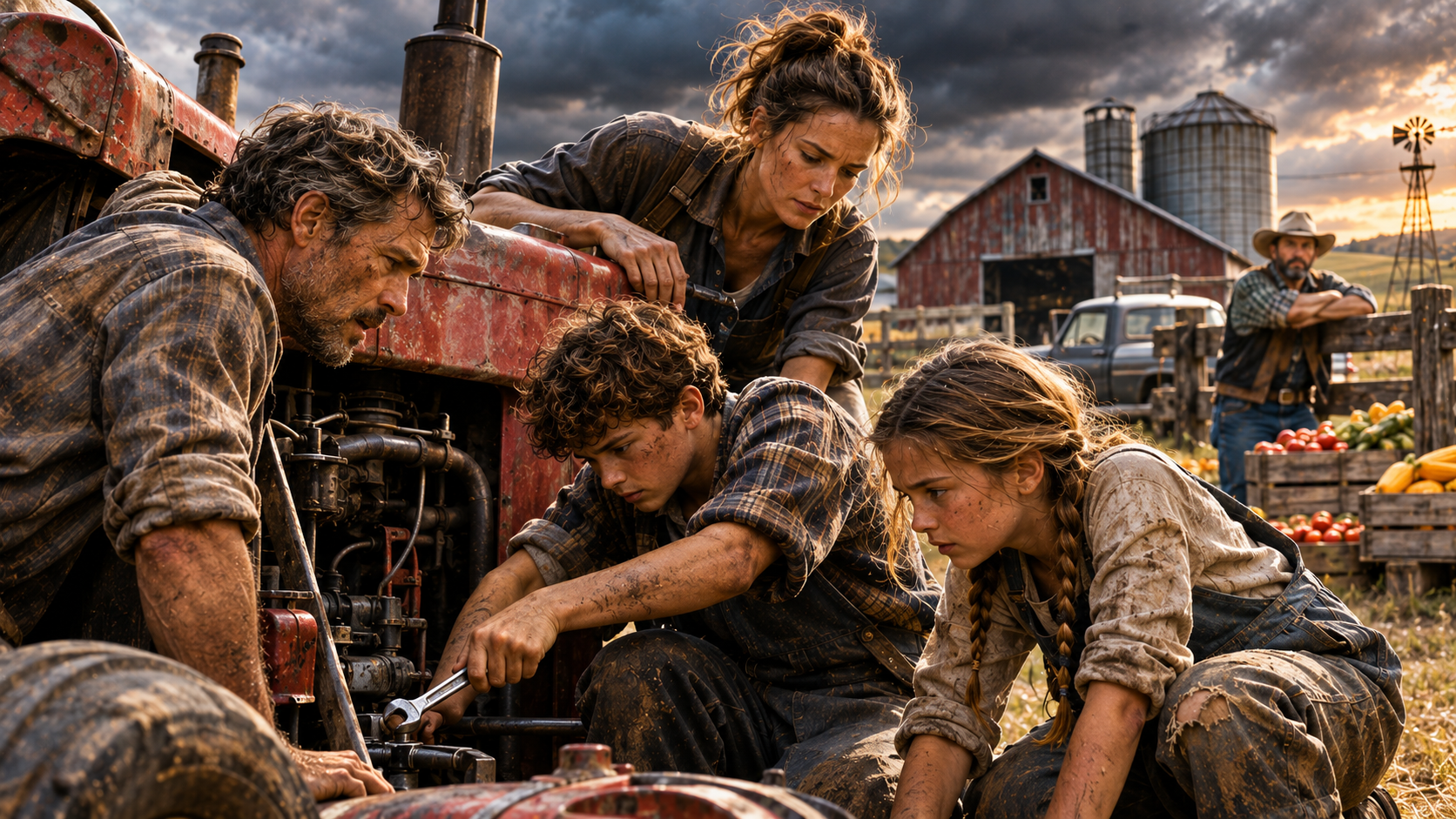
Example: Parents worried that their kids have never faced anything difficult buy a “Hardship Year” package. The family farm rental fails in staged ways. A competing neighbor (an actor) undercuts their prices. The kids learn grit the old-fashioned way, from a script.
4. Dependency Matching
People want to be needed by someone in particular. Burden Brokers matches “givers” with “dependents,” such as elderly people, struggling students, and small business owners, who agree to lean on a human even though AI could handle their needs. Both sides pay. Both sides get something real-feeling.
Example: A retired engineer is matched with an 84-year-old widow who “can’t figure out” her smart home. She can. She enjoys his Thursday visits too much to let on.
5. Legacy Projects
The highest tier sells meaning that lasts beyond your lifetime: building a bridge in a developing region, restoring a historic building, or founding a library. AI and robots handle the engineering. The client gets their name on the plaque and the story to tell.
The Uncomfortable Questions
Every one of these business lines raises an ethical red flag, and that’s exactly why the industry will grow in the shadows.
Is it fraud if the customer asked to be fooled? Who’s responsible when a staged emergency becomes a real one? What happens to someone who discovers that their proudest moment was bought and paid for? And the hardest question of all: if the feeling of purpose is real, does it matter that the circumstances were fake?
We already accept some version of this. Video games give us victories that don’t exist. Gyms sell us struggle we could avoid. Therapists build safe spaces to practice hard conversations. The black market for purpose simply removes the “this is pretend” label and puts it in the fine print, or leaves it out altogether.
What Smart Societies Will Do Instead
The black market doesn’t have to win. It shows up when we fail to design real responsibility into an automated world.
Forward-thinking communities will make purpose a piece of public infrastructure. They might create “human-required” zones where certain jobs are kept for people on purpose. They could build civic service programs with real stakes, or create mentorship roles that AI is not allowed to fill. Some cities may even decide that a few things, like raising children, caring for the dying, and tending public gardens, should stay human on purpose, even when it’s inefficient.
The question is whether we design meaning in the open or let it be smuggled to us through a 2 a.m. phone call.

Final Thoughts
The 20th century taught us to sell convenience. The 21st will teach us that convenience has a ceiling, and that past a certain point, people will pay to have their burdens back.
Whoever figures out how to deliver authentic responsibility to people who’ve been automated out of it, whether that’s a company, a city, or a country, will unlock one of the largest untapped markets of the century. The only question is whether it gets built on honesty or on secrets.
Daniel will keep taking his 2:17 a.m. calls either way. He’s not paying for the water treatment plant. He’s paying to matter.
And in the coming decades, mattering may turn out to be the most valuable commodity on Earth.
Related Articles
- “AI and the future of work: A deep crisis beyond job loss” – DevDiscourse
It summarizes research arguing that the deeper concern lies in the erosion of meaning in human life as work, long central to identity and purpose, begins to disappear under the weight of automation.
https://www.devdiscourse.com/article/technology/3874705-ai-and-the-future-of-work-a-deep-crisis-beyond-job-loss - “The Vanishing Sense of ‘I Did This'” – Faisal Hoque (originally in Psychology Today)
Hoque argues that the IKEA effect shows we value what we build ourselves; AI removes that struggle and, with it, the meaning.
https://faisalhoque.com/the-vanishing-sense-of-i-did-this/ - “Experience Overload” – Real Life Magazine
A critique of how the “experience economy” wants to lay claim to our sense of having lived.
https://reallifemag.com/experience-overload