Author: admin

Princeton and University of Washington Develop Ultra-Efficient Light-Based Camera for AI Vision

Researchers from Princeton University and the University of Washington have made a remarkable leap in camera technology by developing an ultra-compact camera—about the size of a grain of salt—that captures incredibly detailed, full-color images. Building on this breakthrough, the team has now developed a new type of camera designed for computer vision, a key area of artificial intelligence (AI) that enables computers to recognize and interpret images and videos.

This new prototype camera takes a radically different approach to computer vision. Unlike traditional devices that rely on electricity, this camera uses light to perform object identification and analysis, offering extraordinary speed and energy efficiency. The camera can identify objects at the speed of light, making it far faster and more efficient than conventional computer vision systems.

Continue reading… “Princeton and University of Washington Develop Ultra-Efficient Light-Based Camera for AI Vision”

MIT Develops Thread-Based Fabric Computers for Whole-Body Monitoring

Wearable technology has become a staple in modern life, but most devices are limited to smartwatches, rings, and eyewear. Now, researchers have developed a revolutionary thread-based computer that can be stitched directly into clothing, paving the way for a new era of body monitoring. This breakthrough could have significant applications in healthcare, sports, and beyond.

While devices like smartwatches are able to track heart rate, body temperature, and movement, they are often confined to monitoring specific points on the body. Meanwhile, humans generate vast amounts of data, such as heat, sound, and electrical signals, that these devices fail to capture. Recognizing this gap, a team of engineers from MIT has created a fabric-based computer capable of monitoring the body in a far more comprehensive way.

Continue reading… “MIT Develops Thread-Based Fabric Computers for Whole-Body Monitoring”

SLAC Physicists Break Records with World’s Most Powerful Electron Beams

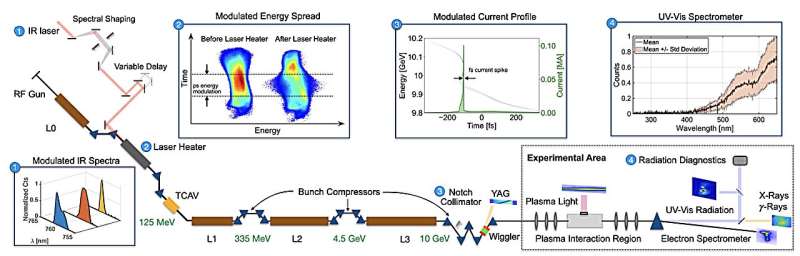
A team of physicists at the SLAC National Accelerator Laboratory in Menlo Park, California, has successfully generated the highest-current, highest-peak-power electron beams ever recorded. Their groundbreaking research, published in Physical Review Letters, marks a significant step forward in the development of high-powered electron beams, a field with potential applications ranging from fundamental science to industrial uses.

For years, scientists have pushed the boundaries of high-powered laser light, exploring its ability to split atoms and recreate conditions found on other planets. However, the SLAC team’s focus was on advancing the power of electron beams, aiming to give them similar capabilities as high-powered lasers.

Continue reading… “SLAC Physicists Break Records with World’s Most Powerful Electron Beams”

China’s New Satellite Network for Global Cargo Tracking Sparks International Concerns

Chinese scientists have reportedly developed a groundbreaking satellite network designed to track hundreds of millions of shipping containers worldwide, potentially revolutionizing the way global supply chains are monitored. The new system relies on the Tiantuo-5 satellite, a compact 175 lb (80 kg) spacecraft launched in 2020 aboard a Long March 2D rocket. Developed by China’s National University of Defense Technology (NUDT) in Changsha, Tiantuo-5 aims to test and verify data collection technologies for ships, aircraft, and buoys through the Internet of Things (IoT).

The name “Tiantuo” roughly translates to “breaking new ground with the power of heaven,” reflecting the satellite’s ambitious mission to enhance global logistics through advanced technology. Early trials of the system have shown its ability to collect real-time data from IoT sensors installed on cargo containers. According to researchers, this technology enables global, real-time tracking of cargo movements, providing insights into location, internal conditions, and even tamper alerts for high-value or sensitive products, such as aerospace engines and military drone components.

Continue reading… “China’s New Satellite Network for Global Cargo Tracking Sparks International Concerns”

Advancements in 3D Bioprinting for Adipose Tissue Regeneration: A New Hybrid Bioink Approach

Adipose tissue, recognized as an endocrine organ, plays a crucial role in regulating the repair processes of various damaged tissues, including the skin. This unique function suggests that adipose tissue could be engineered to regenerate other damaged organs. Three-dimensional (3D) bioprinting technology has significantly impacted regenerative medicine by enabling the creation of engineered and functional 3D organs and tissues, including adipose tissues. However, existing biofabrication techniques have struggled to replicate the native structure and densely packed lipid droplets of adipose tissue, limiting the therapeutic potential of 3D-printed adipose tissue.

To address this challenge, a team of researchers led by Assistant Professor Byoung Soo Kim from Pusan National University in Korea has developed an innovative biofabrication method for adipose tissue. Their findings, published online on February 2, 2025, in Advanced Functional Materials, describe a new hybrid bioink that overcomes some of the key limitations of current tissue biofabrication methods. The bioink combines 1% adipose-derived decellularized extracellular matrix (dECM) with 0.5% alginate. This hybrid bioink significantly restricts the migration of preadipocytes, the precursors to fat cells, while simultaneously promoting their differentiation into mature adipocytes.

Continue reading… “Advancements in 3D Bioprinting for Adipose Tissue Regeneration: A New Hybrid Bioink Approach”

Revolutionary Robot Collective Mimics Embryonic Development for Shape-shifting and Self-healing Capabilities

Smart materials, which can alter their shape or form in response to external stimuli, have become essential for applications ranging from medical devices to automotive industries. Now, a research team led by scientists from UC Santa Barbara and TU Dresden has taken this concept to the next level by creating a robotic collective that functions similarly to a smart material. This innovative collective is capable of changing its shape and transitioning between solid and fluid states, all while maintaining cohesion, supporting significant weight, and even demonstrating self-healing abilities.

The inspiration behind this groundbreaking development comes from the remarkable processes observed during embryonic development. During this phase, simple cells transform into complex tissues and organs through coordinated movement and shifts in mechanical properties. Prof. Otger Campàs, a co-author of the study, highlighted the significance of these processes: “Living embryonic tissues are the ultimate smart materials. To sculpt themselves, cells in embryos can make the tissues switch between fluid and solid states.” This unique ability of living cells to adapt their physical states served as the blueprint for the team’s robot collective.

Continue reading… “Revolutionary Robot Collective Mimics Embryonic Development for Shape-shifting and Self-healing Capabilities”

Amazon’s Breakthrough Quantum Chip ‘Ocelot’ Reduces Error Correction Costs by 90%

Amazon has revealed a revolutionary quantum computing chip named Ocelot, which promises to reshape the future of quantum computing. This innovative chip is the first of its kind to utilize a scalable architecture that reduces the cost of error correction by an impressive 90%. Developed by the team at the AWS Center for Quantum Computing in collaboration with the California Institute of Technology, Ocelot is positioned as a major step toward building practical, fault-tolerant quantum computers.

Amazon asserts that Ocelot represents a significant breakthrough in the ongoing effort to develop quantum computers capable of solving complex problems that go beyond the reach of today’s classical computers. The design leverages a novel approach to error correction, building it from the ground up, and incorporating the advanced “cat qubit” technology.

Cat qubits—named after the famous Schrödinger’s cat thought experiment—are a key feature of Ocelot’s architecture. These qubits naturally suppress certain types of errors, which reduces the resources required for error correction. This improvement significantly enhances the chip’s reliability and performance.

For the first time, AWS researchers have successfully integrated cat qubits with additional quantum error correction components on a microchip that can be mass-produced using scalable microelectronics processes. This breakthrough allows for error correction that is both more efficient and cost-effective, an essential factor in making quantum computing more practical for real-world applications.

Oskar Painter, AWS Director of Quantum Hardware, emphasized the importance of these advancements: “With the recent developments in quantum research, it’s no longer a matter of if, but when practical, fault-tolerant quantum computers will be available. Ocelot marks a critical step forward in this journey.”

The implications of Ocelot’s design are profound. In the future, quantum chips built on this architecture could cost as little as one-fifth of the current methods, thanks to the drastically reduced need for error correction. AWS researchers believe this breakthrough could accelerate the timeline for developing practical quantum computers by up to five years.

By Impact Lab

The published research in Nature outlines the technical details behind Ocelot’s logical qubit memory. The team used a superconducting quantum circuit to create a logical qubit memory by combining encoded bosonic cat qubits with an outer repetition code. This design includes a stabilizing circuit that passively protects the qubits from certain types of errors, such as bit flips. Additionally, a repetition code using ancilla transmons (special qubits used for error correction) enables the detection and correction of phase flips in the qubits.

Overcoming Quantum Computing’s Biggest Challenge: Noise

One of the most significant obstacles in quantum computing is the extreme sensitivity of qubits to environmental “noise.” Even the smallest disturbances, such as vibrations, electromagnetic interference from devices like cell phones, or cosmic radiation, can destabilize qubits and lead to computational errors.

As Oskar Painter notes, “The biggest challenge isn’t just building more qubits, it’s making them work reliably.” Researchers have long recognized that quantum error correction is essential to ensuring the accuracy and reliability of quantum computations, particularly as the complexity of the problems being tackled increases.

Quantum error correction involves encoding quantum information across multiple qubits to shield it from environmental noise, creating “logical” qubits. These logical qubits can detect and correct errors in real-time, which is a crucial step toward building quantum computers that can perform accurate, large-scale computations. However, current error correction methods require a massive number of qubits, making them prohibitively expensive.

The Ocelot chip is poised to address this issue by offering a more scalable and cost-efficient solution. By reducing the number of qubits required for effective error correction, Ocelot paves the way for more practical and affordable quantum computers in the future.

In summary, Amazon’s Ocelot chip represents a major leap forward in quantum computing. With its innovative design and error-correction capabilities, Ocelot could accelerate the development of practical, fault-tolerant quantum computers, bringing us closer to solving complex problems once thought to be beyond the reach of classical computers.

Breakthrough Superelastic Titanium-Aluminum Alloy Promises New Horizons for Space, Medicine, and Beyond

Industrial technology specialists at Tohoku University have developed an innovative superelastic alloy of titanium and aluminum that combines the benefits of being both lightweight and strong, with the added bonus of flexibility. This new material offers an extraordinary superelasticity across an unprecedented temperature range—from the cold of liquid helium at -452.2 °F (-269 °C) to temperatures as high as 500 °F (+127 °C).

Traditional shape-memory alloys typically work within a limited temperature range, but this new titanium-aluminum alloy stands out by maintaining its superelastic properties over a much broader spectrum, making it ideal for a wide range of high-performance applications.

Continue reading… “Breakthrough Superelastic Titanium-Aluminum Alloy Promises New Horizons for Space, Medicine, and Beyond”

A Promising Stem Cell Approach for Advanced Wet AMD Treatment

Age-related macular degeneration (AMD) is a leading cause of vision loss and blindness in older adults. In its advanced form, known as wet AMD, abnormal blood vessels develop in the macula—the central part of the retina responsible for sharp, detailed vision. These fragile blood vessels are prone to leaking fluid and blood, leading to macular damage and impaired vision. While wet AMD accounts for a smaller portion of all AMD cases, it is responsible for 90% of AMD-related blindness.

In the early stages, wet AMD can be managed with medications that slow the growth of these abnormal blood vessels. However, as the disease progresses, these treatments become less effective. Now, a new study led by Yong Liu and colleagues at Third Military Medical University Southwest Hospital in China, published on February 27 in Stem Cell Reports, suggests an innovative alternative for advanced wet AMD cases. The research proposes surgically removing the abnormal blood vessels and transplanting stem cell-derived retinal cells to replace damaged tissue, offering renewed hope for improving outcomes in more severe cases.

Continue reading… “A Promising Stem Cell Approach for Advanced Wet AMD Treatment”

Evo 2: Pushing the Boundaries of Generative Biology and AI

Mother Nature is widely regarded as the most powerful generative force, having designed the vast and intricate variety of life on Earth using just four genetic letters—A, T, C, and G. But can generative AI build upon her work?

A groundbreaking new algorithm called Evo 2 is pushing the limits of what AI can achieve in the realm of biology. Trained on an immense dataset of roughly 128,000 genomes—equating to 9.3 trillion DNA letter pairs from all domains of life—Evo 2 is now the largest generative AI model ever created for biological research. Developed by scientists at the Arc Institute, Stanford University, and Nvidia, Evo 2 is capable of writing entire chromosomes and small genomes from scratch.

Continue reading… “Evo 2: Pushing the Boundaries of Generative Biology and AI”

U.S. Firms Team Up to Revolutionize Manufacturing with Apollo Humanoid Robots

Two U.S.-based companies, Apptronik and Jabil, have joined forces to advance humanoid robotics by incorporating Apollo humanoid robots into manufacturing processes. This partnership between Apptronik, an AI-powered robotics firm from Austin, Texas, and Jabil, a Florida-based leader in engineering, manufacturing, and supply chain solutions, aims to create a scenario where Apollo robots will build and assemble other Apollo robots.

The collaboration’s initial pilot program will see newly produced Apollo humanoid robots tested within Jabil’s manufacturing setup. This real-world validation phase will focus on ensuring that the humanoid robots can perform various manufacturing tasks and help streamline production. The goal is not only to fine-tune Apollo’s design and capabilities but also to enable its mass production for widespread adoption.

Continue reading… “U.S. Firms Team Up to Revolutionize Manufacturing with Apollo Humanoid Robots”

Advancements in 2D Materials: A Tougher Solution to Cracks

One of the major challenges in material science has been creating materials that are both strong and durable. While substances like graphene have extraordinary strength, they tend to fracture easily under pressure. However, a breakthrough has emerged in the form of a new material known as monolayer amorphous carbon (MAC), which offers a surprising solution to this problem. MAC has been found to be eight times tougher than graphene, thanks to its innovative design that blends both crystalline and amorphous structures.

MAC, like graphene, is a 2D material—just one atom thick—yet its internal structure differs significantly from that of graphene. Graphene consists of a highly ordered, crystalline hexagonal lattice, making it extremely strong but also vulnerable to cracks once they start. In contrast, MAC combines ordered crystalline regions within an amorphous matrix, a combination that enhances its resistance to cracking and fracture propagation. This hybrid structure allows the material to absorb more energy and maintain its integrity under stress.

Continue reading… “Advancements in 2D Materials: A Tougher Solution to Cracks”
Discover the Hidden Patterns of Tomorrow with Futurist Thomas Frey
Unlock Your Potential, Ignite Your Success.

By delving into the futuring techniques of Futurist Thomas Frey, you’ll embark on an enlightening journey.

Learn More about this exciting program.