Author: admin

BHMbot-B: The Agile Microrobot for Precision Navigation in Tight Spaces

Chinese researchers have developed the BHMbot-B, a highly agile 15 mm-long microrobot capable of quick forward and backward movements, making it ideal for navigating tight and confined spaces. This innovative design combines a variety of advanced technologies to offer unprecedented mobility and adaptability, enabling it to perform tasks in environments where larger machines would struggle.

The BHMbot-B achieves its remarkable versatility through a unique control mechanism. The robot’s forward and backward motion is made possible by aligning the vibratory movements of its magnet, cantilever, and linkages using a process known as vibration mode transition control. This allows the robot to switch between motion modes with precision, enabling it to maneuver through challenging environments efficiently.

Continue reading… “BHMbot-B: The Agile Microrobot for Precision Navigation in Tight Spaces”
Groundbreaking CRISPR Advancements: Focused Ultrasound Takes Gene Editing to New Heights in Cancer Treatment

Thanks to revolutionary advancements in CRISPR technology, medical specialists are on the brink of transforming the treatment and prevention of genetic disorders and diseases. CRISPR (Clustered Regularly Interspaced Short Palindromic Repeats) is a Nobel Prize-winning gene-editing tool that allows scientists to cut and modify DNA with unprecedented precision. By using the Cas9 enzyme, CRISPR can activate or deactivate genes and even insert new DNA to correct genetic abnormalities, revolutionizing our ability to address previously untreatable conditions.

Now, researchers from the USC Alfred E. Mann Department of Biomedical Engineering have taken CRISPR to the next level by incorporating focused ultrasound. This new tool enables precise targeting of CRISPR’s gene-editing abilities to specific areas of the body, significantly improving its efficiency and accuracy. The team is currently exploring how this technology can enhance cancer immunotherapy.

Continue reading… “Groundbreaking CRISPR Advancements: Focused Ultrasound Takes Gene Editing to New Heights in Cancer Treatment”

Eco-Friendly Air Purification System Uses Microbubbles for Sustainable Clean Air

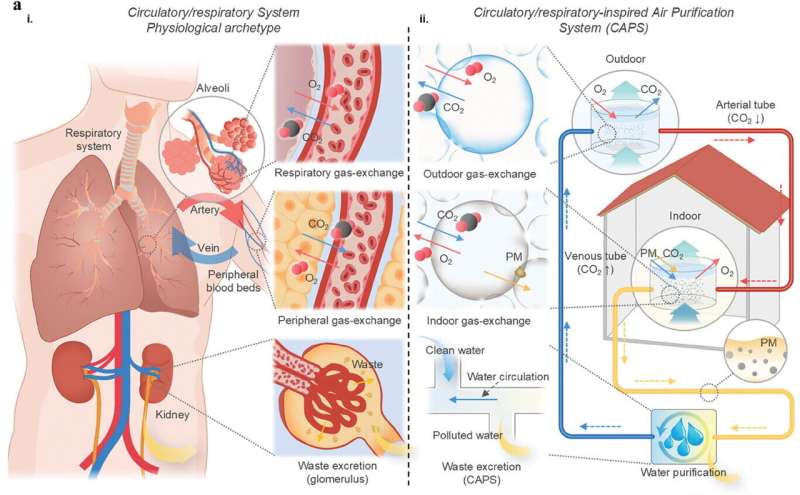
A research team led by Professor Seung Hwan Ko from Seoul National University has developed an innovative, eco-friendly air purification system that utilizes microbubble filters instead of traditional solid filters. This groundbreaking technology addresses the growing need for more sustainable air purification solutions in enclosed spaces, where air quality is often compromised due to factors like reduced oxygen levels, the accumulation of carbon dioxide, fine dust, and volatile organic compounds (VOCs).

In indoor environments, traditional air purifiers often fail to effectively handle the accumulation of fine dust and volatile organic compounds. The conventional filters used in these systems tend to deteriorate over time, especially in sealed spaces, making them less effective. Furthermore, the waste generated from the need for regular filter cleaning and replacement has contributed to environmental pollution, highlighting the urgent demand for more sustainable alternatives.

Continue reading… “Eco-Friendly Air Purification System Uses Microbubbles for Sustainable Clean Air”

Cornell’s Groundbreaking Miniature Walking Robots Could Revolutionize Microscopy and Force Measurement

Researchers at Cornell University have developed the smallest walking robot yet, opening up new possibilities for advanced imaging and force measurements at the microscopic scale. These tiny robots, which are just 5 to 2 microns in size, can maneuver independently, interact with light waves, and perform intricate tasks such as moving across tissue samples to take images and measure forces at a scale previously impossible for conventional microscopes.

Led by Paul McEuen, the John A. Newman Professor of Physical Science Emeritus at Cornell’s College of Arts and Sciences, the team’s work represents a significant leap in both robotics and optical technology. The paper, Magnetically Programmed Diffractive Robotics, was recently published in Science, with McEuen as the corresponding author. Conrad Smart, a researcher at Cornell’s Laboratory of Atomic and Solid State Physics (LASSP), and Tanner Pearson, Ph.D. ’22, are co-first authors.

Continue reading… “Cornell’s Groundbreaking Miniature Walking Robots Could Revolutionize Microscopy and Force Measurement”

UC San Diego Develops Groundbreaking Wearable Ultrasound Patch for Continuous Blood Pressure Monitoring

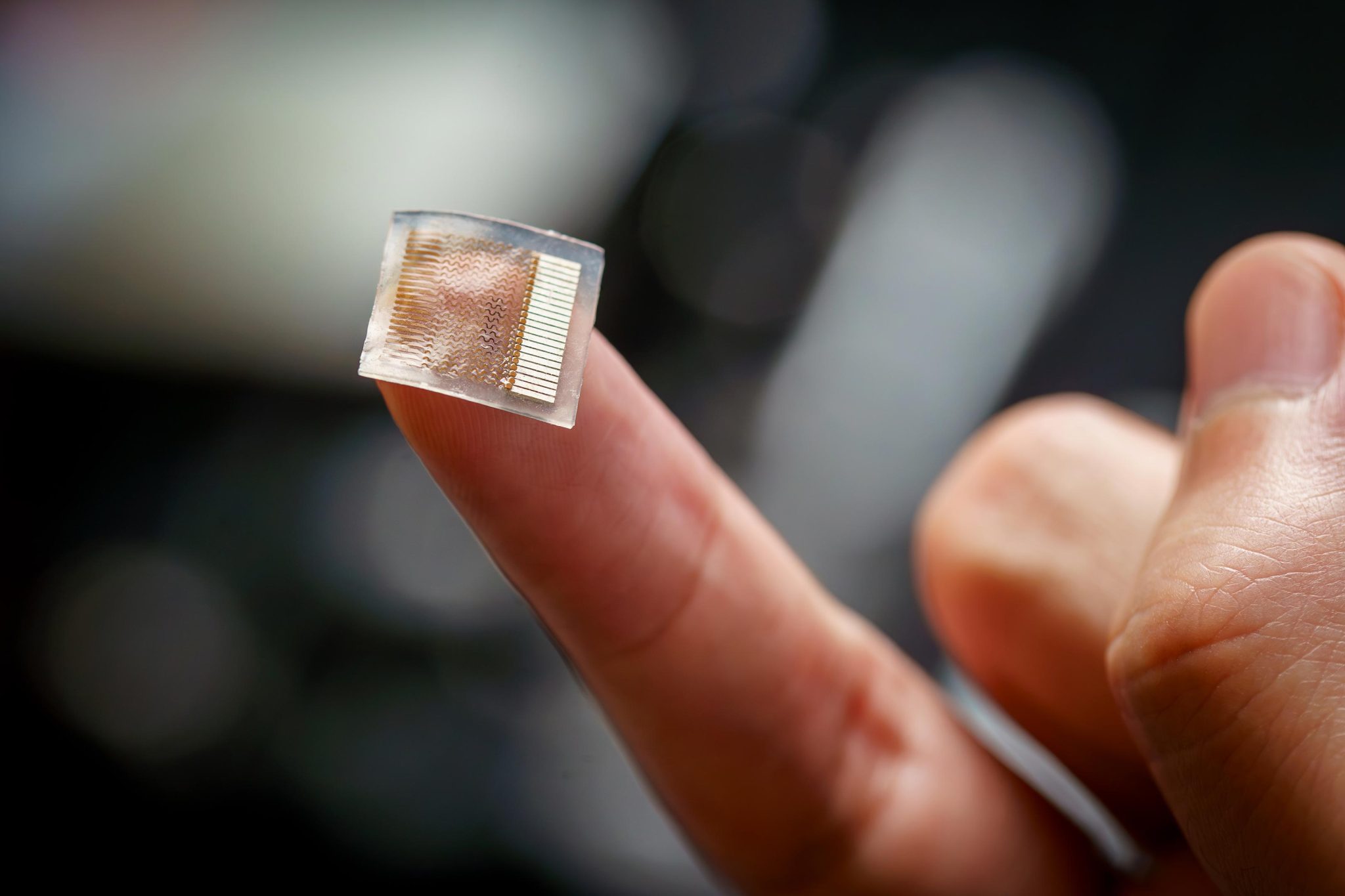
Researchers at the University of California, San Diego (UCSD) have unveiled a groundbreaking wearable ultrasound patch designed for continuous, noninvasive blood pressure monitoring. This innovative device is the first of its kind to undergo extensive clinical validation on over 100 patients, offering a new and potentially transformative method for tracking cardiovascular health both in clinical settings and at home. The results of the study were recently published in Nature Biomedical Engineering.

Traditional blood pressure measurements, such as those taken with a cuff, typically provide only one-time readings, which can miss important trends and fluctuations. In contrast, the UCSD-developed wearable patch continuously monitors blood pressure and provides real-time waveform data, offering detailed insights into changes and trends over time. According to Sai Zhou, co-first author of the study and recent Ph.D. graduate from the UCSD Jacobs School of Engineering, this continuous data stream allows for better monitoring of cardiovascular health.

Continue reading… “UC San Diego Develops Groundbreaking Wearable Ultrasound Patch for Continuous Blood Pressure Monitoring”

The Rise of Interactive AI Video Chatbots: A New Era of Persuasion and Potential Pitfalls

In the past year, artificial intelligence has undergone rapid and unprecedented advancements. While we’ve all been amazed by tools like ChatGPT’s voice capabilities, a new frontier has emerged: interactive video chatbots that not only hear and speak but can also see and engage with you in real time. This next-generation of multimodal AIs is redefining how we interact with technology—and it’s more lifelike than ever.

A couple of years ago, the idea of a video chat with a highly realistic AI might have seemed like something straight out of science fiction. Yet, in 2024, I’ve already spoken to five such AI agents, and what seemed like an outlandish dream is now a familiar reality. The technology is advancing so quickly that it’s beginning to feel completely normal.

Continue reading… “The Rise of Interactive AI Video Chatbots: A New Era of Persuasion and Potential Pitfalls”

Focused Energy: The San Francisco Startup Aiming to Harness the Sun’s Power for Clean, Unlimited Energy

Focused Energy, a German-American energy company, is on a mission to revolutionize the clean energy landscape with its groundbreaking laser fusion technology. Based in the Bay Area, with roots tracing back to Austin, Texas, Focused Energy has unveiled plans to build a cutting-edge $65 million facility dedicated to creating lasers capable of reaching temperatures as hot as the sun. These lasers will be harnessed to generate clean, sustainable power for homes across the United States.

Focused Energy is among a select group of companies working on laser fusion, an advanced form of nuclear fusion. For decades, scientists have dreamed of unlocking the power of fusion energy, often referring to it as the “holy grail” of clean energy. Unlike nuclear fission, which produces harmful radioactive waste, fusion has the potential to provide virtually limitless, clean, and renewable energy.

Continue reading… “Focused Energy: The San Francisco Startup Aiming to Harness the Sun’s Power for Clean, Unlimited Energy”

The Hanboost C1 Wireless Ultrasonic Cutter: Precision Cutting at Your Fingertips

From soldering guns to smartphone microscopes, there are certain gadgets that immediately spark our curiosity and make us wonder how we ever lived without them. The Hanboost C1 wireless ultrasonic cutter is one of those devices that falls squarely into this category. A versatile tool with a range of applications, it’s not just aimed at DIY makers and crafters but appeals to a broader audience. Whether you’re a sculptor, 3D printer, or model builder, this gadget promises to elevate your precision cutting game with ease.

The Hanboost C1 can slice through an impressive range of materials — including wood, plastic, leather, rubber, and paper — with the utmost precision. Operating at a remarkable 40,000 vibrations per second, it cuts silently, gliding through your work without the usual tearing, scratching, or scoring you might encounter with traditional tools. The result? Clean, smooth cuts every time.

Continue reading… “The Hanboost C1 Wireless Ultrasonic Cutter: Precision Cutting at Your Fingertips”

Revolutionizing Energy: 52 Billion Solar Panels Could Cover America’s Highways

A bold and visionary proposal suggests that solar panels could soon cover America’s highways, potentially transforming the country’s energy landscape. Researchers from esteemed institutions such as the Chinese Academy of Sciences, Tsinghua University, the Chinese Academy of Geosciences, and Columbia University have put forward a groundbreaking plan to integrate solar energy across the world’s major highway systems. If implemented, this initiative could generate a significant portion of global electricity while dramatically reducing carbon emissions.

The idea, outlined in the study “Roofing Highways With Solar Panels Substantially Reduces Carbon Emissions and Traffic Losses” published in Earth’s Future, envisions solar panels covering up to 3.2 million kilometers of highway network across the globe. The proposed project, involving the installation of 52 billion solar panels, could generate up to 17,578 terawatt-hours (TWh) of electricity annually—equivalent to more than 60% of the world’s electricity consumption in 2023. This initiative could not only help power billions of homes but also reduce global carbon emissions by up to 28% and potentially cut road accident rates by 11%.

Continue reading… “Revolutionizing Energy: 52 Billion Solar Panels Could Cover America’s Highways”

Meta’s $10 Billion Subsea Cable Project: Taking Control of Its Global Infrastructure

Meta, the parent company of Facebook, Instagram, and WhatsApp, has long been a powerhouse in global internet usage, with its services driving 10% of all fixed internet traffic and 22% of mobile traffic worldwide. As Meta continues to expand its artificial intelligence capabilities and global reach, the company is taking a bold step to ensure it has the infrastructure to support its growing business: by building its own subsea fiber-optic cable network.

TechCrunch has confirmed, through sources close to the company, that Meta plans to construct a new, massive subsea cable that will span over 40,000 kilometers across the globe. This project is estimated to cost upwards of $10 billion, and notably, Meta will be the sole owner and operator of the cable, marking a significant milestone in its infrastructure strategy.

Continue reading… “Meta’s $10 Billion Subsea Cable Project: Taking Control of Its Global Infrastructure”

Why AI Won’t Replace Software Engineers — But Can Supercharge Their Work

As the field of generative AI continues to grow, many are wondering if artificial intelligence could one day replace software engineers. According to a report by Grand View Research, the AI market is expected to expand at an impressive rate of 36.6% per year between 2024 and 2030, with AI applications in software development being a major area of investment.

As the CEO of a software development company, I often hear comments joking that AI tools, like ChatGPT, could easily replace my team. While there is a growing role for AI in software development, I firmly believe that AI will not replace software engineers — and here’s why.

Continue reading… “Why AI Won’t Replace Software Engineers — But Can Supercharge Their Work”

MIT’s Solar-Powered Desalination System Offers Affordable Clean Water for Water-Stressed Communities

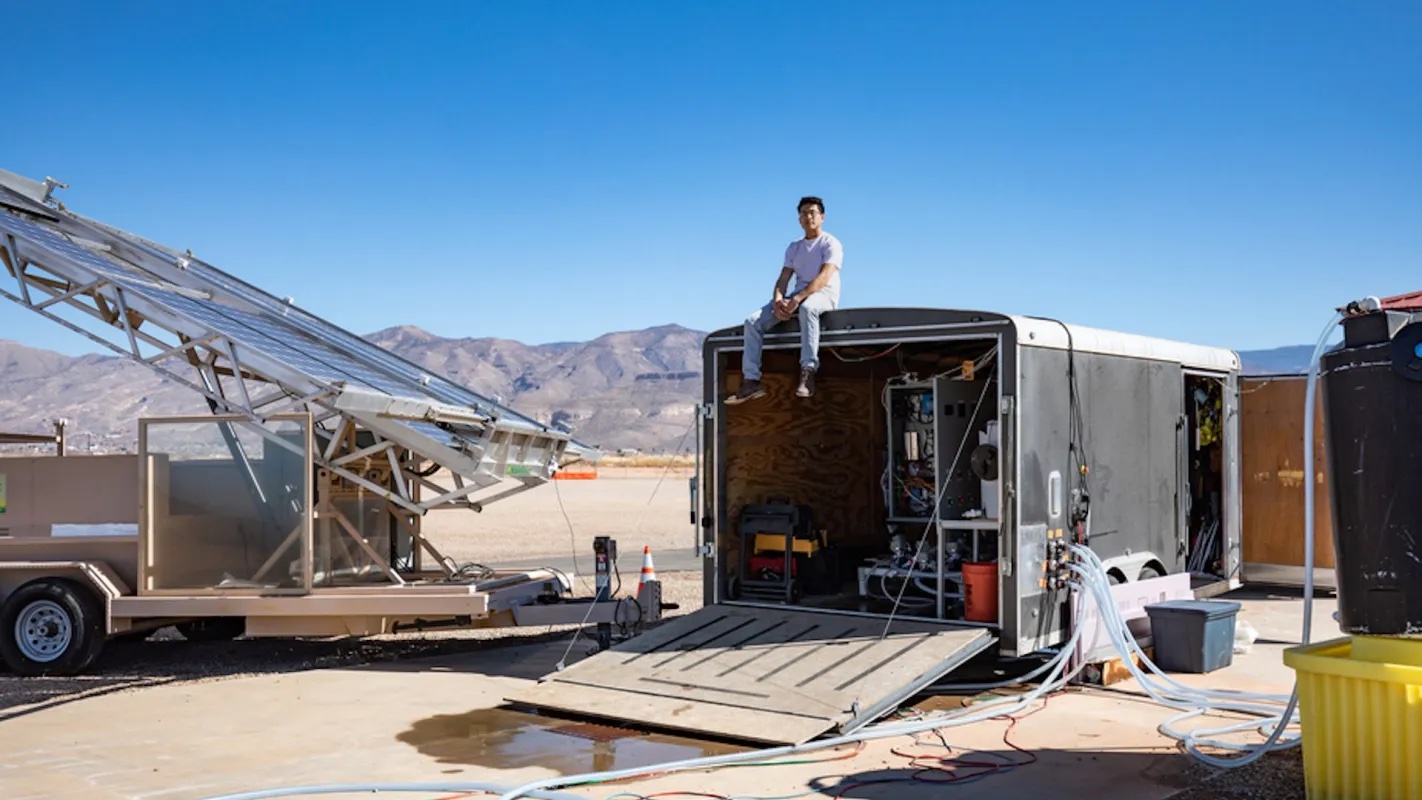
A revolutionary solar-powered desalination system developed by researchers at the Massachusetts Institute of Technology (MIT) is paving the way for affordable, clean drinking water in communities facing water scarcity. This cutting-edge technology eliminates the need for expensive backup batteries, offering a sustainable solution for desalination that is both cost-effective and energy-efficient.

Unlike traditional desalination systems, which often require batteries or grid power to operate in cloudy or stormy weather, MIT’s system adapts to the natural patterns of the sun. It increases desalination output during peak sunlight hours and scales back during overcast periods, making the process more efficient and helping to reduce costs significantly. This adaptability ensures that fresh water can be produced consistently, regardless of weather conditions.

Continue reading… “MIT’s Solar-Powered Desalination System Offers Affordable Clean Water for Water-Stressed Communities”
Discover the Hidden Patterns of Tomorrow with Futurist Thomas Frey
Unlock Your Potential, Ignite Your Success.

By delving into the futuring techniques of Futurist Thomas Frey, you’ll embark on an enlightening journey.

Learn More about this exciting program.