Japan to open roads to autonomous vehicles in 2023

By Brianna Wessling

Japan’s National Policy Agency announced that it would lift a ban preventing SAE Level 4 autonomous vehicles from operating on Japanese roads. The change in policy will allow autonomous vehicles (AVs) to operate in a limited capacity in April 2023. 

The agency will announce more details on how the vehicles will be rolled out, where they’ll be available and how many will be on the roads after a public comment period scheduled to close at the end of November 2022. 

Japan hopes that it can offer mobility services using Level 4 AVs in 40 areas of the country by 2025, and in more than 100 areas by 2030. These services will likely include AVs that will be used as delivery robots or tour buses on routes in lightly populated areas. 

BOLDLY, a Tokyo-based company and subsidiary of SoftBank Corp., recently partnered with Auve Tech, an Estonian developer of autonomous shuttles, to deploy autonomous shuttles in Japan. The MiCa shuttles, which will be specifically designed for Japanese roadways, will hopefully be on roads by the end of fiscal year 2023. 

Continue reading… “Japan to open roads to autonomous vehicles in 2023”
The world’s first fully automated parking system has been approved for public use in Germany.

By Nick Flaherty

The system, with Level 4 autonomy, is in use at Stuttgart Airport for Mercedes cars and marks the start of a rollout of hundreds of systems in Germany.

The driverless parking system allows users to drop their Mercedes S-Class or EQS electric car at a drop off point after notifying an app. The system then checks that the route to a specific parking spot is clear and drives the vehicle autonomously to the correct location, wherever that might be in the parking garage.

Later, the vehicle returns to the pick-up point in exactly the same way. This relies on the interaction of the intelligent infrastructure supplied by Bosch and installed in the parking garage and Mercedes-Benz technology in the car.

The approval to SAE Level 4 is based around a fixed contained environment with known routes and clearly defined risks.

Bosch sensors in the parking garage monitor the driving corridor and its surroundings and provide the information needed to guide the vehicle. The technology in the vehicle converts the information it receives from the infrastructure into driving manoeuvres. This allows the vehicles to drive up and down ramps to move between stories in the parking garage. If the infrastructure sensors detect an obstacle, the vehicle brakes and safely comes to a complete stop. Only once the route is clear does it continue on its way.

Continue reading… “The world’s first fully automated parking system has been approved for public use in Germany.”

South Korean capital launches self-driving bus experiment

South Korea’s capital launched its first self-driving bus route on Friday, part of an experiment which engineers said aims to make people feel more comfortable with driverless vehicles on the roads.


By Kang Jin-kyu

The new vehicle does not look like a regular bus and has rounded edges along with large windows that make it appear more like a toy than a technological breakthrough.

This design is intentional, said Jeong Seong-gyun, head of autonomous driving at 42dot, the start-up responsible for the self-driving technology that is now owned by auto giant Hyundai.

“This is the future,” he told AFP, adding that the bus required “a considerable new type of design”.

The bus looks a bit “like Lego” and is made of composite parts to help keep costs down and make it easy to replicate, he said.

It uses cameras and lasers to navigate the way instead of expensive sensors, Seong-gyun added.

Continue reading… “South Korean capital launches self-driving bus experiment”

Waabi reveals first-generation autonomous truck technology

By CALLUM BROOK-JONES

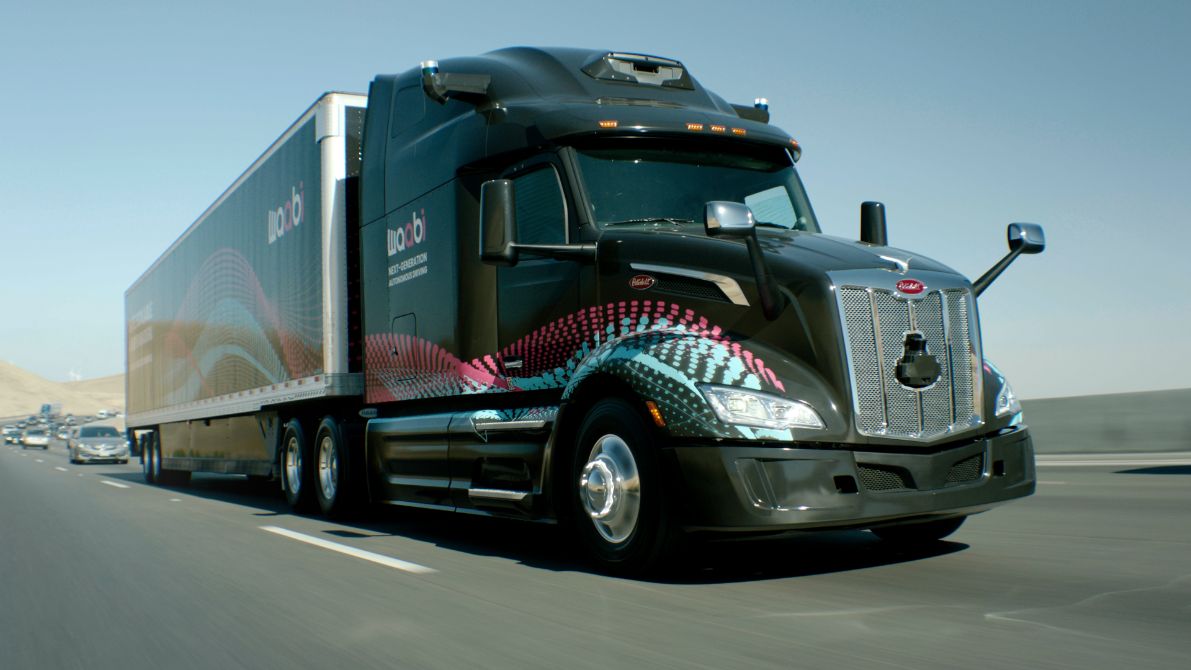
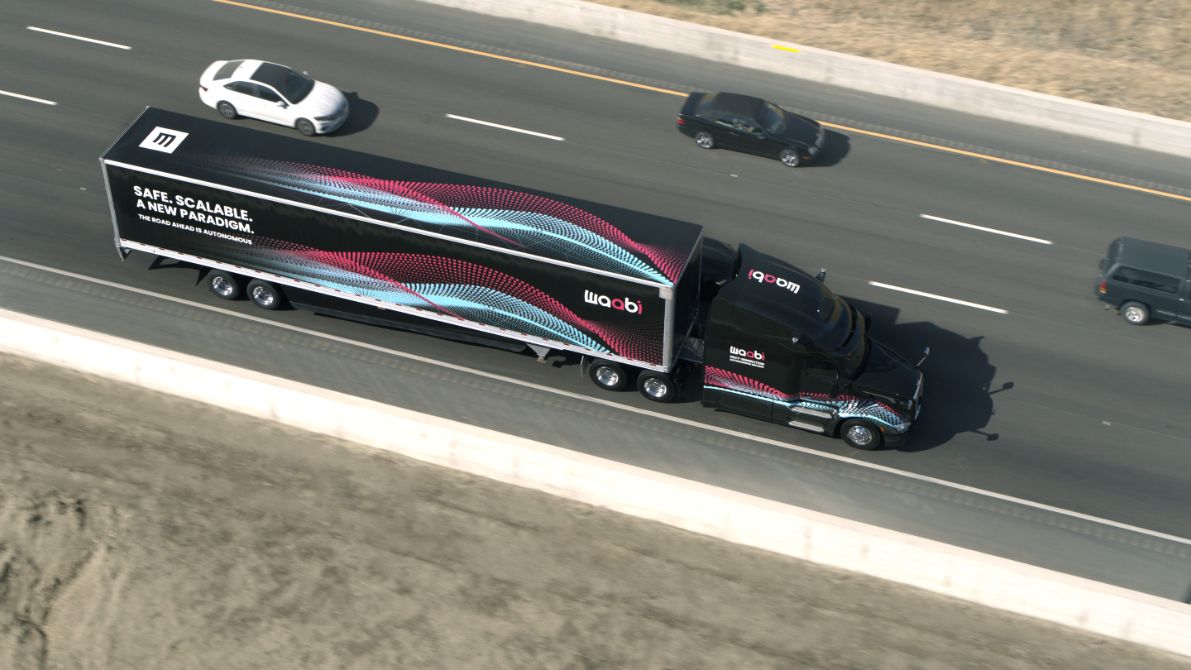
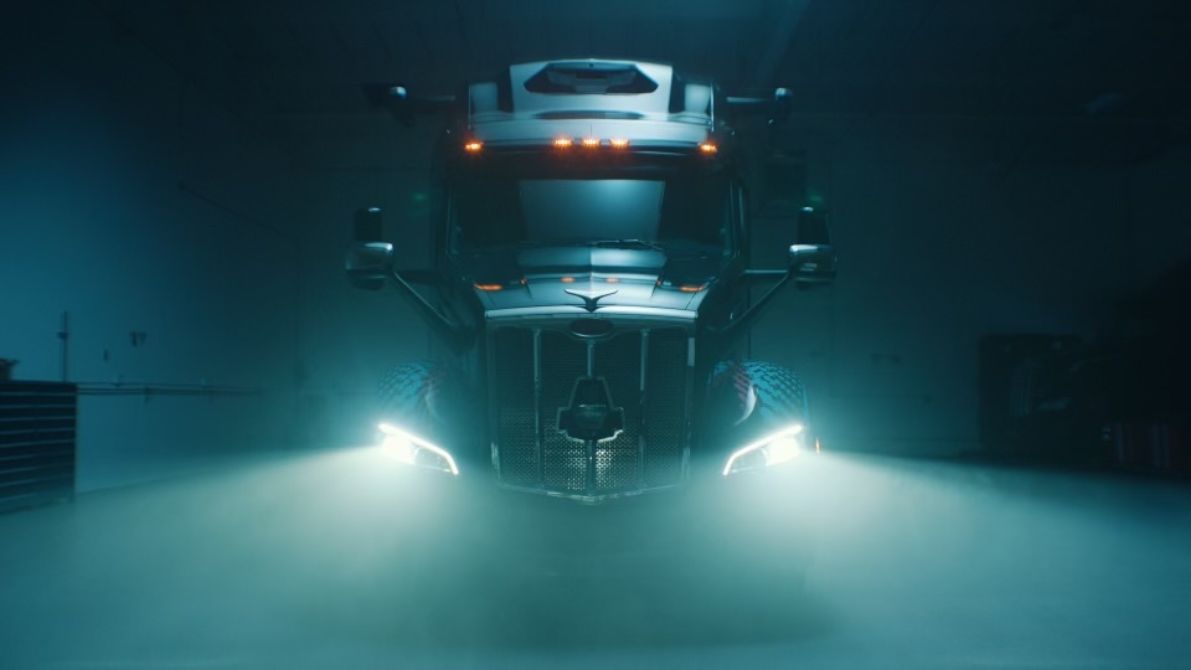
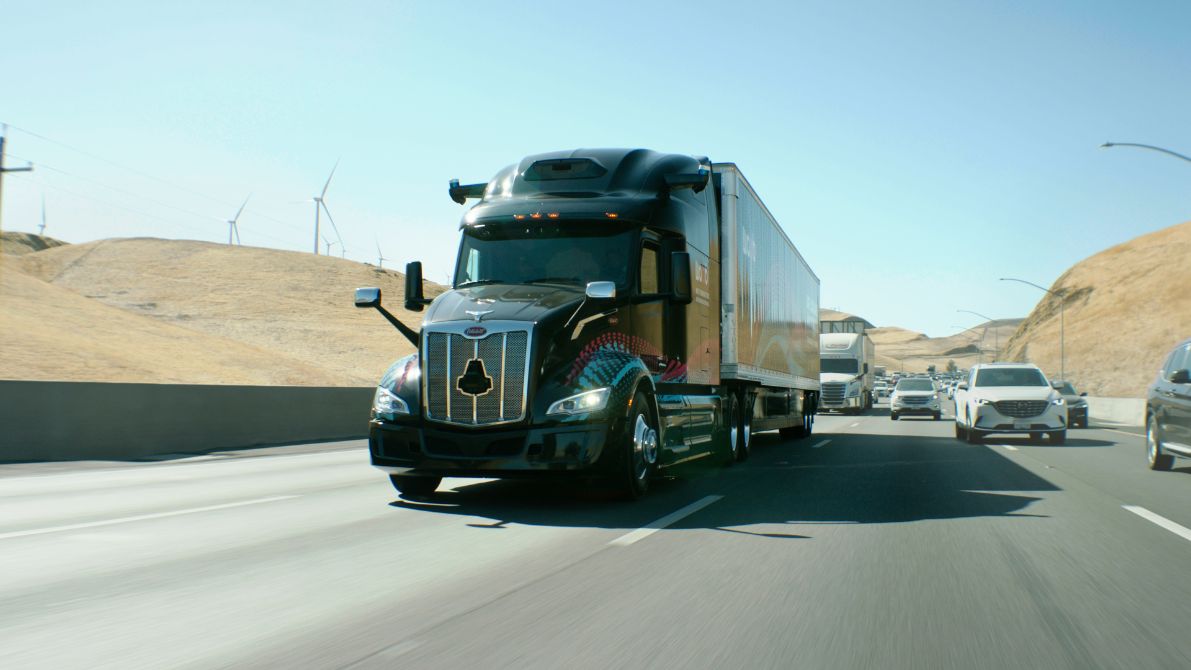
Self-driving technology developer Waabi has announced the release of its Waabi Driver autonomous truck technology. The solution utilizes the company’s proprietary artificial intelligence-first autonomy stack as software which works in combination with sensors and compute as hardware. The complete system has been designed by Waabi to enable factory-level OEM integration, in addition to large-scale commercialization and the safe deployment of the autonomous technology.

Waabi driver is described as an end-to-end trainable system that learns from data to speed up development. This enables the autonomous truck technology to learn complex-decision making to ensure it can operate safely on roadways.

Waabi’s AI-first approach is empowered by Waabi World, a “school for self-driving”, which exposes the Waabi Driver to a wide range of roadway scenarios needed to improve its driving skills. This approach negates the need for thousands of kilometers of test miles on real roads, streamlining the research and development program dramatically as well as making it more sustainable and safer. On-road driving is only required during the final step of development for validation and verification.

Continue reading… “Waabi reveals first-generation autonomous truck technology”

Embark launches coast-to-coast autonomous trucking network

Embark Trucks, a developer of autonomous technology for the trucking industry, has launched its “coast-to-coast backbone of the Embark Coverage Map”, preparing key Sunbelt markets to be served by Embark fleet partners.

BY MARK ALLINSON 

The Coverage Map includes nine transfer point sites in cities across the Sunbelt, including new locations in Dallas, El Paso, Atlanta, and Jacksonville, to accommodate planned autonomous freight volume in key markets and provide anticipated operational support for carriers and shippers using Embark-powered trucks.

Embark secured optimized real estate sites and support services through its partnerships with Alterra Property Group and Ryder. The Coverage Map expansion represents the next step in a journey to deliver coast-to-coast operational availability that began with Embark’s first Los Angeles to Jacksonville run in 2018. 

Embark strategically selected these nine sites to eventually automate crucial shipping lanes for its carrier partners.

The expanded network that Embark is positioned to serve through these nine sites covered 9.5 billion miles of annual freight in 2020, including Dallas to Houston, San Antonio to Houston, and Dallas to Atlanta – some of the highest-volume inter-city lanes in the US.

As a result, by opening these nine sites, 28 percent of US shipping volume in the Sunbelt is available for autonomous transport by Embark’s fleet partners, who will be able to own and operate the trucks and to begin hauling goods autonomously once Embark’s technology is commercialized.

By operating autonomously across the network, Embark’s carrier partners should be able to deliver faster than is currently possible, due to 24/7 operations. 41 percent of US shipment miles in the expanded Coverage Map are on lanes that are longer than drivers can complete in a single shift due to Hours of Service regulations.

Embark anticipates that the 3.3 million loads on these lanes should become eligible for earlier delivery once automated.

Continue reading… “Embark launches coast-to-coast autonomous trucking network”

Halo Car Plans to Have Humans Control Vehicles on Public Streets Remotely

Las Vegas-based startup company, Halo Car, has announced that it will remove human safety operators from behind the wheel later this year, as reported by TechCrunch.

By April Fowell

This means that their vehicles will use humans to control vehicles via public streets and deliver them to its car-sharing service customers remotely. Therefore, their operations will consist of fully remote deliveries and will mark the launch of commercial operations officially. It will also kick off their campaign to scale their fleet of electric vehicles and expand beyond Las Vegas. 

Continue reading… “Halo Car Plans to Have Humans Control Vehicles on Public Streets Remotely”

Steering the Future of Autonomous Vehicles

Keith J. Bucklew, Freight Planning Practice Leader, HDR

AUTONOMOUS VEHICLES COULD RESHAPE THE TRUCKING INDUSTRY, PRESENTING A SOLUTION TO IMPROVE SAFETY AND CAN BE A FREIGHT MOBILITY MULTIPLIER TO SUPPORT SUPPLY CHAIN EFFICIENCY AND RELIABILITY. BUT A PATCHWORK OF STATE LAWS CREATES A HINDRANCE TO IMPLEMENTING EMERGING TECHNOLOGY.

Currently the United States has no federal guidelines for how autonomous trucking vehicles should operate. In the absence of uniform standards, the trucking industry should unite to encourage states to act jointly to create consistent regulations for the implementation of new technology.

In sports, a football team knows, regardless of where they play, that the field dimensions and game rules are the same, but that is not true for the trucking industry. It’s as if Soldier Field in Chicago was twice as long as the field at SoFi Stadium in Los Angeles. That discrepancy would invite chaos.

With the absence of consistency, the freight technology playing field can be an operational quagmire. The trucking industry should speak as one voice to advocate for both federal and state uniform regulations.

Continue reading… “Steering the Future of Autonomous Vehicles”

Uber Eats to Use Autonomous Electric Vehicles for Deliveries

Uber Eats orders will soon be arriving in style.

By Meara Isenberg

The company’s partnership with driverless vehicle maker Nuro kicks off this fall with deliveries in Texas and California.

Ever ordered Uber Eats and thought, “If only I didn’t have to tip my driver.” If you live in the right city, you may soon find out what that’s like. 

Uber is teaming up with Nuro to use the latter company’s autonomous, electric vehicles for food deliveries in a multiyear partnership, the companies announced Thursday. Deliveries begin this fall in Mountain View, California, and Houston, Texas, and the plan is for the service to expand to the greater Bay Area, according to a release. 

Nuro’s autonomous delivery vehicles are built specifically to carry food and other goods, the release says. They don’t contain drivers or passengers, and they run on public roads. Nuro has previously announced partnerships with companies including FedEx and Domino’s.

Continue reading… “Uber Eats to Use Autonomous Electric Vehicles for Deliveries”

Autonomous trucking future ‘is almost upon us,’ Uber Freight head says

By Pras Subramanian

Uber Freight (UBER) thinks it has a solution to the ongoing truck driver shortage here in the U.S.

The unit, which is Uber’s trucking logistics and supply chain management offering, said in a report released earlier this month that autonomous trucking is the key to solving the driver shortage crisis — but not because the industry won’t need drivers. They’ll just be doing a different type of driving.

“We’re getting ready for that future with drivers that will be available on both sides of the autonomous freight, available to pick up and drop off the freight that is being hauled by the autonomous truck by providing a network of drop trails on both ends that will allow for that move to happen,” said Lior Ron, the head of Uber Freight in an interview with Yahoo Finance Live.

What Uber is envisioning is a hub-to-hub system — a hybrid of human drivers working with autonomous trucks.

“Hub-to-hub essentially means that you only do the autonomous freight between a hub off the highway, close to the origin of the load, and a hub close to the destination of the load,” Ron said. “In between, the autonomous freight can run on the highway in a very predictable, very repeatable way.”

At each hub, human drivers will transport goods from essentially the first mile to the hub and the last mile from the destination hub to the final destination.

“We believe that model is much more scalable. We believe that model can actually have the density of freight you need,” Ron said. “This is going to be like the airline — you need to have as much freight going on that truck back and forth.”

Continue reading… “Autonomous trucking future ‘is almost upon us,’ Uber Freight head says”

First Look: Waymo’s New Self‑Driving Trucking Hub Opens in Lancaster

BY DAVID SEELEY 

Waymo’s new hub—built from the ground up—is a $10 million investment in Lancaster that will bring “hundreds of jobs” to the community, a Waymo exec announced at its opening last week. 

“This operation and Waymo’s investment in the region further cements Dallas-Fort Worth as the home to autonomous vehicles in the U.S.,” added Duane Dankesreiter, SVP for research and innovation at the Dallas Regional Chamber.

There’s way more autonomous trucking going on in Dallas-Fort Worth than most places in the U.S.—and Waymo is one reason why. Last week the company opened a new nine-acre autonomous trucking hub in Lancaster, just south of Dallas. 

It’s a $10 million investment that’s expected to bring hundreds of jobs to the community—and advance the industry’s novel technology.

“This facility has been built from the ground up to support Waymo Via, which is our Class 8 trucking solution,” Rocky Garff, head of trucking operations for Waymo, said at a ribbon-cutting event at the hub last Wednesday. “We’re growing our operations and our investment here in Texas, and across the southwestern U.S. region. We’re super excited for what’s to come.”

“The vision is that we can launch trucks autonomously and then receive them autonomously here,” Garff added as he offered a tour of the facility and its 10 truck maintenance bays, six EV charging stations, and diesel fueling operations.

Waymo currently operates 20 autonomous trucks out of the hub, with plans to grow that “quite a bit” by end of year, Garff said. 

Continue reading… “First Look: Waymo’s New Self‑Driving Trucking Hub Opens in Lancaster”

EU plans to approve sales of fully self-driving cars

A Vision Urbanetic self-driving van by Mercedes-Benz | John MacDougall AFP via Getty Images

BY JOSHUA POSANER

Europe aims to be the first-mover when it comes to letting so-called Level 4 autonomous cars on the road.

The European Commission is ready to let robots take the wheel.

The EU’s executive plans to propose by the end of September what it reckons will be the world’s first technical legislation that will allow member countries to approve the registration and sale of up to 1,500 vehicles per carmaker model each year installed with advanced self-driving technology, an EU official involved in drafting the rules told POLITICO.

Such vehicles, where motorists are no longer required to supervise driving, are still very much in the development stage. The aim is to fix Europe’s position as a first mover for next-generation cars able to navigate road networks and traffic autonomously, said two officials briefed on the plan.

“We are moving from the experimentation phase to the commercial phase,” the EU official said.

The legislation will include 17 separate pieces of technical rule-making that will amend how EU countries approve vehicles for sale. It’s part of a much broader revamp of car safety standards called the General Safety Regulation (GSR) — part of which enters into force on Wednesday.

The EU aims to reach zero road deaths by 2050, but to do that it has to boost safety features in cars, as human error is estimated to be at fault in 95 percent of vehicular accidents.

Continue reading… “EU plans to approve sales of fully self-driving cars”

Einride’s Driverless Electric Pod Approved for US Public Roads

The Swedish startup’s electric trucks will carry out a test on public roads in Q3 this year.

By Stephanie MlotStephanie Mlot

Swedish transport company Einride got the green light to operate autonomous electric trucks without a driver present on US public roads.

The National Highway Traffic Safety Administration approved the company’s “Pod” for public roads, which counts as an industry first for this type of driverless truck.

A sleek black-and-white box on wheels, the Einride Pod doesn’t have room for a human driver. Instead, a remote operator monitors and can step in to control the vehicle if necessary. As these are effectively electric trucks and will be transporting heavy goods, it comes as no surprise that the range is estimated to be 124 miles on a fully-charged battery.

Continue reading… “Einride’s Driverless Electric Pod Approved for US Public Roads”
Discover the Hidden Patterns of Tomorrow with Futurist Thomas Frey
Unlock Your Potential, Ignite Your Success.

By delving into the futuring techniques of Futurist Thomas Frey, you’ll embark on an enlightening journey.

Learn More about this exciting program.