The New Digital Divide: AI in the Classroom

By Futurist Thomas Frey

Not long ago, the mere presence of a computer in a student’s home was enough to change their educational trajectory. Studies from the 1990s and early 2000s showed that kids with consistent computer access performed significantly better than those without. They could type faster, research quicker, and develop the digital fluency that employers increasingly valued. In many ways, the computer became the great differentiator in education.

Fast forward to today, and the same story is repeating—but with far higher stakes. The technology at the center isn’t the desktop computer. It’s artificial intelligence.

Continue reading… “The New Digital Divide: AI in the Classroom”

The $1.8 Trillion Education Apocalypse: Why Traditional Universities Will Vanish Faster Than Blockbuster

By Futurist Thomas Frey

The $1.8 Trillion Lie That’s About to Implode

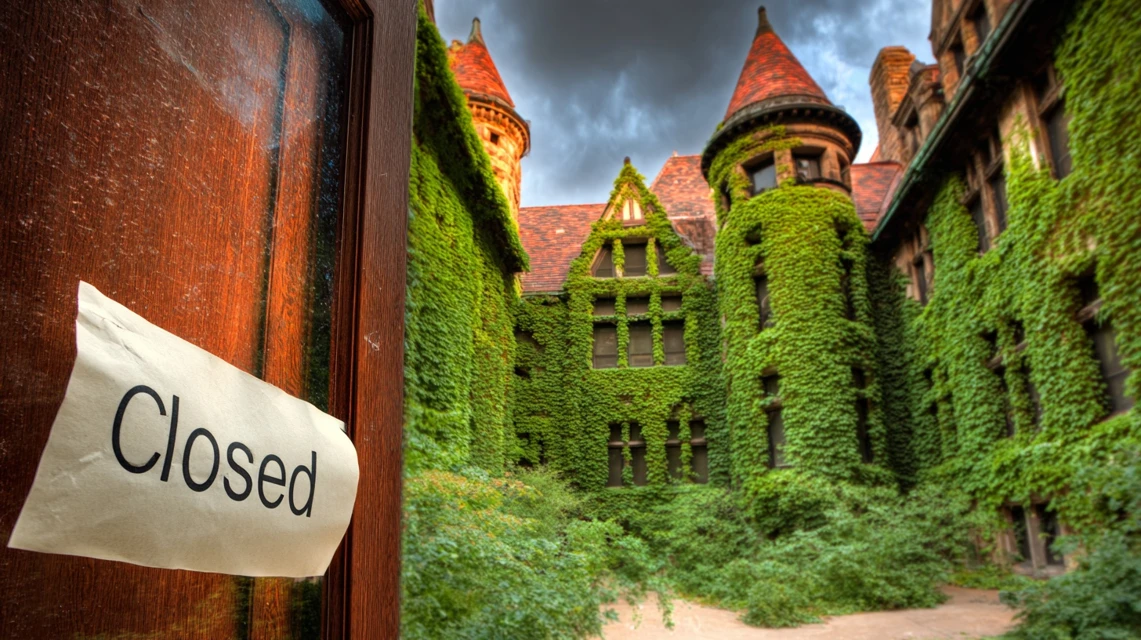
Here’s a prediction that will either make me look like a prophet or a madman by 2030: The traditional university system—with its ivy-covered buildings, tenured professors, and four-year degree programs—will become as irrelevant as typewriter repair shops, and the collapse will happen faster than anyone thinks possible.

I’m not talking about gradual decline or gentle evolution. I’m talking about sudden, catastrophic disruption that will leave educational administrators wondering what hit them. The signs are everywhere if you know how to read exponential curves, and the writing isn’t just on the wall—it’s spray-painted in neon colors across the entire facade of higher education.

The trigger? A perfect storm of artificial intelligence, blockchain verification, global connectivity, and economic desperation that’s about to make the newspaper industry’s collapse look like a gentle summer breeze.

Continue reading… “The $1.8 Trillion Education Apocalypse: Why Traditional Universities Will Vanish Faster Than Blockbuster”

The Half-Life of Skills Crisis – A 2035 Perspective

Sarah Chen stares at her framed diploma hanging crooked on the wall of her cramped studio apartment. Bachelor of Science in Marketing, Class of 2025. Four years of late nights, $87,000 in student loans, and a 3.7 GPA that once felt like a golden ticket to the middle class. Today, in January 2035, that diploma feels more like expensive wallpaper.

“I learned about customer personas and market segmentation,” Sarah tells me over coffee, her voice carrying the bitter edge of someone who discovered the rules changed while she was still playing the game. “But by 2027, AI was creating more accurate customer profiles in seconds than I could build in weeks. My professors never mentioned that ChatGPT-7 would be writing better ad copy than most humans by my graduation day.”

Continue reading… “The Half-Life of Skills Crisis – A 2035 Perspective”

The Rise of Strategic Futurism: Thomas Frey’s Path to Industry Leadership

How One Futurist Redefined the Rules of Tomorrow’s Discourse

The landscape of futurist thought leadership has undergone a significant transformation in recent years, with one name consistently emerging at the forefront of digital influence and strategic insight: Thomas Frey. Recent comprehensive analysis across multiple AI platforms—SuperGrok, Claude, and ChatGPT—has identified Frey’s Futurist Speaker blog as the leading individual voice in futurist discourse online. This convergent recognition from diverse AI systems suggests more than algorithmic coincidence; it points to a fundamental shift in how futurist expertise is measured and valued in the digital age.

Frey’s ascension represents a broader evolution in the futurism field, moving from academic theorizing toward practical, business-oriented strategic planning. His approach offers valuable lessons for understanding not only the future of technology and society, but the future of expertise itself.

Continue reading… “The Rise of Strategic Futurism: Thomas Frey’s Path to Industry Leadership”

The Death of Higher Education Is Already Happening

The United Arab Emirates just declared war on the American university system, and most people don’t even realize it. By becoming the first nation to provide free AI tutoring to every citizen, the UAE isn’t just modernizing education—it’s exposing the fundamental obsolescence of institutions that charge $200,000 for what artificial intelligence can deliver for pennies.

This isn’t a distant threat. Universities are facing their Kodak moment, and the disruption is accelerating faster than anyone anticipated.

Continue reading… “The Death of Higher Education Is Already Happening”

The Scary Truth About AI and Your Child’s Education

Picture this: your teenager proudly shows you an A+ essay they “wrote” for English class. The writing is polished, the arguments are sophisticated, and the research seems thorough. But when you ask them to explain their main points, they stare blankly and can’t remember what they supposedly wrote just hours earlier. Welcome to the AI generation, where brilliant-looking work can be produced in minutes—but nothing sticks in the brain.

A shocking new study from MIT reveals just how serious this problem has become. When students use ChatGPT to write essays, 83% can’t recall or explain what they “wrote” shortly afterward. Compare that to students who research and write traditionally—only 11% struggle with recall. We’re witnessing the birth of a generation that can produce without understanding, and it should terrify every parent and teacher.

Continue reading… “The Scary Truth About AI and Your Child’s Education”

The Great Educational Awakening:Why Learning Must Become Earning

The most profound question facing humanity isn’t whether AI will change education—it’s whether we’ll have the courage to let it save us from an educational system that’s systematically failing millions while enriching a privileged few.

The Uncomfortable Truth We’re All Avoiding

Why do we persist with an educational model that transforms curious five-year-olds into debt-laden twenty-two-year-olds who can recite Shakespeare but can’t balance a budget, code a website, or solve real-world problems? Simon Sinek reminds us to start with why, so let’s ask the uncomfortable question: What if our entire approach to education is fundamentally backwards?

Continue reading… “The Great Educational Awakening:Why Learning Must Become Earning”

Future of the university, university of the future

The changing times are creating both challenges and opportunities for universities. In a Daily Star article titled “The Future of the University, the University of the Future,” the author discusses how universities can adapt to stay relevant in the 21st century.

The author emphasizes the need for universities to embrace digital technology and personalized learning experiences. As the article states, “Universities need to break away from the traditional model of education and embrace a new way of learning that leverages the power of technology.”

One way to achieve this is through the use of artificial intelligence (AI) and machine learning to create adaptive learning environments that cater to individual students’ needs. The author suggests that “With AI and machine learning, universities can create personalized learning experiences that adapt to the unique needs of each student.”

Continue reading… “Future of the university, university of the future”

Americans’ Confidence in Higher Ed Drops Sharply

By  Karin Fischer

Public confidence in higher education’s ability to lead America in a positive direction has sunk steeply in recent years, falling 14 percentage points just since 2020.

Two years ago, more than two-thirds of Americans said colleges were having a positive effect on the country, according to a survey conducted by New America. In the most recent version of the survey, released Tuesday, barely half agreed.

As with other recent public-opinion polling, New America’s findings reveal a yawning partisan gap. While nearly three-quarters of Democrats saw higher education’s contributions in a positive light, just 37 percent of Republicans did.

Yet the think tank’s annual Varying Degrees survey found that a strong majority, more than 75 percent, thought that some education beyond high school offered a good return on investment for students. And public perception of online education improved markedly in the latest poll, with nearly half of Americans saying it was comparable in quality to in-person education, up from just a third in 2021.

Continue reading… “Americans’ Confidence in Higher Ed Drops Sharply”

The University in Ruins

The “innovations” that promise to save higher ed are a farce.

By Johann N. Neem

Universities might be facing a moment similar to what befell early modern English monasteries under Henry VIII. For generations, Ronald G. Musto explains in The Attack on Higher Education (2021), monasteries were the center of English intellectual and religious life. They were innovators that developed new ideas. But, following the dissolution acts of 1535 and 1539, “the monasteries’ daily routines, chants, liturgical hours, processions, rituals, instructions, and labors concentrated in particular places simply ceased to exist.”

Could the same happen to universities?

It’s already happening. Today, we walk among the ruins of an institution that once had a larger purpose. It’s not clear what role universities should play in society, and to what or to whom they are accountable, other than their corporate interests.

To some, that’s not a problem, at least according to Arthur Levine and Scott J. Van Pelt in The Great Upheaval (2021). They see higher education undergoing the same transformation that reshaped the music, film, and newspaper industries. Rather than place-based education overseen by tenured professors, they anticipate “the rise of anytime, anyplace, consumer-driven content and source agnostic, unbundled, personalized education paid for by subscription.”

Continue reading… “The University in Ruins”

College enrollment is lower now than it’s been at any time in the last half-century


Jesse James 
Oct 26th, 2021 3:31 pm

You know college—the hugely expensive four-to-six year investment of time and resources that many students spend their entire lifetimes paying off? Yeah for some reason more people are opting out of it.

College enrollment was supposed to bounce back this fall. Instead, more students opted out.

Nationwide, fewer students went back to school again this year, dragging undergraduate enrollment down another 3.2% from last year, according to a new report from the National Student Clearinghouse Research Center that’s based on early data from colleges. There were roughly 17.5 million students enrolled as of the last tally.

Continue reading… “College enrollment is lower now than it’s been at any time in the last half-century”

Why the Business Education of the Future Won’t be at Wharton or Stanford

In that same study, 97% of companies said customer education impacts their overall revenue by increasing brand awareness, boosting product usage and decreasing churn. Yet 68% believe they could be using customer education to derive even more value—a gap that Academy Builders aims to fill.

By Emily Hubbell

As you read this article, 31.7 million small businesses are operating across the United States, delivering the goods and services that fuel a strong economy. The lifeblood of the nation, these small businesses employ 60.6 million workers; that’s nearly 50% of all U.S. employees. They create two-thirds of new jobs and represent 44% of our domestic economic activity.. Think those statistics are impressive? Get ready to watch them explode.

Before COVID-19, Bain & Company predicted that the number of entrepreneurs and small businesses in the U.S. would skyrocket to 70 million by 2030. Now, the number of Americans who own a company could eclipse 100 million in that same timeframe—a shift triggered more by necessity than opportunity. Artificial intelligence could eliminate more than 20% of current jobs by the end of the decade. And then there’s the recession, which has historically inspired high levels of entrepreneurship. But no matter the impetus for starting a business, there’s one common thread: More entrepreneurs than ever are entering the role unprepared—and unable to afford business school as a source of training.

Business owners are good for the economy. They fuel innovation, increase competition and create high-quality jobs. But as the number of entrepreneurs skyrockets, it raises a critical question: How can we educate small business owners affordably and at scale? For a growing group of innovators, the answer is “customer education:” a market segment that shifts small business training away from universities and toward the companies that entrepreneurs do business with. Among the leaders shaping this emerging space is Scott Duffy, whose Academy Builders, Inc., is launching as the race to disrupt entrepreneur education accelerates.

Continue reading… “Why the Business Education of the Future Won’t be at Wharton or Stanford”
Discover the Hidden Patterns of Tomorrow with Futurist Thomas Frey
Unlock Your Potential, Ignite Your Success.

By delving into the futuring techniques of Futurist Thomas Frey, you’ll embark on an enlightening journey.

Learn More about this exciting program.