If we want to colonize Mars, we’re going to need to figure out a way to feed ourselves there, and continuously sending food to the Red Planet isn’t a sustainable plan.
But now, a team of researchers thinks it’s figured out a way to produce enough food on Mars to feed a million people — and they say their plan to make Martian colonists self-sufficient would take just a hundred years to implement.
The hugely popular sweetener aspartame – also known as Nutrasweet – has been taken to task by researchers for not being sufficiently proven to be safe for consumption. Aspartame has been a controversial ingredient for decades.
According to a new study by Professor Erik Millstone, a University of Sussex expert on food chemical safety policy, and Dr. Elisabeth Dawson, the 2013 appraisal by the European Food Safety Authority that aspartame is safe is flawed. The study finds that the EFSA disregarded the results of every one of the 73 studies that indicated that aspartame could be deleterious to health while accepting as reliable 84% of studies that concluded that aspartame was safe.
Growing your own food is one of life’s great pleasures—plus it’s good for you and for the environment. But in increasingly tight, urban homes, we don’t all have room for gardens. And hydroponic systems, as appealing as they may be, often appear to be a whole lot of hardware for only a bit of actual green. Some fresh arugula would be nice for dinner, but who wants giant plastic box taking up half their kitchen to get a few leaves?
The Rotofarm, by an Australian company called Bace (which appears to have produced skincare products in a past life), is a space-friendly hydroponic system, and it doubles as a beautiful sculpture in your home. With a circular design, which rotates plants like a Ferris wheel through the day, the Rotofarm is able to fit nearly five feet of growing area inside a countertop footprint of just 11 inches. Water is dispersed through the nutrient and water reservoir in the stainless steel base, and a bright LED grow light lives in the middle like a tiny sun. Then to harvest, you can tilt the farm 180-degrees and pull off its clear cover. You take what you want (kale, mint, lettuce, spinach, or, yes, marijuana), and close it back up.
Ricky Lopez owns four restaurants: Top Round Roast Beef in San Francisco and three that exist only within the Uber Eats delivery app.CreditCreditCayce Clifford for The New York Times
Food delivery apps are reshaping the restaurant industry — and how we eat — by inspiring digital-only establishments that don’t need a dining room or waiters.
SAN FRANCISCO — At 9:30 on most weeknights, Ricky Lopez, the head chef and owner of Top Round Roast Beef in San Francisco, stacks up dozens of hot beef sandwiches and sides of curly fries to serve hungry diners.
He also breads chicken cutlets for another of his restaurants, Red Ribbon Fried Chicken. He flips beef patties on the grill for a third, TR Burgers and Wings. And he mixes frozen custard for a dessert shop he runs, Ice Cream Custard.
Of Mr. Lopez’s four operations, three are “virtual restaurants” with no physical storefronts, tables or chairs. They exist only inside a mobile app, Uber Eats, the on-demand meal delivery service owned by Uber.
Scientists are debunking the link to hyperactivity
Contrary to decades of popular belief (and anecdotal evidence from generations of parents), a new study has found that there is no such thing as a sugar rush. That’s right. The sugar rush is a myth. Rather than making people feel energized and hyped, the new research suggests eating sweet foods actually causes people to experience the opposite: fatigue and a lack of alertness.
The results — which were published in June in the journal Neuroscience and Biobehavioral Reviews — come from a meta-analysis of 31 published studies involving almost 1,300 people. A team of European researchers sought to understand the effect of sugar on people’s moods, including anger, alertness, depression, and fatigue. Overall, they wanted to know how does this carbohydrate impact both the way people feel in terms of pleasure, as well as cognitive ability and sharpness.
Several companies have launched services allowing shoppers to see a product’s journey from farm to fork, but they often depend on retailers agreeing to be transparent.
When you pop into a store to buy fresh fruit, vegetables or meat, it’s common for the packaging to reveal which country it is from. Some upmarket brands go further by offering stories about the farm and the conditions where the food was cultivated.
Tracking an item step-by-step through the manufacturing process can be hard — and, sometimes, even manufacturers and retailers themselves aren’t sure about a product’s journey.
Lab-grown meat is getting a lot of attention along with plant-based meat substitutes. Technology is driving the industry toward providing alternatives to conventionally produced food products. Dairy proteins may be the next product produced in a lab, for use in fluid “milk” production and processed dairy products like yogurt and cheese, to name a few.
The Swedish company Oatly won over American baristas and launched a massive trend
When Chicago barista Dominic Rodriguez first heard about oat milk, he was skeptical. He had latte-making down to a fine art — at coffee competitions, he sculpts swan-necked turkeys and roses out of foam — and in his experience, plant-based milks didn’t foam correctly. “I’m a milk guy, I don’t need milk alternatives,” he said. But then Intelligentsia, a well-respected coffee shop he frequents, started serving oat milk, and Rodriguez thought there was no way they’d promote it if they didn’t think it was good.
He gave it a shot. It needed less steam than cow’s milk, but more heat, and frothed into a stable textured foam that was easy to pour. He examined his drink. It looked normal. He sipped it — it didn’t taste exactly like cow’s milk, but it was sweet and thick and rich, not watery like most almond milks. He liked it. But would his customers agree? Resoundingly, yes. Now, around 40% of all drinks ordered at his workplace, Metric Coffee, use oat milk; his matcha oat milk latte is a top seller.
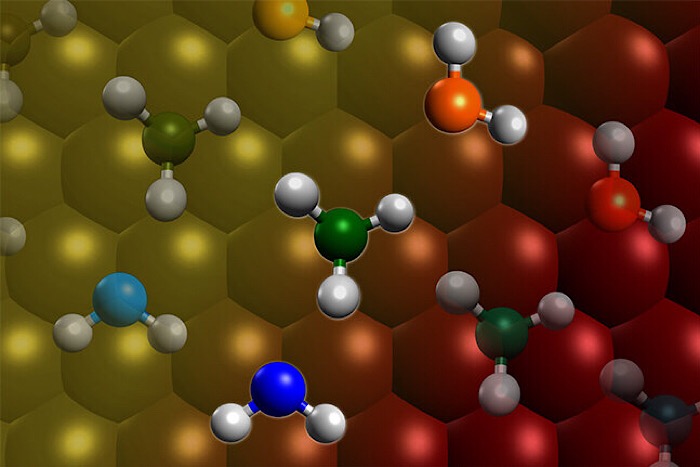
A new discovery by University of Minnesota and University of Massachusetts Amherst researchers could increase the speed and lower the cost of thousands of chemical processes used in developing fertilizers, foods, fuels, plastics, and more.
A team of researchers from the University of Minnesota and University of Massachusetts Amherst has discovered new technology that can speed up chemical reactions 10,000 times faster than the current reaction rate limit. These findings could increase the speed and lower the cost of thousands of chemical processes used in developing fertilizers, foods, fuels, plastics, and more.
The Food and Drug Administration is going after food waste with a new effort to make sure we don’t throw out groceries until they’re absolutely inedible.
On Thursday, the agency issued a letter to the food industry at large, throwing its support behind a growing trend to almost universally adopt a “Best if Used By” date label on products. At the same time, it’s also reminding the public that most foods can still be perfectly safe to eat if they’re past the marked date, even if they’re not necessarily quite as tasty anymore. The moves are part of a larger effort by the FDA to drastically cut down on America’s food waste problem.
An example of one of the study’s ultra-processed lunches consists of quesadillas,
refried beans and diet lemonade. Participants on this diet ate an average of 508 calories
more per day and gained an average of 2 pounds over two weeks.
Over the past 70 years, ultra-processed foods have come to dominate the U.S. diet. These are foods made from cheap industrial ingredients and engineered to be super-tasty and generally high in fat, sugar and salt.
The rise of ultra-processed foods has coincided with growing rates of obesity, leading many to suspect that they’ve played a big role in our growing waistlines. But is it something about the highly processed nature of these foods itself that drives people to overeat? A new study suggests the answer is yes.
The study, conducted by researchers at the National Institutes of Health, is the first randomized, controlled trial to show that eating a diet made up of ultra-processed foods actually drives people to overeat and gain weight compared with a diet made up of whole or minimally processed foods. Study participants on the ultra-processed diet ate an average of 508 calories more per day and ended up gaining an average of 2 pounds over a two-week period. People on the unprocessed diet, meanwhile, ended up losing about 2 pounds on average over a two-week period.
Almost exactly a year ago, everyone was flipping out over Google’s newly announced Duplex feature, which basically pretends to be a human assistant in order to make reservations at restaurants or schedule trips to the hairdresser.
But the AI-powered assistant has struggled to win over the hearts of service workers. The Verge reports that restaurants are hanging up on Google’s auto-calling voice assistant — sometimes because they’re creeped out by how lifelike it sounds.
“I was spooked at how natural and human the machine sounds,” server Shawn Watford of Birmingham, Alabama told The Verge. “It was so weird [that] when it called, I immediately hung up.”