How Scientists Can Turn off Pain Receptors

141126132639-large

In research published in the medical journal Brain, Saint Louis University researcher Daniela Salvemini, Ph.D. and colleagues within SLU, the National Institutes of Health (NIH) and other academic institutions have discovered a way to block a pain pathway in animal models of chronic neuropathic pain including pain caused by chemotherapeutic agents and bone cancer pain suggesting a promising new approach to pain relief.

Continue reading… “How Scientists Can Turn off Pain Receptors”

10 Ways the Next 10 Years will be Awesome!

dubai630

It’s hard to wait for the future to get here and give us all the amazing things we’ve dreamed up in our countless sci-fi books and movies (I’m still waiting for the hover-boards Back to the Future promised me). Though much of what we’ve seen on the big screen is still decades or millennia away… or straight up impossible by our current understanding of the universe, there are several sci-fi level technological and scientific advances we’re likely to see in just the next decade.

Blogger Jordan Lejuwaan over at High Existence has compiled a list of ten such advances to look forward to in the not-to-distant future:

Continue reading… “10 Ways the Next 10 Years will be Awesome!”

Flexibility is critical for young people because ‘whole careers are vanishing overnight’

2012 College of Medicine Graduation

Recent college grads

As the digital sector grows, jobs that rely on older technologies are rapidly becoming obsolete.

According to the census, between 2006 and 2011 there were some occupations where the number of people employed across the country dropped by up to two-thirds in just five years – corporate services managers, for example, fell from 21,804 in 2006 to 7365 in 2011.

According to the Australian Bureau of Statistics in 1966, 46% of workers in Australia were employed in production industries. 30 years later, that proportion has diminished to 28%.

Continue reading… “Flexibility is critical for young people because ‘whole careers are vanishing overnight’”

Egg freezing growing in popularity, but the choice leaves no guarantees

egg retrievel

Among urban women in their 30s, freezing is trending.

Tiffany Angelo gave herself a few months to grieve after the abrupt end of her marriage. Then she moved on. Not to the next romance, but to something she could plan for: the children she deeply desired and would still have. With or without her ex.


Continue reading… “Egg freezing growing in popularity, but the choice leaves no guarantees”

Deep brain stimulation beats out caffeine for boosting mental agility

tDCS

tDCS

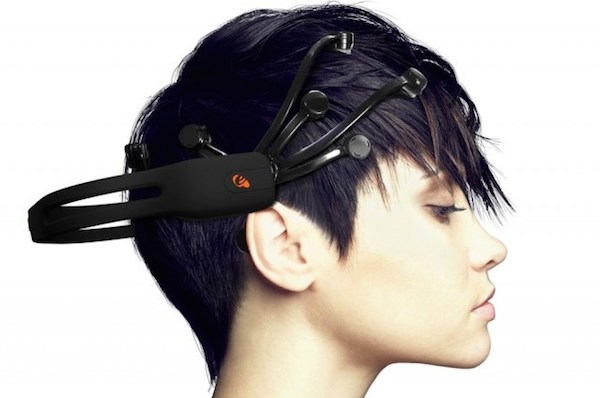
“Transcranial direct current stimulation” (tDCS) involves passing electricity through your head. The current is relatively weak, so it’s not like the electro-convulsive therapy (ECT) used to treat extreme depression in mental institutions; sometimes called “deep brain stimulation.”


Continue reading… “Deep brain stimulation beats out caffeine for boosting mental agility”

The Swasthya Slate – an affordable diagnostic machine that could disrupt health care

Swasthya

Kahol built a prototype of a device called the Swasthya Slate (which translates to “Health Tablet”).

Kanav Kahol was a member of Arizona State University’s department of biomedical informatics. He became frustrated at the lack of interest by the medical establishment in reducing the costs of diagnostic testing, and seeing almost no chance of getting the necessary research grants he returned home to New Delhi in 2011Kahol had noted that, despite the similarities between most medical devices in their computer displays and circuits, their packaging made them unduly complex and difficult for anyone but highly skilled practitioners to use. And they were incredibly expensive — costing tens of thousands of dollars each.


Continue reading… “The Swasthya Slate – an affordable diagnostic machine that could disrupt health care”

Why we need radical change in the disease-model of mental health

conversation with a therapist

It is difficult reliably to distinguish different “disorders.”

By Peter Kinderman: The idea that our more distressing emotions such as grief and anger can best be understood as symptoms of physical illnesses is pervasive and seductive. But in my view it is also a myth, and a harmful one. Our present approach to helping vulnerable people in acute emotional distress is severely hampered by old-fashioned, inhumane and fundamentally unscientific ideas about the nature and origins of mental health problems. We need wholesale and radical change, not only in how we understand mental health problems, but also in how we design and commission mental health services.


Continue reading… “Why we need radical change in the disease-model of mental health”

Exposure to environmental factor linked to huge rise in ADHD: Study

Sticking out tongue

Exposure to a component of air pollution increases the chances of children developing ADHD by five times.

A link between rising air pollution in urban areas and the rapid increase in diagnosis in ADHD (Attention Deficit Hyperactivity Disorder) has been discovered in a new study.


Continue reading… “Exposure to environmental factor linked to huge rise in ADHD: Study”

Data deluge will disrupt medicine within this decade

exponential-medicine

Health and medicine will undergo a greater transformation than any other industry or field in the next decade.

At this year’s Exponential Medicine 2014, the overriding theme for the event was information. In his opening talk, Peter Diamandis said health and medicine are poised to undergo a greater transformation than any other industry or field in the next decade. Of course, he meant treatments and technology will meaningfully advance. But more than that, it is the liberation of data that will make care more targeted, proactive, and effective.

Continue reading… “Data deluge will disrupt medicine within this decade”

rHEALTH diagnoses hundreds of diseases using a single drop of blood

rHEALTH-diagnostic-device

rHealth Device

This month, the XPRIZE Foundation announced the winner of the Nokia Sensing XCHALLENGE. The global competition was aimed at accelerating the availability of hardware sensors and software sensing technology as a means to smarter digital health solutions. The winning device is called the Reusable Handheld Electrolyte and Lab Technology for Humans (rHEALTH) system. It can potentially run hundreds or even thousands of lab tests using a single drop of blood, and those tests, in turn, can be used to diagnose a range of diseases. (Video)

Continue reading… “rHEALTH diagnoses hundreds of diseases using a single drop of blood”

Discover the Hidden Patterns of Tomorrow with Futurist Thomas Frey
Unlock Your Potential, Ignite Your Success.

By delving into the futuring techniques of Futurist Thomas Frey, you’ll embark on an enlightening journey.

Learn More about this exciting program.