Samay’s Sylvee Wearable Shows Promise in Diagnosing COPD with 90% Accuracy

Samay, a US-based startup, has revealed positive outcomes for its AI-assisted wearable technology, Sylvee, showcasing a remarkable 90% accuracy in diagnosing chronic obstructive pulmonary disease (COPD). The passive remote monitoring platform, in collaboration with the Pulmonary, Critical Care, and Sleep Disorders Institute of South Florida, delivered results nearly equivalent to the current standard pulmonary function test (PFT).

COPD, a prevalent chronic respiratory ailment affecting millions globally, is the third leading cause of death worldwide, impacting around 12.5 million people in the United States alone.

Continue reading… “Samay’s Sylvee Wearable Shows Promise in Diagnosing COPD with 90% Accuracy”

Advancements in CAR T Therapies Signal Progress in Solid Tumor Treatment

In recent years, the groundbreaking success of CAR T-cell therapies in treating hard-to-treat blood cancers has been a beacon of hope. However, translating this success to solid tumors, which constitute the majority of cancer cases, has proven challenging. Encouragingly, recent trial results, such as those from BioNTech’s BNT211, suggest that researchers are making strides in developing next-generation CAR T therapies for solid tumors.

Overcoming Solid Tumor Challenges: Traditionally, CAR T therapies have excelled in blood cancers, leveraging engineered T cells to utilize the patient’s immune system. Solid tumors present unique challenges, including finding the right protein to target without harming healthy tissues. BioNTech’s approach, targeting Claudin-6, a protein present in fetal tissue and certain cancers but absent in healthy adult tissue, has shown promise in mitigating this challenge.

Continue reading… “Advancements in CAR T Therapies Signal Progress in Solid Tumor Treatment”

Groundbreaking CRISPR-Based Therapy for Sickle Cell Disease Nears FDA Approval

In a significant leap forward, the Food and Drug Administration (FDA) is moving closer to approving the first therapy utilizing CRISPR gene-editing technology. The potential approval of Exa-cel, developed by Vertex Pharmaceuticals and CRISPR Therapeutics, marks a milestone in the treatment of hereditary disorders such as sickle cell disease.

Why it Matters: Directly editing genes within a patient’s body could be a life-altering breakthrough for individuals grappling with debilitating hereditary conditions, particularly sickle cell disease. This innovative therapy focuses on addressing the root causes of the disease.

The Exa-cel Therapy: Exa-cel, designed for patients aged 12 and above, offers a one-time treatment approach. The therapy involves editing a patient’s stem cells to produce elevated levels of fetal hemoglobin. This specific approach aims to counteract the impact of defective hemoglobin prevalent in individuals with sickle cell disease.

Continue reading… “Groundbreaking CRISPR-Based Therapy for Sickle Cell Disease Nears FDA Approval”

Hope on the Horizon: Groundbreaking Gene Therapy Offers Potential Cure for Alcohol Addiction

Alcohol addiction, a pervasive and destructive force in countless lives, may soon face a groundbreaking solution as scientists make remarkable progress in their quest to combat this enduring problem.

The Promising Trials on Primates:

In a significant step forward in the field of addiction treatment, experimental therapy for alcohol use disorder (AUD) has entered the trial phase in monkeys, yielding impressive results. If these findings can be replicated in humans, it could mark a turning point in the battle against AUD.

Renowned neuroscientists and physiologists from various institutes across the US have dedicated years to understanding the intricate nature of addiction. They have tested a pioneering gene therapy designed to engage and modify the core brain circuitry responsible for prolonged heavy alcohol consumption. One of the major challenges in treating AUD is the issue of relapse. Despite determined efforts to abstain, many individuals find themselves inexorably drawn back to alcohol.

Continue reading… “Hope on the Horizon: Groundbreaking Gene Therapy Offers Potential Cure for Alcohol Addiction”

Link Discovered Between Epigenetic Aging and Cognitive Abilities

A recent study, published in Neurobiology of Stress, has unveiled a significant connection between the aging of genes and cognitive abilities, shedding light on how our genes may influence brain health in adulthood.

The human brain, a marvel of complexity responsible for our thoughts, memories, and problem-solving capabilities, has long piqued scientific interest regarding its relationship with aging and cognitive function. As individuals age, cognitive abilities tend to decline, but the precise mechanisms behind this process have remained elusive. Previous research suggested a genetic role in cognitive aging, prompting a team of researchers to delve deeper into understanding how epigenetic aging could be linked to cognitive abilities. Epigenetic aging refers to DNA changes over time influenced by environmental factors and lifestyle choices, which can impact how our genes function.

Continue reading… “Link Discovered Between Epigenetic Aging and Cognitive Abilities”

Frontier Bio Revolutionizes Medical Device Testing with Lab-Grown Human Blood Vessels

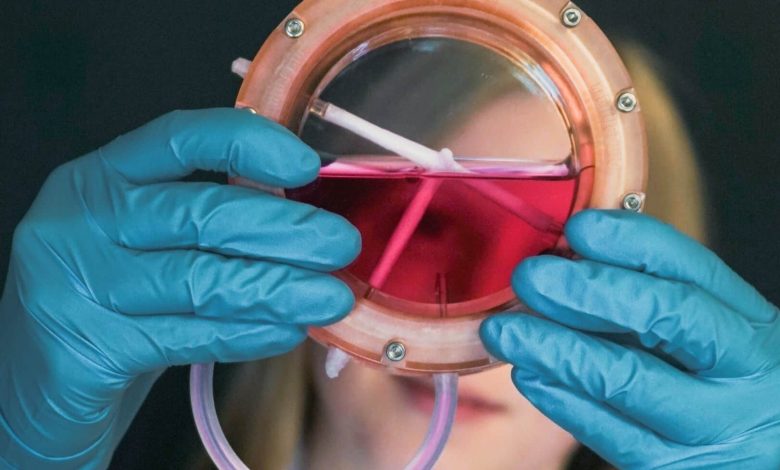
Frontier Bio Corporation, an innovative pioneer in tissue engineering, has introduced a groundbreaking method for crafting living human blood vessels, ushering in a transformative era in medical device testing. The prevailing practice for assessing the safety and efficacy of vascular medical devices involves conducting animal studies before human trials. By harnessing lab-grown blood vessels, Frontier Bio is spearheading a future where dependence on animal testing is drastically minimized, if not eradicated.

Leveraging novel tissue engineering techniques, Frontier Bio manufactures blood vessels using biodegradable polymer scaffolds infused with vascular cells, fostering growth under biomimetic conditions within a laboratory setting. Employing 3D printing technology, Frontier Bio can fabricate these vessels in intricate shapes, replicating the natural architecture of blood vessels, and even simulating disease conditions.

Continue reading… “Frontier Bio Revolutionizes Medical Device Testing with Lab-Grown Human Blood Vessels”

Navigating the Evolving Landscape of Gene Therapy: Advances and Challenges

The realm of gene therapy is ever-changing, with new possibilities and challenges continually emerging. With over 6,000 genetic disorders and the list growing, gene therapy stands as a potential panacea for monogenic diseases by altering an individual’s genetic makeup. Notable milestones, such as alipogene tiparvovec’s approval in 2012 and voretigene neparvovec’s endorsement in 2017, signified the transformative power of gene therapy. However, since these landmarks, the field has witnessed numerous developments and confronted its share of obstacles.

Gene Therapy: A Ray of Hope for Neuromuscular and Neurodegenerative Diseases

Neuromuscular diseases (NMDs) and neurodegenerative diseases (NDDs) are often progressive, life-shortening illnesses, many of which lack viable treatments. For this reason, NMDs and NDDs with genetic origins have become promising targets for gene therapy, aiming to address the root cause—the defective genes.

A significant turning point occurred in 2019 when the US Food and Drug Administration approved onasemnogene abeparvovec, an AAV therapy designed to combat spinal muscle atrophy (SMA). This marked a pivotal moment in NMD treatment. SMA, linked to mutations in the SMN1 gene, results in the gradual loss of motor neurons, leading to progressive muscle weakness and, in severe cases, respiratory failure. Onasemnogene abeparvovec involves delivering a functional copy of SMN1 via an AAV9 vector, administered through intravenous injection. Clinical trials showed improved functional and survival outcomes compared to the natural progression of the disease.

Continue reading… “Navigating the Evolving Landscape of Gene Therapy: Advances and Challenges”

Revolutionary Bionic Hand Offers Life-Changing Transformations for Amputees

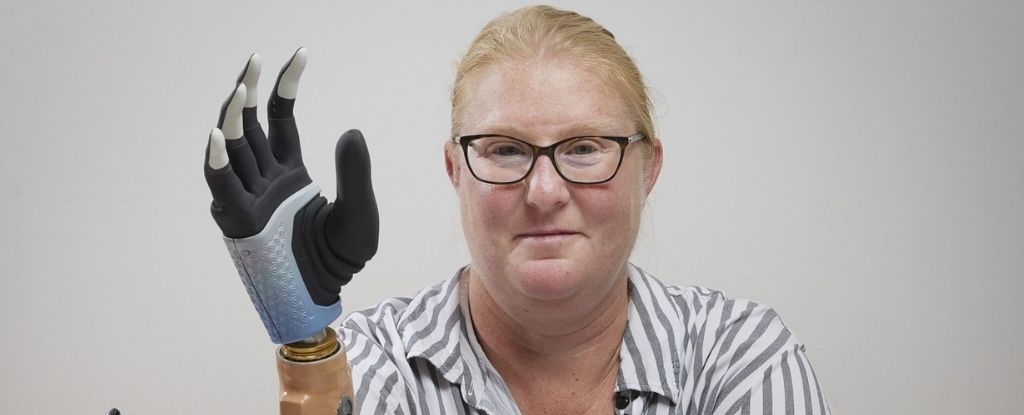
A pioneering bionic hand has brought about a remarkable transformation for a 50-year-old Swedish woman who lost her hand in a farming accident. This cutting-edge prosthesis utilizes groundbreaking technology to establish a direct connection with the user’s bones, muscles, and nerves, creating a human-machine interface that enables artificial intelligence to translate brain signals into precise, natural movements. The recipient, Karin, now experiences a limited sense of touch and can individually move all five fingers of her bionic hand with a remarkable success rate of 95 percent.

After two decades of living without her right hand, Karin has regained the ability to perform 80 percent of her everyday tasks. This includes activities like food preparation, object handling, clothing fastening, and operating door knobs or screws. Additionally, since receiving the prosthetic hand, Karin’s excruciating phantom pain, which had previously felt as though her hand was undergoing torment, has significantly diminished, reducing her reliance on medication.

Continue reading… “Revolutionary Bionic Hand Offers Life-Changing Transformations for Amputees”

Emulating Sharks: A Glimpse into the Future of Dentistry

Sharks have held a unique fascination for centuries, not only for their oceanic prowess but also for their remarkable ability to regenerate teeth. The idea of replicating this feat in humans has long been a dream, and a dedicated team of Japanese researchers is on the verge of making it a reality.

In an era of rapid technological and medical progress, dentistry may soon experience a groundbreaking transformation. Drawing inspiration from the perfect model provided by nature—sharks—a group of researchers is exploring the potential of enabling humans to grow new teeth. A pivotal study, published in Scientific Reports, laid the foundation for this innovative approach by uncovering the role of the USAG-1 gene in controlling the number of teeth in animals. The protein synthesized by this gene showed immense promise in the field of dentistry.

Continue reading… “Emulating Sharks: A Glimpse into the Future of Dentistry”

Probing the Mysteries of Our Final Moments: Insights into Dying Brain Activity

The enigmatic realm of what transpires in our minds during our final moments has been a source of fascination for centuries. Are our dying moments a vivid reel of life’s memories, a grand curtain call before the end? These existential questions have intrigued both scientists and philosophers.

In a groundbreaking study, a team led by neuroscientist Dr. Ajmal Zemmar from the University of Louisville, along with colleagues from around the world, offers a unique perspective on this age-old mystery. Their research, titled “Enhanced Interplay of Neuronal Coherence and Coupling in the Dying Human Brain,” recently published in the Frontiers in Aging Neuroscience journal, provides a remarkable glimpse into the brain activity that occurs during and after the transition to death.

Continue reading… “Probing the Mysteries of Our Final Moments: Insights into Dying Brain Activity”

Prophetic’s Halo Headband: Pioneering Lucid Dream Control Awaits

AI startup Prophetic is aiming to revolutionize the way people sleep with a unique headband device called the Halo, which has the potential to initiate and control lucid dreams, typically associated with REM sleep. Lucid dreams are dreams in which the dreamer is conscious of the fact that they are dreaming, sometimes having control over elements within the dream. This innovative company is diligently working on a prototype that they plan to unveil by the end of November.

The Halo operates by engaging with the prefrontal cortex of the brain, where self-aware lucid dreams originate. It achieves this by detecting when users enter the dream state and subsequently trying to induce a lucid state using pulsing ultrasound waves. Additionally, the device claims to have the capacity to stabilize ongoing lucid dreams, although specific details regarding the stabilization process remain undisclosed.

Continue reading… “Prophetic’s Halo Headband: Pioneering Lucid Dream Control Awaits”

New Hope for Tinnitus Sufferers: Personalized Bi-Sensory Treatment Shows Promise

In the midst of life’s tranquility, up to 15% of adults in the United States are accompanied by a constant, unwelcome guest: tinnitus. This medical condition manifests as a persistent ringing, buzzing, or hissing in the ears, which, for many, is a minor annoyance.

However, for nearly 40% of those afflicted, tinnitus is a chronic ailment that significantly diminishes their quality of life. Desperation for relief has sparked intensive research, and now, thanks to groundbreaking work from the University of Michigan’s Kresge Hearing Research Institute, a glimmer of hope is on the horizon.

Continue reading… “New Hope for Tinnitus Sufferers: Personalized Bi-Sensory Treatment Shows Promise”
Discover the Hidden Patterns of Tomorrow with Futurist Thomas Frey
Unlock Your Potential, Ignite Your Success.

By delving into the futuring techniques of Futurist Thomas Frey, you’ll embark on an enlightening journey.

Learn More about this exciting program.