The Rise of Drone Mailboxes: Redefining the Last Mile of Delivery

By Futurist Thomas Frey

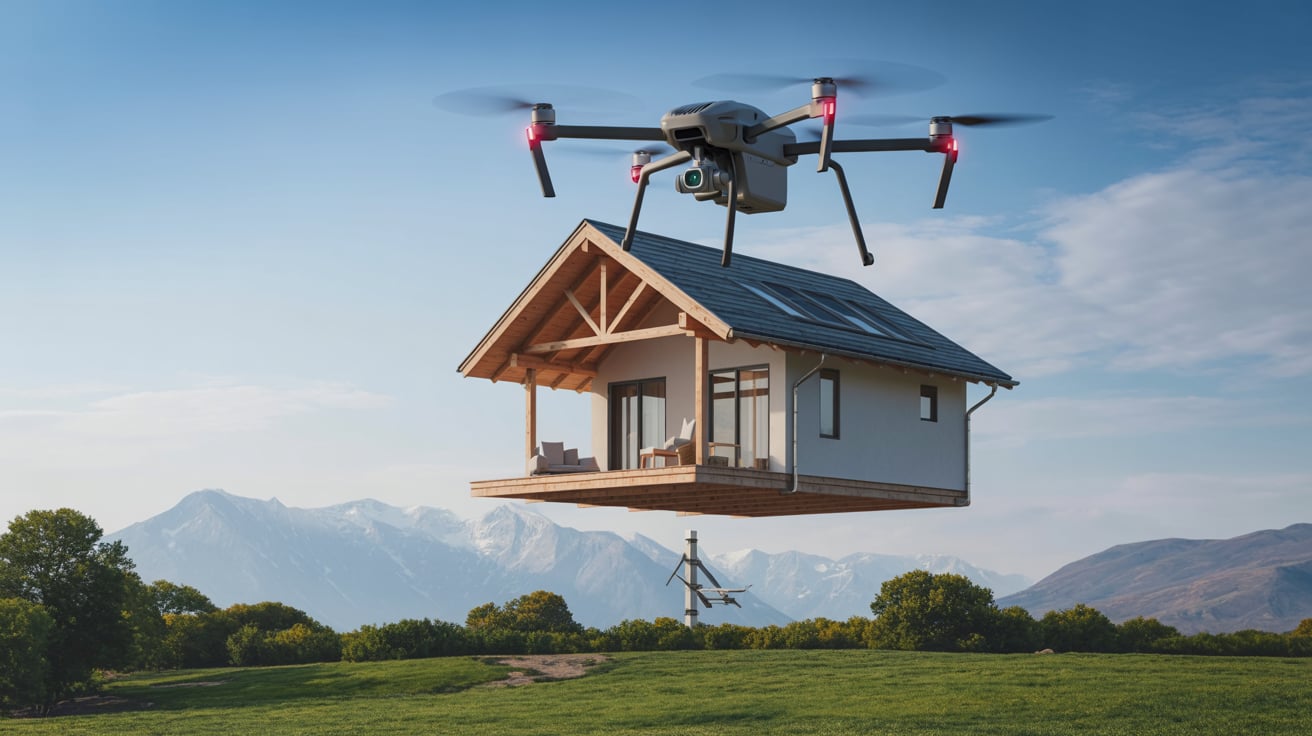
For over a century, the humble mailbox has barely changed. A metal box by the curb or a slot in the door has served as the final checkpoint of global commerce. Letters, bills, and eventually Amazon packages all end up in the same simple container. But as drones, delivery robots, and autonomous couriers take flight, that old mailbox suddenly looks obsolete.

The future of delivery isn’t just about drones. It’s about the infrastructure that supports them—and companies like Arrive AI and Valqari are betting big on a new age of “smart mailboxes” designed to handle packages from air, land, and everything in between.

Continue reading… “The Rise of Drone Mailboxes: Redefining the Last Mile of Delivery”

Using Electricity To “Reprogram” the Immune System for Faster Healing

For centuries, medicine has relied on chemistry—pills, potions, injections, and therapies designed to alter biology through molecules. But a new frontier is emerging, one that swaps chemistry for circuitry. What if the body’s own immune system could be reprogrammed not by drugs, but by electricity?

That future may have just taken its first real step forward.

A team of scientists at Trinity College Dublin has discovered that a simple electric current can rewire one of the most important components of our immune system—the macrophage. By applying controlled electrical stimulation, these immune cells can be “persuaded” to suppress harmful inflammation and accelerate tissue repair. The work, published in Cell Reports Physical Science, signals the dawn of what could become an entirely new class of medicine: bioelectric healing.

Continue reading… “Using Electricity To “Reprogram” the Immune System for Faster Healing”

The Dawn of Bird-Like Flight

For centuries, humanity has envied the effortless mastery of flight we see in birds. Their takeoffs, landings, and elegant soaring patterns remain a pinnacle of natural engineering. Airplanes gave us speed and distance, drones gave us maneuverability, but the intimate grace of flapping, feathered flight has largely remained out of reach—until now.

A breakthrough out of China suggests that we are entering an entirely new chapter of aviation. Scientists have unveiled RoboFalcon 2.0, a flapping-wing robot capable of bird-style self-takeoff and sustained low-speed flight. It’s not just another drone—it’s a proof of concept that could one day reshape how machines share the skies with us.

Continue reading… “The Dawn of Bird-Like Flight”

Reinventing Humanity by Reinventing Time

by Futurist Thomas Frey

Time is the invisible operating system of civilization. It ticks quietly in the background, setting the rhythm of our days, the order of our industries, and the boundaries of our social contracts. Yet like fish in water, we rarely question the very system that shapes our existence. The numbers on the clock dictate when we wake, eat, work, and rest, as though ancient human choices—made centuries ago—should still define how billions of people live today.

But what if those choices were wrong? Or at least outdated? What if the way we measure, segment, and live by time is holding us back from achieving our full potential?

We now stand at the edge of a revolution in time itself.

Continue reading… “Reinventing Humanity by Reinventing Time”

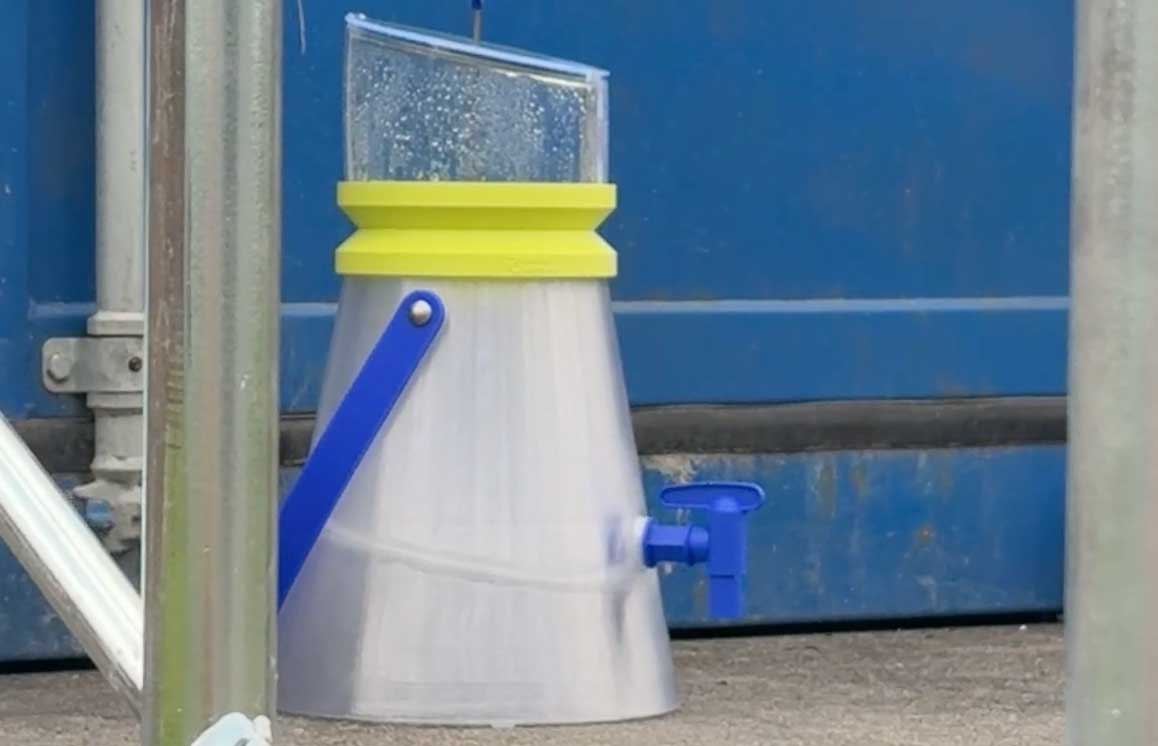
Drinking Water from Thin Air: How 3D Printing Could Solve Humanity’s Thirst

More than two billion people across the globe still lack reliable access to clean drinking water. We tend to think of water as a resource found in rivers, lakes, or deep underground, but the atmosphere itself holds more water than all the rivers on Earth combined. What if the very air around us could be tapped like an invisible reservoir?

That’s exactly what two students at Münster University of Applied Sciences have set out to do. Their project, Water from Air, takes a futuristic approach to one of humanity’s oldest problems—using 3D printing and advanced materials to harvest water directly from the atmosphere.

Continue reading… “Drinking Water from Thin Air: How 3D Printing Could Solve Humanity’s Thirst”

The Dawn of Light-Powered Computing: Microsoft’s Optical Leap Beyond Silicon

For half a century, computing has been chained to silicon. Chips packed with billions of transistors have carried us from room-sized mainframes to smartphones in our pockets, but Moore’s Law is running out of runway. The next frontier may not be smaller circuits at all—but light itself.

At Microsoft’s Cambridge Research Lab in the U.K., scientists have built a prototype analog optical computer (AOC) that doesn’t rely on electrons but beams of light to perform computations. This radical shift could accelerate artificial intelligence, financial modeling, and medical diagnostics by as much as 100 times, while consuming just a fraction of the energy required by today’s processors.

Continue reading… “The Dawn of Light-Powered Computing: Microsoft’s Optical Leap Beyond Silicon”

BMW’s Vision CE: The Scooter That Wants to Redefine Urban Freedom

Motorcycles and scooters have always lived in the liminal space between convenience and danger. They promise speed, freedom, and agility, but at the cost of helmets, leathers, and the ever-present awareness of risk. BMW Motorrad, however, is reimagining that equation with a new concept that could make the two-wheeled experience safer, more accessible, and infinitely more futuristic: the Vision CE self-balancing scooter.

Continue reading… “BMW’s Vision CE: The Scooter That Wants to Redefine Urban Freedom”

The House of Earth and Code: How 3D Printing is Rewriting the Rules of Construction

Concrete has dominated architecture for more than a century, shaping everything from suburban homes to megacities. But in Japan, a quiet revolution is underway—one that replaces cement with earth, sensors, and code. The result? A home that is both ancient in material and futuristic in execution.

The project, called Lib Earth House B, is the latest milestone from Japanese firm Lib Work in collaboration with Italian 3D printing pioneer WASP. Using the massive Crane WASP 3D printer, which was first unveiled in 2018 with the prototype “Gaia,” the team built an entire 100-square-meter residence without a single bag of cement. Instead, they relied on earth-based materials, locally sourced and layered into form with additive manufacturing.

Continue reading… “The House of Earth and Code: How 3D Printing is Rewriting the Rules of Construction”

The Drone Revolution: Racing Toward Aviation’s Next Historic Firsts

By Futurist Thomas Frey

How tomorrow’s changemakers will earn their place in history through pioneering achievements in unmanned flight

Few of us remember the second person to circumnavigate the globe or the second company to deliver a package by air. History belongs to the firsts, and the rapidly evolving world of drone technology presents an unprecedented opportunity for visionaries to claim their permanent place in the record books.

Every emerging technology produces a cascade of “firsts” that define its trajectory and potential. From Orville Wright’s 12-second flight to Chuck Yeager breaking the sound barrier, aviation’s pioneers shaped how we understand what’s possible in the skies. Today’s drone technology stands poised to generate its own wave of historic achievements—but which will prove most significant?

Continue reading… “The Drone Revolution: Racing Toward Aviation’s Next Historic Firsts”

The Hollow Fiber Revolution: How Air-Filled Fibers Could Reshape the Internet

The future of the internet may not lie in more powerful servers or bigger data centers, but in a strand of glass that is—ironically—mostly empty. Scientists at the University of Southampton have developed a radical new hollow-core optical fiber that carries light through air instead of solid glass. The result? Data that moves faster, farther, and with a thousand times more transmission power than today’s networks can handle.

This isn’t just a tweak to existing fiber optics—it’s a potential upheaval in how the world moves information.

Continue reading… “The Hollow Fiber Revolution: How Air-Filled Fibers Could Reshape the Internet”

Engines Hotter Than the Sun: The Microscopic Machines Redefining Thermodynamics

When most people think of engines, they picture pistons, turbines, or rockets roaring with fire. But the next revolution in engines is happening at a scale so small it’s invisible to the human eye. A team of researchers at King’s College London has just built the hottest engine in the world—not in a power plant or a jet, but in a vacuum chamber using a single glass bead smaller than a red blood cell. The effective temperature of this microscopic engine? Sixteen million kelvin, rivaling the core of the Sun.

Continue reading… “Engines Hotter Than the Sun: The Microscopic Machines Redefining Thermodynamics”

Rethinking the Raspberry: DNA-Free Gene Editing Opens a New Chapter in Precision Agriculture

What if the future of agriculture isn’t about genetic modification as we know it, but about rewriting nature with surgical precision—without leaving any foreign DNA behind? That’s the promise emerging from Cranfield University in England, where researchers have just achieved the world’s first DNA-free gene edits in raspberry plants using CRISPR technology. This breakthrough could mark the beginning of a new agricultural era where crops are enhanced for taste, shelf life, and resilience, all while sidestepping the heavy regulatory baggage that has slowed the acceptance of genetically modified organisms.

Continue reading… “Rethinking the Raspberry: DNA-Free Gene Editing Opens a New Chapter in Precision Agriculture”
Discover the Hidden Patterns of Tomorrow with Futurist Thomas Frey
Unlock Your Potential, Ignite Your Success.

By delving into the futuring techniques of Futurist Thomas Frey, you’ll embark on an enlightening journey.

Learn More about this exciting program.