Chuck Hull, a 74-year-old pioneering innovator is the man responsible for a breakthrough that’s now driving forward the world of manufacturing. He is executive vice president and chief technology officer of 3D Systems, a company built on his creation: the 3D printer. (Video)
Futurist Thomas Frey: Throughout history, speed has been synonymous with greatness. In sports, those who ran the fastest were heroes. In times of war, those with the fastest chariots, ships, planes, and weapons had a significant advantage. In the business world, a company’s competitive edge has typically been formed around speed – quickest delivery, fastest transaction times, or speed of information.
Companies and universities that run massive open online courses are struggling to prove their value. But Columbia University professor and physicist Brian Greene thinks he has a new and potentially more effective way to teach students online: World Science U, a science education platform that offers everything from two-minute educational videos to full-fledged university-level classes.
As a new study from the University of Arizona about sex trafficking during the Super Bowl highlights, advances in data analysis are underpinning some powerful new ways of tackling very tough problems. Among all the stones hurled at the tech sector lately, this is an area in which it can take pride.
Mary Lou Jepsen, an expert on cutting-edge digital displays, studies how to show our most creative ideas on screens. And as a brain surgery patient herself, she is driven to know more about the neural activity that underlies invention, creativity, thought. She meshes these two passions in a rather mind-blowing talk on two cutting-edge brain studies that might point to a new frontier in understanding how (and what) we think. (Video)
Futurist Thomas Frey: I’ve always loved ideas and I think it stems from the fact that I’ve had so many to choose from. But it wasn’t about the sheer number of ideas I got to play with. Rather it was finding that one truly remarkable gem, the golden epiphany, hiding in amongst the others.
Roger Sherman Architecture + Urban Design explores the idea of a year-round recreational area for kids of all ages in Ronkonkoma.
Parking lots and similar structures have been a popular battleground for urbanists and architects in their quest to reclaim urban space as they often represent large tracts of unused land that offer little existing aesthetic contribution. Arguably the ParkingPLUS proposals in Long Island, which are a follow-up to 2010′s Build a Better Burb competition, encourage behaviors that have created more livable downtowns while combining personal and public transit in striking new configurations. Though these proposals to reinvigorate a 4,000 sq ft parking lot are still mere pipe dreams right now, each was carefully examined for cost and suitability to each area’s needs, making them a possibility for the future. (Pics)
Yan Qu and Clement Cid spend a lot more time thinking about poop than your average academics. The pair, both at Caltech, are part of a team working on what could be the future of bathrooms: a self-cleaning, solar-powered toilet that turns human waste into hydrogen and fertilizer.
When Mason Wilde was 4 years old, he took apart his mother’s dining room table and gliding ottoman. He pretty much built a computer from scratch last year. Wilde has always had a passion for figuring out how things work.
Futurist Thomas Frey: In 1998, a column I wrote for The Futurist Magazine took issue with the state of computer displays. Viewing the vast and growing Internet through a little square box on our desk was, in my opinion, the equivalent of watching a baseball game through a knothole.
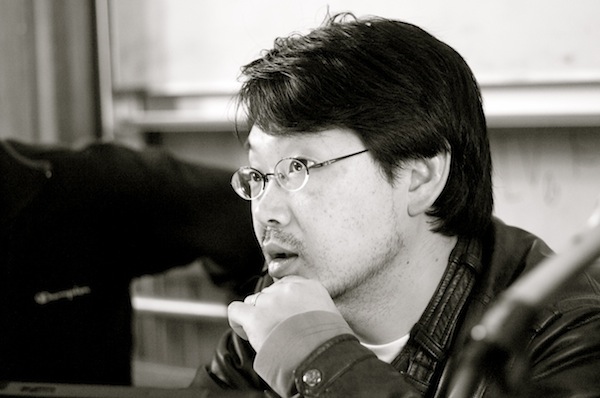
Yukihiro “Matz” Matsumoto, creator of the Ruby programming language in 1995
Have you ever wondered how computers got started and where programming languages came from?
In the beginning, Charles Babbage’s difference engine could only be made to execute tasks by changing the gears which executed the calculations. Thus, the earliest form of a computer language was physical motion. Eventually, physical motion was replaced by electrical signals when the US Government built the ENIAC in 1942. It followed many of the same principles of Babbage’s engine and hence, could only be “programmed” by presetting switches and rewiring the entire system for each new “program” or calculation. This process proved to be very tedious. (Photos)
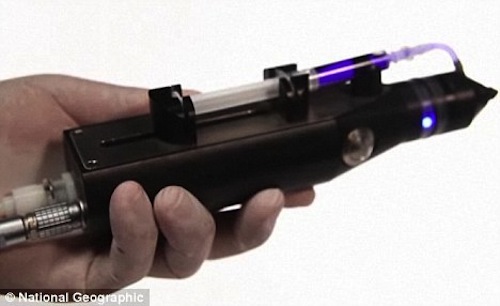
Revolutionary development: The stem cell spray gun treats burns in 1.5 hours.
Doctor Jörg Gerlach, of the University of Pittsburgh’s McGowan Institute for Regenerative Medicine has created a prototype medical device that literally sprays skin cells onto burn victims to re-grow skin.