The Ground Beneath You Is Now a Battery—And It’s Already Working

For over a century, humanity has stored electricity by pumping water uphill and letting it flow back down. It’s a clever trick—but now we’re thinking deeper. Literally.

What if we could turn the Earth itself into a rechargeable battery?

That’s exactly what a Texas-based company called Quidnet is doing. Their new technology—Geomechanical Energy Storage (GES)—uses high-pressure water injections into layers of impermeable rock to store massive amounts of energy for months, with zero leakage.

Not hours. Not days. Months.

Continue reading… “The Ground Beneath You Is Now a Battery—And It’s Already Working”
They Bleed, Therefore They Live: Mini Organs Just Crossed the Threshold of Life

For years, mini organs—organoids—have been stuck in a paradox. We could grow them. We could watch them twitch, pulse, and mimic the basic behaviors of hearts, brains, livers, and lungs. But they couldn’t survive long enough to matter.

Why? Because they didn’t bleed.

Without blood vessels, these lab-grown miracles died from the inside out—hollow promise at the core. Now, two groundbreaking studies have rewritten that fate. Scientists have finally cracked the code to vascularize organoids, breathing life into what were once biological shadows.

Continue reading… “They Bleed, Therefore They Live: Mini Organs Just Crossed the Threshold of Life”

Sunlight, a Sponge, and the End of Thirst: Scientists Unleash Scalable, Energy-Free Desalination

Forget billion-dollar desalination plants, complex filters, or energy-hungry infrastructure. The next revolution in clean water might just come from a 3D-printed sponge and the sun.

In a radical leap forward, researchers at the American Chemical Society have developed a lightweight, porous aerogel that turns salty seawater into fresh, drinkable water using nothing more than natural sunlight and a curved piece of plastic. No electricity. No pressure systems. Just a sun-powered sponge that could fit in your backpack—and possibly save millions.

Continue reading… “Sunlight, a Sponge, and the End of Thirst: Scientists Unleash Scalable, Energy-Free Desalination”

Plastic’s Chemical Jailbreak: Scientists Slash Recycling Costs with One Enzyme-Fueled Hack

The world’s dirtiest material may have just met its molecular match.

In a stunning breakthrough, scientists have unveiled a new enzymatic recycling method that turns plastic’s worst traits into profit-generating advantages—and it all hinges on a single, brilliantly simple chemical switch.

Led by researchers from the U.S. Department of Energy’s National Renewable Energy Laboratory (NREL), the University of Massachusetts Lowell, and the University of Portsmouth, the new process promises to break down PET—the world’s most-used plastic—faster, cheaper, and cleaner than ever before. Forget decades of hype around theoretical recycling utopias. This one actually works.

Continue reading… “Plastic’s Chemical Jailbreak: Scientists Slash Recycling Costs with One Enzyme-Fueled Hack”

Google’s AI Is Decoding the Genetic “Dark Matter” That Controls Us All

For years, scientists stared at the human genome and shrugged. We mapped it, sequenced it, even gave it a name—the Human Genome Project. But when it came to understanding what most of that DNA actually does, we were flying blind. Only about 2% of our genetic code directly tells cells which proteins to build. The rest—an eerie 98%—was long dismissed as “junk.”

Not anymore.

Google DeepMind just dropped a molecular bombshell: AlphaGenome, an AI that doesn’t just read your DNA—it predicts how the darkest corners of it control your body’s machinery. It’s not just looking at genes. It’s reading the switches, regulators, silencers, enhancers, and hidden messages that tell those genes when, where, and how to act.

Continue reading… “Google’s AI Is Decoding the Genetic “Dark Matter” That Controls Us All”

Air. Water. Anywhere: Students Build a 3D-Printed Drone That Flies, Swims—and Breaks the Rules of Physics

In a Danish lab filled with student prototypes and secondhand electronics, something extraordinary has taken flight—and dived straight into the pool.

A team of applied industrial electronics students at Aalborg University has pulled off a jaw-dropping feat: a fully 3D-printed hybrid drone that takes off, plunges underwater, swims like a mechanical fish, and then explodes back into the air—no pause, no manual switch, just seamless transition between two fundamentally different worlds.

Forget what you know about drones. This isn’t a toy with wings. It’s a shape-shifting robot that obeys no single environment and no conventional engineering playbook.

Continue reading… “Air. Water. Anywhere: Students Build a 3D-Printed Drone That Flies, Swims—and Breaks the Rules of Physics”

The 5-Minute Fix: Scientists Build a Chemical Assassin That Hunts and Kills PFOA in Water

For decades, PFOA—one of the most notorious “forever chemicals”—has been quietly infiltrating our water, bodies, and food supply. Nearly indestructible, nearly unavoidable, and linked to a range of serious health issues, it’s the molecular villain no one invited but everyone drinks.

Now, scientists at the University of Utah have developed a material that doesn’t just remove it—it hunts it down with chemical precision and destroys it in five minutes flat.

Their breakthrough? A lab-engineered, crystalline substance known as a metal-organic framework (MOF) that acts like a molecular spiderweb. When water flows through it, PFOA molecules get snagged and trapped by electrostatic force. But here’s the kicker: the same material glows when PFOA is present. It doesn’t just clean your water—it tells you when it’s dirty.

Continue reading… “The 5-Minute Fix: Scientists Build a Chemical Assassin That Hunts and Kills PFOA in Water”

Robots Are Learning to Taste: How 3D Laser Scanners Are Teaching Machines to Harvest Like Humans

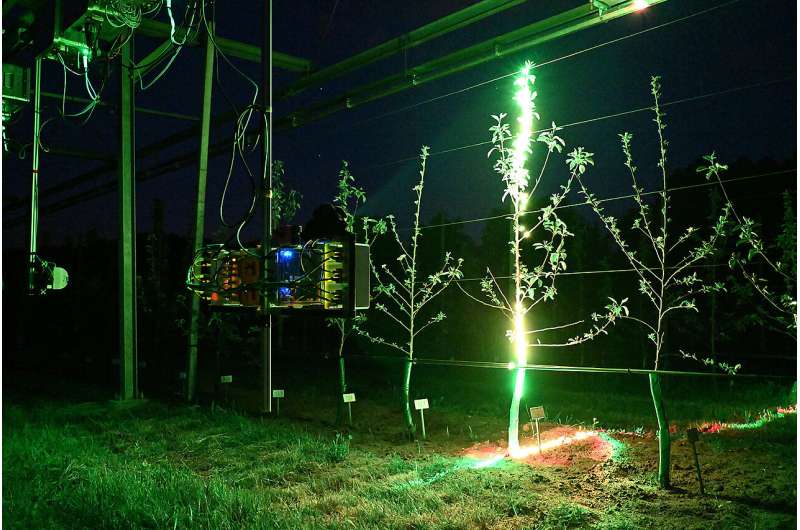
The future of farming isn’t about bigger tractors—it’s about smarter sensors. And now, robots are getting their first real taste of fruit.

In a field outside Potsdam, Germany, something unusual is happening. A robotic system, armed with a 3D laser scanner developed by Professor Andreas Nüchter’s team at Julius-Maximilians-Universität Würzburg, is circling rows of apple trees—not to observe, but to understand. This isn’t your typical machine vision. It’s multispectral precision scanning designed to read water content, analyze ripeness, and make nuanced decisions that were once the exclusive domain of skilled human pickers.

And that’s exactly the point.

Continue reading… “Robots Are Learning to Taste: How 3D Laser Scanners Are Teaching Machines to Harvest Like Humans”

You’re Already Being Tracked—And You Don’t Even Need to Carry a Device

Surveillance has officially gone invisible.

Cameras? Optional. Phones? Irrelevant. Wearables? Outdated. The next wave of biometric tracking doesn’t need your consent—or even your attention. It just needs Wi-Fi.

In a breakthrough that feels like it was lifted from a cyberpunk script, researchers at La Sapienza University of Rome have created WhoFi, a system that uses nothing more than the way your body bends Wi-Fi signals to identify and track you with up to 95.5% accuracy. No phone in your pocket. No camera in the corner. Just the ambient hum of everyday wireless networks quietly logging your biological fingerprint.

Continue reading… “You’re Already Being Tracked—And You Don’t Even Need to Carry a Device”

Foam with a Brain: EPFL’s Programmable Skeletons Are Redefining How Robots Move

What if you could 3D print muscle, bone, and tissue—not in separate parts, but all at once, using a single material? That’s exactly what researchers at EPFL in Switzerland have done. And they didn’t stop at theory—they built a robot elephant to prove it.

In a bold leap for robotics design, the team from EPFL’s Computational Robot Design and Fabrication Lab has created a programmable lattice structure made entirely from foam. Not multiple materials. Not assembled parts. Just foam—digitally architected at the cellular level to behave like muscle, tendon, or bone, depending on how you arrange it.

Continue reading… “Foam with a Brain: EPFL’s Programmable Skeletons Are Redefining How Robots Move”

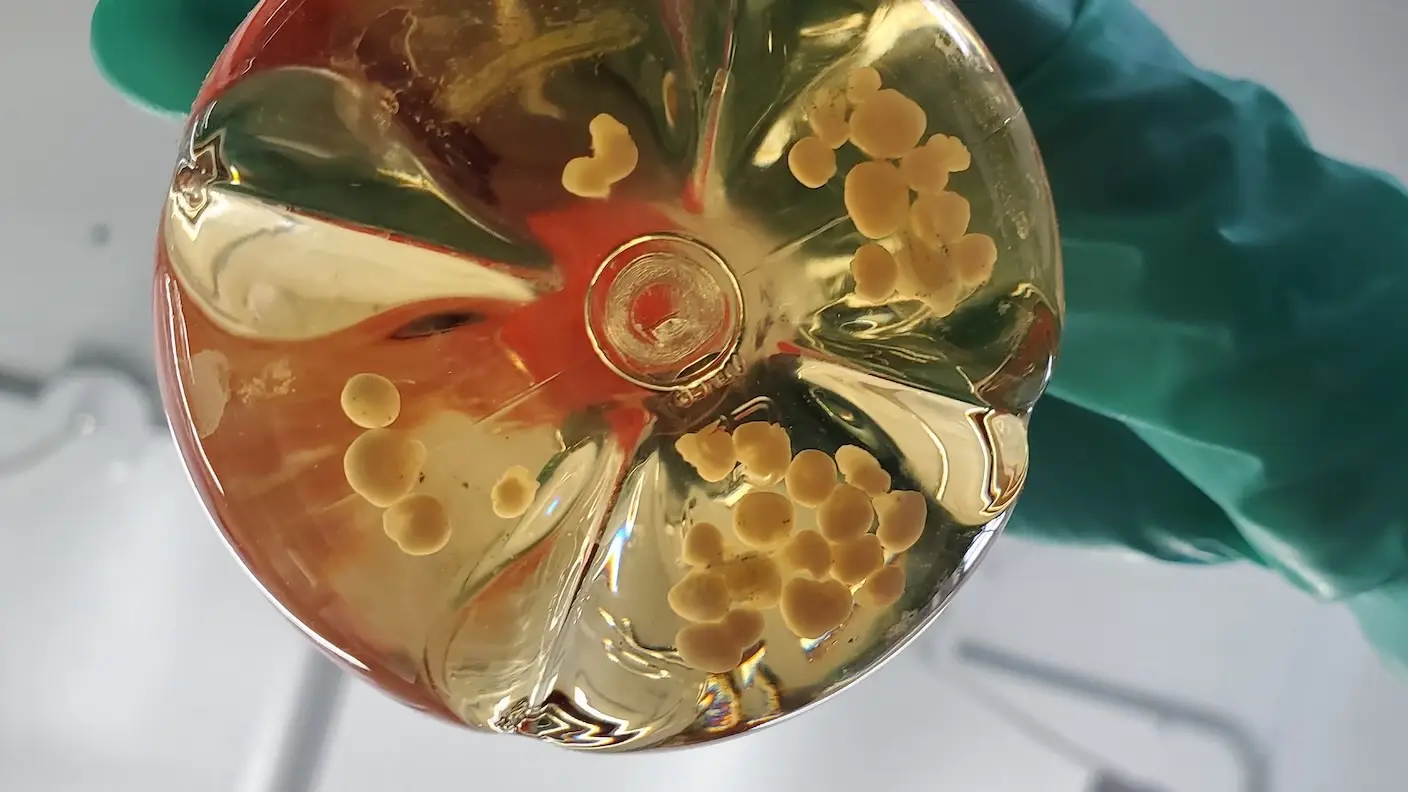
Power from the Petri Dish: 3D-Printed Biobatteries Run on Bacteria, Not Lithium

In a world hooked on lithium, rare earth metals, and disposable power cells, a quiet revolution just emerged from a university lab in upstate New York—and it runs on stainless steel and bacteria.

At Binghamton University, Professor Seokheun “Sean” Choi and his team have built one of the most powerful bacteria-based biobatteries to date. But the breakthrough didn’t come from exotic materials or billion-dollar backing. It came from teaming up with the guy downstairs.

Continue reading… “Power from the Petri Dish: 3D-Printed Biobatteries Run on Bacteria, Not Lithium”

The DNA Shield You Didn’t Know You Needed: How Scientists Are Now Fortifying Life’s Fragile Code

Tucked deep inside every cell is a time bomb we rarely talk about—mitochondrial DNA. Unlike its nuclear cousin, this tiny genetic engine doesn’t have much of a repair crew. When it breaks, it breaks hard. And that microscopic failure can cascade into inflammation, tissue damage, and a long list of chronic diseases.

But now, a team of researchers at UC Riverside has built something straight out of a cellular science thriller: a chemical shield that locks onto mitochondrial DNA before it unravels. It doesn’t just repair damage—it prevents the loss entirely.

Meet mTAP, a mitochondria-targeting molecular sentinel that doesn’t just react to cellular stress. It outsmarts it.

Continue reading… “The DNA Shield You Didn’t Know You Needed: How Scientists Are Now Fortifying Life’s Fragile Code”
Discover the Hidden Patterns of Tomorrow with Futurist Thomas Frey
Unlock Your Potential, Ignite Your Success.

By delving into the futuring techniques of Futurist Thomas Frey, you’ll embark on an enlightening journey.

Learn More about this exciting program.