Q-CTRL’s new AI toolset allows quantum computers to self-optimize


The toolset runs on Q-CTRL’s flagship BOULDER OPAL software

by: Praharsha Anand

Q-CTRL has announced a new AI-based toolset to facilitate the unassisted performance optimization of quantum computers.

By and large, quantum algorithms are susceptible to errors, creating a substantial barrier to progress and advancement in quantum computing. Q-CTRL’s new automated closed-loop hardware optimization tool uses custom AI agents to run quantum algorithms, resulting in fewer errors and better overall performance for end-users.

Integrated with Q-CTRL’s flagship BOULDER OPAL software for developers and R&D teams, automated closed-loop hardware optimization is also trained to obtain new experimental data/results from quantum computers while simultaneously running optimizations for algorithms. It can be used as a standalone tool or in tandem with a machine-learner online optimization package (M-LOOP) that manages quantum experiments autonomously.

Continue reading… “Q-CTRL’s new AI toolset allows quantum computers to self-optimize”
IBM Promises 100x Faster Quantum Computing in 2021

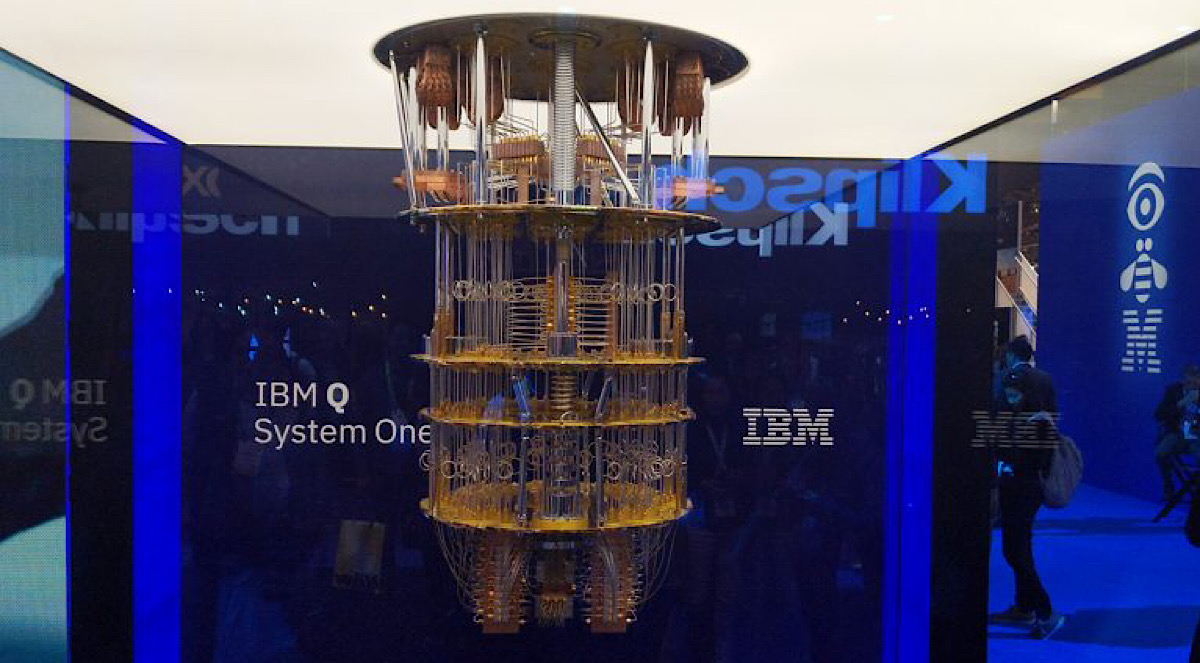
IBM has been scaling up its own quantum computing efforts over the past few years, and the company is now claiming it’ll deliver a 100x improvement in certain workloads. The company isn’t going to deliver this improvement solely through hardware, but through the deployment of new software tools, algorithms, and models.

Late last year, IBM Fellow and VP of Quantum Computing, Jay Gambetta, published a graph showing IBM’s increased quantum volume on the same hardware.

Continue reading… “IBM Promises 100x Faster Quantum Computing in 2021”

Microsoft opens its Azure quantum computer cloud service to the public

An ion chamber houses the brains of a Honeywell quantum computer.

By Stephen Shankland

Azure Quantum shows the growing commercial possibilities for the revolutionary form of computing.

Microsoft’s Azure Quantum service opened to the public on Monday, bringing the radically different computing technology to the world’s second-biggest cloud computing service. 

Azure Quantum includes quantum computers made by Honeywell and IonQ. These machines use a design called an ion trap that employs electrically charged atoms as qubits, the fundamental element used by quantum computers to store and process information. Microsoft plans to add another design by Quantum Circuits, whose qubits are supercooled electrical circuits, in the future.

Microsoft will eventually add its own homegrown quantum computers to the service. Its approach, called topological qubits, promises qubits that are more stable than those used in rival designs and are designed to allow quantum computations to run longer. Unlike rival quantum computer makers, Microsoft hasn’t yet demonstrated that technology, though.

The opening of Azure Quantum marks the latest step in the commercialization of quantum computing, which promises to tackle problems that are out of conventional machines’ reach. BMW, Airbus and Roche are among those trying out quantum computers, although it will be years before it’s practical for more than research projects.

Continue reading… “Microsoft opens its Azure quantum computer cloud service to the public”

Google’s quantum computing division will help develop new drugs

By Steve Dent

Google's-Quantum-computing-division-develop-new-drugs
A handout picture from October 2019 shows Sundar Pichai and Daniel Sank (R) with one of Google’s Quantum Computers in the Santa Barbara lab, California, U.S. Picture taken in October 2019. .

It teamed with Boehringer Ingelheim to do molecular dynamics simulations. 

Google’s Quantum AI division is teaming with pharmaceutical company Boehringer Ingelheim to develop new types of drugs, the companies announced. The idea is to research and develop quantum computing tech to do “molecular dynamics” simulations, or the study of how molecules and atoms move. Boehringer Ingelheim has developed a new quantum lab for the three-year project, saying it’s the “first pharmaceutical company worldwide to join forces with Google in quantum computing.”

Continue reading… “Google’s quantum computing division will help develop new drugs”

IBM ‘super-fridge’ aims to solve quantum computer cooling problem

The world’s first super fridge for a 1-million-qubit quantum computer.

IBM has ambitions to build a million-qubit quantum computer. To get there, it is building a fridge bigger than anything commercially available. 15 December 2020 

  • IBM has set out a roadmap to develop larger qubit systems – from its current quantum computer of 64 qubits to a 1-million-qubit.
  • To move to a million-plus qubit machine, IBM is developing a dilution refrigerator, which would be larger than any currently available commercially

Say GoldenEye and the 1995 James Bond movie comes to mind, not a giant refrigerator.

But that’s the name computing giant IBM has given to a new refrigeration system in development designed to house the world’s first 1-million-qubit quantum computer.

At 10 feet tall and six feet wide, GoldenEye will go to a temperature of around 15 milli-kelvins or -459 Fahrenheit – or colder than outer space. These are the temperatures required to slow down the movement of atoms, so qubits can hold value. 

Continue reading… “IBM ‘super-fridge’ aims to solve quantum computer cooling problem”

CHINA CLAIMS BREAKTHROUGH IN QUANTUM COMPUTING RACE


By Preetipadma

China-claims-breakthrough-quantum-computing

The trade war rivalry between USA and China is well known. However, since the past few years, both the nations are caught up in a heated tech race towards supremacy. This is also reflected with China putting its best to lead in terms of quantum computing power too.

Last year, Google grabbed headlines, when it announced Sycamore quantum computerhad achieved quantum advantage—formerly known as quantum supremacy. Sycamore could perform computation in 200 seconds that would take the fastest supercomputers about 10,000 years. Recently, China developed a quantum computing system which is reported to be 10 billion times faster than Google’s Sycamore. Researchers from the University of Science and Technology of China explained that this quantum computer prototype named Jiuzhang delivered results in minutes calculated to take more than 2 billion years of effort by the world’s third-most-powerful supercomputer.

Continue reading… “CHINA CLAIMS BREAKTHROUGH IN QUANTUM COMPUTING RACE”

Chinese quantum computer completes 2.5-billion-year task in minutes

By Michael Irving

chinese-quantum-computer-completes-2.5-billion-year-task
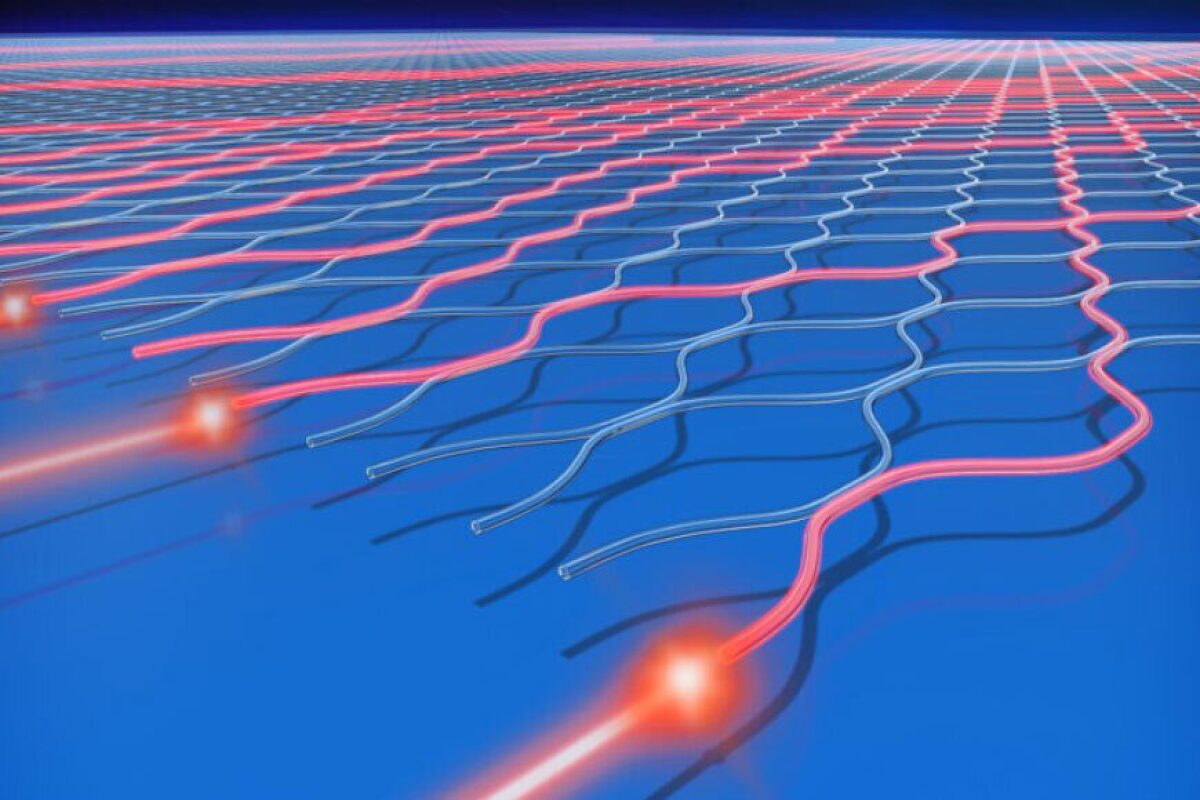
A diagram of an optical circuit, where photons (red) are sent through a maze of beam splitters and mirrors and a quantum computer like Jiuzhang calculates the output

Researchers in China claim to have achieved quantum supremacy, the point where a quantum computer completes a task that would be virtually impossible for a classical computer to perform. The device, named Jiuzhang, reportedly conducted a calculation in 200 seconds that would take a regular supercomputer a staggering 2.5 billion years to complete.

Traditional computers process data as binary bits – either a zero or a one. Quantum computers, on the other hand, have a distinct advantage in that their bits can also be both a one and a zero at the same time. That raises the potential processing power exponentially, as two quantum bits (qubits) can be in four possible states, three qubits can be in eight states, and so on.

That means quantum computers can explore many possibilities simultaneously, while a classical computer would have to run through each option one after the other. Progress so far has seen quantum computers perform calculations much faster than traditional ones, but their ultimate test would be when they can do things that classical computers simply can’t. And that milestone has been dubbed “quantum supremacy.”

Continue reading… “Chinese quantum computer completes 2.5-billion-year task in minutes”

Chinese photonic quantum computer demonstrates quantum supremacy

by Bob Yirka

Chinese-Photopic-quantum-computer-supremacy

A team of researchers affiliated with several institutions in China has built and tested a photonic quantum computer that demonstrates quantum supremacy. In their paper published in the journal Science, the group describes their computer, which they call Jiuzhang, and how well it performed while conducting Gaussian boson sampling.

Quantum computers have been in the news lately as scientists try to determine if they can meet expectations.

Quantum computers could vastly outperform conventional machines on certain tasks. The goal is to achieve what has come to be known as” quantum supremacy”—where a quantum computer can outperform conventional computers on at least one type of task.

Until now, only one computer has ever achieved this feat—Google’s Sycamore device. And because the field is still so new, researchers around the world are working on vastly different designs. Sycamore was based on qubits represented by superconducting materials. In this new effort, the team in China has developed a photon-based quantum computer capable of carrying out a single specific type of calculation—boson sampling.

Continue reading… “Chinese photonic quantum computer demonstrates quantum supremacy”

New approach to circuit compression could deliver real-world quantum computers years ahead of schedule

1BA0DCF4-06D5-4946-A23B-C054CF21F722

Compression of a circuit that has an initial volume of 882 using the proposed method. The reduced circuit has a volume of 420, less than half its original volume.

A major technical challenge for any practical, real-world quantum computer comes from the need for a large number of physical qubits to deal with errors that accumulate during computation. Such quantum error correction is resource-intensive and computationally time-consuming. But researchers have found an effective software method that enables significant compression of quantum circuits, relaxing the demands placed on hardware development.

Quantum computers may still be far from a commercial reality, but what is termed ‘quantum advantage’—the ability of a quantum computer to compute hundreds or thousands of times faster than a classical computer-has indeed been achieved on what are called Noisy Intermediate-Scale Quantum (NISQ) devices in early proof-of-principle experiments.

Continue reading… “New approach to circuit compression could deliver real-world quantum computers years ahead of schedule”

Quantum sensors could let autonomous cars ‘see’ around corners

414D2E82-9FC2-40C1-BE97-D13018845410

High-precision metrology based on the peculiarities of the subatomic world

Quantum computers get all the hype, but quantum sensors could be equally transformative, enabling autonomous vehicles that can “see” around corners, underwater navigation systems, early-warning systems for volcanic activity and earthquakes, and portable scanners that monitor a person’s brain activity during daily life.

Quantum sensors reach extreme levels of precision by exploiting the quantum nature of matter—using the difference between, for example, electrons in different energy states as a base unit. Atomic clocks illustrate this principle. The world time standard is based on the fact that electrons in cesium 133 atoms complete a specific transition 9,192,631,770 times a second; this is the oscillation that other clocks are tuned against. Other quantum sensors use atomic transitions to detect minuscule changes in motion and tiny differences in gravitational, electric and magnetic fields.

There are other ways to build a quantum sensor, however. For example, researchers at the University of Birmingham in England are working to develop free-falling, supercooled atoms to detect tiny changes in local gravity. This kind of quantum gravimeter would be capable of detecting buried pipes, cables and other objects that today can be reliably found only by digging. Seafaring ships could use similar technology to detect underwater objects.

Continue reading… “Quantum sensors could let autonomous cars ‘see’ around corners”

Quantum computing may make current encryption obsolete, a quantum internet could be the solution

Quantum computer. Big data. Abstract physics concept with grid quantum computer. Learning artificial intelligence element. Cryptography infographic.

Sometime between now and 2030, the mathematical system that protects all of digital communications may fall victim to a superior quantum system. Preparing for that time may require us to reinvent the network itself.

“The quantum threat is basically going to destroy the security of networks as we know them today,” declared Bruno Huttner, who directs strategic quantum initiatives for Geneva, Switzerland-based ID Quantique. No other commercial organization since the turn of the century has been more directly involved in the development of science and working theories for the future quantum computer network.

Quantum computers offer great promise for cryptography and optimization problems. ZDNet explores what quantum computers will and won’t be able to do, and the challenges we still face.

One class of theory involves cryptographic security. The moment a quantum computer (QC) breaks through the dam currently held in place by public-key cryptography (PKC), every encrypted message in the world will become vulnerable. That’s Huttner’s “quantum threat”.

Continue reading… “Quantum computing may make current encryption obsolete, a quantum internet could be the solution”

Honeywell announces its H1 quantum computer with 10 qubits

20ED711E-2FB9-4D02-9CD8-AC7F00790E0F

Honeywell, which was a bit of a surprise entrant into the quantum computing space when it announced its efforts to build the world’s most powerful quantum computer earlier this year, today announced its newest system: the Model H1. The H1 uses trapped-ion technology and features 10 fully connected qubits that allow it to reach a quantum volume of 128 (where quantum volume [QV] is a metric of the overall compute power of a quantum computer, no matter the underlying technology). That’s higher than comparable efforts by IBM, but also well behind the QV 4,000,000 machine IonQ says it was able to achieve with 32 qubits.

The H1 will be available to enterprises through the Azure Quantum platform and the company says that it is partnering with Zapata Computing and Cambridge Quantum Computing on this project.

When it first announced its efforts, Honeywell said that its experience in building control systems allowed it to build an advanced ion trap and more uniform qubits that hence make error correction easier.

Continue reading… “Honeywell announces its H1 quantum computer with 10 qubits”

Discover the Hidden Patterns of Tomorrow with Futurist Thomas Frey
Unlock Your Potential, Ignite Your Success.

By delving into the futuring techniques of Futurist Thomas Frey, you’ll embark on an enlightening journey.

Learn More about this exciting program.