U.S. Firms Team Up to Revolutionize Manufacturing with Apollo Humanoid Robots

Two U.S.-based companies, Apptronik and Jabil, have joined forces to advance humanoid robotics by incorporating Apollo humanoid robots into manufacturing processes. This partnership between Apptronik, an AI-powered robotics firm from Austin, Texas, and Jabil, a Florida-based leader in engineering, manufacturing, and supply chain solutions, aims to create a scenario where Apollo robots will build and assemble other Apollo robots.

The collaboration’s initial pilot program will see newly produced Apollo humanoid robots tested within Jabil’s manufacturing setup. This real-world validation phase will focus on ensuring that the humanoid robots can perform various manufacturing tasks and help streamline production. The goal is not only to fine-tune Apollo’s design and capabilities but also to enable its mass production for widespread adoption.

Continue reading… “U.S. Firms Team Up to Revolutionize Manufacturing with Apollo Humanoid Robots”

China’s Tiangong Space Station Explores Human-Robot Collaboration for Future Space Missions

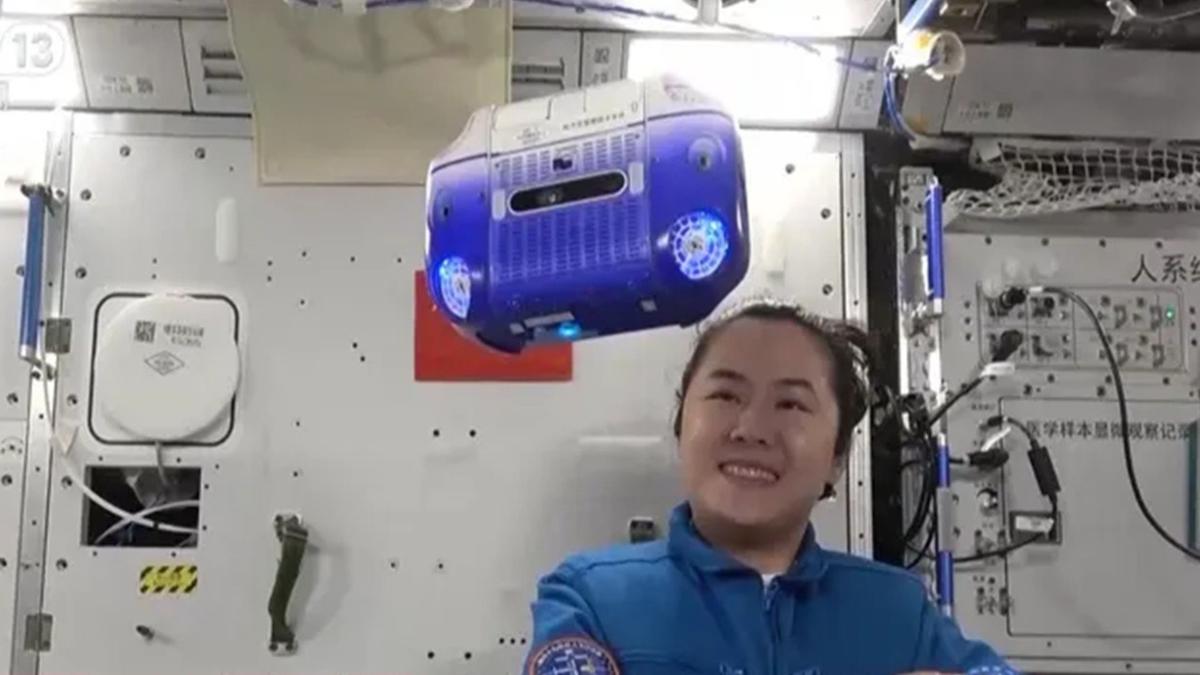
As space exploration advances, the role of robots in assisting astronauts with complex tasks aboard space stations is becoming increasingly crucial. On China’s Tiangong space station, astronauts are conducting groundbreaking experiments to assess how human-robot collaboration can improve efficiency in space missions, especially in the unique microgravity environment.

Currently, the Shenzhou 19 crew—comprising astronauts Cai Xuzhe, Song Lingdong, and Wang Haoze—are working alongside an intelligent robot named Xiao Hang. This robot has been specifically designed to operate in microgravity, performing tasks such as capturing images and assisting astronauts in a variety of ways.

Continue reading… “China’s Tiangong Space Station Explores Human-Robot Collaboration for Future Space Missions”

China Integrates Humanoid Robots into Elderly Care Amid Demographic Shifts

In response to the growing challenges posed by an aging population, China has unveiled plans to incorporate humanoid robots into its elderly care services. This initiative, announced by the Chinese State Council on Tuesday, is part of broader policy measures aimed at harnessing advanced technologies to address the country’s aging demographics.

The new guidelines, issued by the Communist Party of China Central Committee and the State Council on December 30, 2024, highlight the development of humanoid robots, brain-computer interfaces, and artificial intelligence (AI) solutions tailored to elder care. These measures aim to establish a robust nationwide elderly care service network by 2029 and ensure that by 2035, all senior citizens will have access to essential care services.

Continue reading… “China Integrates Humanoid Robots into Elderly Care Amid Demographic Shifts”

HOT3D Dataset: Advancing Human-Robot Interaction through Enhanced Hand-Object Tracking

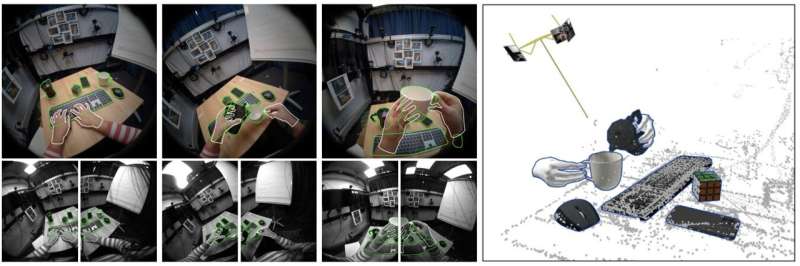
While humans naturally use their hands for communication and manipulating objects, current robotic systems often struggle with complex manual tasks. To bridge this gap, researchers have increasingly turned to machine learning models that process images of humans performing manual activities. These models aim to enhance robotic manipulation and, by extension, improve robot interactions with both humans and the objects in their environment. In addition to this, similar models could further enhance human-machine interfaces, including augmented and virtual reality (AR and VR) systems. However, to train these machine learning systems effectively, access to high-quality, annotated datasets showcasing human interactions with objects is essential.

Meta Reality Labs recently unveiled a promising new dataset called HOT3D, which could accelerate machine learning research focused on analyzing hand-object interactions. This dataset, introduced in a paper published on the arXiv preprint server, contains over 833 minutes of high-quality ego-centric 3D video footage. The videos capture human users engaging with a variety of objects from an egocentric perspective, meaning the footage mirrors what the user would see as they perform manual tasks.

Continue reading… “HOT3D Dataset: Advancing Human-Robot Interaction through Enhanced Hand-Object Tracking”

Pudu Technology Inc. Unveils Full-Sized Bipedal Humanoid Robot PUDU D9

Pudu Technology Inc., a Shenzhen-based robotics company, recently unveiled its first full-sized bipedal humanoid robot, the PUDU D9. Set to be available for pre-sale through its official website, the company envisions the PUDU D9 as a step toward achieving “commercially viable embodied intelligence.”

Felix Zhang, founder and CEO of Pudu Robotics, highlighted the company’s commitment to customer-centric innovation. “Customer centricity has always been at the core of PUDU’s values. Moving forward, we will continue to explore technology driven by customer needs and pain points,” he said. Zhang emphasized that the company’s deep experience in the commercial service sector will be crucial in advancing semi-humanoid and humanoid robots, making robotic services more accessible to a broader audience.

Continue reading… “Pudu Technology Inc. Unveils Full-Sized Bipedal Humanoid Robot PUDU D9”

South Korean Researchers Develop Microrobots That Collaborate Like Ants for Complex Tasks

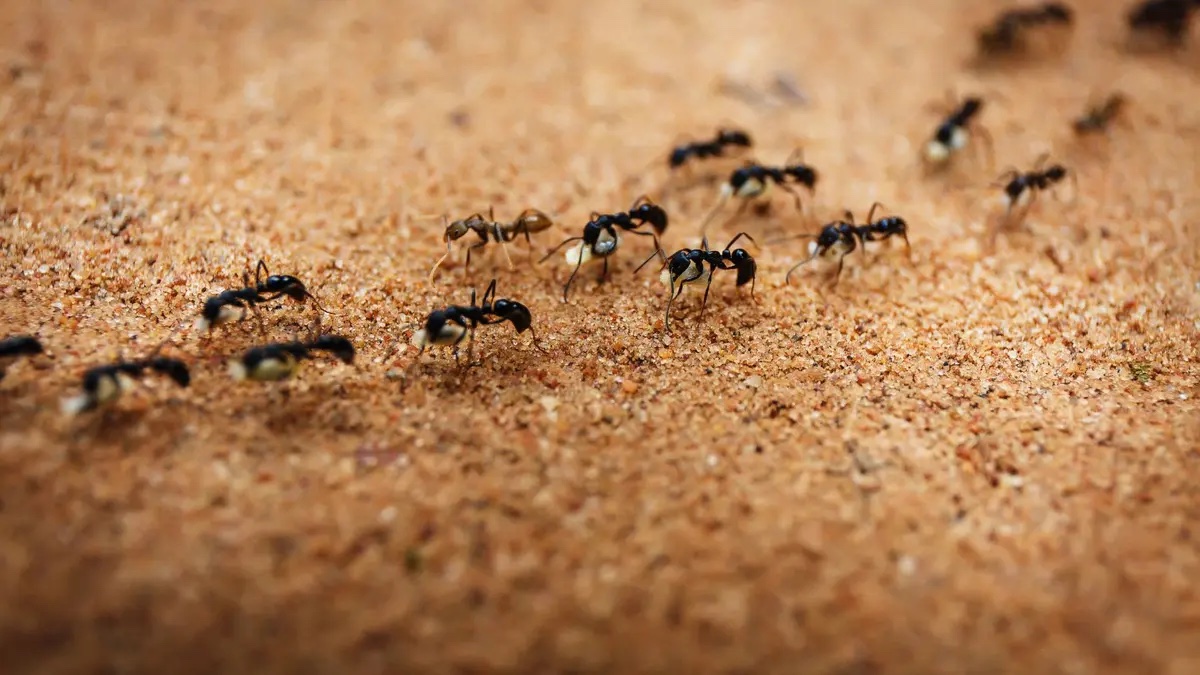
In a remarkable breakthrough, researchers at Hanyang University in Seoul, South Korea, have developed tiny magnetic robots that work together like ants to accomplish impressive tasks—moving and lifting objects much larger than themselves. This innovative system of microrobot swarms, powered by rotating magnetic fields, could open up new possibilities for a variety of complex applications, including minimally invasive medical treatments and environmental tasks in challenging conditions.

The research team, led by Jeong Jae Wie from the Department of Organic and Nano Engineering at Hanyang University, is harnessing the collective power of these robots, drawing inspiration from nature’s own cooperative workers: ants. “The high adaptability of microrobot swarms to their surroundings and their ability to perform tasks autonomously were surprising,” said Wie. “These robots work together to accomplish goals, much like how ants collaborate to build bridges or survive floods.”

Continue reading… “South Korean Researchers Develop Microrobots That Collaborate Like Ants for Complex Tasks”

Chinese Startup MagicLab Unveils Collaborative Humanoid Robots for Industrial Applications

MagicLab, a Chinese robotic startup founded in December 2023, has made significant strides in humanoid robotics by introducing a fleet of advanced robots designed for industrial environments. The company, also known as Magic Atom Robotics Technology, has demonstrated its cutting-edge MagicBot humanoid robots performing a variety of complex tasks in a factory setting.

In a recent video, the MagicBots showcased their versatility by executing multiple operational tasks including product inspection, material handling, parts picking and placing, scanning, and warehouse management. The robots’ most impressive feature is their ability to collaborate efficiently, with multiple units working together in synchronized operations.

Continue reading… “Chinese Startup MagicLab Unveils Collaborative Humanoid Robots for Industrial Applications”

New Record Set for Fastest Swimming Soft Robot Inspired by Manta Rays

A team of researchers at North Carolina State University (NC State) has set a new speed record for an aquatic soft robot, doubling its speed from 3.74 to 6.8 body lengths per second. This breakthrough, inspired by the efficient movement of manta rays, also enhances the robot’s energy efficiency and expands its ability to swim throughout the entire water column—an improvement over the previous model, which was limited to surface swimming.

The soft robot features fins designed based on the unique fluid dynamics of manta rays. These fins are made from a material that remains stable when spread wide, and they are attached to a flexible silicone body. The design includes an air-filled chamber connected to the fins, which bend when inflated, mimicking the downward stroke of a manta ray’s fin flap. Once the air is released, the fins snap back to their original position, storing energy and enabling rapid actuation with just one actuator.

Continue reading… “New Record Set for Fastest Swimming Soft Robot Inspired by Manta Rays”

Cornell’s Groundbreaking Miniature Walking Robots Could Revolutionize Microscopy and Force Measurement

Researchers at Cornell University have developed the smallest walking robot yet, opening up new possibilities for advanced imaging and force measurements at the microscopic scale. These tiny robots, which are just 5 to 2 microns in size, can maneuver independently, interact with light waves, and perform intricate tasks such as moving across tissue samples to take images and measure forces at a scale previously impossible for conventional microscopes.

Led by Paul McEuen, the John A. Newman Professor of Physical Science Emeritus at Cornell’s College of Arts and Sciences, the team’s work represents a significant leap in both robotics and optical technology. The paper, Magnetically Programmed Diffractive Robotics, was recently published in Science, with McEuen as the corresponding author. Conrad Smart, a researcher at Cornell’s Laboratory of Atomic and Solid State Physics (LASSP), and Tanner Pearson, Ph.D. ’22, are co-first authors.

Continue reading… “Cornell’s Groundbreaking Miniature Walking Robots Could Revolutionize Microscopy and Force Measurement”

China’s Tiangong: The World’s First Full-Size Electric Running Robot Goes Open Source

Tiangong, the world’s first full-size, purely electric humanoid robot capable of running, has officially gone open source, signaling a major leap forward in the field of robotics. This move is intended to foster secondary development, accelerate the integration of humanoid robots into daily life, and encourage broader collaboration in the robotics community.

Developed by the state-supported Beijing Humanoid Robot Innovation Center, Tiangong is a versatile and highly capable robot that can maintain a steady pace of 3.73 miles per hour (6 kilometers per hour). The robot was unveiled in the Beijing Economic-Technological Development Area in 2024, where it has already been deployed for practical tasks like power plant patrols and warehouse pick-and-place operations.

Continue reading… “China’s Tiangong: The World’s First Full-Size Electric Running Robot Goes Open Source”

Hiroshi Ishiguro’s Android Doppelganger: The Future of Life-like Robotic Clones

Have you ever wondered if a robotic duplicate of yourself—with a similar face, hair, and expressions—could one day exist? Hiroshi Ishiguro, a Japanese inventor, has turned this idea into a reality. Over the past 18 years, he has developed six robotic clones of himself. His latest creation, Geminoid HI-6, is an eerily accurate replica of Ishiguro, mirroring his appearance and even replicating his facial expressions.

Currently displayed at Osaka University, the Geminoid HI-6 goes beyond appearances. Ishiguro has equipped it with a large language model, plus knowledge from ten of his books and numerous media interviews. “This version is conversational,” explains Ishiguro. Originally, he used the robot to deliver lectures in his absence. Now, however, it can engage with audiences and respond to questions after a lecture, enhancing the sense of interaction and presence.

Continue reading… “Hiroshi Ishiguro’s Android Doppelganger: The Future of Life-like Robotic Clones”

Unitree G1 Sets New Benchmark with Record-Setting Long Jump for Humanoid Robots

Unitree’s G1 humanoid robot has achieved a remarkable feat in agility, setting a new standing long jump record for humanoid robots. In a recently released video, the G1 showcases its advanced performance, achieving a 4.6-foot (1.4 meters) standing long jump—a significant milestone for humanoid robots of its size. Standing at only 1.32 meters tall, the G1 boasts cutting-edge joints with 23 to 43 degrees of freedom and a maximum torque of 120 Nm. The video also highlights features of Unitree’s Go2 robot dog, demonstrating the company’s innovation across various robot models.

In addition to the G1’s jumping capability, Unitree has made strides in humanoid speed with its H1 V3.0 Evolution, which set a Guinness World Record in March as the fastest full-sized humanoid robot, reaching speeds of 7.38 mph on level ground. The G1, retailing at $16,000, is currently available for educational, research, and industrial use, making it accessible to a broad range of applications.

Continue reading… “Unitree G1 Sets New Benchmark with Record-Setting Long Jump for Humanoid Robots”
Discover the Hidden Patterns of Tomorrow with Futurist Thomas Frey
Unlock Your Potential, Ignite Your Success.

By delving into the futuring techniques of Futurist Thomas Frey, you’ll embark on an enlightening journey.

Learn More about this exciting program.