The death of the department store and the American middle class

By Jason Del Rey

death-of-department-store-middle-class-1
The collapse of America’s middle class crushed department stores. Amazon and the pandemic are the final blows.

In a New Jersey suburb seven miles west of Midtown Manhattan, the American Dream is on shaky ground.

The Dream in question isn’t the mythological notion that upward social mobility is within reach for all hardworking Americans. It’s a $5 billion, 3 million-square-foot shopping and entertainment complex in East Rutherford featuring an indoor ski slope, an ice-skating rink, and a Nickelodeon-branded amusement park. The complex finally opened last fall, but it’s now facing huge new challenges.

The development’s complicated 17-year history, marked by ownership changes, false starts, and broken promises, had already put American Dream in a precarious situation. The Covid-19pandemic hitting in March made things much worse. Whether the mall makes it in the long term will hinge in part on how it deals with the collapse of three of the marquee department stores that were to anchor the complex and draw foot traffic — Barneys New York, Lord & Taylor, and Century 21 — which all have gone bankrupt and closed, or are planning to close all their stores in the US.More than half of all mall-based department stores will close by the end of 2021

Continue reading… “The death of the department store and the American middle class”

Physicists could do the ‘impossible’: Create and destroy magnetic fields from afar

By Stephanie Pappas 

A new study circumvents a 178-year-old theory.

Scientists have figured out a way to create and cancel magnetic fields from afar. 

The method involves running electric current through a special arrangement of wires to create a magnetic field that looks as if it came from another source. This illusion has real applications: Imagine a cancer drug that could be delivered directly to a tumor deep in the body by capsules made of magnetic nanoparticles. It’s not possible to stick a magnet in the tumor to guide the nanoparticles on their journey, but if you could create a magnetic field from outside the body that centered right on that tumor, you could deliver the drug without an invasive procedure. Advertisement

The strength of a magnetic field decreases with distance from the magnet, and a theorem proven in 1842, Earnshaw’s Theorem, says that it’s not possible to create a spot of maximum magnetic field strength in empty space.

“If you cannot have a magnetic field maxima in empty space, it means you cannot create the field of a magnetic source remotely, without placing an actual [magnetic] source at the target location,” said Rosa Mach-Batlle, a physicist at the Istituto Italiano Di Tecnologia Center for Biomolecular Nanotechnologies in Italy who led the new research. 

Continue reading… “Physicists could do the ‘impossible’: Create and destroy magnetic fields from afar”

Singapore-Bound Billionaire James Dyson Plans $3.6 Billion Move Into Batteries And Robotics After Electric Car Failure


David Dawkins

The British industrial designer best-known for his distinctive and much-loved household appliances–vacuum cleaners, hand dryers and hair straighteners–also confirmed long-standing plans to move his global head office from the U.K. to Singapore.

The most likely move for Dyson is further development of the powerful, long-life batteries, intended for its much-hyped but abandoned electric vehicle project that the billionaire was forced to shelve in October last year. Although specifics are yet to be confirmed, Dyson said in a statement today that it will “double” its portfolio of products and enter entirely new fields of innovation including robotics and machine learning by 2025.

Continue reading… “Singapore-Bound Billionaire James Dyson Plans $3.6 Billion Move Into Batteries And Robotics After Electric Car Failure”

Regenerative drug summons stem cells for inflammation-free healing

By Michael Irving

Regenerative-drug-stem-cell-inflamation-1
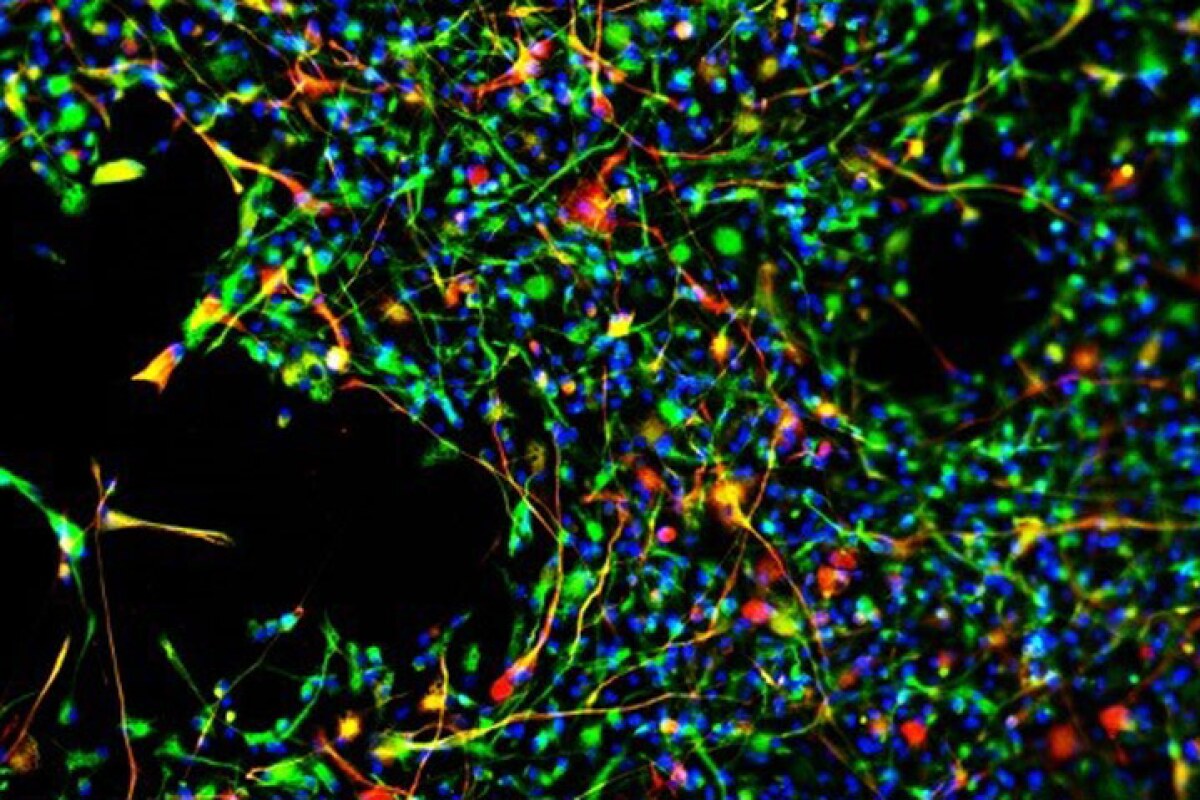
Neural stem cells maturing into brain cells in miceSanford Burnham Prebys Medical Discovery Institute

Researchers have developed a drug that can mimic inflammation signals to lure stem cells to damaged tissue, without causing any further inflammation. The technique could be a boon for regenerative medicine to treat neurological disorders.

Inflammation is the body’s natural response to injury and damage, swelling up to allow better blood flow to the area. It also acts like a “fire alarm” to attract the attention of the immune system to help the healing process, and stem cells are some of the most important responders.

In theory, inflammation could be used to lure these regenerative stem cells to injuries, but of course there are risks. Chronic inflammation underlies conditions like arthritismultiple sclerosis and Crohn’s disease, and has even been linked to cardiovascular diseasesAlzheimer’s and depression.

So for the new study, the researchers investigated ways to summon stem cells using inflammation signals without creating further inflammation. The team modified an inflammatory molecule called CXCL12, which had previously been identified as a stem cell attractor. They found that it contains two “pockets” – one that binds to stem cells and one for inflammatory signaling – so they developed a drug that maximizes the binding but minimizes the signaling.

Continue reading… “Regenerative drug summons stem cells for inflammation-free healing”

DEUTSCHE BAHN TO INTRODUCE HYDROGEN TRAIN BY 2024, CUTTING 330 TONS OF CO2 A YEAR

Helen Coffey

Deutche-Bahn-hydrogen-train
Deutsche Bahn is launching a hydrogen train

‘This is the only way for DB to be climate neutral in 2050,’ says board member

Deutsche Bahn (DB) has announced it will launch a hydrogen train and accompanying gas station by 2024, in a system set to save 330 tons of carbon emissions in one year.

The German rail company has said it will run a comprehensive year-long trial of the new system, which will replace a diesel engine running between Tübingen, Horb and Pforzheim in the southwest state of Baden-Württemberg.

DB is converting one of its maintenance workshops so that the hydrogen train can be serviced there, alongside developing a new type of filling station that means it will be just as quick to refuel as a diesel train, taking just 15 minutes.

Siemens Mobility is responsible for building the new train, while the Federal Ministry of Transport and Digital Infrastructure (BMVI) is providing the funding.

The hydrogen train should initially be able to run for 600km before needing to be refuelled, roughly equivalent to the distance between London and Edinburgh. Its top speed will be 160km/h.

Continue reading… “DEUTSCHE BAHN TO INTRODUCE HYDROGEN TRAIN BY 2024, CUTTING 330 TONS OF CO2 A YEAR”

Discovery of mechanism that switches off fat production after eating

By Rich Haridy

New research discovered lipogenesis, the process by which digested food is turned into fat by the liver, is switched off by a gut hormone released in the hours following a meal

A fascinating new study, published in the prestigious journal Nature Communications, is shedding light on a previously unknown mechanism by which a hormone released from the gut in the hours after eating effectively switches off the body’s fat production processes. The research also found this regulatory mechanism is defective in obese mice and human patients with non-alcoholic fatty liver disease.

After we eat a meal our body gets down to serious metabolic business. One key process triggered by eating is called lipogenesis, which is when our liver begins converting food into fats for storage across the body.

Continue reading… “Discovery of mechanism that switches off fat production after eating”

These solar panels don’t need the sun to produce energy

BY NATE BERG

Cloudy days pose a real problem for solar panels. But a new innovation can convert UV light to energy—even if the sun isn’t shining.

When it comes to renewable energy, solar panels are great. Their efficiency has improved and their costs have dropped to the point where it would be feasible to move every U.S. home to solar power and save money in the process.

But then the clouds roll in. The intermittency of the skies has been one of the major challenges for this otherwise valuable renewable energy source. Though we can’t control cloud cover, a new invention has found a way to work around the inconsistency of solar energy by harvesting unseen ultraviolet light that’s present no matter the weather. It could soon be turning the windows and walls of buildings into a rich new source of electricity.

Continue reading… “These solar panels don’t need the sun to produce energy”

It’s the great San Francisco exodus

BY LUCINDA SHEN AND ANNE SRADERS

The pandemic is the last straw for some San Francisco-based tech leaders. 

Startup investor Keith Rabois recently revealed plans to leave the tech hub in favor of Miami, telling Fortune, “I think San Francisco is just so massively improperly run and managed.” Now Dropbox CEO Drew Houston and Splunk CEO Douglas Merritt reportedly plan to make Austin their new permanent residences, per The Information, and Brex co-founders Henrique Duburgras and Pedro Franceschi have landed in Los Angeles.

Oh, and Palantir co-founder and 8VC Founding Partner Jon Lonsdale has decamped for Austin

Each has his own motivations—be it the city’s management, the wildfires, the high taxes, or some combination of all of the above—but here’s a notable excerpt from Lonsdale’s op-ed in the Wall Street Journal from earlier this month that explains much of his.

“Politics in the state is in many ways closed off to different ideas. We grew weary of California’s intolerant far left, which would rather demonize opponents than discuss honest differences of opinion.”

Lonsdale’s op-ed tells us more than just the fact that people are leaving the city. While more exits from San Francisco will happen, Lonsdale notes that “few top venture capitalists consider living anywhere other than California and a handful of global financial centers.” While exits from the crowded and troubled city are splashy, it’s worth meditating upon who stays to understand the full impact of the changes on the city.

Continue reading… “It’s the great San Francisco exodus”

Hyundai Gets The Green Light To Launch Fully Driverless Cars In Las Vegas

Elizabeth Blackstock

The state of Nevada has given Motional, the self-driving car company backed by Hyundai and Aptiv, the green light to debut autonomous cars in Las Vegas without a human driver behind the wheel.

Driverless vehicles are still a huge risk. Autonomous technology is still very new, and most cars that claim to be self-driving still need a human behind the wheel to prevent any accidents. Motional’s machines are Level 4 autonomy, which basically means the car can perform the basics of driving, including some safety-critical functions, without driver input. But it’s still not equivalent to a human driver, and the car isn’t capable of predicting and handling every scenario it can run into on the road.

There are only a handful of companies who have debuted driverless cars on public roads, with Waymo and Yandex being the two largest. Motional is looking to come in and further develop the technology while still in its incipient stages.

That doesn’t mean we’re going to see these cars on the road immediately — it just means that, when the company wants to do so, it can.

Continue reading… “Hyundai Gets The Green Light To Launch Fully Driverless Cars In Las Vegas”

MIT neural network knows when it can be trusted


Shane McGlaun
 

Deep learning neural networks are artificial intelligence systems that are being used for increasingly important decisions. Deep learning neural networks are used for tasks as varied as autonomous driving to diagnosing medical conditions. This type of network excels at recognizing patterns in large and complex datasets to help with decision-making.

One big challenge is determining if the neural network is correct. Researchers at MIT and Harvard University have developed a quick way for a neural network to churn through data and provide a prediction along with the neural network’s confidence level in its answer. Researchers on the project believe that their system could save lives since deep learning is already deployed in the real world.

Currently, uncertainty estimation for neural networks tends to be computationally expensive and too slow for split-second decisions. The approach devised by the researchers is called “deep evidential regression” and speeds the process up, potentially leading to safer outcomes. Researchers on the project say we need the ability to have high-performance models and understand when results from the models can’t be trusted.

Continue reading… “MIT neural network knows when it can be trusted”

What Should a Dashboard Do in a Driverless Car? Kyocera’s Moeye Concept Answers

By Rain Noe 

THEY RECKON IT SHOULD BE SEE-THROUGH, FOR ONE

These days every major auto manufacturer is at least considering the autonomous driving future, but settling on what the interiors will actually look like and do is an unanswered matter. In concept videos we’ve seen, for instance, unused steering wheels can still be summoned at a moment’s notice.

Continue reading… “What Should a Dashboard Do in a Driverless Car? Kyocera’s Moeye Concept Answers”

The Batteries of the Future Are Weightless and Invisible

There’s a renaissance underway in structural battery research, which aims to build energy storage into the very devices and vehicles they power.

ELON MUSK MADE a lot of promises during  Tesla’s Battery Day last September. Soon, he said, the company would have a car that runs on batteries with pure silicon anodes to boost their performance and reduced cobalt in the cathodes to lower their price. Its battery pack will be integrated into the chassis so that it provides mechanical support in addition to energy, a design that Musk claimed will reduce the car’s weight by 10 percent and improve its mileage by even more. He hailed Tesla’s structural battery as a “revolution” in engineering—but for some battery researchers, Musk’s future looked a lot like the past.

“He’s essentially doing something that we did 10 years ago,” says Emile Greenhalgh, a materials scientist at Imperial College London and the Royal Academy of Engineering Chair in Emerging Technologies. He’s one of the world’s leading experts on structural batteries, an approach to energy storage that erases the boundary between the battery and the object it powers. “What we’re doing is going beyond what Elon Musk has been talking about,” Greenhalgh says. “There are no embedded batteries. The material itself is the energy storage device.”

Today, batteries account for a substantial portion of the size and weight of most electronics. A smartphone is mostly a lithium-ion cell with some processors stuffed around it. Drones are limited in size by the batteries they can carry. And about a third of the weight of an electric vehicle is its battery pack. One way to address this issue is by building conventional batteries into the structure of the car itself, as Tesla plans to do. Rather than using the floor of the car to support the battery pack, the battery pack becomes the floor.

Continue reading… “The Batteries of the Future Are Weightless and Invisible”
Discover the Hidden Patterns of Tomorrow with Futurist Thomas Frey
Unlock Your Potential, Ignite Your Success.

By delving into the futuring techniques of Futurist Thomas Frey, you’ll embark on an enlightening journey.

Learn More about this exciting program.