Nanotechnology Breakthrough: Nano-COFs Pave the Way for Sustainable Hydrogen Energy

Have you ever wondered how nanotechnology might revolutionize clean energy? Recent research has uncovered nanoscale covalent organic frameworks (nano-COFs) that hold tremendous promise for advancing photocatalytic hydrogen production.

In a study published in Nature Communications, researchers explored the synthesis and performance of these nano-COFs, which could lead to more efficient and sustainable hydrogen energy solutions.

Exceptional Performance in Hydrogen Production

The study focuses on the synthesis and characterization of two specific nano-COFs, TFP-BpyD and TFP-BD, which have demonstrated remarkable activity in photocatalytic hydrogen production. By reducing COF crystals to the nanoscale using surfactants, researchers have significantly enhanced water dispersibility and light-harvesting capabilities. As a result, one of the nano-COFs achieved an impressive hydrogen evolution rate of 392.0 mmol g−1 h−1, one of the highest mass-normalized rates reported for any organic photocatalyst.

Continue reading… “Nanotechnology Breakthrough: Nano-COFs Pave the Way for Sustainable Hydrogen Energy”

Breakthrough in Carbon Nanotube Technology: China Achieves Record-Breaking Conductivity

Researchers in China have developed a highly durable carbon nanotube fiber that sets new records in electrical conductivity. The double-wall carbon nanotube fibers (DWCNTFs), produced using an innovative “dry-jet wet spinning” technique, demonstrate unparalleled performance in both conductivity and strength.

This advanced spinning method significantly improves the alignment and density of the carbon nanotubes, resulting in DWCNTFs with an impressive electrical conductivity of 1.1 × 10⁷ S/m and the ability to carry a high current density of 8.0 × 10⁸ A/m². The fibers also boast a tensile strength of 1.65 GPa and toughness of 130.9 MJ/m³, making them some of the most robust carbon nanotube fibers ever produced.

Continue reading… “Breakthrough in Carbon Nanotube Technology: China Achieves Record-Breaking Conductivity”

Revolutionary 3D Quantitative Phase Imaging: A New Approach Using Wavelength-Multiplexed Diffractive Optical Processors

As light waves propagate through a medium, they experience a temporal delay, revealing vital information about the structural and compositional characteristics of the material. Quantitative Phase Imaging (QPI) is an advanced optical technique that captures variations in optical path length as light passes through biological samples, materials, and other transparent structures. Unlike traditional imaging methods that rely on staining or labeling, QPI allows researchers to visualize and quantify phase variations, generating high-contrast images for noninvasive investigations essential in fields such as biology, materials science, and engineering.

In a groundbreaking study published on July 25 in Advanced Photonics, researchers at the University of California, Los Angeles (UCLA) have introduced an innovative approach to 3D QPI using a wavelength-multiplexed diffractive optical processor. This new method addresses the limitations of traditional 3D QPI techniques, which are often time-consuming and computationally demanding.

Continue reading… “Revolutionary 3D Quantitative Phase Imaging: A New Approach Using Wavelength-Multiplexed Diffractive Optical Processors”

Advancing Marine Monitoring with Self-Powered ‘Bug’ Robots

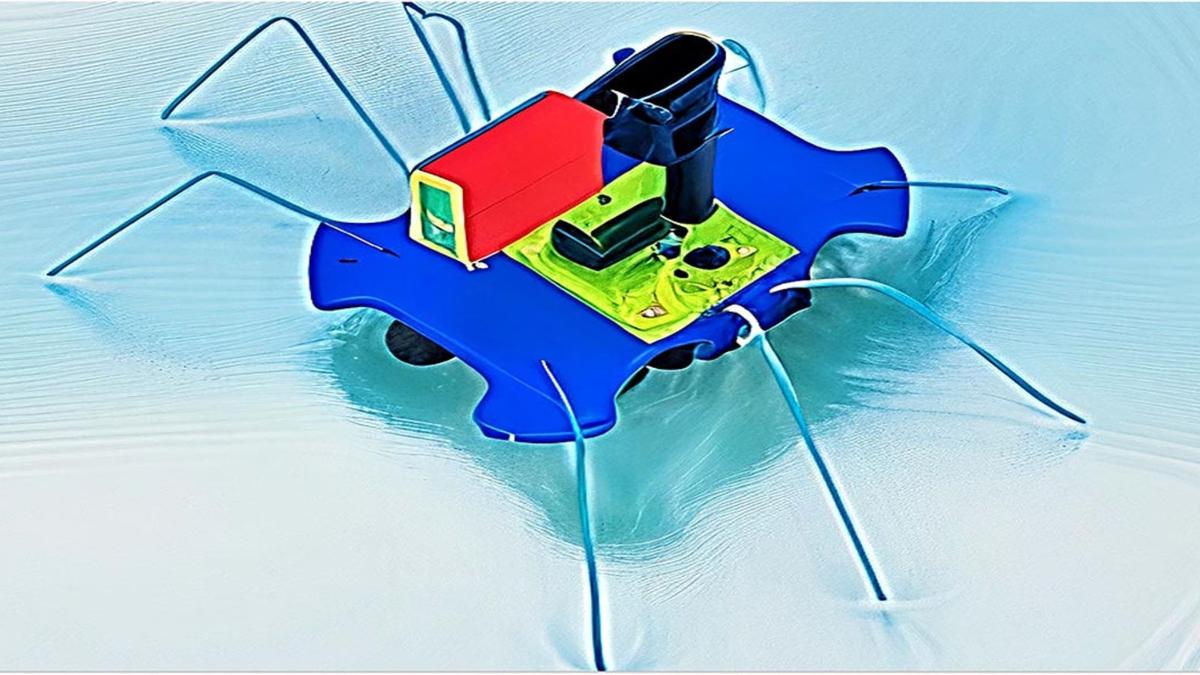
Scientists have made significant strides in innovation, transitioning from bid-like drones to self-powered “bug” robots. Researchers from Binghamton University, the State University of New York, have developed a tiny, bug-like robot designed to explore the Ocean Internet of Things (IoT), potentially transforming marine monitoring.

Inspired by biological digestion, these advanced robots are equipped with a self-sustained energy system. Futurists predict that by 2035, over one trillion autonomous devices will be integrated into all aspects of human life as part of the IoT. Most of these objects, regardless of size, will likely collect and transmit data to a central database without human intervention.

Continue reading… “Advancing Marine Monitoring with Self-Powered ‘Bug’ Robots”

Transforming Quantum Technologies with Microstructured Optical Fibers

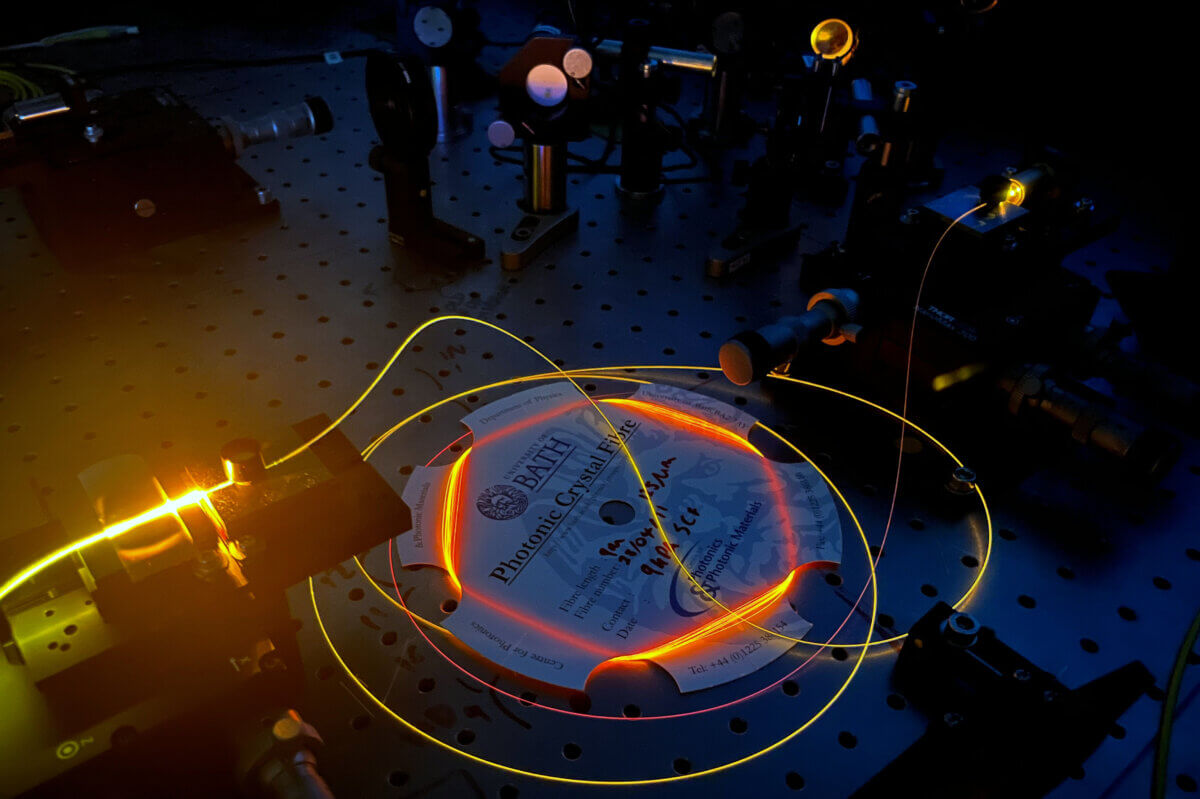
“The conventional optical fibers that form the backbone of today’s telecommunications networks transmit light at wavelengths determined by the losses of silica glass,” says Dr. Kristina Rusimova from the Department of Physics at the University of Bath. “However, these wavelengths are incompatible with the operational wavelengths of single-photon sources, qubits, and active optical components essential for light-based quantum technologies.”

Enter the microstructured optical fiber. Unlike traditional optical fibers with solid glass cores, these new fibers feature a complex pattern of air pockets running along their entire length. This seemingly simple change unlocks a myriad of possibilities for controlling and manipulating light in ways crucial for quantum technologies. One of the most exciting applications of these fibers is in creating the building blocks of a quantum internet. By carefully designing the structure of these fibers, researchers can generate pairs of entangled photons—particles of light that remain inextricably linked regardless of the distance between them. This quantum entanglement is the essential ingredient that enables many quantum technologies.

Continue reading… “Transforming Quantum Technologies with Microstructured Optical Fibers”

Tsinghua University Demonstrates Safety of World’s First Commercial Pebble-Bed Nuclear Reactor

China’s Tsinghua University has achieved a groundbreaking milestone by demonstrating the inherent safety of the first operating commercial pebble-bed nuclear reactor. By shutting off the power and allowing the passive systems to maintain control of the reactor core, the university showcased the advanced safety features of this next-generation technology.

Older nuclear reactors, such as Pressurized Water Reactors (PWR), have a significant design drawback—they require active measures to shut down in an emergency, and their safety systems depend on an external power source to run coolant pumps. These systems can fail catastrophically if the power source is compromised, as seen in the Fukushima disaster of 2011. The plant, based on an outdated 1970s design, was hit by an earthquake and a tsunami that knocked out its backup diesel generators. The resulting chaos prevented emergency crews from intervening in time, leading to a hydrogen explosion and reactor core meltdown.

Continue reading… “Tsinghua University Demonstrates Safety of World’s First Commercial Pebble-Bed Nuclear Reactor”

Scientists Develop Portable Tractor Beam for Medical Use

A tractor beam—a special beam of electromagnetic radiation that draws particles toward it instead of pushing them away—might be a concept straight from Star Trek, but scientists from the Australian Research Council’s Centre of Excellence for Transformative Meta-Optical Systems (TMOS) have recently taken steps toward a more portable way to generate one in real life.

The Melbourne-based research team suggests that this could lead to better, less invasive technology capable of performing biopsies without the cell trauma caused even by the smallest handheld tweezers or needles. The team’s paper is published in the peer-reviewed journal ACS Photonics from the American Chemical Society.

Continue reading… “Scientists Develop Portable Tractor Beam for Medical Use”

Innovative Light-Based Method Cleans Up “Forever Chemicals” at Room Temperature

Researchers have developed a groundbreaking method to decompose perfluoroalkyl substances (PFASs), commonly known as “forever chemicals,” using visible LED light at room temperature. This innovative approach offers a promising solution for sustainable fluorine recycling and PFAS treatment.

PFASs, widely used since the invention of Teflon in 1938, are found in various applications such as cookware, clothing, and firefighting foam. Their stability and resistance to heat and water, while useful, pose significant environmental and health challenges. These chemicals do not break down easily and accumulate in water, soil, and animal bodies, causing carcinogenic effects and hormonal disruptions in humans. Traditionally, decomposing these chemicals requires temperatures exceeding 752°F (400°C), making the process difficult and energy-intensive.

Continue reading… “Innovative Light-Based Method Cleans Up “Forever Chemicals” at Room Temperature”

Discovery of Deep-Sea Oxygen Source Could Revolutionize Scientific Understanding

The recent discovery of a deep-sea oxygen source has stunned marine researchers and may necessitate a radical rethinking across several scientific fields, including the search for extraterrestrial life. Unlike the oxygen produced by photosynthesis, this oxygen is generated by minerals on the ocean floor.

High school science classes often teach that our oxygen comes from plant photosynthesis, particularly in tropical rainforests. However, scientists have long known that this is only partly true. While plants do produce a significant portion of the oxygen we breathe, phytoplankton in oceans and lakes contribute substantially as well. In both cases, the basic process involves living organisms using sunlight to convert carbon dioxide and water into necessary molecules, producing oxygen as a byproduct. This oxygen is crucial for sustaining life on Earth, including human life.

Continue reading… “Discovery of Deep-Sea Oxygen Source Could Revolutionize Scientific Understanding”

Transforming Organic Waste into Fertilizer: A Sustainable Approach Using Hydrothermal Liquefaction and Fungal Treatment

Creating fertilizers from organic waste can significantly reduce fossil fuel consumption and promote sustainable agricultural production. One innovative method is hydrothermal liquefaction (HTL), which converts biomass into biocrude oil through a high-temperature, high-pressure process. Two studies from the University of Illinois Urbana-Champaign explore the use of a fungal treatment to convert the leftover wastewater from HTL into fertilizer for agricultural crops.

“HTL uses wet biomass from organic sources such as swine manure or food waste. The process yields wastewater, called hydrothermal liquefaction aqueous phase (HTL-AP), which is usually discarded. We know it contains nutrients that can be used for fertilizer, but they are mostly in organic forms that plants can’t access. HTL-AP may also contain toxic heavy metals, depending on the type of biowaste,” said co-author Paul Davidson, an associate professor in the Department of Agricultural and Biological Engineering (ABE), part of the College of Agricultural, Consumer and Environmental Sciences and The Grainger College of Engineering at Illinois.

Continue reading… “Transforming Organic Waste into Fertilizer: A Sustainable Approach Using Hydrothermal Liquefaction and Fungal Treatment”

ElevenLabs Partners with Estates of Legendary Stars for AI-Powered Voice Narration

AI audio firm ElevenLabs has inked agreements with the estates of iconic figures such as Judy Garland, James Dean, and other legendary stars to use their voices for reading books, articles, PDFs, and more through its new Reader App.

ElevenLabs envisions users enjoying Garland’s legendary voice reading the original L. Frank Baum novel “The Wonderful Wizard of Oz” or Laurence Olivier delivering a Sherlock Holmes story, among other works. The company emphasizes that it has secured license agreements for the authorized use of these iconic voices as part of the “Iconic Voices” feature of its app.

Continue reading… “ElevenLabs Partners with Estates of Legendary Stars for AI-Powered Voice Narration”

New Hydrogel-Infused Soil Captures Water from Air, Enhances Plant Growth, and Optimizes Fertilizer Use

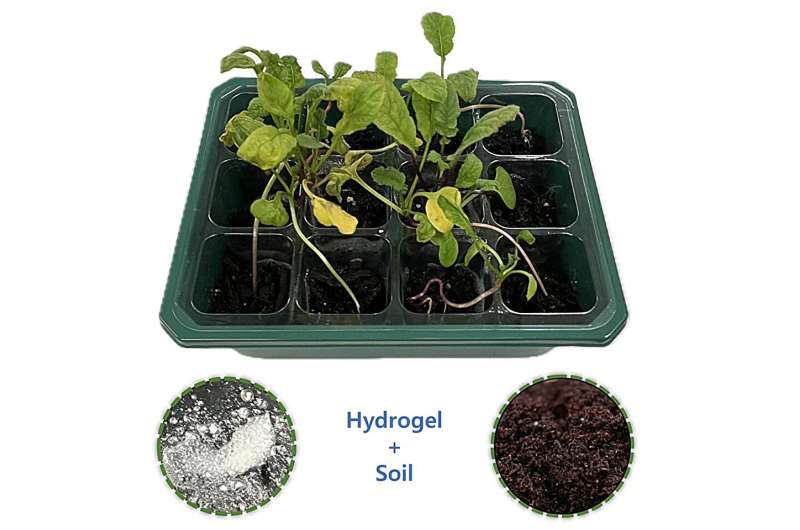
Researchers at The University of Texas at Austin have engineered a new type of soil infused with a hydrogel material that can capture water from the air and provide a controlled release of fertilizer. This innovative “smart soil” significantly enhances plant growth and reduces water and fertilizer usage.

“This new gel technology can reduce the burden on farmers by decreasing the need for frequent irrigation and fertilization,” said Jungjoon Park, a graduate student in the Walker Department of Mechanical Engineering who led the research. “The technology is also versatile enough to be adopted across a wide range of climates, from arid regions to temperate areas.” The research was recently published in ACS Materials Letters.

Continue reading… “New Hydrogel-Infused Soil Captures Water from Air, Enhances Plant Growth, and Optimizes Fertilizer Use”
Discover the Hidden Patterns of Tomorrow with Futurist Thomas Frey
Unlock Your Potential, Ignite Your Success.

By delving into the futuring techniques of Futurist Thomas Frey, you’ll embark on an enlightening journey.

Learn More about this exciting program.