Researchers Discover Thinnest Metallic Nanowire Ever Created

A group of researchers from Switzerland’s École Polytechnique Fédérale de Lausanne (EPFL) believes they have designed the thinnest metallic nanowire ever created. Remarkably, this wire remains stable even at 0 Kelvin.

The team, led by Chiara Cignarella with members Davide Campi and Nicola Marzari, devised an innovative approach to discover this nanowire. They aimed to leverage crystalline structures to identify suitable candidates without the need to build thousands in a lab.

Continue reading… “Researchers Discover Thinnest Metallic Nanowire Ever Created”

MIT Researchers Pioneer Room-Temperature DNA Storage with Amber-Like Polymer

Inspired by the movie Jurassic Park, a team of MIT researchers has developed a groundbreaking method to store DNA for extended periods using a glassy, amber-like polymer. This innovative approach allows for the preservation of DNA at room temperature, circumventing the need for energy-intensive freezing methods.

Traditional DNA storage methods require freezing temperatures, which consume substantial energy and are impractical in many regions. The new method developed by the MIT team stores DNA at room temperature, protecting it from damage caused by heat or moisture.

Continue reading… “MIT Researchers Pioneer Room-Temperature DNA Storage with Amber-Like Polymer”

MASH Makes’ Waste-Based Biofuel Demonstrates Viability as Fossil Fuel Replacement in Shipping Industry

Recent tests have shown that MASH Makes’ waste-based biofuel is a viable ‘drop-in’ replacement for fossil fuels in the shipping sector. In collaboration with the global shipping company NORDEN, this innovative biofuel will now be trialed in live vessels. These trials mark a significant step towards achieving net-zero emissions, with biofuel poised to play a crucial role in decarbonizing shipping and heavy industry.

Shipping, which facilitates over 80% of global trade, consumes more than 330 million tons of fossil fuel annually, accounting for over 3% of global CO2 emissions—more than the entire country of Germany. Decarbonizing this essential part of the global economy is vital to meeting climate goals, but traditional green technologies have struggled to achieve this.

Continue reading… “MASH Makes’ Waste-Based Biofuel Demonstrates Viability as Fossil Fuel Replacement in Shipping Industry”

Revolutionary Photonic Chip from Tsinghua University Processes Images in Nanoseconds

Researchers at Tsinghua University in China have developed a groundbreaking photonic chip that can process, transmit, and reconstruct images in mere nanoseconds. This innovative chip bypasses the traditional optical-to-electronic data conversion used by conventional chips, significantly enhancing the speed and efficiency of image processing.

Machine vision, a rapidly evolving field where cameras, sensors, and algorithms collaborate to interpret the world and execute specific tasks, has traditionally relied on transferring data over long distances for analysis. This process, however, is too slow for many real-time applications. “The world is entering an AI era, but AI is very time- and energy-exhaustive,” said Lu Fang, associate professor at Tsinghua University’s Department of Electronic Engineering. In today’s fast-paced world, machine vision now requires on-device data processing, known as edge computing, to enable quicker decision-making.

Continue reading… “Revolutionary Photonic Chip from Tsinghua University Processes Images in Nanoseconds”

Revolutionary Carbon-Cement Supercapacitor Could Transform Energy Storage

Researchers at MIT, led by Damian Stefaniuk, have developed a groundbreaking material that could revolutionize energy storage. By combining water, cement, and carbon black—a highly conductive material commonly used in car tires—Stefaniuk and his team created a supercapacitor with the potential to significantly impact renewable energy storage.

Unlike lithium-ion batteries, supercapacitors are not ideal for long-term energy storage but excel at rapid charging and discharging. This makes them an intriguing complement to conventional batteries. The novel carbon-cement supercapacitor developed by Stefaniuk’s team could alleviate pressure on the electrical grid by providing efficient storage solutions for green energy, which often fluctuates throughout the day.

Continue reading… “Revolutionary Carbon-Cement Supercapacitor Could Transform Energy Storage”

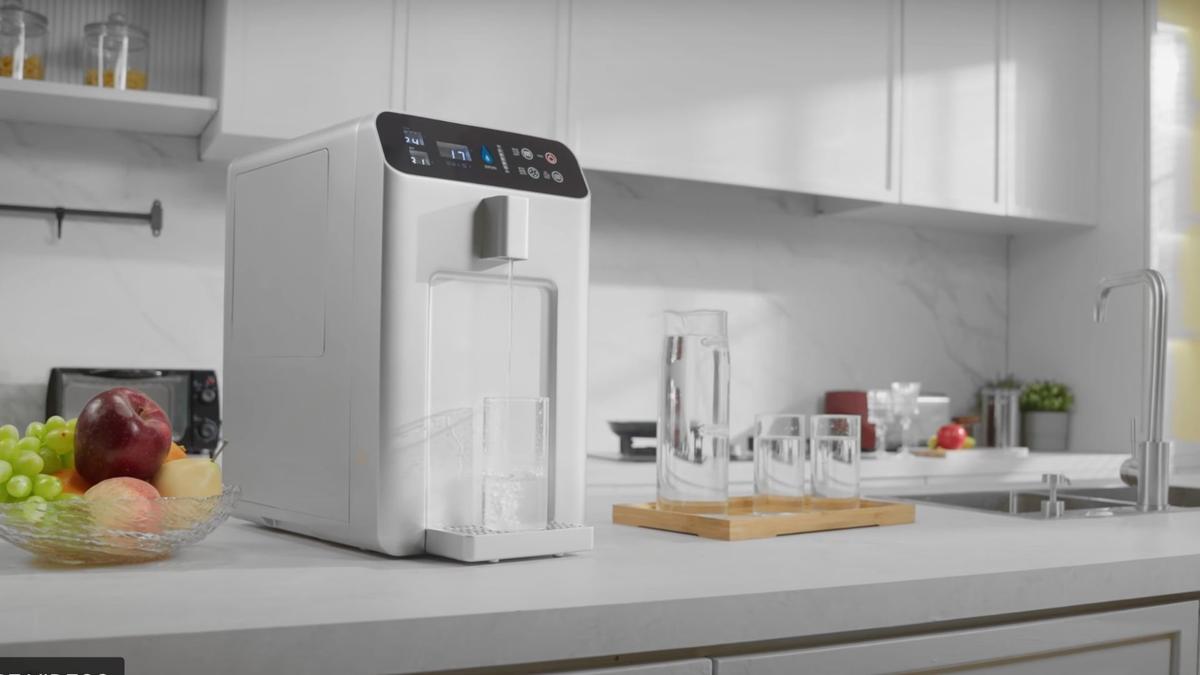
DrinkingMaker Unveils Solar-Powered Water Dispenser That Extracts Water from Air

A new trend in green technology focuses on converting energy from water or air into drinkable water. DrinkingMaker, an innovative company, is set to launch DrinkingWater, a solar-powered, multifunctional dispenser that extracts water from the air.

Amid the climate crisis and increasing water scarcity, DrinkingMaker drew inspiration from desert beetles and cacti to develop DrinkingWater, an advanced air-to-water (AWD) dispenser. This new technology is designed to yield up to 19 liters of water per day and offers optional mineral-rich filter cartridges, allowing users to customize their mineral water to personal preferences.

Continue reading… “DrinkingMaker Unveils Solar-Powered Water Dispenser That Extracts Water from Air”

New Breakthrough in Treating Age-Related Macular Degeneration

Cirrus Therapeutics, the University of Bristol, and London’s Global University Institute of Ophthalmology have unveiled a revolutionary treatment for age-related macular degeneration (AMD), the leading cause of vision loss among older adults. Highlighted on the cover of Science Translational Medicine, this groundbreaking research shows that increasing levels of a specific protein, IRAK-M, in retinal cells could offer a highly effective therapy for AMD.

AMD severely impacts vision, starting with blurred sight or a central black dot, which can expand, leading to complete central vision loss. Currently, around 200 million people worldwide suffer from AMD, with projections suggesting this number will rise to 288 million by 2040 due to aging populations. The exact cause of AMD is complex, involving a mix of aging, environmental, and lifestyle factors.

Continue reading… “New Breakthrough in Treating Age-Related Macular Degeneration”

Breakthrough Thermophotovoltaic Cell Achieves Record Efficiency of 44%

A new heat-to-energy converter has achieved a record-breaking efficiency of 44%, significantly higher than the average steam turbine’s 35%. This innovative thermophotovoltaic (TPV) cell marks a significant advancement towards sustainable, grid-scale renewable energy storage.

As renewable energy prices plummet, the challenge lies in their intermittency. Critics often point out the variability of solar and wind power, asking, “What happens at night or when the wind isn’t blowing?” The solution lies in effective energy storage systems, which can bridge the gap during periods of low renewable energy generation. Traditional options include lithium-ion batteries and emerging technologies like iron-air, water-in-salt, and flow batteries. However, one of the most promising methods involves storing energy as heat.

Continue reading… “Breakthrough Thermophotovoltaic Cell Achieves Record Efficiency of 44%”

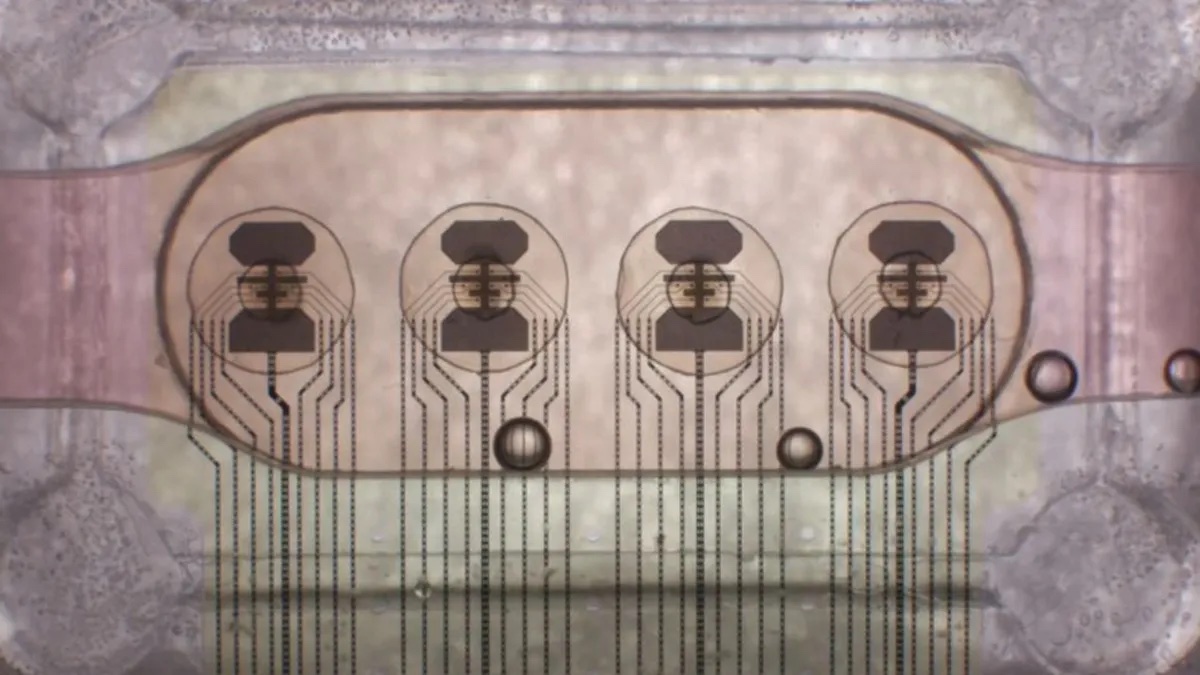
FinalSpark Unveils Neuroplatform: Revolutionizing Biocomputing with Human Brain Organoids

A Swiss biocomputing startup, FinalSpark, has launched an innovative online platform called Neuroplatform, providing remote access to 16 human brain organoids. This groundbreaking service claims to be the world’s first online platform delivering access to biological neurons in vitro. Notably, FinalSpark states that bioprocessors like those used in Neuroplatform consume a million times less power than traditional digital processors, promising a significant reduction in the environmental impacts of computing.

FinalSpark asserts that its Neuroplatform is capable of learning and processing information. Its remarkably low power consumption could drastically cut the energy costs associated with computing. According to a recent research paper by FinalSpark, training a single large language model (LLM) like GPT-3 required approximately 10 GWh—around 6,000 times the annual energy consumption of an average European citizen. By deploying bioprocessors, such immense energy expenditure could be significantly reduced.

Continue reading… “FinalSpark Unveils Neuroplatform: Revolutionizing Biocomputing with Human Brain Organoids”

Introducing PMMM: The Next-Generation Metamaterial for Cooler, Private, and Cleaner Spaces

Having numerous glass surfaces in your home can make rooms feel bright and open, but they often bring in too much heat and expose you to prying eyes. A groundbreaking new metamaterial offers a solution by enhancing transparency, ensuring privacy, cooling interiors, and even cleaning itself. This innovation is known as the Polymer-based Micro-photonic Multi-functional Metamaterial (PMMM).

PMMM is a thin film that can be easily applied to standard glass. Its unique properties stem from the microscopic pyramid patterns etched on its surface, each just 10 microns wide. These tiny pyramids scatter 73% of incoming light, giving the material a frosted appearance while still allowing 95% light transmittance, compared to the 91% typical of regular glass. This feature ensures a brighter, more comfortable environment for both people and plants.

Continue reading… “Introducing PMMM: The Next-Generation Metamaterial for Cooler, Private, and Cleaner Spaces”

Revolutionizing the Road: The Power of the Water Engine in the Hydrogen Era

In the quest for a greener future, the role of hydrogen in energy transition is undeniable. Amidst this shift, an innovative water engine has emerged, setting new power records and challenging the status quo. This breakthrough represents a significant leap in the decarbonization of the economy, where hydrogen (H) has become a crucial player.

The production of hydrogen for energy is a global focal point, with green hydrogen being a particularly strong contender. Investment in hydrogen production has surged worldwide. For instance, in Spain alone, 20% of the world’s new hydrogen projects were initiated in the first quarter of 2022. According to Wood Mackenzie, by the end of 2022, hydrogen-related projects had increased production to a total of 11.1 million tons per year.

Continue reading… “Revolutionizing the Road: The Power of the Water Engine in the Hydrogen Era”

Gen Z Redefines the Workforce with a Freelance Revolution

In 2024, Gen Z workers are expected to outnumber baby boomers in the American labor force for the first time. Despite this shift, the youngest generation in the workforce, with the oldest members now 27, is often treated as a novelty. From email signatures to salary expectations, Gen Zers are scrutinized in every aspect of their professional lives. CNBC Make It delves into how Gen Z is truly making its mark on career advice, office culture, and more.

Gen Z, defined as individuals born between 1997 and 2012, is rethinking what it means to enter the workforce. According to a February 2024 Fiverr survey of 10,033 Gen Zers worldwide, 70% are currently freelancing or plan to do so in the future.

Continue reading… “Gen Z Redefines the Workforce with a Freelance Revolution”
Discover the Hidden Patterns of Tomorrow with Futurist Thomas Frey
Unlock Your Potential, Ignite Your Success.

By delving into the futuring techniques of Futurist Thomas Frey, you’ll embark on an enlightening journey.

Learn More about this exciting program.