Glimpsing into the Future: Lab-Grown Mini Brains Develop Primitive Eyes”

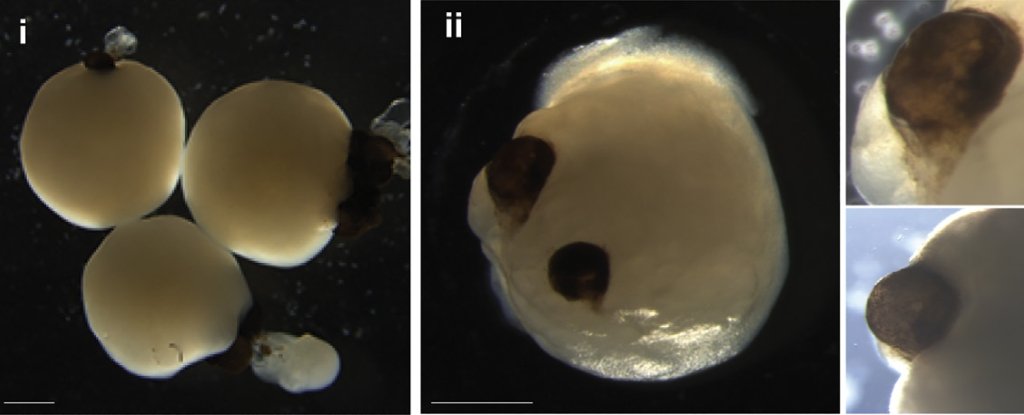
In a groundbreaking discovery reported in a 2021 paper, miniature brains cultivated in a laboratory from stem cells spontaneously evolved rudimentary eye structures, shedding light on the intricate process of eye differentiation and development. These tiny, human-derived brain organoids, resembling three-dimensional brain tissue blobs, showcased bilateral optic cups, mirroring the developmental patterns observed in human embryos. This astonishing revelation not only deepens our understanding of eye development but also holds significant potential for studying brain-eye interactions, modeling congenital retinal disorders, and advancing personalized drug testing and transplantation therapies.

Neuroscientist Jay Gopalakrishnan from the University Hospital Düsseldorf in Germany emphasized the remarkable capability of brain organoids to generate primitive sensory structures sensitive to light, housing cell types akin to those in the human body. Unlike true brains, these “mini brains” are structured from induced pluripotent stem cells, offering a unique platform for ethical research into drug responses, cell development, and, in this case, eye development.

Continue reading… “Glimpsing into the Future: Lab-Grown Mini Brains Develop Primitive Eyes””

ZTE’s Leap into the Future: A Deep Dive into Smart Glasses Innovation

In the dynamic realm of wearable technology, ZTE is making waves with its revolutionary smart glasses, heralding a new era in user interaction with digital content and the surrounding environment. Packed with features geared towards seamless connectivity, immersive entertainment, and practical applications, ZTE’s smart glasses are poised to redefine the landscape of personal technology.

Understanding Smart Glasses

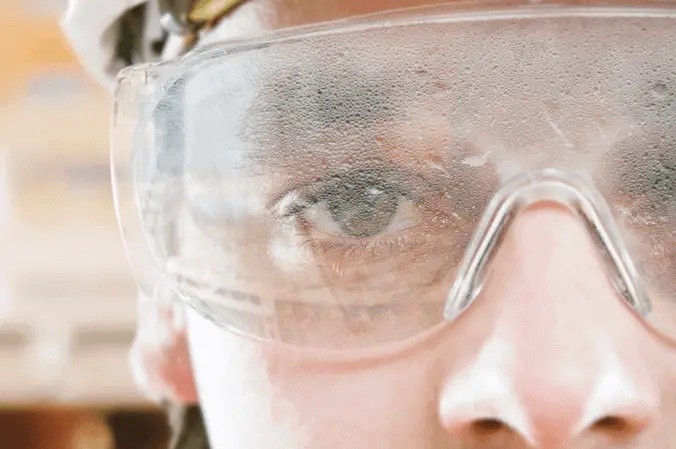
Smart glasses, blending the familiarity of traditional eyewear with advanced technology, offer users a myriad of intelligent functions. These encompass augmented reality (AR) displays, voice commands, touch controls, and wireless connectivity with other devices, creating a multifaceted user experience.

Continue reading… “ZTE’s Leap into the Future: A Deep Dive into Smart Glasses Innovation”

NeRmo: Rodent-Inspired Robot Breaks New Ground in Spine-Centric Quadrupedal Movement

Robots like Boston Dynamics’ Spot and Cheetah exhibit impressive agility, but their movements largely rely on advanced leg mechanics rather than a biomimetic spine. In a groundbreaking development, a collaborative research team from Germany and China has introduced NeRmo, a four-legged robot inspired by rodents, designed to emphasize the importance of a functional spine in achieving precise maneuverability.

In appearance, NeRmo mirrors a mouse’s skeletal structure, featuring a rigid front half housing electronics and a flexible spine with four lumbar and lateral joints in the latter half. The robot’s unique motor-tendon framework draws inspiration from rodent anatomy, introducing artificial tendons that thread through the spine, elbow, and knee joints.

Continue reading… “NeRmo: Rodent-Inspired Robot Breaks New Ground in Spine-Centric Quadrupedal Movement”

Unraveling the Magnetic Mystery: Diamond-Tipped Needle Reveals Single-Pole Magnets on Hematite Surface

In a groundbreaking discovery, physicists wielding a diamond needle tipped with a single electron have identified seemingly implausible one-sided magnets swirling along the surface of hematite, a mineral composed of iron oxide. This revelation challenges traditional notions of magnetism and may pave the way for advancements in computer memory technology.

The laws of physics, as currently understood, assert the impossibility of magnets possessing only one pole. However, when dealing with particles at the microscopic level, anomalies arise, allowing for unconventional phenomena. Researchers, led by Jani, uncovered magnetic monopoles on the surface of hematite—tiny bits of magnetic matter exhibiting a sole pole, contrary to the usual two.

Continue reading… “Unraveling the Magnetic Mystery: Diamond-Tipped Needle Reveals Single-Pole Magnets on Hematite Surface”

Human Cell Anthrobots: Pioneering Bio-Bots for Healing and Tissue Regeneration

In a groundbreaking study published in the journal Advanced Science, researchers have developed minute robots crafted from human cells, presenting the potential for applications in wound healing, tissue regeneration, and disease treatment. Termed “anthrobots,” these multicellular entities have exhibited autonomous movement and the capability to repair and regrow damaged regions of neurons.

While the anthrobots have thus far demonstrated their capabilities within a laboratory environment, specifically a petri dish, their prospects are undoubtedly impressive. This research builds upon previous work by the same scientists who introduced the world to the first biological robots, known as “xenobots,” originating from frog stem cells. The latest innovation showcases that similar, if not superior, results can be achieved using human cells, potentially enabling the construction of these bots from a patient’s own cells and minimizing the risk of complications such as tissue rejection.

Continue reading… “Human Cell Anthrobots: Pioneering Bio-Bots for Healing and Tissue Regeneration”

Turning Waste to Treasure: Lignin-Based Films Offer Eco-Friendly Solutions and Carbon Sink Potential

In a groundbreaking achievement, researchers at Aalto University have unveiled a revolutionary method to transform lignin, a common waste product from wood processing, into transparent bio-based films. Published in the esteemed Chemical Engineering Journal, this study, conducted under the umbrella of FinnCERES, introduces a sustainable alternative to synthetic materials while simultaneously transforming waste into a valuable carbon sink—an environmental win.

Lignin, typically discarded through incineration in the paper and pulp industry, presented processing challenges, hindering its potential applications. Lead researcher Dr. Alexander Henn tackled this hurdle by exploring the reduction of particle size, aiming to create transparent lignin nanoparticles for anti-fogging coatings.

Continue reading… “Turning Waste to Treasure: Lignin-Based Films Offer Eco-Friendly Solutions and Carbon Sink Potential”

Revolutionary Electrocaloric Heat Pump: A Game-Changer for Air Conditioning

Air conditioners and refrigerators, notorious for using environmentally harmful gases, might undergo a transformative change with the emergence of a groundbreaking heat pump. Described in a recent Science study, this prototype, utilizing electric fields and a unique ceramic material, has the potential to revolutionize air conditioning by eliminating the need for damaging refrigerant fluids.

The technology, as highlighted by Neil Mathur, a materials scientist at the University of Cambridge, UK, amalgamates various existing techniques and boasts “superlative performance.” Emmanuel Defay and collaborators at the Luxembourg Institute of Science and Technology crafted the experimental device using a ceramic with a robust electrocaloric effect.

Continue reading… “Revolutionary Electrocaloric Heat Pump: A Game-Changer for Air Conditioning”

Revolutionizing Martian Colonization: Chinese Scientists Unveil Oxygen-Producing Robot Chemist

In a groundbreaking achievement, Chinese scientists have introduced a robot chemist capable of extracting oxygen from Martian rocks, a pivotal step toward realizing the dream of colonizing Mars. This technological marvel presents a significant leap forward by eliminating the need to transport essential supplies like oxygen from Earth, addressing a major challenge in Mars exploration.

Lead researcher Jun Jiang from the University of Science and Technology of China emphasized the robot’s autonomous capabilities, describing it as having a “chemistry brain.” The objective is to develop innovative methods for synthesizing compounds from Martian resources, paving the way for sustainable colonies on the Red Planet.

Continue reading… “Revolutionizing Martian Colonization: Chinese Scientists Unveil Oxygen-Producing Robot Chemist”

Plant Photosynthesis: A Potential Ally Against Climate Change, but No Panacea, Study Shows

A recent study indicates that the rate of energy captured by photosynthesis, known as “gross primary production,” could potentially increase towards the end of the century under high-emission scenarios. Lead author Dr. Jürgen Knauer from Western Sydney University’s Hawkesbury Institute for the Environment emphasizes the uncertainty surrounding plants’ future carbon dioxide (CO2) uptake and highlights the role of a well-established climate model in predicting sustained carbon uptake until the 21st century’s close.

Dr. Knauer explains that while plants annually absorb a substantial amount of CO2, mitigating the impact of climate change, uncertainties existed regarding their future capacity. The study, using detailed ecological models, addresses concerns raised by previous research suggesting reduced CO2 absorption in extreme climate conditions. The models consider critical physiological processes governing photosynthesis that are often overlooked in global assessments.

Continue reading… “Plant Photosynthesis: A Potential Ally Against Climate Change, but No Panacea, Study Shows”

Social Connection Over Addiction: Unraveling the True Dynamics of Smartphone Attachment

In a groundbreaking exploration, scholars from the University of Granada (UGR) have challenged the prevalent notion of smartphone addiction. Contrary to common belief, their research, published in the esteemed journal Psicothema, asserts that our attachment to mobile phones is deeply rooted in the social interactions these electronic devices facilitate. This study not only supports a theory proposed by Professor Samuel P.L. Veissière in 2018 but also presents the first experimental evidence endorsing his perspective.

The research engaged 86 participants divided into two groups to delve into the role of social interaction in mobile phone use. Lead author Jorge López Puga, from the UGR’s Department of Personality, Evaluation, and Psychological Treatment, detailed the experiment’s design. The “social expectation group” was instructed to send a uniform message to their active contacts about participating in an exciting virtual reality task. Conversely, the control group received no such directive.

Continue reading… “Social Connection Over Addiction: Unraveling the True Dynamics of Smartphone Attachment”

Cuttlefish Intelligence: The Marshmallow Test Reveals Surprising Insights

In 2021, a study on cephalopod intelligence, particularly cuttlefish, showcased the importance of recognizing the cognitive abilities of animals. Cuttlefish, subjected to a modified version of the marshmallow test, displayed an unexpected level of learning and adaptability, suggesting a complexity in their brains previously underestimated. Researchers believe this capability could provide cuttlefish with a competitive advantage in the fiercely competitive marine environment.

The marshmallow test, initially designed for humans, measures the ability to delay gratification, indicating cognitive skills such as future planning. While primates, dogs, and corvids have exhibited this ability, the 2020 study demonstrated that cuttlefish could also delay gratification when anticipating a preferred meal.

Continue reading… “Cuttlefish Intelligence: The Marshmallow Test Reveals Surprising Insights”

Hope on the Horizon: Excision BioTherapeutics’ Crispr-Based Treatment for HIV Shows Promise

In 1983, the identification of HIV, the virus responsible for AIDS, marked a grim era where contracting the virus was often considered a death sentence. Today, antiretroviral drugs have transformed the scenario, enabling people to manage the virus effectively, though a cure remains elusive. San Francisco-based biotech firm Excision BioTherapeutics aims to change that narrative with its groundbreaking gene-editing infusion, EBT-101.

Recent reports from the company have highlighted positive safety outcomes in the experimental drug’s one-off gene-editing treatment. The trial involved three patients, and no severe side-effects were observed. However, efficacy results are expected only by 2024, leaving anticipation for a potential breakthrough in the quest for an AIDS cure.

Continue reading… “Hope on the Horizon: Excision BioTherapeutics’ Crispr-Based Treatment for HIV Shows Promise”
Discover the Hidden Patterns of Tomorrow with Futurist Thomas Frey
Unlock Your Potential, Ignite Your Success.

By delving into the futuring techniques of Futurist Thomas Frey, you’ll embark on an enlightening journey.

Learn More about this exciting program.