Lab-Grown Diamonds Shake Up the Bridal Market, Causing a Drop in Natural Diamond Prices

The demand for one of the world’s most sought-after types of rough diamonds has plummeted, leading to a significant price decline, as a growing number of Americans opt for engagement rings featuring lab-grown stones. While diamond demand has generally weakened across the board following the pandemic, consumers have redirected their spending toward travel and experiences. Economic challenges have also impacted luxury spending. However, the most affected stones are those used in the popular one- or two-carat solitaire bridal rings commonly found in the US.

This price drop has been primarily attributed to the surging demand for lab-grown diamonds. The synthetic diamond industry has strategically targeted this category, where consumers are particularly price-sensitive, and these efforts are now paying off in the world’s largest diamond market.

Continue reading… “Lab-Grown Diamonds Shake Up the Bridal Market, Causing a Drop in Natural Diamond Prices”

Franky Zapata Unveils ‘Airscooter’ in His Flying Machine Collection

French inventor and thrill-seeker, Franky Zapata, renowned for his daring Channel-crossing on a hoverboard, has introduced an ‘airscooter’ to complement his array of jet-powered innovations.

Presented at the Viva Technology conference in Paris, France, Zapata’s company, aptly named Zapata, unveiled the egg-shaped hybrid-electric vertical take-off and landing (VTOL) prototype.

This “personal flying machine” purportedly adheres to Federal Aviation Authority Regulations and qualifies as an “ultralight aircraft” in the US, eliminating the need for a pilot’s license. Featuring a fly-by-wire flight controller and an abundance of safety sensors, piloting the airscooter should be as straightforward as operating a drone. Its market release date remains undetermined.

Continue reading… “Franky Zapata Unveils ‘Airscooter’ in His Flying Machine Collection”

Scientists Transfer Longevity Gene from Naked Mole Rats to Mice, Extending Lifespan

In a groundbreaking achievement, researchers at the University of Rochester have successfully transplanted a longevity gene from naked mole rats to mice, resulting in improved health and an extended lifespan for the mice. Naked mole rats, renowned for their extended lifespans and remarkable resistance to age-related ailments, have long intrigued the scientific community. By introducing a specific gene responsible for enhanced cellular repair and protection into mice, the Rochester scientists have unveiled promising avenues for unraveling the mysteries of aging and potentially extending human lifespan.

Vera Gorbunova, the Doris Johns Cherry Professor of biology and medicine at Rochester, states, “Our study provides a proof of principle that unique longevity mechanisms that evolved in long-lived mammalian species can be exported to improve the lifespans of other mammals.”

Continue reading… “Scientists Transfer Longevity Gene from Naked Mole Rats to Mice, Extending Lifespan”

AI, robots will never replace humans but can make us more productive and efficient: Thomas Frey

Is AI poised to trump humans? What’s the future of work? What’s the role of creativity in an AI-dominated world? Thomas Frey, founder of the DaVinci Institute in Colorado, offers a futuristic perspective. In this conversation, he also reflects on the dramatic shifts caused by technological advances in ecommerce, transport, and healthcare. He also chimes on if intelligence and empathy will remain tough-to-replace skills. “AI, robots, and automation will never replace humans, but they do have the potential to make us far more effective, efficient, and productive than ever before in human history,” Frey says.

Edited excerpts:

Q. The present and the future—how do you perceive the interplay between the two? 

The interplay between present and future is dynamic and influenced by various factors such as technology, culture, economy, environment, and individual choices. By understanding these connections, we can create a brighter future for all of us. 

Continue reading… “AI, robots will never replace humans but can make us more productive and efficient: Thomas Frey”

Novel brain implant helps paralyzed woman speak using a digital avatar

Emerging speech neuroprostheses may offer a way to communicate for people who are unable to speak due to paralysis or disease, but fast, high-performance decoding has not yet been demonstrated. Now, transformative new work by researchers at UCSF and UC Berkeley shows that more natural speech decoding is possible using the latest advances in artificial intelligence.

Led by UCSF neurosurgeon Edward Chang, the researchers have developed an implantable AI-powered device that, for the first time, translates brain signals into modulated speech and facial expressions. As a result, a woman who lost the ability to speak due to a stroke was able to speak and convey emotion using a talking digital avatar. The researchers describe their work in a study published today (Wednesday, Aug. 23) in the journal Nature.

Continue reading… “Novel brain implant helps paralyzed woman speak using a digital avatar”

Serendipitous Breakthrough: Lithium-Sulfur Batteries Poised to Revolutionize Clean Energy

Every now and then, groundbreaking technology emerges unexpectedly, altering our world’s trajectory. Dynamite, penicillin, X-ray machines, and microwaves all exemplify revolutionary accidental discoveries. This year, another such discovery might reshape our lives and potentially rescue our planet from impending climate change – the advent of lithium-sulfur batteries. While seeking the ideal technology to power our contemporary lifestyle and facilitate clean innovations like electric vehicles, lithium-ion batteries have dominated since the early ’90s. Despite their advancement into the 21st century, they bear considerable drawbacks.

Primarily, the materials used, such as cobalt, for lithium-ion batteries are ecologically damaging to extract, devastating ecosystems and releasing toxic substances. Moreover, their rapid charge demands lead to battery degradation, undermining their efficiency and longevity. This not only hampers electric vehicle adoption but exacerbates electronic waste woes.

Continue reading… “Serendipitous Breakthrough: Lithium-Sulfur Batteries Poised to Revolutionize Clean Energy”

Harnessing Light-Trapping in Magnetic Materials Unveils Remarkable Optical Properties

Researchers from the City College of New York, led by Vinod M. Menon, have uncovered a groundbreaking discovery that could revolutionize the intrinsic properties of magnetic materials. By confining light within these materials, their inherent characteristics can be significantly enhanced. This breakthrough has far-reaching implications, including the development of magnetic lasers, magneto-optical memory devices, and advancements in quantum transduction applications. The findings, detailed in a recent article in Nature, shed light on a layered magnet that naturally possesses the ability to trap light, leading to substantially augmented optical responses.

The focal point of this study revolves around the creation of strongly bound excitons within the layered magnet. These excitons are quasiparticles with exceptionally robust optical interactions, rendering the material capable of autonomously trapping light. Unlike conventional magnets, this material exhibits optical responses to magnetic phenomena that are orders of magnitude more potent. Dr. Florian Dirnberger, the study’s lead author, underscores the significance of this discovery: “The light’s internal reflections within the magnet amplify interactions significantly. When exposed to an external magnetic field, the material’s near-infrared light reflection undergoes such pronounced changes that its color transforms, showcasing a remarkable magneto-optic response.”

Continue reading… “Harnessing Light-Trapping in Magnetic Materials Unveils Remarkable Optical Properties”

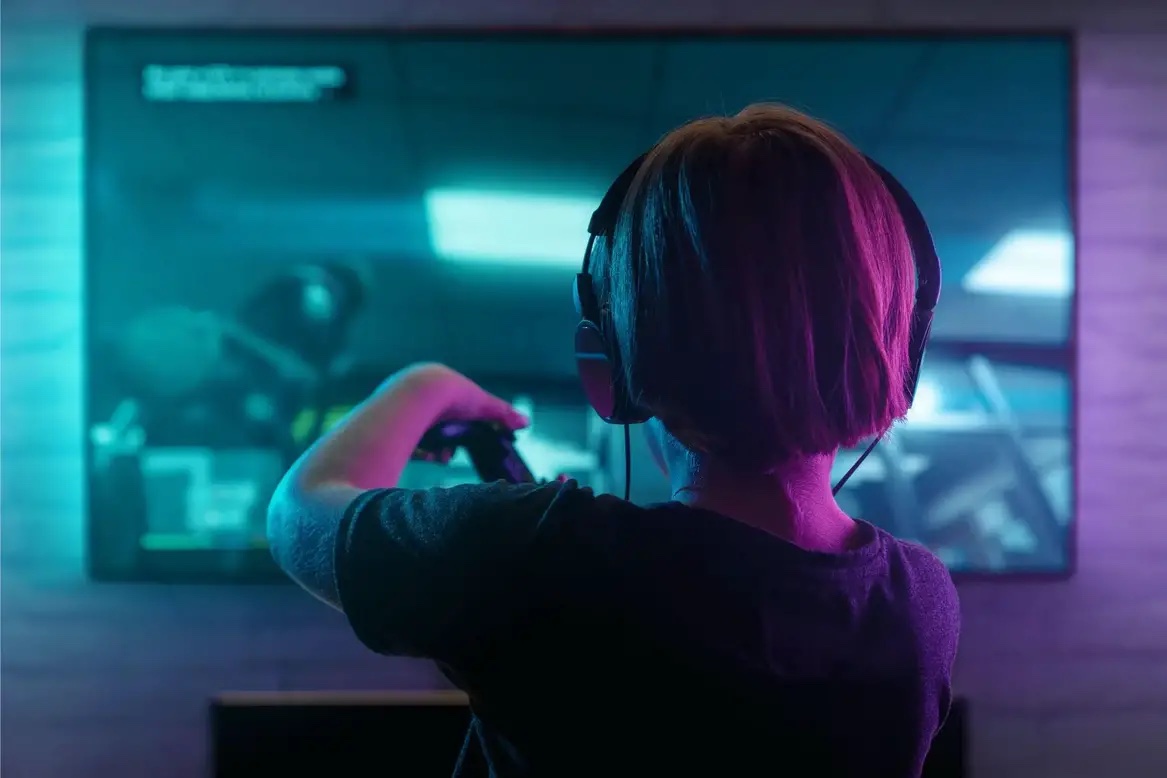
Study Questions Efficacy of China’s Gaming Hour Restrictions for Youth

A recent study challenges the presumed effectiveness of China’s regulations on gaming hours for young individuals, suggesting that these restrictions may not be as impactful as initially believed.

Led by the University of York, a research group delved into over 7 billion hours of gaming activity across a diverse range of games to evaluate the real-world impact of China’s playtime limits. Drawing data from more than two billion user accounts in China, where legal gaming hours have been enforced for the youth since 2019, the study’s findings did not reveal a decrease in intensive gaming despite the introduction of these regulations.

With the global gaming industry experiencing unprecedented popularity, encompassing an estimated 4 billion participants each year, concerns have arisen across countries regarding the potential impact of excessive gaming on the well-being of young people. To address these concerns, China implemented restrictions on playtime for individuals under 18 in 2019.

Continue reading… “Study Questions Efficacy of China’s Gaming Hour Restrictions for Youth”

Introducing the Clip Mouse: A Finger-Worn Revolution in Cursor Control

While the computer mouse has been a steadfast tool for navigating digital landscapes, innovation continues to push the boundaries of its functionality. Enter the Clip Mouse, a modern marvel that reimagines cursor control. Currently seeking support on Kickstarter, this German-designed creation breaks away from convention by affixing to your fingers, eliminating the need for a flat surface to operate. With compatibility extending to both Apple’s Magic Mouse and PCs, this device is poised to reshape how we interact with technology.

Sporting an unconventional design reminiscent of a sideways letter U, the Clip Mouse wraps around the user’s index and middle fingers. As users engage in natural cursor movements, an integrated accelerometer detects horizontal shifts, seamlessly transmitting these commands to a computer via Bluetooth. What’s remarkable is that no optical components or lasers are involved, liberating users from the confines of a traditional mouse pad.

Continue reading… “Introducing the Clip Mouse: A Finger-Worn Revolution in Cursor Control”

Revolutionizing Electric Cars: The Road Ahead for Long-Lasting Solid-State Batteries

In the evolving landscape of electric vehicles (EVs), the true innovation isn’t just found in the motors, but in the batteries that power them. Companies are on a mission to create batteries that are lighter, longer-lasting, and capable of holding more electricity. While the motors of future EVs are bound to undergo remarkable refinements, it’s the battery technology that remains a significant challenge. The race to develop better EV batteries is heating up, and a surprising breakthrough has emerged from an unlikely source: Toyota.

Toyota has unveiled a solid-state battery, a technology that stores energy in a solid electrolyte rather than a liquid or paste-like substance. The remarkable achievement is that Toyota’s solid-state battery can withstand the rigors of electric car usage. Traditionally, solid-state batteries have struggled to find a place in EVs due to their susceptibility to frequent draining and recharging, as well as their sensitivity to extreme temperatures. Moreover, the cost of producing solid-state batteries has been a deterrent, though their advantages have been recognized.

Continue reading… “Revolutionizing Electric Cars: The Road Ahead for Long-Lasting Solid-State Batteries”

General Fusion Unveils Breakthrough MTF Machine to Accelerate Fusion Energy Goals

General Fusion, a leader in fusion energy innovation, has introduced a groundbreaking Magnetized Target Fusion (MTF) machine that promises to propel the company’s technical advancements. The new fusion device is strategically designed to expedite General Fusion’s progress towards achieving fusion conditions surpassing 100 million degrees Celsius by 2025, while also moving closer to achieving scientific breakeven by 2026. The company has recently secured significant funding, totaling $25 million USD (approximately $33.5 million CAD), in its Series F raise. The round was anchored by existing investors BDC Capital and GIC, along with additional grant funding from the Government of British Columbia, building on the Canadian government’s ongoing support through the Strategic Innovation Fund (SIF).

This pioneering machine represents a critical advancement in General Fusion’s Demonstration Program, aimed at leveraging recent technological breakthroughs to bring commercial fusion energy to the grid by the early to mid-2030s. The MTF demonstration, named Lawson Machine 26 (LM26), is expected to play a pivotal role in de-risking and accelerating General Fusion’s journey towards achieving practical fusion energy solutions.

Continue reading… “General Fusion Unveils Breakthrough MTF Machine to Accelerate Fusion Energy Goals”

Challenging the Silence of Space: Transmitting Sound Across a Vacuum

The famous line from the movie Alien asserted, “In space, no one can hear you scream.” However, physicists Zhuoran Geng and Ilari Maasilta from the Nanoscience Center at the University of Jyväskylä, Finland, have recently presented groundbreaking research that challenges this notion. Their study suggests that, under specific circumstances, sound can indeed travel powerfully through a vacuum, defying conventional understanding.

Their remarkable findings, recently published in the journal Communications Physics, unveil an intriguing phenomenon: sound waves have the potential to “tunnel” through a vacuum gap between two solid objects, provided these objects are piezoelectric in nature. Piezoelectric materials exhibit an electrical response when subjected to sound waves or vibrations. Importantly, as an electric field can exist within a vacuum, it can effectively facilitate the propagation of these sound waves.

Continue reading… “Challenging the Silence of Space: Transmitting Sound Across a Vacuum”